What Are Machine Vision Systems? Defining Precision in Production
At its core, a machine vision system is a sophisticated technology that enables computers to “see” and interpret images, much like human vision, but with unparalleled speed, accuracy, and consistency. Unlike simple sensors that detect presence or absence, machine vision systems capture visual data, process it using specialized algorithms, and make intelligent decisions based on predefined criteria. These systems are integral to factory automation, offering a non-contact method of inspection, measurement, and guidance that is vital for maintaining stringent quality standards and optimizing production workflows.
The essence of machine vision lies in its ability to replicate and surpass human visual capabilities in industrial environments. It translates the analog world of light and objects into digital information that can be analyzed, quantified, and acted upon. From identifying microscopic defects to verifying complex assemblies, machine vision provides the objective, repeatable data necessary for high-volume manufacturing. This technology is a cornerstone of smart manufacturing, allowing for real-time adjustments and continuous improvement, directly contributing to the principles outlined in Lean Manufacturing Principles Explained by minimizing errors and maximizing throughput.
The adoption of machine vision systems reflects a broader industry trend towards intelligent automation and data-driven decision-making. As products become more complex and customer expectations for flawless quality rise, the capacity of these systems to perform 100% inspection at line speed becomes not just an advantage, but a necessity. They serve as the eyes of the automated factory, ensuring every product meets specifications before it leaves the production line, thereby safeguarding brand reputation and reducing costly recalls.
The Core Components of a Machine Vision System
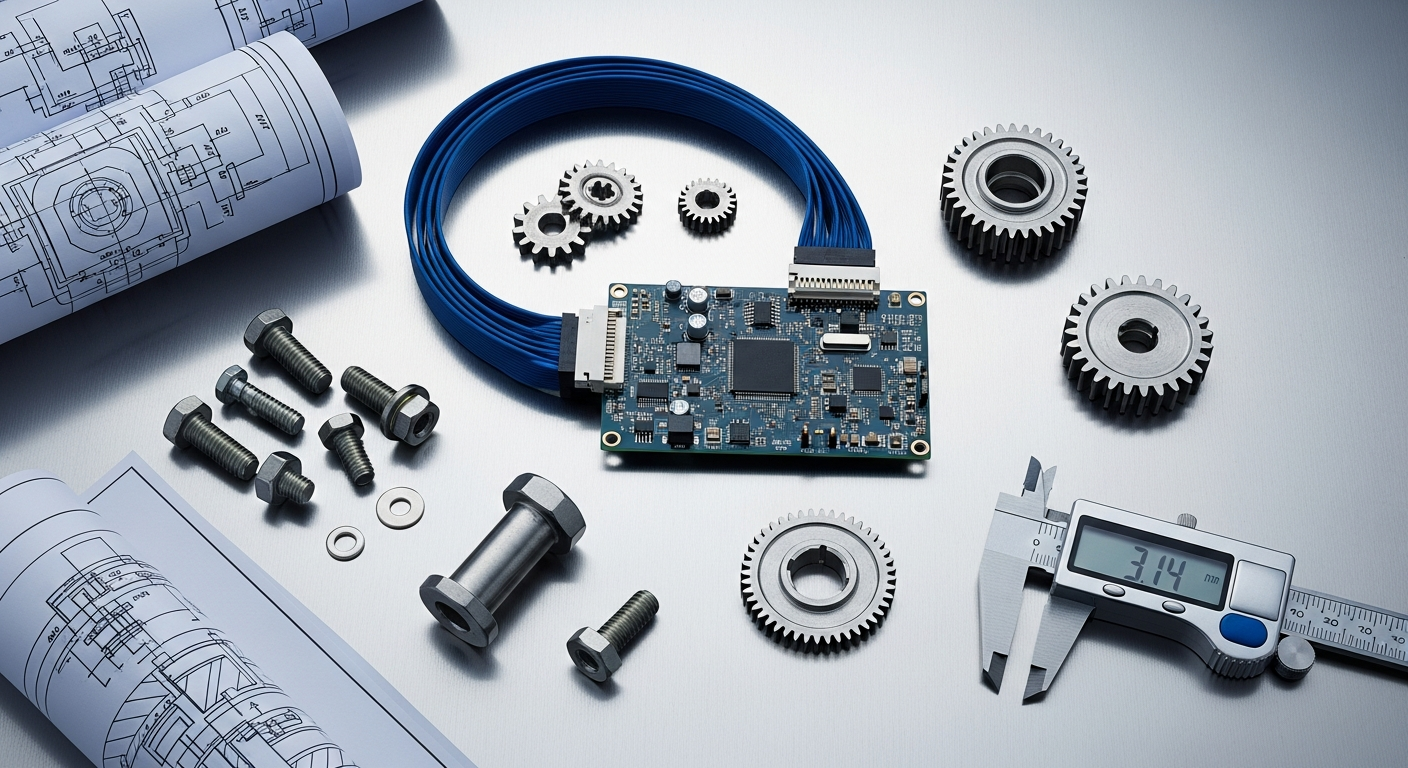
A robust machine vision system is an intricate orchestration of several key components, each playing a vital role in capturing, processing, and interpreting visual information. Understanding these elements is crucial for designing and implementing an effective solution tailored to specific manufacturing challenges.
Illumination: The Foundation of Visibility
Proper illumination is arguably the most critical component, as it dictates the quality and clarity of the image captured. Without appropriate lighting, even the most advanced camera and software cannot produce reliable results. Various illumination techniques are employed based on the application:
- Brightfield Lighting: Illuminates the object directly, highlighting surface features and textures.
- Darkfield Lighting: Illuminates from a low angle, making scratches, defects, and surface irregularities stand out against a dark background.
- Backlight Lighting: Places the light source behind the object, creating a silhouette that is ideal for precise dimensional measurements and detecting missing features.
- Structured Light: Projects a known pattern (e.g., lines, grids) onto an object to create a 3D profile, useful for depth perception and volume measurement.
- Strobe Lighting: Provides brief, intense flashes of light to “freeze” motion, essential for inspecting fast-moving objects on a conveyor.
The choice of light source (LED, halogen, fluorescent) and color also significantly impacts image contrast and the ability to highlight specific features or defects, especially when dealing with diverse materials where Materials Science In Manufacturing knowledge becomes critical.
Lenses: Focusing on Detail
The lens gathers light reflected from the object and focuses it onto the camera’s sensor. Its quality and specifications directly impact the image resolution, field of view, and optical distortion. Key lens types include:
- Fixed Focal Lenses: Offer a constant magnification and field of view, ideal for dedicated applications.
- Telecentric Lenses: Minimize perspective error, ensuring objects appear the same size regardless of their distance from the lens, crucial for accurate dimensional measurements.
- Zoom Lenses: Provide variable magnification, offering flexibility for different inspection tasks.
- Macro Lenses: Designed for close-up imaging of small objects or fine details.
Selecting the right lens involves considering working distance, resolution requirements, and the optical characteristics of the object being inspected.
Cameras: The Eyes of the System
The camera converts the focused light into digital data (pixels). Modern industrial cameras are designed for robustness, high speed, and precision. Types include:
- Area Scan Cameras: Capture a complete 2D image of an object in a single shot, suitable for inspecting stationary or slow-moving items.
- Line Scan Cameras: Capture images one line of pixels at a time as an object moves past, ideal for continuous web inspection or very high-resolution imaging of large objects.
- 3D Cameras: Utilize technologies like structured light, laser triangulation, or time-of-flight to capture depth information, providing a three-dimensional profile of objects.
- Hyperspectral/Multispectral Cameras: Capture images across a wide range of light spectra beyond the visible, revealing material composition and properties, which is highly relevant for advanced Materials Science In Manufacturing applications and defect detection not visible to the human eye.
Key camera specifications include resolution (number of pixels), frame rate (images per second), sensor type (CCD, CMOS), and interface (GigE Vision, USB3 Vision, Camera Link).
Vision Processor and Software: The Brains of the Operation
Once an image is captured, the vision processor (often an industrial PC or embedded system) and specialized software take over. This is where the “intelligence” of the system resides. The software performs various image processing tasks:
- Image Pre-processing: Enhances image quality through noise reduction, contrast adjustment, and filtering.
- Feature Extraction: Identifies specific attributes like edges, corners, patterns, and colors.
- Analysis & Measurement: Applies algorithms for tasks such as dimensional gauging, pattern matching, optical character recognition (OCR), barcode reading, and defect classification.
- Decision Making: Compares extracted features against predefined tolerances or master patterns to make a pass/fail decision or provide guidance.
- Communication: Interfaces with other factory systems (PLCs, robots, databases) to trigger actions or record data.
The increasing integration of Artificial Intelligence (AI) and Machine Learning (ML) algorithms is revolutionizing vision software, enabling systems to learn from data, adapt to variations, and tackle more complex, subjective inspection tasks that were previously impossible for rules-based algorithms.
Input/Output (I/O) and Actuators: The System’s Actions
The final stage involves the system communicating its findings and initiating actions. I/O modules connect the vision system to the wider automation infrastructure, allowing it to:
- Trigger cameras and lights.
- Send pass/fail signals to PLCs.
- Control robotic arms for sorting or manipulation.
- Activate reject mechanisms for defective products.
- Update production databases with inspection results.
This seamless integration ensures that the insights gained from machine vision translate directly into actionable steps on the production floor, completing the automation loop.
How Machine Vision Systems Work: From Pixels to Precision
1. Image Acquisition
The process begins with the camera capturing an image of the target object. This involves the precise synchronization of illumination, lens focusing, and camera triggering. The environmental conditions, such as ambient light, temperature, and vibration, are carefully controlled to ensure consistent image quality. For objects moving at high speeds, a triggered strobe light might be used to obtain a clear, blur-free image, capturing a snapshot in time.
2. Image Pre-processing
Once acquired, the raw image often undergoes pre-processing to enhance its quality and prepare it for analysis. This stage involves applying various filters and algorithms to:
- Noise Reduction: Removing random pixel variations that could interfere with accurate analysis.
- Contrast Enhancement: Adjusting brightness and contrast to make features more discernible.
- Edge Detection: Highlighting the boundaries of objects or features.
- Image Normalization: Standardizing image parameters to ensure consistency across different captures.
Effective pre-processing minimizes false positives and negatives, ensuring that subsequent analysis stages receive the cleanest possible data.
3. Feature Extraction
In this critical stage, the vision software identifies and isolates specific features or patterns within the pre-processed image that are relevant to the inspection task. This can involve:
- Pattern Matching: Locating predefined patterns or templates within the image.
- Blob Analysis: Identifying and characterizing connected regions of pixels (blobs) based on size, shape, and color, often used for presence/absence detection or counting.
- Edge and Line Detection: Precisely locating edges and lines to define object boundaries or measure dimensions.
- Color Analysis: Verifying correct color, detecting color variations, or identifying color codes.
- Optical Character Recognition (OCR) / Verification (OCV): Reading alphanumeric characters (e.g., lot codes, serial numbers) and verifying their accuracy against a database.
The success of this stage heavily relies on the robustness of the algorithms and their ability to differentiate relevant features from background noise or minor variations.
4. Analysis and Measurement
With features extracted, the system then performs quantitative and qualitative analysis based on the application’s requirements. This includes:
- Dimensional Gauging: Precisely measuring lengths, widths, diameters, and angles of components.
- Position Verification: Confirming the correct placement or alignment of parts.
- Presence/Absence Detection: Verifying that all components are present or that no foreign objects are included.
- Defect Classification: Identifying and categorizing flaws such as scratches, dents, cracks, discoloration, or foreign material. This directly supports Manufacturing Waste Reduction Strategies by catching defects early.
- Assembly Verification: Ensuring that all parts of an assembly are correctly put together according to specifications.
This stage often involves comparing the extracted data against predefined tolerances, CAD models, or reference images.
5. Decision and Action
Based on the analysis, the machine vision system makes a decision, typically a pass/fail judgment. This decision then triggers an appropriate action:
- Product Sorting: Diverting defective products to a reject bin or routing good products to the next stage of production.
- Process Adjustment: Sending feedback to a PLC to adjust machine parameters (e.g., robotic arm position, adhesive dispensing volume) to correct deviations in real-time.
- Guidance: Providing precise coordinates to robotic systems for pick-and-place operations, assembly, or welding.
- Data Logging: Recording inspection results, images of defects, and statistical data for quality assurance, traceability, and continuous process improvement. This data is invaluable for identifying trends and root causes of issues, aligning with Lean Manufacturing Principles Explained for problem-solving.
The speed at which this entire cycle occurs is often measured in milliseconds, enabling 100% inspection even in the fastest production lines, ensuring that every single product meets the highest standards.
Key Applications of Machine Vision in Modern Manufacturing
The versatility of machine vision systems makes them invaluable across virtually every sector of modern manufacturing. Their ability to perform rapid, accurate, and objective inspections opens up a vast array of applications that drive efficiency, quality, and innovation.
1. Quality Control and Defect Detection
This is perhaps the most widespread application. Machine vision excels at identifying flaws that are often imperceptible to the human eye or occur too rapidly for manual inspection. Examples include:
- Surface Inspection: Detecting scratches, dents, discoloration, bubbles, or contamination on materials like metal, glass, plastic, or fabric. This application often leverages advanced insights from Materials Science In Manufacturing to understand material properties and common defect types.
- Component Verification: Ensuring all parts of an assembly are present, correctly oriented, and free from damage.
- Packaging Inspection: Checking for mislabeled products, incorrect fill levels, damaged packaging, or missing seals.
- Pharmaceutical & Medical Device Inspection: Verifying tablet integrity, inspecting sterile packaging, or detecting foreign particles in liquids.
By catching defects early in the production process, machine vision significantly contributes to Manufacturing Waste Reduction Strategies by preventing further processing of faulty items and reducing rework.
2. Guidance and Robotics
Machine vision systems provide the “eyes” for industrial robots, enabling them to perform complex tasks with high precision:
- Pick-and-Place: Guiding robots to accurately locate and pick randomly oriented parts from a bin (bin picking) and place them precisely into an assembly.
- Assembly Automation: Providing real-time positional data to robots for precise component alignment during assembly operations.
- Welding & Machining: Guiding robotic welders or CNC machines along complex paths, adapting to slight variations in part positioning.
This application transforms rigid automation into flexible, adaptive systems, enhancing overall manufacturing agility.
3. Measurement and Gauging
For applications requiring extremely precise dimensional verification, machine vision offers non-contact, high-speed solutions:
- Dimensional Inspection: Measuring lengths, widths, diameters, angles, and distances with micron-level accuracy.
- Profile Measurement: Capturing the exact shape or contour of an object.
- Tolerance Verification: Ensuring components meet strict engineering tolerances.
These systems are crucial in industries like automotive, aerospace, and electronics where even minute deviations can lead to product failure.
4. Identification and Traceability
Tracking products throughout their lifecycle is essential for quality control, inventory management, and regulatory compliance. Machine vision enables:
- Barcode and QR Code Reading: Rapidly decoding 1D and 2D codes on products and packaging for tracking and data retrieval.
- Optical Character Recognition (OCR) / Verification (OCV): Reading human-readable text (e.g., lot numbers, expiration dates, serial numbers) and verifying their accuracy. This is vital for product traceability, a key aspect of Lean Manufacturing Principles Explained.
- Part Marking Verification: Ensuring that direct part marks (DPM) created by laser etching or dot peening are legible and accurate.
Robust identification ensures complete product traceability, which is critical for recalls and quality investigations in 2026.
5. Sorting and Classification
Machine vision can automate the sorting of products based on various criteria:
- Defect-based Sorting: Separating good products from defective ones.
- Feature-based Sorting: Classifying items by color, shape, size, or other visual characteristics (e.g., sorting different types of fruit, recycling materials).
- Material Sorting: Identifying and separating different material types, often leveraging advanced spectral imaging and insights from Materials Science In Manufacturing.
This improves efficiency and consistency in logistics and material handling.
6. Process Monitoring and Control
Beyond inspection, machine vision provides real-time feedback for optimizing manufacturing processes:
- Assembly Process Monitoring: Verifying each step of an assembly, ensuring tools are used correctly and components are seated properly.
- Fluid Dispensing Control: Monitoring the amount and placement of adhesives, sealants, or lubricants.
- Welding Seam Monitoring: Inspecting weld beads for consistency and integrity in real-time.
By continuously monitoring and providing feedback, these systems enable proactive adjustments, preventing defects rather than just detecting them, embodying true Lean Manufacturing Principles Explained.
Benefits of Integrating Machine Vision into Your Operations
The strategic implementation of machine vision systems offers a multitude of benefits that directly impact a manufacturer’s bottom line, competitive standing, and operational excellence. These advantages are particularly potent when aligned with principles of Lean Manufacturing Principles Explained and Manufacturing Waste Reduction Strategies.
1. Enhanced Quality and Consistency
One of the most significant advantages is the ability to achieve unprecedented levels of product quality and consistency. Machine vision systems perform 100% inspection, tirelessly and without fatigue, eliminating the subjectivity and variability inherent in human inspection. This means every single product leaving the line meets specifications, leading to:
- Zero-Defect Manufacturing: Aspirational goal achieved through continuous, objective inspection.
- Reduced Warranty Claims and Returns: Higher quality products lead to greater customer satisfaction and fewer post-sale issues.
- Improved Brand Reputation: Consistent quality builds trust and strengthens market position.
2. Increased Efficiency and Throughput
Machine vision systems operate at speeds far exceeding human capabilities, making them ideal for high-volume production environments. They can perform multiple inspections simultaneously and provide real-time feedback, leading to:
- Faster Inspection Cycles: Enabling higher production rates without compromising quality.
- Continuous Operation: Vision systems don’t require breaks, working around the clock.
- Reduced Bottlenecks: Streamlining inspection processes that might otherwise slow down the production line.
3. Reduced Manufacturing Waste and Costs
This benefit directly addresses core tenets of Manufacturing Waste Reduction Strategies. By identifying defects early in the production cycle, machine vision prevents the addition of value to already flawed products, significantly reducing:
- Scrap and Rework: Fewer defective items mean less material waste and labor associated with fixing or discarding faulty products.
- Labor Costs: Automating inspection tasks frees up human operators for more complex, value-added activities.
- Material Costs: Optimizing material usage by preventing waste.
- Energy Consumption: More efficient processes can lead to lower energy use per unit.
The prevention of defects is far more cost-effective than their detection and rectification further down the line or, worse, after shipment.
4. Improved Data Collection and Analytics
Machine vision systems are powerful data generators. Every inspection provides valuable data points that can be logged, analyzed, and used for continuous improvement:
- Process Optimization: Identifying trends and root causes of defects allows for proactive adjustments to manufacturing parameters.
- Traceability: Comprehensive records of inspected products, including images and results, are invaluable for regulatory compliance and recall management.
- Predictive Maintenance: Monitoring subtle changes in product characteristics can signal impending equipment malfunctions.
- Yield Improvement: Understanding where and why defects occur leads to strategies for maximizing good product output.
This data-driven approach is fundamental to modern manufacturing excellence, enabling informed decision-making for 2026 and beyond.
5. Enhanced Worker Safety
By automating inspection tasks in hazardous or monotonous environments, machine vision systems contribute to a safer workplace:
- Eliminating Repetitive Strain Injuries: Reducing the need for manual, repetitive visual inspections.
- Removing Workers from Dangerous Areas: Inspecting hot, sharp, or chemically hazardous components without human intervention.
- Reducing Eye Strain: Alleviating the burden of continuous, detailed visual tasks.
6. Competitive Advantage
Manufacturers who embrace machine vision gain a significant edge in the market:
- Faster Time to Market: Efficient quality control accelerates product development and release.
- Ability to Handle Complex Products: Vision systems can inspect intricate designs and micro-components that are impossible for humans.
- Flexibility and Adaptability: Easily reconfigurable for new products or processes with software adjustments.
- Compliance with Industry Standards: Meeting increasingly strict quality and traceability regulations.
In a globalized and competitive market, these benefits translate directly into stronger market share and sustained growth.
Implementing Machine Vision: A Strategic Approach
Integrating machine vision into a manufacturing environment is a strategic investment that requires careful planning and execution. A thoughtful approach ensures that the system delivers maximum ROI and seamlessly integrates with existing operations.
1. Define Your Needs and Objectives
Before selecting any hardware or software, clearly articulate the problem you aim to solve and the desired outcomes. Ask:
- What specific defects or measurements do you need to detect?
- What is the required accuracy and repeatability?
- What is the production line speed?
- What are the environmental conditions (lighting, temperature, dust, vibration)?
- What is the expected Return on Investment (ROI)?
A detailed specification of requirements will guide the entire implementation process and prevent costly missteps. Consider how this aligns with your broader Manufacturing Waste Reduction Strategies and Lean Manufacturing Principles Explained goals.
2. System Selection and Design
Based on your objectives, select the appropriate components and system architecture. This typically involves:
- Hardware Selection: Choosing the right cameras (area scan, line scan, 3D), lenses (telecentric, fixed focal), and illumination (brightfield, darkfield, structured light) for your specific application and materials (informed by Materials Science In Manufacturing).
- Software Platform: Deciding between off-the-shelf vision libraries, configurable software packages, or custom-developed solutions. Consider the ease of programming, flexibility, and integration capabilities.
- Integration Planning: How will the vision system communicate with your PLCs, robots, and MES (Manufacturing Execution System)? Plan for I/O connections, network protocols, and data exchange.
It’s often beneficial to work with experienced integrators or system providers like Mitsubishi Manufacturing, who can offer expertise in designing optimized solutions.
3. Prototyping and Testing
Before full-scale deployment, conduct thorough prototyping and testing. This involves:
- Proof of Concept: Testing key components and algorithms with real-world samples to validate feasibility.
- Pilot Implementation: Deploying the system on a smaller scale or in a test cell to identify and resolve any unforeseen issues.
- Performance Validation: Measuring actual accuracy, speed, and reliability against the defined objectives.
This iterative process helps fine-tune the system and ensures it performs as expected under operational conditions.
4. Integration and Deployment
The physical and logical integration of the machine vision system into the production line is a critical phase:
- Mechanical Integration: Securely mounting cameras, lights, and processors, ensuring stability and precise positioning.
- Electrical Integration: Connecting power, I/O, and communication cables, ensuring proper grounding and shielding.
- Software Integration: Establishing communication protocols with existing automation systems (PLCs, robots), configuring data logging, and setting up user interfaces.
- Environmental Considerations: Protecting components from dust, liquids, vibration, and extreme temperatures, which can impact performance.
Careful attention to these details prevents operational disruptions and ensures system longevity, well into 2026.
5. Calibration and Training
Once deployed, the system requires precise calibration and ongoing maintenance:
- System Calibration: Accurately calibrating lenses, cameras, and measurement scales to ensure precise measurements and consistent image capture.
- Algorithm Tuning: Optimizing software parameters and thresholds to achieve the desired balance of sensitivity and robustness.
- Operator Training: Training production staff and maintenance personnel on how to operate, monitor, and troubleshoot the system.
- Documentation: Providing comprehensive documentation for system configuration, operation, and maintenance.
Regular maintenance and re-calibration are essential for maintaining accuracy over time, especially in dynamic manufacturing environments.
6. Scalability and Future-Proofing
As manufacturing processes evolve, consider the scalability and adaptability of your machine vision investment:
- Modular Design: Choosing systems that can be easily upgraded or expanded to accommodate new products or increased throughput.
- Software Flexibility: Opting for software platforms that can be reconfigured for new inspection tasks or integrated with emerging technologies like AI.
- Data Archiving: Implementing robust data storage and analytics capabilities to leverage historical data for continuous improvement.
A forward-thinking approach ensures that your machine vision system remains a valuable asset for years to come.
The Future of Machine Vision: Trends and Innovations
The field of machine vision is dynamic, constantly evolving with advancements in computing power, sensor technology, and artificial intelligence. Looking towards 2026 and beyond, several key trends are shaping the next generation of machine vision systems.
1. AI and Deep Learning Integration
This is perhaps the most transformative trend. While traditional machine vision relies on rules-based algorithms, AI and deep learning enable systems to:
- Learn from Data: Identify complex patterns and subtle defects that are difficult to define with explicit rules.
- Handle Variability: Adapt to variations in product appearance, lighting, or background noise.
- Perform Subjective Inspections: Evaluate aesthetic quality or classify complex flaws with human-like discernment.
Deep learning models, especially Convolutional Neural Networks (CNNs), are revolutionizing defect detection, assembly verification, and robotic guidance, making machine vision more robust and versatile.
2. Advanced 3D Vision
While 2D vision provides planar information, 3D vision systems capture depth and volumetric data, offering a complete understanding of an object’s geometry. Innovations include:
- Enhanced Accuracy: More precise dimensional measurements and volume calculations.
- Complex Object Inspection: Inspecting objects with intricate shapes or multiple layers.
- Robotic Guidance: Enabling robots to interact with objects in three-dimensional space with greater dexterity.
Technologies like structured light, laser triangulation, and time-of-flight are becoming faster, more accurate, and more affordable.
3. Hyperspectral and Multispectral Imaging
These technologies extend vision beyond the visible light spectrum, capturing images across a wide range of wavelengths. This allows for:
- Material Composition Analysis: Identifying different materials, detecting contaminants, or assessing chemical properties not visible to the human eye. This is a direct application of advanced Materials Science In Manufacturing principles.
- Hidden Defect Detection: Revealing internal flaws, foreign objects, or subtle changes in material integrity.
- Food & Pharmaceutical Inspection: Assessing ripeness, freshness, or ingredient distribution.
As these systems become more compact and cost-effective, their industrial applications will expand significantly.
4. Edge Computing and Embedded Vision
Processing images closer to the data source (at the “edge” of the network) rather than in a centralized cloud offers several advantages:
- Reduced Latency: Faster decision-making, critical for high-speed production lines.
- Enhanced Security: Less data transmitted over networks.
- Lower Bandwidth
Recommended Resources
Explore Credit Score Tips To Improve Fast for additional insights.
For more on machine vision systems, see Childcare Assistance Programs Guide on Protect Families Protect Choices.