Understanding the Automotive Paint Process: An Essential Guide
The journey of a vehicle through the paint shop is a meticulously orchestrated ballet of chemistry, robotics, and human expertise. Far from a simple coat, modern automotive painting involves a sophisticated multi-layer system, each layer serving a distinct purpose, from corrosion protection to enhancing visual appeal. The primary objective is to create a durable, uniform, and aesthetically pleasing finish that can withstand harsh environmental conditions, resist chips and scratches, and maintain its luster for years. This intricate process is a testament to the engineering prowess within the automotive manufacturing sector, where every detail is scrutinized to meet rigorous industry standards and consumer expectations.
The importance of a high-quality paint finish extends beyond mere aesthetics. It significantly contributes to the vehicle’s overall longevity and resale value. A robust paint system protects the underlying metal from rust and corrosion, which can compromise the structural integrity of the vehicle over time. Furthermore, the visual quality of the paint – its depth, gloss, and color consistency – directly impacts a buyer’s perception of a vehicle’s craftsmanship and quality. For manufacturers like Mitsubishi, the paint shop represents a significant investment in technology and human capital, embodying our commitment to delivering vehicles that are not only reliable and high-performing but also visually stunning and resilient.
Advances in paint technology, application techniques, and environmental regulations have continually reshaped this process. From the advent of waterborne paints to sophisticated robotic application systems, the industry is always evolving to achieve superior results with greater efficiency and reduced environmental impact. Understanding each layer and its function is key to appreciating the complexity and precision involved in transforming bare metal into a work of automotive art. This guide will navigate through these layers, detailing the preparatory stages, the application of various coatings, and the final critical steps that ensure a flawless finish, all while highlighting the underlying principles of quality and efficiency that drive modern manufacturing.
The Critical First Steps: Pre-Treatment and Electrocoating (E-Coat)
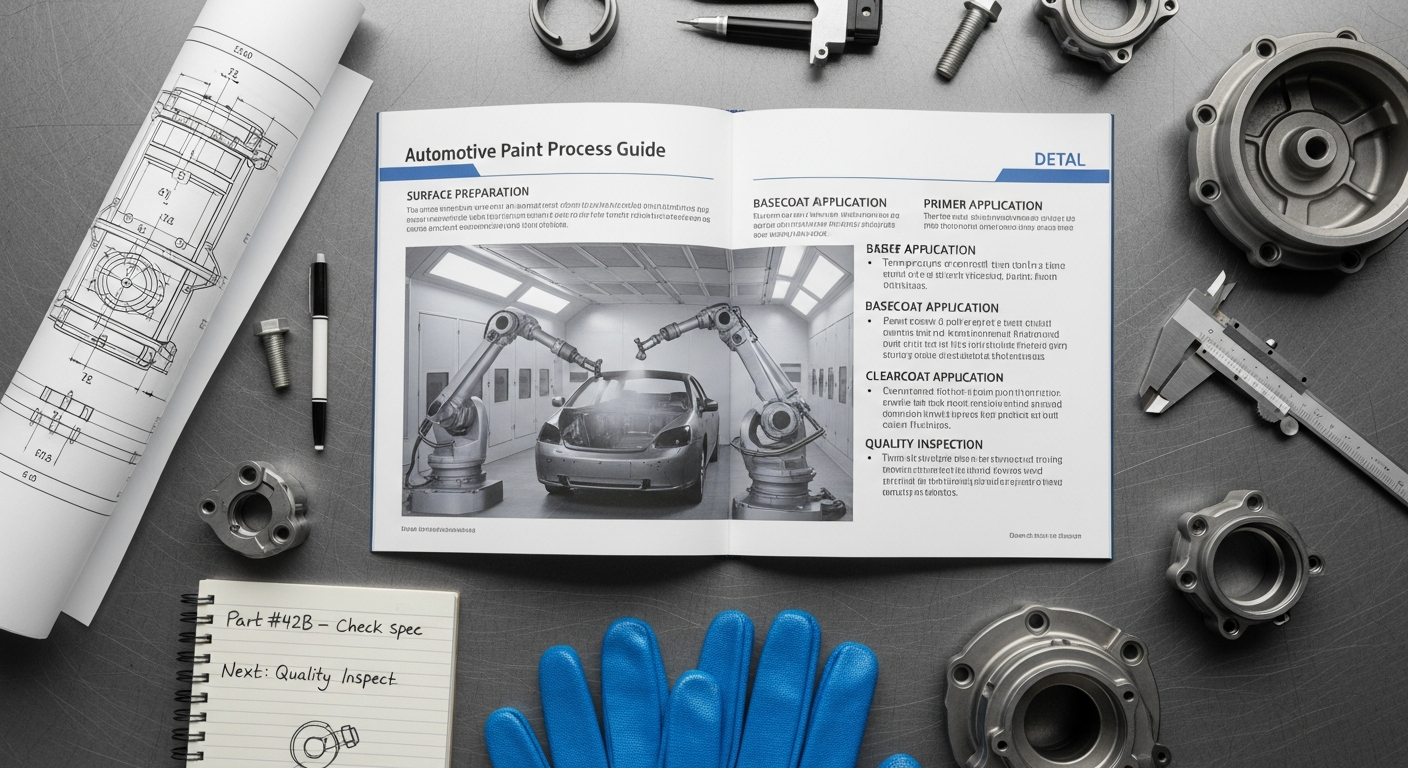
Before any color can be applied, the vehicle body-in-white (BIW) undergoes an exhaustive pre-treatment process, a foundational stage absolutely critical for the adhesion of subsequent paint layers and long-term corrosion resistance. This stage typically involves a series of immersion baths and sprays designed to clean the metal surface thoroughly, removing oils, greases, dust, and any other contaminants acquired during the stamping and welding processes. The cleanliness of the surface is paramount; even microscopic contaminants can compromise paint adhesion and lead to defects later on. The pre-treatment sequence usually includes degreasing, multiple rinsing stages, and surface conditioning.
Following cleaning, the BIW enters a phosphating bath. This chemical conversion coating creates a thin, crystalline layer on the metal surface. This phosphate layer serves two vital purposes: it enhances the adhesion of the subsequent E-coat layer and provides an initial barrier against corrosion. The uniform application of this layer is crucial, as it dictates the quality of the bond for all subsequent coatings. Precision control over chemical concentrations, temperature, and immersion times is maintained to ensure consistent quality across every vehicle body.
Once pre-treatment is complete, the vehicle body proceeds to the electrocoating (E-coat) stage, often referred to as the cathodic electrodeposition process. This is perhaps one of the most technologically sophisticated steps in the entire paint process. The BIW is immersed in a large tank filled with an electrically charged paint emulsion. An electric current is passed through the tank, causing the paint particles to be drawn to and deposited onto the vehicle body, which acts as a cathode. This process ensures an incredibly uniform coating, even in hard-to-reach cavities and crevices, providing comprehensive corrosion protection for the entire vehicle.
The E-coat layer is the primary defense against rust and is fundamental to the vehicle’s longevity. It forms a robust, chip-resistant barrier that adheres tenaciously to the phosphated metal. After deposition, the E-coated body is rinsed to remove any undeposited paint particles and then baked at high temperatures (typically around 160-200°C). This baking process cross-links the E-coat polymer, curing it into a hard, durable, and insoluble film. The consistency and integrity of this E-coat layer are continuously monitored using advanced sensors and quality control checks, as any imperfection here can have cascading negative effects on the entire paint system and the vehicle’s long-term durability. This rigorous approach in the initial stages underscores Mitsubishi Manufacturing’s unwavering commitment to building vehicles that last.
Building the Foundation: Primer Application and Its Importance
The primary function of the primer, often called the surfacer or filler primer, is to fill in any minor imperfections, such as microscopic pinholes or sanding marks, that might exist on the E-coat surface. Even with the advanced precision of E-coating, minute irregularities can occur. The primer acts as a leveling agent, creating a perfectly smooth and uniform substrate that is essential for achieving the high gloss and depth characteristic of a premium automotive finish. Without this smoothing effect, surface defects would be magnified by subsequent layers, detracting significantly from the vehicle’s aesthetic appeal.
Beyond its filling capabilities, the primer significantly enhances chip resistance. Modern automotive primers are formulated to be tough and flexible, absorbing impacts from road debris and preventing chips from propagating through to the E-coat or even the metal itself. This protective quality is vital for maintaining the vehicle’s appearance and preventing localized corrosion that could start from chip damage. Different types of primers may be used depending on the specific areas of the vehicle or desired properties, such as specialized primers for plastic parts or enhanced stone chip protection in vulnerable areas.
The primer is typically applied using robotic spray systems, which ensure a consistent and even thickness across the entire body. The application process is highly controlled, often involving multiple passes to build up the desired film thickness. After application, the primer is flash-off (allowing solvents to evaporate) and then baked in ovens, similar to the E-coat, to cure and harden the layer. Following curing, the primed body often undergoes a meticulous sanding process, either manually or using automated sanding robots, to further refine the surface smoothness. This sanding also creates a microscopic profile that improves the mechanical adhesion of the subsequent basecoat. Quality control checks at this stage are paramount, as any remaining imperfections will be visible in the final finish. Mitsubishi Manufacturing’s dedication to this meticulous preparatory work ensures that every vehicle receives a robust and flawless foundation, setting the stage for an exceptional final paint appearance.
Achieving Aesthetic Excellence: Basecoat and Clearcoat Application
With the foundation of E-coat and primer firmly established, the paint process moves into the stages that define the vehicle’s aesthetic identity: the application of the basecoat and clearcoat. These layers are responsible for the vehicle’s color, visual depth, gloss, and long-term protection against environmental degradation, demanding unparalleled precision and advanced technology in their application.
The Basecoat: Unleashing Color and Effect
The basecoat is the layer that provides the vehicle’s specific color. Modern automotive basecoats are incredibly sophisticated, available in a vast spectrum of hues and effects, including solid colors, metallics, and pearlescent finishes. Each type presents its own application challenges. Solid colors require uniform coverage to avoid mottling or streaks. Metallic and pearlescent paints, which contain tiny reflective flakes, demand even greater precision to ensure the flakes align correctly and distribute uniformly, preventing blotchiness or uneven sparkle. The angle and distance of the spray, as well as environmental conditions like temperature and humidity, are critical factors meticulously controlled to achieve the desired effect.
Basecoats are predominantly applied using highly advanced robotic spray systems. These robots are programmed with intricate paths to ensure consistent film thickness and uniform color distribution across all surfaces, including complex curves and recesses. The paint itself is often waterborne, significantly reducing volatile organic compound (VOC) emissions and aligning with stringent environmental regulations and Mitsubishi’s commitment to sustainable manufacturing practices. After application, a crucial “flash-off” period allows solvents or water to evaporate, preparing the surface for the clearcoat without disturbing the pigment orientation.
The Clearcoat: The Ultimate Protector and Gloss Enhancer
Following the basecoat, the vehicle receives its clearcoat layer. This transparent, high-gloss coating is arguably the most important layer for the vehicle’s long-term appearance and protection. It provides the deep, mirror-like finish that consumers expect, but its primary function is protective. The clearcoat acts as a robust barrier against environmental damage, including UV radiation from the sun, acid rain, bird droppings, tree sap, and minor abrasions. Without a durable clearcoat, the basecoat would quickly fade, oxidize, and degrade.
Modern clearcoats are typically two-component (2K) polyurethane systems, known for their excellent hardness, flexibility, and chemical resistance. Advanced formulations can also include ceramic nanoparticles for enhanced scratch resistance. Like the basecoat, clearcoat application relies heavily on robotic precision to achieve a uniform, defect-free finish. The thickness of the clearcoat is critical: too thin, and it won’t offer adequate protection; too thick, and it risks issues like sagging or poor curing. After application, the vehicle proceeds to the curing ovens, where the clearcoat undergoes a chemical cross-linking process at elevated temperatures, transforming it into a hard, durable, and highly protective film. This final aesthetic and protective layer is a hallmark of quality, reflecting the meticulous attention to detail at every stage of Mitsubishi Manufacturing’s paint process.
The Final Stages: Curing, Inspection, and Polishing
The application of the basecoat and clearcoat marks the culmination of the spraying processes, but the journey to a flawless finish is far from over. The subsequent stages of curing, rigorous inspection, and final polishing are equally critical in locking in the paint’s durability, enhancing its aesthetic appeal, and ensuring every vehicle meets Mitsubishi Manufacturing’s uncompromising quality standards.
Curing: Hardening the Finish
After the clearcoat application, the vehicle bodies are transported into large, precisely controlled baking ovens. This curing process is essential for polymerizing and cross-linking the paint layers, transforming the liquid coatings into a hard, durable, and chemically resistant film. The ovens maintain specific temperature profiles and durations, typically ranging from 120°C to 180°C for 20 to 45 minutes, depending on the paint system and vehicle type. Precise temperature control is crucial; insufficient curing can lead to a soft, easily damaged finish, while excessive heat can cause defects like blistering or discoloration. Some advanced paint systems may also utilize infrared (IR) or ultraviolet (UV) curing technologies, particularly for localized repairs or specific components, offering faster processing times and reduced energy consumption.
The curing process is not just about hardening the paint; it also contributes to the paint’s final gloss and mechanical properties. The heat facilitates the flow and leveling of the clearcoat, further smoothing out any microscopic surface irregularities. The robust interlocking of polymer chains during curing provides the paint with its characteristic hardness, chip resistance, and chemical resistance, all vital for the vehicle’s long-term performance and appearance.
Inspection: The Uncompromising Eye for Detail
Upon exiting the curing ovens and cooling, each vehicle undergoes an exhaustive inspection process. This stage is paramount for identifying and rectifying any paint defects before the vehicle proceeds to final assembly. Both automated and manual inspection methods are employed to ensure comprehensive coverage.
- Automated Inspection: Advanced vision systems, equipped with high-resolution cameras and sophisticated algorithms, scan the entire vehicle surface for anomalies such as dirt inclusions (nibs), sags, runs, orange peel texture, and other surface irregularities. These systems can detect defects invisible to the human eye, providing objective and consistent quality assessments.
- Manual Inspection: Skilled technicians, working in specially illuminated inspection booths (often with varying light sources to highlight different types of defects), meticulously scrutinize every panel. Their trained eyes and tactile senses can identify subtle imperfections that automated systems might miss, ensuring that the final aesthetic meets the highest standards.
Any identified defects are meticulously documented and categorized. Depending on the nature and severity of the defect, vehicles may be routed for minor touch-ups, spot repairs, or, in rare cases, partial or full re-painting. This rigorous quality control ensures that only vehicles with impeccable paint finishes move forward in the production line.
Polishing and Buffing: The Final Luster
For vehicles requiring minor cosmetic corrections identified during inspection, or simply to enhance the final gloss, a polishing and buffing stage may be performed. This involves using specialized abrasive compounds and rotary or orbital polishers to carefully remove very fine scratches, swirl marks, or slight texture variations. This step requires immense skill and precision to avoid damaging the clearcoat. The goal is to achieve a perfectly smooth, mirror-like finish, maximizing the paint’s depth and reflectivity. After polishing, the vehicle undergoes a final wash and often receives a protective sealant application, ready for subsequent assembly stages with a paint finish that epitomizes Mitsubishi Manufacturing’s commitment to excellence.
Optimizing Paint Shop Efficiency: Lean Manufacturing and Waste Reduction
In the pursuit of manufacturing excellence, the automotive paint shop stands as a complex arena where efficiency directly translates to cost savings, environmental responsibility, and ultimately, product quality. At Mitsubishi Manufacturing, we rigorously apply Lean Manufacturing Principles Explained to continuously optimize our paint processes, aiming to eliminate waste and maximize value for our customers. Lean principles, originating from the Toyota Production System, focus on identifying and systematically removing non-value-added activities, thereby streamlining operations and improving overall performance.
The automotive paint process, by its very nature, is susceptible to various forms of waste, which Lean methodologies categorize as “Muda.” These include defects, overproduction, waiting, non-utilized talent, transportation, inventory, motion, and over-processing. Implementing effective Manufacturing Waste Reduction Strategies in the paint shop is crucial for achieving world-class efficiency and sustainability.
Specific Waste Reduction Strategies in Automotive Painting:
- Defect Reduction (Quality Control): Defects like dirt inclusions, sags, or orange peel are costly as they require rework, consuming time, materials, and energy. Lean focuses on “building quality in” rather than inspecting it out. This involves:
- Enhanced air filtration and cleanroom technologies to minimize dirt.
- Precise robotic control and process parameters to prevent application errors.
- Real-time monitoring and advanced inspection systems to catch issues early.
- Root cause analysis (5 Whys) for recurring defects to implement permanent solutions.
- Material Waste (Over-processing and Inventory): Paint materials are expensive, and their disposal can be environmentally challenging.
- Optimized Spray Applications: Utilizing highly efficient spray guns and robotic programming that minimizes overspray and maximizes transfer efficiency. This directly reduces paint consumption per vehicle.
- Closed-Loop Paint Circulation Systems: These systems minimize paint waste by recycling unused paint and solvents, reducing both material cost and hazardous waste generation.
- Just-In-Time (JIT) Material Delivery: Reducing excess paint inventory prevents spoilage, obsolescence, and the need for extensive storage space.
- Energy Waste (Motion and Waiting): Paint shops are energy-intensive, particularly due to large ovens and ventilation systems.
- Optimized Oven Design: Investing in energy-efficient ovens and intelligent heating systems that adjust to production schedules.
- Automated Conveyor Systems: Streamlining vehicle movement between stages reduces idle time and the energy consumed by waiting processes.
- Robotic Process Optimization: Efficient robot programming minimizes unnecessary motion and speeds up application times, reducing cycle time and energy consumption per vehicle.
- Water Waste (Pre-Treatment): The pre-treatment stage consumes significant amounts of water.
- Recycling and Filtration Systems: Implementing advanced water filtration and recycling systems for rinse baths significantly reduces fresh water consumption.
- Chemical Optimization: Precisely dosing chemicals to avoid overuse and reduce wastewater treatment requirements.
- Non-Utilized Talent: Empowering employees to identify and solve problems is a cornerstone of Lean.
- Training and Skill Development: Equipping technicians with the skills to perform maintenance, quality checks, and continuous improvement activities.
- Kaizen Events: Regularly involving teams in continuous improvement workshops to identify bottlenecks and implement innovative solutions in the paint process.
By diligently applying these Lean Manufacturing principles and waste reduction strategies, Mitsubishi Manufacturing continuously strives for paint shop operations that are not only highly productive but also environmentally responsible and economically sustainable, ensuring our vehicles are produced with the utmost efficiency and quality.
Innovations and Future Outlook in Automotive Painting for 2026
The automotive paint industry is constantly evolving, driven by demands for greater efficiency, enhanced durability, superior aesthetics, and stricter environmental compliance. Looking ahead to 2026 and beyond, we anticipate significant advancements that will redefine the automotive paint process, incorporating smart technologies, sustainable materials, and advanced simulation techniques. Mitsubishi Manufacturing is at the forefront of these innovations, continually investing in research and development to integrate cutting-edge solutions into our production lines.
Smart Paint Shops and Digitalization:
The concept of the “smart factory” is rapidly extending to paint shops. By 2026, we expect to see even greater integration of the Internet of Things (IoT) and Artificial Intelligence (AI) throughout the paint process. Sensors embedded in spray booths, ovens, and conveyor systems will collect vast amounts of real-time data on temperature, humidity, paint viscosity, and robot performance. AI algorithms will analyze this data to predict potential defects, optimize process parameters dynamically, and schedule maintenance proactively, minimizing downtime and improving overall quality consistency. Predictive analytics will allow for fine-tuning of robotic spray patterns based on individual vehicle body variations, ensuring unparalleled precision.
Sustainable Materials and Processes:
Environmental responsibility remains a core driver of innovation. The shift towards waterborne paints will continue, with ongoing development to match or exceed the performance of traditional solvent-based systems in terms of durability and finish. We also foresee the widespread adoption of lower-VOC (Volatile Organic Compound) and ultra-low-VOC clearcoats and primers. Research into bio-based and recycled content paint materials will intensify, reducing the reliance on petrochemical derivatives. Energy efficiency in curing ovens will improve further through advanced insulation, heat recovery systems, and the increased use of faster, more targeted curing technologies like UV and IR, reducing the carbon footprint of the paint shop.
Advanced Application Technologies:
Robotic paint application will become even more sophisticated. Next-generation robots will feature enhanced dexterity, real-time sensing capabilities, and adaptive spraying technologies that can adjust to complex geometries and varying paint properties on the fly. Automated Guided Vehicles (AGVs) will play a larger role in transporting vehicle bodies between paint stages, replacing traditional conveyor systems in some areas to offer greater flexibility and efficiency in production flow. The development of electrostatic spray technology will continue to improve transfer efficiency, minimizing overspray and reducing material waste even further.
Simulation and Material Science:
The role of advanced simulation techniques, such as Finite Element Analysis Explained, will become increasingly critical in optimizing paint processes and developing new paint materials. FEA allows engineers to virtually test and analyze the behavior of paint layers under various conditions without the need for physical prototypes. For example:
- Adhesion and Delamination: FEA can simulate the stress distribution within paint layers during curing and under mechanical stress, predicting potential areas of delamination or poor adhesion. This helps in optimizing material compositions and application parameters.
- Thermal Stress During Curing: The drastic temperature changes during baking can induce thermal stresses in the paint layers and the underlying substrate. FEA helps engineers understand these stresses, preventing issues like cracking, warping, or premature aging of the paint.
- Impact and Chip Resistance: By simulating impact scenarios, FEA can predict how different paint formulations and layer thicknesses will respond to stone chips or minor collisions, guiding the development of more robust and durable coatings.
- Material Flow and Coverage: In the design phase, FEA can model paint flow characteristics during spray application, helping to optimize spray gun angles, distances, and robot paths to achieve uniform coverage and film thickness, minimizing defects like sags or thin spots.
These simulation capabilities accelerate the development cycle for new paint systems and allow for the virtual optimization of existing processes, leading to higher quality and more efficient manufacturing. Looking forward to 2026, Mitsubishi Manufacturing is committed to leveraging these innovations to produce vehicles that not only meet but exceed the evolving expectations of our global customers in terms of aesthetics, durability, and environmental performance.
Frequently Asked Questions
Recommended Resources
Related reading: Prenatal Care Importance And Access (Protect Families Protect Choices).
Related reading: How To Drink More Water Daily (Diaal News).