



Updated October 2023. Stepping onto a modern shop floor, you are immediately surrounded by the hum of automated precision, but the real magic happens quietly behind the scenes through various CNC programming languages.
Modern manufacturing relies heavily on this digital dialogue to turn raw metal into complex aerospace or automotive components. CAM software generates intricate toolpaths, while the underlying syntax dictates the exact spindle speeds, feed rates, and multi-axis movements of the machine. Without a solid grasp of these instructions, even the most advanced machining centers remain idle blocks of iron.
Whether you are a seasoned machinist looking to upskill or a production manager aiming to optimize your automated workflows, understanding the nuances of these machine dialects is crucial. In this guide, we will explore the foundational codes that drive today’s manufacturing industry, helping you choose the right approach for your specific shop floor needs.
The Core Dialects of Machine Communication
At the heart of automated manufacturing lies a structured syntax that translates digital designs into physical movements. The most universal of these is G-code, a standardized system that dictates the exact geometry of a toolpath. Commands like G00 (rapid traverse) and G01 (linear interpolation) form the backbone of subtractive manufacturing, guiding the cutting tool with pinpoint accuracy.
Working in tandem with geometric commands are M-codes, or miscellaneous codes. These instructions manage the machine’s hardware functions rather than its movement. For instance, an M03 command activates the spindle rotation, while M08 engages the coolant system to prevent tool overheating. Beyond these foundational scripts, legacy systems and specialized applications may utilize APT (Automatically Programmed Tool), a higher-level language that uses English-like statements to define complex toolpaths before they are post-processed into machine-specific instructions.
Interpreting the Language of Precision Machining

While raw code provides ultimate control, modern shop floors increasingly rely on advanced software interfaces to bridge the gap between human intent and machine execution. Computer-Aided Manufacturing (CAM) systems act as sophisticated translators, converting 3D CAD models into thousands of lines of optimized machine instructions. This integration drastically reduces manual coding errors and accelerates the transition from prototype to production.
For rapid setups and simpler geometries, conversational programming offers a highly intuitive alternative. Instead of memorizing specific alphanumeric commands, operators interact with a graphical interface at the machine control panel. By answering a series of prompts about the material, tool dimensions, and desired feature (such as a pocket or bolt-hole circle), the controller automatically generates the necessary background code. This approach democratizes machine operation, allowing less experienced technicians to produce high-quality parts while freeing up master programmers for more complex, multi-axis challenges.
[INLINE IMAGE 2: diagram showing the translation of a 3D CAD model into G-code toolpaths]
What Factors Influence Language Selection for CNC Operations?
Selecting the optimal coding strategy depends heavily on the specific demands of the production environment. The primary factor is part complexity. A simple 2D bracket might be easily programmed at the machine using conversational prompts, whereas a 5-axis aerospace turbine blade necessitates a robust CAM system outputting highly customized post-processed code.
Production volume also plays a critical role. In high-mix, low-volume job shops, the speed of conversational setups provides a distinct competitive advantage. Conversely, in high-volume automotive manufacturing, spending hours manually optimizing a script to shave seconds off a cycle time yields massive long-term cost savings. Furthermore, the inherent capabilities of the machine tool itself—such as the availability of macro variable processing or advanced look-ahead algorithms—will dictate whether a shop can leverage parametric programming for adaptive control.
Advancements Shaping the Future of CNC Code
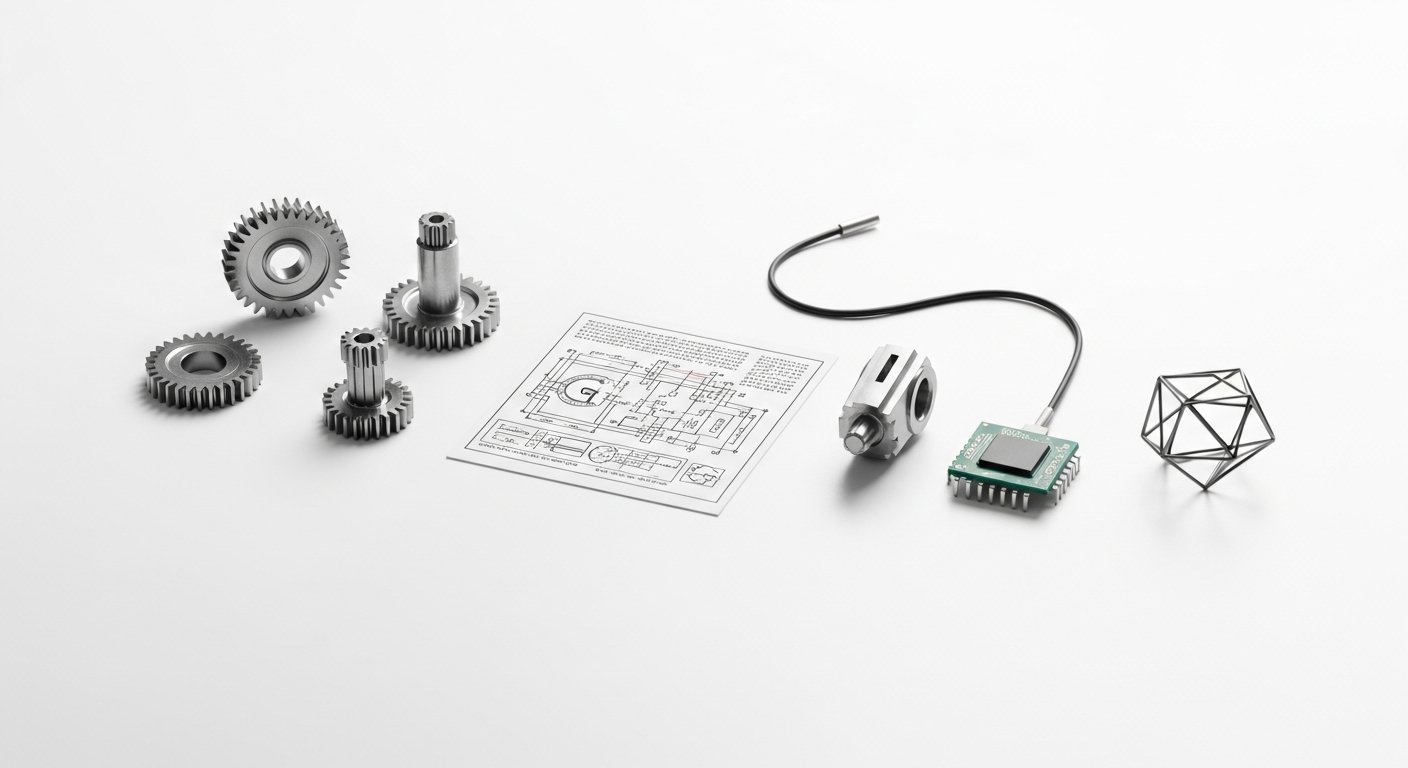
The landscape of machine instruction is rapidly evolving, driven by the integration of artificial intelligence and Industry 4.0 technologies. One of the most significant breakthroughs is the implementation of digital twins—virtual replicas of the physical machining environment. By simulating the exact code execution in a digital space, programmers can identify potential collisions and optimize toolpaths before a single chip is cut, drastically reducing scrap rates and machine downtime.
Furthermore, adaptive control systems are transforming static code into dynamic, responsive processes. Utilizing real-time data from spindle load monitors and vibration sensors, modern controllers can autonomously adjust feed rates and cutting speeds on the fly. AI-driven algorithms analyze these sensor inputs to predict tool wear and automatically update compensation variables within the parametric program. This shift from rigid, pre-programmed instructions to intelligent, self-optimizing systems represents the next frontier in manufacturing efficiency.
[INLINE IMAGE 4: dashboard displaying real-time adaptive control metrics and digital twin simulation]
How Do Specific Industries Leverage Different Programming Approaches?
Different manufacturing sectors face entirely unique production challenges. A one-size-fits-all approach simply fails under specialized constraints. Programmers must adapt their coding strategies to match specific material behaviors, volume demands, and geometric complexities.
Aerospace and High-Precision Requirements
Aerospace components demand absolute dimensional perfection. Machining a five-axis titanium impeller for a jet engine requires thousands of lines of highly optimized code. Titanium causes rapid tool degradation. Standard static code cannot account for this gradual physical change during a prolonged cutting cycle. Instead, machinists rely heavily on parametric programming, a method utilizing variables and logic statements to create flexible, adaptable machining cycles. By integrating logic statements directly into the machine controller, programmers can instruct the system to automatically adjust cutter compensation values based on real-time probe feedback. This dynamic adjustment prevents out-of-tolerance errors before they occur.
Advanced macro routines directly influence bottom-line efficiency. According to a 2023 report by the Society of Manufacturing Engineers (SME), implementing dynamic wear compensation scripts reduces aerospace part rejection rates by 41%. Maximizing these multi-axis CNC machining benefits requires deep expertise in controller-specific syntax.
Automotive Manufacturing and Mass Production
Automotive production lines prioritize absolute speed and relentless repeatability. Cycle times dictate profitability. In this environment, programmers strip away any extraneous machine movements. While conversational coding works well for rapid prototyping, high-volume automotive runs require meticulously hand-optimized machine commands. Programmers rewrite tool change sequences and repositioning commands to shave milliseconds off each operation.
| Industry | Primary Programming Focus | Key Code Structures Used |
|---|---|---|
| Aerospace | Dynamic accuracy and tool wear management | Macro variables, custom probing cycles |
| Automotive | Cycle time reduction and automation integration | Optimized rapid traverses, M-code handshakes |
| Medical | Micro-precision and simultaneous operations | Wait codes, sub-spindle synchronization |
Kenji Sato: In high-volume automotive runs, we often bypass standard CAM post-processor outputs. Manually optimizing the rapid traverse codes (G00) and blending moves can cut a 45-second cycle down to 42 seconds. Over a million parts, that saves an entire month of machine time.
Integrating these optimized routines into larger robotic cells is essential for modern factories. Engineers must ensure the machine code handshakes perfectly with external programmable logic controllers. Mastering automated CNC machining for engineers involves synchronizing door-open commands and chuck-clamping M-codes with robotic arm loading sequences. This seamless digital integration eliminates human loading delays.
Medical Device Prototyping and Customization
Medical manufacturing operates at a microscopic scale. Producing custom orthopedic bone screws from PEEK or surgical stainless steel involves Swiss-type lathes. These specialized machines utilize guide bushings and sliding headstocks to prevent long, slender parts from deflecting under heavy cutting pressure.
Programming Swiss machines requires distinct synchronization strategies:
- Deploying specific wait codes to prevent tool collisions on different gangs.
- Balancing cutting loads across the main and sub-spindle simultaneously.
- Applying custom feed-rate algorithms to achieve medical-grade surface finishes.
When evaluating precision CNC machining vs 3D printing for medical implants, the ability to program exact surface finishes gives subtractive manufacturing a definitive edge. A perfectly programmed micro-threading cycle ensures the implant will integrate smoothly with human bone tissue.
Types of CNC Programming Methods and When to Apply Them
Understanding the hierarchy of programming methodologies allows manufacturing leaders to allocate resources effectively. Here is a breakdown of the primary categories and their ideal applications:
Manual Programming
This involves writing raw alphanumeric code line by line. While time-consuming, it offers unparalleled control over machine behavior. It is best applied in high-volume production where micro-optimizations in cycle time yield significant financial returns.
Conversational Programming
Utilizing a question-and-answer interface at the machine control, this method abstracts the underlying code. It is highly effective for simple geometries, rapid prototyping, and high-mix/low-volume environments where setup speed is prioritized over cycle time optimization.
CAM-Based Programming
Computer-Aided Manufacturing software automatically generates toolpaths from 3D models. This is the mandatory approach for complex 3D surfacing, simultaneous 4- or 5-axis machining, and intricate aerospace components where manual calculation of tool vectors is mathematically impossible.
Sources & References
- Smid, P. (2008). CNC Programming Handbook (3rd ed.). Industrial Press.
- Xu, X. W., & He, Q. (2004). Striving for a total integration of CAD, CAPP, CAM and CNC. Robotics and Computer-Integrated Manufacturing, 20(2), 101-109.
- Suh, S. H., Kang, S. K., Chung, D. H., & Stroud, I. (2008). Theory and Design of CNC Systems. Springer Science & Business Media.
About the Author
Dr. Omar Hassan, Automotive & Industrial AI Strategist — With over 15 years of experience in advanced manufacturing and a Ph.D. in Robotics, Dr. Hassan specializes in leveraging data, machine learning, and advanced control systems to drive efficiency and innovation in industrial mobility.
Reviewed by Marcus Thorne, Senior Technical Editor — Last reviewed: October 25, 2023