


html
The global transition towards sustainable transportation is accelerating at an unprecedented pace, with electric vehicles (EVs) at the forefront of this transformative shift. Central to the performance, range, and cost-effectiveness of every EV is its battery. The manufacturing of these complex power sources represents one of the most sophisticated and critical industrial processes of our time, demanding precision, efficiency, and relentless innovation. For Mitsubishi Manufacturing, understanding and contributing to the advancements in electric vehicle battery manufacturing is not just an industry imperative but a commitment to a greener future. This comprehensive exploration delves into the intricate stages, cutting-edge technologies, and strategic principles that define modern EV battery production, highlighting how manufacturers are rising to meet the immense global demand while striving for unparalleled quality and sustainability.
The Foundation of Electric Mobility: Understanding EV Battery Technology
At its core, an electric vehicle battery is a sophisticated energy storage system, typically composed of thousands of individual cells integrated into modules and then into a complete pack. The dominant chemistry in today’s EVs is lithium-ion, favored for its high energy density, power output, and relatively long cycle life. However, the exact composition—whether NMC (nickel-manganese-cobalt), NCA (nickel-cobalt-aluminum), or LFP (lithium iron phosphate)—can vary significantly, influencing performance characteristics such as range, charging speed, and cost. The choice of chemistry and the subsequent design and manufacturing processes are paramount in determining the overall efficiency, safety, and longevity of the EV. As global demand for EVs skyrockets, manufacturers face the immense challenge of scaling production while simultaneously enhancing battery performance and reducing costs. This requires a deep understanding of material science, advanced engineering, and highly optimized manufacturing workflows, making electric vehicle battery manufacturing one of the most dynamic and critical sectors in modern industry.
The Evolving Landscape of Battery Demand
The sheer scale of demand for EV batteries is reshaping industrial landscapes worldwide. Projections indicate a multi-fold increase in battery production capacity needed by 2026 and beyond to meet the anticipated growth in EV sales. This surge is driving the construction of “gigafactories” – massive, highly automated facilities dedicated to battery cell and pack production. These facilities represent enormous investments in capital, technology, and human resources. The competitive landscape is fierce, with established automotive giants, specialized battery manufacturers, and new entrants all vying for market share. Success in this environment hinges not only on technological superiority but also on robust supply chain management, operational excellence, and a strong commitment to sustainability. The entire ecosystem, from raw material extraction to recycling, is under intense scrutiny to ensure ethical practices and minimal environmental impact, underscoring the comprehensive nature of challenges and opportunities in electric vehicle battery manufacturing.
The Intricate Stages of EV Battery Manufacturing

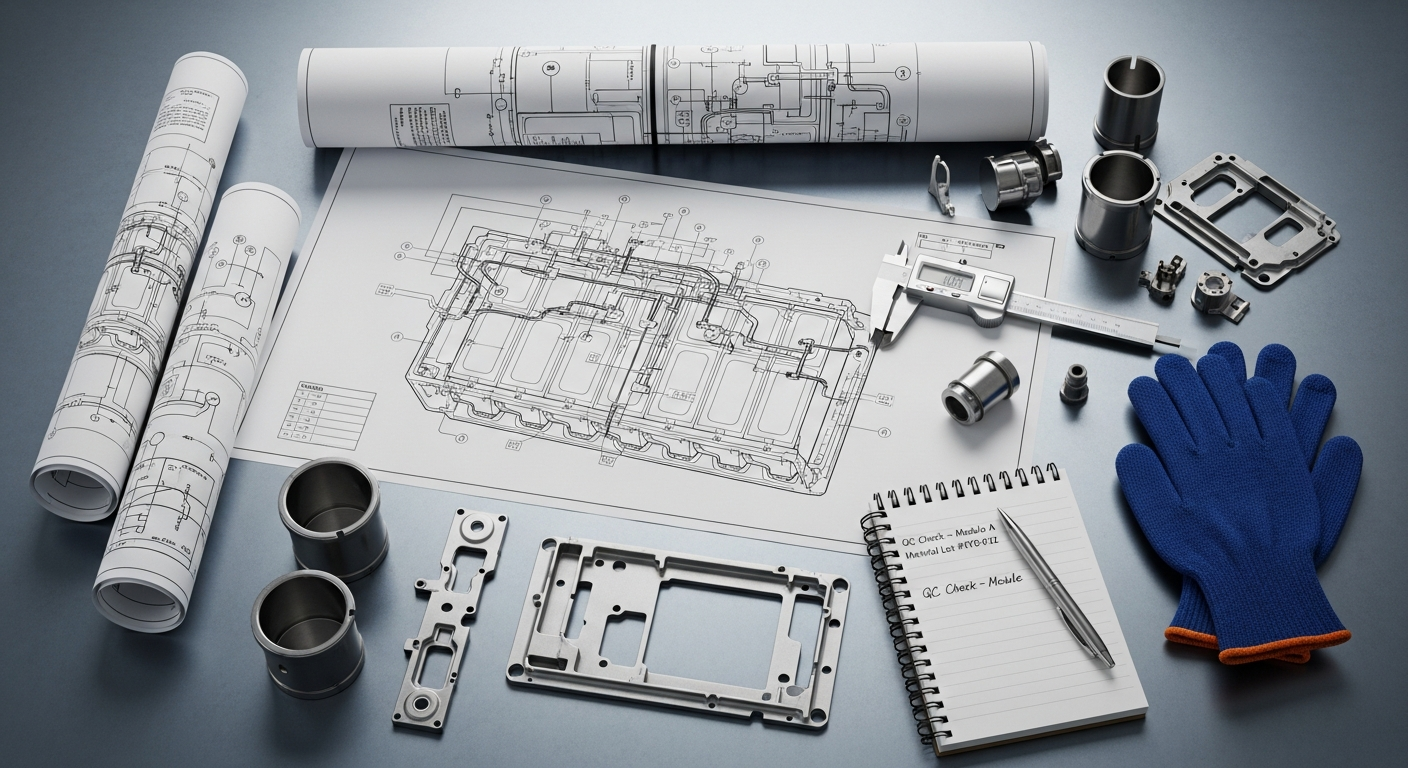
The journey of an EV battery from raw materials to a fully functional power pack is a complex, multi-stage process that demands extreme precision and stringent quality control at every step. Each stage is critical, and any deviation can impact the battery’s performance, safety, and lifespan.
Material Sourcing and Preparation
The genesis of an EV battery lies in its raw materials. Key components include lithium, cobalt, nickel, manganese, graphite, and various binders and electrolytes. Ethical and sustainable sourcing of these materials is a growing concern, with manufacturers increasingly focusing on supply chain transparency and responsible mining practices. Once sourced, these materials undergo rigorous purification and preparation. For example, cathode and anode active materials are typically milled to precise particle sizes and mixed with conductive additives and binders to form slurries. This mixing process is critical; inconsistencies here can lead to uneven coating and poor cell performance. The uniformity and purity of these initial mixtures directly influence the electrochemical reactions within the battery cell, making this foundational stage paramount for the overall quality of electric vehicle battery manufacturing.
Cell Manufacturing: From Electrodes to Encapsulation
Cell manufacturing is the heart of electric vehicle battery manufacturing, encompassing several highly specialized sub-processes:
- Electrode Production: The prepared cathode and anode slurries are precisely coated onto thin metal foils (aluminum for cathode, copper for anode). This coating must be incredibly uniform in thickness and density to ensure optimal ion flow and prevent hot spots. After coating, the electrodes are dried in controlled environments to remove solvents, then calendered (pressed) to achieve the desired thickness and porosity. Slitting machines then cut these large electrode sheets into precise widths and lengths.
- Cell Assembly: This is where the individual battery cells begin to take shape. For prismatic or pouch cells, the electrodes, along with a separator (a thin, porous membrane that prevents short-circuiting while allowing ion passage), are stacked or wound together. For cylindrical cells, the electrode and separator layers are wound into a jelly roll. This assembly takes place in ultra-dry rooms, as even minute amounts of moisture can severely degrade battery performance and safety.
- Electrolyte Filling and Formation: Once assembled, the cell is filled with an electrolyte solution, which acts as the medium for lithium-ion transport between the electrodes. This process must be done under vacuum to ensure complete saturation and remove any air bubbles. Following electrolyte filling, the cells undergo a “formation” cycle, where they are charged and discharged slowly for the first time. This forms the Solid Electrolyte Interphase (SEI) layer on the electrodes, a critical film that stabilizes cell performance and extends its lifespan. The precision required at this stage is immense, with sophisticated equipment monitoring voltage, current, and temperature to ensure proper SEI formation.
- Degassing and Sealing: During formation, gases can be produced. These gases are removed through a degassing process, and then the cells are hermetically sealed. This sealing is crucial to prevent moisture ingress or electrolyte leakage, which would compromise the cell’s integrity and safety.
Module and Pack Assembly
Individual battery cells, once formed and tested, are rarely used in isolation in EVs. Instead, they are grouped into modules, and multiple modules are then assembled into a complete battery pack.
- Module Assembly: Cells are connected in series and/or parallel within a module to achieve desired voltage and capacity. Thermal management components, such as cooling plates or channels, are integrated at this stage, along with wiring for the Battery Management System (BMS). The mechanical integrity and thermal management within modules are vital for overall pack performance and safety. Advanced bonding techniques are used to ensure robust electrical connections and structural stability.
- Pack Assembly: Modules are then integrated into a rigid housing that forms the complete battery pack. This housing provides structural protection, further thermal management, and shields the components from environmental factors. The BMS, which monitors cell voltage, temperature, and current, and manages charging/discharging, is fully integrated at the pack level. The final battery pack is a highly engineered system, often tailored to the specific vehicle platform, requiring significant expertise in mechanical, electrical, and thermal engineering during the electric vehicle battery manufacturing process.
Driving Innovation: Technologies Shaping EV Battery Manufacturing
The relentless pursuit of higher energy density, faster charging, improved safety, and reduced costs in EV batteries is fueled by continuous technological innovation across the manufacturing spectrum. These advancements are not just incremental improvements but often represent paradigm shifts in how batteries are conceived, designed, and produced.
Automation, Robotics, and Artificial Intelligence
Gigafactories are epitomes of advanced automation. High-speed robotics handle delicate components, performing tasks like electrode stacking, cell winding, and module assembly with unparalleled precision and repeatability. Automated guided vehicles (AGVs) transport materials across vast production floors, optimizing logistics and reducing human intervention in hazardous or sensitive areas. Artificial intelligence (AI) and machine learning (ML) are increasingly integrated into the manufacturing process for predictive maintenance, quality control, and process optimization. AI algorithms can analyze vast datasets from production lines to identify anomalies, predict equipment failures before they occur, and fine-tune process parameters in real-time, significantly improving yield and reducing downtime. The application of AI in visual inspection systems, for instance, can detect minute defects on electrodes or separators that might be missed by human eyes, ensuring the highest standards of quality in electric vehicle battery manufacturing.
Advanced Materials Science and Engineering
Innovation in EV battery manufacturing is inextricably linked to breakthroughs in materials science. Researchers are constantly exploring new cathode and anode materials that offer higher energy density, better power delivery, and enhanced safety. Silicon-anode batteries, solid-state electrolytes, and new high-nickel cathode chemistries are examples of ongoing research aiming to push the boundaries of current lithium-ion technology. The development of advanced separators, binders, and electrolytes also plays a crucial role in improving battery performance and longevity. These material innovations often require new manufacturing techniques and tighter process controls to successfully translate from laboratory scale to mass production, posing fascinating challenges for electric vehicle battery manufacturing.
Digital Twins and Simulation: Integrating Finite Element Analysis Explained
The concept of a “digital twin” – a virtual replica of a physical product or process – is revolutionizing electric vehicle battery manufacturing. Digital twins allow manufacturers to simulate entire production lines, test new designs, and optimize processes in a virtual environment before committing to costly physical changes. A critical component of this simulation capability is Finite Element Analysis (FEA) explained. FEA is a computational method used to predict how a product reacts to real-world forces, heat, vibration, and other physical effects. In battery manufacturing, FEA is vital for:
- Structural Integrity: Simulating the mechanical stress on battery cells, modules, and packs during vehicle operation, collisions, or vibration, ensuring robust design.
- Thermal Management: Analyzing heat distribution within cells and packs, optimizing cooling system designs to prevent overheating and thermal runaway, which is critical for safety and longevity.
- Electrochemical Performance: Modeling ion transport and current distribution within cells to optimize electrode design and prevent localized degradation.
- Manufacturing Process Optimization: Simulating processes like calendering or welding to identify potential issues and optimize parameters for consistent quality and reduced material waste.
By leveraging FEA, manufacturers can accelerate design cycles, reduce the need for expensive physical prototypes, and enhance the safety and reliability of battery systems. This predictive capability is indispensable for de-risking new product introductions and optimizing complex manufacturing workflows, making it a cornerstone of advanced electric vehicle battery manufacturing.
Optimizing for Excellence: Efficiency, Quality, and Waste Reduction
In the highly competitive and capital-intensive world of electric vehicle battery manufacturing, operational excellence is not just an advantage; it’s a necessity. Achieving peak efficiency, impeccable quality, and minimal waste directly impacts profitability, market share, and environmental footprint.
Implementing Lean Manufacturing Principles Explained
Many leading battery manufacturers have embraced Lean Manufacturing Principles explained as their operational backbone. Lean focuses on maximizing customer value while minimizing waste. For electric vehicle battery manufacturing, this translates into:
- Value Stream Mapping: Identifying and analyzing every step in the production process to distinguish value-added activities from non-value-added waste.
- Just-In-Time (JIT) Production: Producing only what is needed, when it is needed, in the amount needed, to reduce inventory holding costs and prevent obsolescence of rapidly evolving battery chemistries.
- Poka-Yoke (Mistake-Proofing): Implementing mechanisms to prevent defects from occurring or to immediately detect them if they do, such as automated visual inspection systems on coating lines or torque sensors on assembly robots.
- Continuous Improvement (Kaizen): Fostering a culture where every employee is empowered to identify and implement small, incremental improvements to processes, leading to significant cumulative gains in efficiency and quality.
- Total Productive Maintenance (TPM): Maximizing equipment effectiveness through a comprehensive system of planned maintenance, autonomous maintenance, and continuous improvement, ensuring high uptime in critical dry rooms and coating machines.
By rigorously applying these Lean principles, manufacturers can streamline workflows, reduce lead times, and significantly improve the overall cost-effectiveness and quality of their battery products.
Advanced Quality Control and Metrology
Given the critical role of batteries in EV performance and safety, quality control in electric vehicle battery manufacturing is exceptionally rigorous. This involves a multi-faceted approach:
- In-Line Inspection: Real-time monitoring of process parameters (e.g., coating thickness, drying temperature, electrolyte fill volume) using sensors and automated vision systems.
- Non-Destructive Testing (NDT): Techniques like X-ray inspection, ultrasonic testing, and computed tomography (CT) scans are used to detect internal defects, such as voids, cracks, or misalignment within cells and modules, without damaging them.
- Statistical Process Control (SPC): Using statistical methods to monitor and control a process to ensure that it operates at its full potential. This helps in early detection of process drifts and prevents the production of out-of-spec products.
- End-of-Line Testing: Comprehensive performance testing of individual cells, modules, and complete packs, including capacity testing, internal resistance measurement, self-discharge rates, and safety tests (e.g., overcharge, short circuit).
The sheer volume of data generated by these quality control measures is immense, requiring advanced data analytics and AI to derive actionable insights and maintain the highest standards in electric vehicle battery manufacturing.
Manufacturing Waste Reduction Strategies
Reducing waste is not only an environmental imperative but also a significant economic driver in battery manufacturing. Manufacturing Waste Reduction Strategies are integral to the Lean approach and target various forms of waste:
- Material Waste: Optimizing electrode coating processes to minimize scrap material, implementing precise slitting techniques, and recovering valuable materials from rejected components. For example, dry electrode manufacturing, an emerging technology, aims to eliminate the solvent drying step, significantly reducing energy consumption and material waste.
- Energy Waste: Designing energy-efficient dry rooms (which consume vast amounts of energy to maintain low humidity), optimizing oven temperatures, and utilizing renewable energy sources for factory operations.
- Time Waste: Streamlining material flow, reducing waiting times between process steps, and minimizing equipment downtime through predictive maintenance.
- Defect Waste: Implementing robust quality control at every stage to prevent defects from propagating, thereby avoiding the costly rework or scrapping of entire cells or modules.
- Water Waste: Implementing closed-loop water systems and advanced filtration techniques, especially in areas like slurry preparation and cooling.
Effective waste reduction strategies not only lower operational costs but also enhance the sustainability profile of electric vehicle battery manufacturing, aligning with broader corporate responsibility goals.
Sustainability and the Circular Economy in Battery Production
As the volume of EV battery production scales, so too does the scrutiny on its environmental footprint. A truly sustainable future for electric mobility requires a robust circular economy approach to battery manufacturing, encompassing everything from responsible sourcing to end-of-life management.
Green Energy Integration and Environmental Footprint Reduction
Battery manufacturing, particularly the energy-intensive processes of material preparation and cell formation, can have a significant carbon footprint if powered by fossil fuels. Manufacturers are increasingly committing to powering their gigafactories with renewable energy sources, such as solar and wind power. This commitment extends to optimizing energy consumption within the factory itself, through highly efficient HVAC systems for dry rooms, waste heat recovery, and smart energy management systems. Reducing water usage and minimizing air emissions are also critical environmental considerations. The goal is to produce “green batteries” with the lowest possible lifecycle carbon footprint, positioning electric vehicle battery manufacturing as a leader in industrial sustainability.
Battery Recycling and Reuse: Closing the Loop
The long-term sustainability of the EV revolution hinges on effective battery recycling and reuse programs. As batteries reach their end of life in vehicles (typically after 8-10 years), they still retain significant capacity, often 70-80%. These batteries can be given a “second life” in stationary energy storage applications, such as grid stabilization or backup power for homes and businesses. This “second life” extends the economic and environmental value of the battery before it undergoes full recycling.
When batteries can no longer serve any useful purpose, they enter the recycling stream. Advanced recycling technologies aim to recover valuable materials like lithium, cobalt, nickel, and copper with high efficiency and purity. Pyrometallurgical processes involve smelting batteries to recover metals, while hydrometallurgical processes use chemical solutions to dissolve and extract specific elements. The recovered materials can then be fed back into the manufacturing process, reducing the reliance on virgin raw materials and mitigating the environmental impact of mining. This closed-loop approach is essential for establishing a truly circular economy for electric vehicle battery manufacturing, ensuring that the growth of EVs does not create a new waste crisis.
The Future Horizon of EV Battery Manufacturing
The EV battery landscape is one of constant evolution, with researchers and manufacturers continuously pushing the boundaries of what’s possible. The next decade promises even more transformative changes in chemistry, production methods, and global supply chain dynamics.
Next-Generation Battery Chemistries and Manufacturing
While lithium-ion batteries dominate today, the pursuit of next-generation chemistries is intense. Solid-state batteries, which replace liquid electrolytes with solid ones, promise higher energy density, faster charging, and significantly improved safety by eliminating flammable liquids. However, their mass production still faces considerable technical challenges related to interface resistance and manufacturing scalability. Lithium-sulfur, lithium-air, and sodium-ion batteries are also under active development, each offering unique advantages and challenges. The emergence of these new chemistries will necessitate entirely new electric vehicle battery manufacturing processes, requiring significant R&D investment and a flexible, adaptable manufacturing infrastructure.
Global Expansion and Supply Chain Resilience
The geographical footprint of electric vehicle battery manufacturing is expanding rapidly, moving beyond traditional Asian hubs to North America and Europe. This decentralization is driven by geopolitical considerations, the desire to localize supply chains, and government incentives to build domestic manufacturing capabilities. By 2026, numerous new gigafactories are expected to be operational globally, aiming to reduce dependence on single regions for critical components and materials. However, this expansion also brings challenges related to securing skilled labor, establishing new infrastructure, and ensuring consistent quality across diverse manufacturing sites. Building resilient and transparent supply chains, from raw material extraction to final assembly, will remain a top priority to navigate potential disruptions and ensure the steady growth of electric vehicle battery manufacturing.
Mitsubishi’s Commitment to Manufacturing Excellence
At Mitsubishi Manufacturing, our expertise in precision engineering, advanced automation, and robust quality control positions us uniquely to support the evolution of electric vehicle battery manufacturing. We are committed to developing and deploying solutions that enhance efficiency, improve sustainability, and ensure the highest standards of safety and performance in battery production. From providing critical machinery for material processing and assembly to integrating advanced analytics for process optimization and leveraging our deep understanding of Lean principles, Mitsubishi is dedicated to powering the future of electric mobility through manufacturing excellence. Our focus on innovation, coupled with a steadfast commitment to sustainability, ensures we remain at the forefront of this vital industry, driving progress towards a cleaner, more electrified world.
Frequently Asked Questions (FAQ) about EV Battery Manufacturing
What are the primary types of EV batteries manufactured today?
The primary types of EV batteries manufactured today are lithium-ion batteries, which include several chemistries such as NMC (nickel-manganese-cobalt), NCA (nickel-cobalt-aluminum), and LFP (lithium iron phosphate). Each chemistry offers different balances of energy density, power, cost, and safety, catering to various vehicle segments and manufacturer priorities.
How long does the manufacturing process for an EV battery typically take?
The entire manufacturing process for an EV battery, from raw material preparation to a fully assembled pack, can take several weeks. This includes the intricate steps of electrode production, cell assembly in dry rooms, electrolyte filling, formation cycling (which can be several days itself), and then subsequent module and pack assembly. The total time is influenced by the specific chemistry, cell design, and manufacturing scale.
What role does Lean Manufacturing play in EV battery production?
Lean Manufacturing Principles are crucial in EV battery production for optimizing efficiency, reducing waste, and improving quality. They help streamline complex processes, minimize inventory, prevent defects through mistake-proofing (Poka-Yoke), and foster continuous improvement (Kaizen) across all stages, from material handling to final assembly.
Why is Finite Element Analysis (FEA) important in battery design and manufacturing?
Finite Element Analysis (FEA) is vital for predicting how battery components (cells, modules, packs) will perform under various physical conditions like mechanical stress, vibration, and thermal loads. It helps optimize structural integrity, design efficient cooling systems to prevent thermal runaway, and simulate manufacturing processes to improve quality and reduce defects without costly physical prototyping.
What are the biggest challenges facing electric vehicle battery manufacturing by 2026?
By 2026, the biggest challenges for electric vehicle battery manufacturing will include scaling production to meet surging global demand, securing sustainable and ethical supplies of critical raw materials, managing geopolitical risks in the supply chain, developing and integrating next-generation battery chemistries (like solid-state), and ensuring advanced recycling infrastructure is in place to support a circular economy.
How are manufacturers addressing the environmental impact of battery production?
Manufacturers are addressing the environmental impact of battery production by integrating renewable energy sources into their factories, optimizing energy and water consumption, implementing advanced waste reduction strategies, and developing robust battery recycling and second-life programs. The goal is to minimize the carbon footprint and resource consumption throughout the entire battery lifecycle.
Recommended Resources
Explore How To Invest Money For Beginners 2026 for additional insights.
Explore Single Parent Resources And Support for additional insights.