


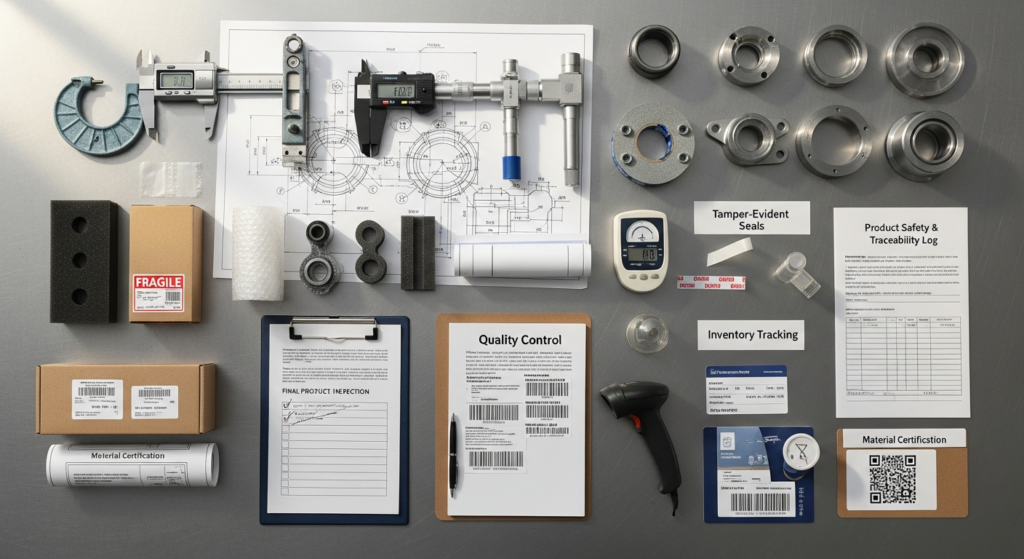
The Foundational Pillars of Product Safety: Design & Compliance
Ensuring product safety begins long before any material enters the production line; it is intricately woven into the very fabric of product conception and design. This proactive approach, often termed “Safety by Design,” emphasizes integrating safety considerations from the earliest stages of product development. Manufacturing companies commit significant resources to this phase, understanding that rectifying safety flaws post-production is exponentially more costly and complex than preventing them upfront. This involves a rigorous process of risk assessment, utilizing methodologies such as Failure Mode and Effects Analysis (FMEA) and Hazard and Operability (HAZOP) studies to identify potential failure points and hazards associated with a product’s intended use, foreseeable misuse, and eventual disposal.
Material selection is another critical aspect. Engineers meticulously evaluate raw materials and components not only for their performance characteristics but also for their inherent safety properties. This includes assessing toxicity, flammability, allergic potential, and durability under various environmental conditions. Advanced simulations and prototyping allow for early testing of material integrity and performance, flagging potential safety compromises before mass production. For instance, in the automotive sector, advanced alloys and composite materials undergo stringent crash simulations to ensure structural integrity and passenger safety. Similarly, in medical device manufacturing, biocompatibility and sterilization efficacy are paramount design considerations, often dictating material choices and processing methods.
Beyond internal design principles, adherence to a labyrinth of global and regional regulatory standards and certifications is non-negotiable. Manufacturing companies must navigate a complex landscape of safety directives, including ISO (International Organization for Standardization) standards for quality management (ISO 9001) and specific product safety (e.g., ISO 13485 for medical devices, ISO 26262 for automotive functional safety). Other critical compliances include CE marking for products sold in the European Economic Area, UL (Underwriters Laboratories) certification for electrical products, ASTM (American Society for Testing and Materials) standards for materials and products, and industry-specific regulations like FDA (Food and Drug Administration) requirements for food, pharmaceuticals, and medical devices in the U.S. By 2026, the regulatory environment is expected to become even more stringent, particularly with emerging technologies like AI and advanced robotics, necessitating continuous monitoring and adaptation of compliance strategies.
The documentation and traceability inherent in the design and compliance phase are equally vital. Every decision, every test result, every regulatory approval must be meticulously recorded. This creates an immutable audit trail that demonstrates due diligence, facilitates root cause analysis in the event of an incident, and supports continuous improvement efforts. Robust version control for design specifications and bill of materials (BOMs) ensures that only approved and safe designs proceed to manufacturing. This foundational commitment to safety by design and unwavering compliance forms the bedrock upon which all subsequent product safety measures are built, embodying the proactive stance necessary to protect end-users and uphold brand integrity.
Rigorous Quality Control and Assurance Protocols

Once a product design is finalized and compliant, the baton passes to the manufacturing floor, where rigorous Quality Control (QC) and Quality Assurance (QA) protocols become the frontline defense for product safety. These processes are designed to detect and prevent defects at every stage of production, ensuring that the finished product consistently meets safety specifications and performance benchmarks. It’s a proactive and continuous effort, akin to the diligent preventive maintenance that keeps critical infrastructure, such as those discussed in topics like the “4 most common maintenance issues for houses of worship,” from succumbing to predictable failures. By addressing potential issues early, manufacturers prevent minor discrepancies from escalating into significant safety hazards.
The journey of quality assurance typically begins with Incoming Material Inspection. Before any raw material or component enters the production stream, it undergoes thorough verification against specifications. This can include visual inspections, dimensional checks, material composition analysis, and performance testing. Non-conforming materials are immediately quarantined and returned, preventing substandard inputs from compromising the safety of the final product. For instance, in electronics manufacturing, capacitors and resistors are tested for correct values and absence of defects, while in food processing, ingredients are checked for contaminants and adherence to purity standards.
Throughout the manufacturing process, In-Process Quality Checks are strategically integrated. These checks often utilize Statistical Process Control (SPC) methodologies, where samples are taken at regular intervals to monitor process parameters and product characteristics. Deviations from acceptable ranges trigger immediate corrective actions, preventing the production of
Recommended Resources
Explore Cervical Cancer Prevention Guide for additional insights.
For more on how manufacturing companies, see Career Change Guide For Professionals on Diaal News.