


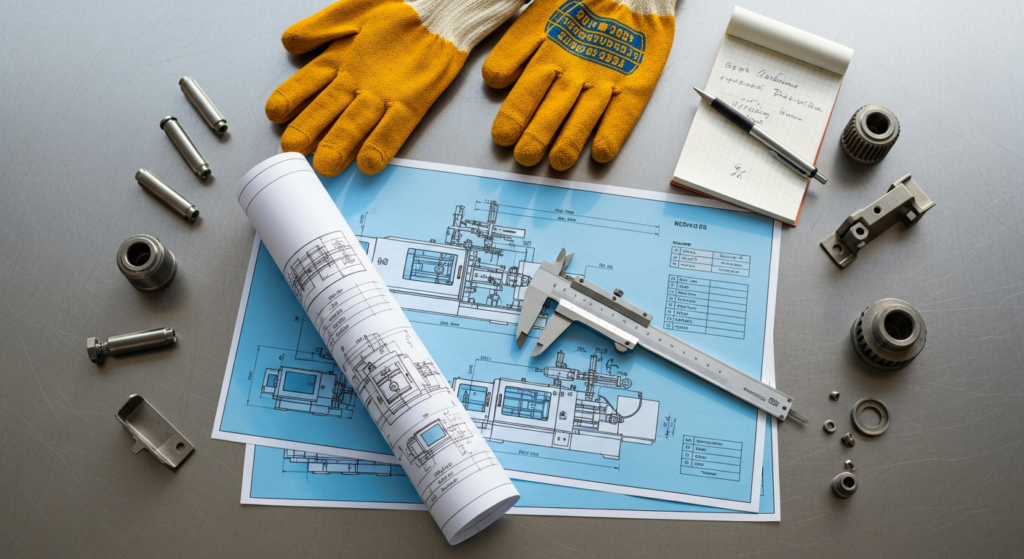
What is Injection Molding? A Fundamental Manufacturing Process
Injection molding is a manufacturing process for producing parts by injecting molten material into a mold. It is most commonly used with thermoplastic and thermosetting polymers, but can also be applied to metals (as in die casting), glasses, elastomers, and confections. The process is revered for its ability to create highly complex shapes with exceptional accuracy and consistent quality, making it ideal for mass production. Conceived in the mid-19th century, injection molding has evolved dramatically, transforming from rudimentary hand-operated machines to sophisticated, automated systems capable of intricate multi-component production. The sheer versatility of the process allows for the creation of components ranging from microscopic gears in electronic devices to large, robust panels for vehicles, underpinning its status as one of the most significant manufacturing technologies globally. Its widespread adoption is a testament to its efficiency, cost-effectiveness at scale, and the ability to produce parts with minimal post-processing requirements, thereby reducing lead times and overall manufacturing costs. In 2026, the demand for injection-molded products continues to grow, driven by advancements in material science and increasing automation, further solidifying its position as a critical industrial process.
The core principle involves melting a raw material, typically in granular form, and then forcing it under high pressure into a mold cavity. Once inside the mold, the material cools and solidifies to the shape of the cavity. This method offers several distinct advantages, including the ability to produce parts with consistent dimensions and tolerances, excellent surface finish, and the capacity to integrate multiple functions into a single component. Furthermore, the process is highly repeatable, ensuring that each part produced from the same mold is virtually identical. This consistency is crucial for industries where component reliability and performance are non-negotiable, such as automotive, aerospace, and medical device manufacturing. The rapid cycle times achievable with modern injection molding machines also contribute significantly to its economic viability, allowing for the rapid production of millions of units annually. Understanding these fundamental aspects is the first step towards appreciating the intricate engineering behind every injection-molded product we encounter daily.
The Core Phases of the Injection Molding Process
The injection molding process, while seemingly straightforward, involves a precise sequence of events, each critical for producing high-quality parts. This cyclical operation, often referred to as a “cycle,” consists of several distinct phases that occur in rapid succession, typically lasting from a few seconds to several minutes depending on part complexity, material, and machine capabilities. Understanding these phases is essential for process control, optimization, and troubleshooting.
- Clamping: The injection molding cycle begins with the clamping unit. The mold, consisting of two halves (the stationary platen and the movable platen), is securely closed. A powerful clamping force is applied to hold the mold halves together during the injection phase, preventing the molten plastic from forcing them apart. This force must be sufficient to counteract the pressure exerted by the injected material, ensuring the mold remains sealed and flash (excess material escaping the mold) is prevented. Modern machines use hydraulic, electric, or hybrid systems to achieve this precise and powerful clamping action.
- Injection: Once the mold is clamped shut, the injection unit takes over. Raw plastic pellets are fed from a hopper into a heated barrel, where they are melted by heater bands and the shearing action of a reciprocating screw. The screw then moves forward, acting like a plunger, to force the molten plastic through a nozzle and into the mold cavity. This injection phase is characterized by high pressure and controlled speed, ensuring the mold is completely filled. Precise control over injection speed and pressure is vital to avoid defects like short shots (incomplete filling) or excessive internal stresses in the part.
- Dwelling (Packing and Holding): After the mold cavity is filled, the injection unit maintains a specific amount of pressure, known as dwelling or packing pressure, for a set period. This pressure compacts the molten plastic, compensating for material shrinkage as it cools and solidifies. The dwelling phase is crucial for ensuring the part achieves its final dimensions, density, and prevents sink marks or voids. Insufficient dwelling pressure can lead to part shrinkage and dimensional inaccuracies, while excessive pressure can cause flash or overpacking, leading to internal stresses.
- Cooling: With the dwelling phase complete, the molten plastic inside the mold begins to cool and solidify. Cooling channels, integrated within the mold design, circulate a coolant (typically water or oil) to efficiently remove heat from the plastic. The cooling time is often the longest phase of the cycle and is critical for the part to solidify enough to be ejected without deforming. The efficiency of the cooling system directly impacts the cycle time and, consequently, the overall production rate and energy consumption. Optimized cooling strategies are a key area for improving efficiency in Lean Manufacturing processes.
- Ejection: Once the part has sufficiently cooled and solidified, the clamping unit opens the mold halves. Ejector pins, typically built into the movable half of the mold, push the finished part out of the cavity. These pins are carefully designed to apply force evenly across the part’s surface to prevent damage or distortion during ejection. The part then falls into a collection bin or is removed by a robotic arm for further processing or packaging. After ejection, the mold closes, and the cycle begins anew.
- Post-Processing (Optional): While injection molding aims to produce near-net-shape parts, some components may require minor post-processing steps. These can include trimming gates (the small channels where plastic enters the mold cavity), deflashing (removing thin excess material), or assembly operations. Automation and advanced mold designs continuously reduce the need for extensive post-processing, aligning with Kaizen principles for continuous improvement in manufacturing efficiency.
Each of these phases is interconnected, and the successful outcome of the injection molding process relies on the precise control and coordination of various parameters, including temperatures, pressures, speeds, and times. Mitsubishi Manufacturing emphasizes the importance of understanding and optimizing each phase to achieve maximum efficiency and product quality.
Key Components of an Injection Molding Machine
-
Clamping Unit: This unit is responsible for holding the two halves of the mold securely together during the injection and cooling phases and then opening them for part ejection. It consists of:
- Platens: Two large, heavy steel plates to which the mold halves are attached. One platen is stationary, and the other moves.
- Tie Bars: Robust steel rods that connect the platens and bear the clamping force.
- Toggle System (for hydraulic/mechanical machines): A series of linkages that multiply the hydraulic cylinder’s force to generate the enormous clamping force required. Electric machines often use ball screws for direct clamping.
- Clamping Mechanism: Can be hydraulic, electric, or hybrid. Hydraulic systems use fluid pressure, electric systems use servomotors, and hybrid systems combine both for efficiency and precision.
The clamping force required can range from a few tons to several thousand tons, depending on the size of the part and the projected area of the molded part within the mold cavity.
-
Injection Unit: This unit plasticizes the raw material and injects it into the mold. Its primary components include:
- Hopper: A large container that holds the raw plastic pellets before they enter the machine.
- Barrel: A robust, heated cylinder where the plastic pellets are melted. Heater bands wrap around the barrel to provide the necessary heat.
- Reciprocating Screw: The heart of the injection unit. This screw rotates to convey, melt, and homogenize the plastic material. It also acts as a ram to inject the molten plastic into the mold. The screw’s design (e.g., L/D ratio, compression ratio) is critical for efficient plasticization.
- Non-Return Valve (Check Ring): Located at the tip of the screw, this valve prevents molten plastic from flowing backward along the screw during injection.
- Nozzle: The component at the end of the barrel through which the molten plastic is injected into the mold. It must seal tightly against the mold’s sprue bushing.
The design and functionality of the injection unit are crucial for achieving consistent melt quality and precise injection control, directly influencing part quality and cycle time.
-
Mold: While not technically part of the machine, the mold is an indispensable component without which the process cannot occur. It is a precision-engineered tool designed to withstand high pressures and temperatures, shaping the molten plastic into the desired part. Key features include:
- Cavities: The hollow spaces within the mold that form the shape of the part. Molds can have a single cavity or multiple cavities (multi-cavity molds) to produce many parts simultaneously.
- Runners: Channels that guide the molten plastic from the sprue (where it enters the mold) to the gates.
- Gates: Small openings that connect the runners to the mold cavities, controlling the flow of plastic into the part.
- Ejector Pins: Pins that push the solidified part out of the mold cavity.
- Cooling Channels: Passages within the mold through which a coolant flows to regulate mold temperature and facilitate part solidification.
The design and manufacturing of the mold are highly specialized fields, requiring deep expertise in Materials Science In Manufacturing and precision machining to ensure longevity, accuracy, and efficient heat transfer.
- Control System: The brain of the injection molding machine, this system monitors and controls all process parameters. Modern machines feature sophisticated computer numerical controls (CNC) with touch screens, allowing operators to precisely set and adjust temperatures, pressures, speeds, times, and other critical variables. The control system also provides data logging, diagnostics, and networking capabilities, crucial for implementing Lean Manufacturing Principles Explained and Kaizen Continuous Improvement Explained initiatives.
The integration and precise functioning of these components are what allow injection molding machines to consistently produce millions of high-quality plastic parts year after year, forming the backbone of countless manufacturing operations worldwide.
The Role of Materials Science in Injection Molding Success
The success of any injection molding project hinges critically on the judicious selection and understanding of the raw material. This is where Materials Science In Manufacturing plays an absolutely indispensable role. The properties of the polymer chosen dictate not only the final characteristics and performance of the molded part but also significantly influence the process parameters, mold design, and overall manufacturability. A deep understanding of material behavior under various conditions is paramount for achieving optimal results, preventing defects, and ensuring the longevity and functionality of the end product.
Polymers, the most common materials used in injection molding, are broadly categorized into thermoplastics and thermosets. Thermoplastics, such as polypropylene (PP), polyethylene (PE), ABS, nylon (PA), polycarbonate (PC), and PET, can be melted and re-solidified multiple times without significant degradation. This makes them highly recyclable and versatile. Their processing involves heating them above their melting point, injecting them, and then cooling them to solidify. The specific melt temperature, viscosity, shrinkage rate, and cooling rate vary significantly between different thermoplastics, necessitating precise control over process parameters. For instance, amorphous polymers like ABS and PC have a broader processing window but may exhibit higher internal stresses, while semi-crystalline polymers like PP and nylon have a sharper melting point and often higher shrinkage.
Thermosets, on the other hand, undergo an irreversible chemical reaction (curing) when heated, forming a rigid, cross-linked structure. Once cured, they cannot be re-melted. Examples include phenolic, epoxy, and certain polyester resins. While offering superior heat resistance and mechanical properties, their processing is more complex, involving careful control of curing time and temperature within the mold. This fundamental difference in molecular structure profoundly impacts mold design, heating systems, and ejection mechanisms.
Beyond the basic polymer type, various factors influence material selection:
- Mechanical Properties: Strength, stiffness, impact resistance, tensile strength, and flexural modulus are critical for parts subjected to mechanical stress.
- Thermal Properties: Heat deflection temperature (HDT), continuous use temperature (CUT), and thermal conductivity are vital for parts operating in high-temperature environments.
- Chemical Resistance: Resistance to acids, bases, solvents, and fuels is important for parts exposed to harsh chemicals.
- Electrical Properties: Dielectric strength, resistivity, and dissipation factor are crucial for electrical components.
- Optical Properties: Transparency, clarity, and refractive index are important for lenses, light guides, and transparent housings.
- Dimensional Stability: Shrinkage, warpage, and creep determine how well a part maintains its dimensions over time and under load.
- Aesthetics: Color, surface finish, and texture are important for consumer products.
Furthermore, additives and fillers are often incorporated into polymers to enhance specific properties. Glass fibers, carbon fibers, or mineral fillers can significantly increase strength, stiffness, and dimensional stability. UV stabilizers protect against degradation from sunlight, flame retardants improve fire resistance, and colorants provide aesthetic appeal. Each additive alters the material’s flow characteristics, melt temperature, and cooling behavior, requiring careful adjustment of injection molding parameters. For example, highly filled materials can be abrasive to molds and screws, demanding specialized tool steels or surface coatings.
Mitsubishi Manufacturing constantly leverages advancements in Materials Science In Manufacturing to push the boundaries of what’s possible with injection molding. Our engineers collaborate closely with material suppliers to understand the latest polymer innovations, ensuring that our processes are optimized for new high-performance materials. This scientific approach to material selection and processing is a cornerstone of our commitment to delivering superior quality and performance in every product we manufacture in 2026 and beyond.
Optimizing the Process: Lean Manufacturing and Kaizen in Injection Molding
In the highly competitive manufacturing landscape of 2026, merely understanding the injection molding process is no longer sufficient; continuous optimization is paramount. This is where the powerful methodologies of Lean Manufacturing Principles Explained and Kaizen Continuous Improvement Explained become indispensable tools for enhancing efficiency, reducing waste, and improving product quality in injection molding operations. Mitsubishi Manufacturing champions these principles to drive innovation and maintain our leadership position.
Lean Manufacturing Principles Explained focuses on identifying and eliminating waste (muda) in all its forms across the production value stream. In injection molding, common areas of waste include:
- Overproduction: Producing more parts than immediately needed, leading to excess inventory and storage costs. Lean strategies involve demand-driven production and smaller batch sizes.
- Waiting: Idle machine time, waiting for materials, or waiting for molds to change. Optimizing cycle times, implementing quick mold change (QMC) systems, and efficient scheduling reduce waiting.
- Transportation: Unnecessary movement of raw materials, work-in-progress, or finished goods. Streamlining plant layout and material flow minimizes this waste.
- Over-processing: Performing unnecessary steps or using overly complex processes. Simplifying mold designs, reducing post-processing requirements, and optimizing process parameters fall under this category.
- Inventory: Excessive raw material, work-in-progress, or finished goods inventory ties up capital and space. Just-in-Time (JIT) delivery of materials and efficient production scheduling are key.
- Motion: Unnecessary movement of people, e.g., operators searching for tools or parts. Ergonomic workstation design and standardized work procedures address this.
- Defects: Production of faulty parts requiring rework or scrap. This is perhaps the most critical waste in injection molding, leading to material loss, energy waste, and increased costs. Robust process control, preventative maintenance, and statistical process control (SPC) are vital for defect reduction.
Applying Lean principles to injection molding means meticulously analyzing every step of the process, from material handling to part ejection and packaging. For instance, optimizing cooling times, reducing mold changeover times through SMED (Single-Minute Exchange of Die) techniques, and implementing automated part removal systems can significantly cut down on waste and improve overall equipment effectiveness (OEE).
Kaizen Continuous Improvement Explained complements Lean Manufacturing by fostering a culture of continuous, small-scale improvements involving everyone from machine operators to management. It’s about empowering employees to identify problems, suggest solutions, and implement changes that lead to incremental yet significant gains over time. In the context of injection molding, Kaizen initiatives might include:
- Process Parameter Refinement: Operators and engineers constantly fine-tuning injection pressures, temperatures, cycle times, and cooling rates based on real-time data and observations to improve part quality or reduce cycle time.
- Mold Maintenance Enhancements: Regular and proactive maintenance schedules, standardized cleaning procedures, and immediate repair of minor mold issues to prevent larger, more costly breakdowns and defects.
- Material Handling Improvements: Developing better ways to store, transport, and load plastic pellets to minimize contamination or waste.
- Defect Analysis and Prevention: When a defect occurs (e.g., flash, sink marks, warp), a Kaizen team investigates the root cause using tools like 5 Whys or Ishikawa diagrams and implements corrective actions to prevent recurrence.
- Energy Efficiency Projects: Identifying opportunities to reduce energy consumption, such as optimizing machine idle times, using more energy-efficient heater bands, or improving chiller efficiency.
By embedding Kaizen into daily operations, Mitsubishi Manufacturing ensures that our injection molding processes are not static but are constantly evolving towards greater perfection. This culture of continuous improvement, combined with the waste-reduction focus of Lean Manufacturing, allows us to achieve superior product quality, faster delivery times, and more competitive costs, thereby delivering exceptional value to our customers.
Design Considerations and Troubleshooting in Injection Molding
The success of an injection molding project is often determined long before any material enters the machine. Effective Design for Manufacturability (DFM) principles are critical to ensuring that a part can be produced efficiently, cost-effectively, and without defects. Moreover, even with optimal design, issues can arise during production, necessitating systematic troubleshooting. Mitsubishi Manufacturing integrates DFM at the earliest stages and employs robust troubleshooting methodologies to maintain peak operational efficiency.
Design Considerations (Design for Manufacturability – DFM)
Designing a part specifically for the injection molding process can prevent a host of problems down the line:
- Wall Thickness: Uniform wall thickness is paramount. Varying wall thicknesses can lead to inconsistent cooling, causing warpage, sink marks, and internal stresses. If variations are unavoidable, transitions should be gradual.
- Draft Angles: All vertical walls (perpendicular to the mold parting line) require a slight taper, or draft angle, to facilitate easy ejection from the mold. Without sufficient draft, parts can stick, warp, or even crack during ejection, increasing cycle time and potential damage to the part or mold.
- Ribs and Bosses: These features add strength and provide mounting points without significantly increasing overall wall thickness. They should be designed with a thickness no more than 60% of the nominal wall thickness to prevent sink marks on the opposite surface. Proper fillets at their bases are also crucial for stress distribution.
- Radii and Fillets: Sharp corners concentrate stress, making parts weaker and more prone to cracking. Applying generous radii and fillets to internal and external corners improves part strength, aids material flow, and reduces mold wear.
- Undercuts: Features that prevent the part from being directly ejected from a two-part mold. While sometimes necessary, undercuts typically require complex and costly mold mechanisms (e.g., slides, lifters) to release the part. Minimizing or eliminating undercuts simplifies mold design and reduces tooling costs and cycle times.
- Gate Location: The point where molten plastic enters the mold cavity. Strategic gate placement ensures proper mold filling, minimizes weld lines (where two flow fronts meet), and reduces stress concentrations.
- Parting Line: The line where the two halves of the mold meet. Its location affects mold complexity, tooling cost, and the aesthetic appearance of the finished part.
Incorporating these DFM principles early in the design phase, often with input from Materials Science In Manufacturing experts, significantly reduces the risk of manufacturing challenges, optimizes cycle times, and lowers overall production costs.
Troubleshooting Common Injection Molding Defects
Despite careful design and process setup, defects can still occur. Effective troubleshooting involves understanding the root causes and systematically adjusting process parameters or mold features.
-
Short Shots (Incomplete Filling):
- Cause: Insufficient material, low injection pressure/speed, low melt temperature, restricted gate/runner, or trapped air.
- Solution: Increase injection pressure/speed, increase melt temperature, check material supply, enlarge gate/runner, or add vents to the mold.
-
Flash (Excess Material):
- Cause: Excessive injection pressure, insufficient clamping force, worn mold components, or excessive melt temperature.
- Solution: Reduce injection pressure, increase clamping force, repair/maintain mold, or reduce melt temperature.
-
Warpage:
- Cause: Uneven cooling, internal stresses due to material orientation, or non-uniform wall thickness.
- Solution: Optimize cooling channel design, equalize mold temperatures, adjust gate location, or modify part design for uniform wall thickness.
-
Sink Marks:
- Cause: Insufficient dwelling/packing pressure, insufficient cooling time, or overly thick sections.
- Solution: Increase dwelling pressure, extend dwelling/cooling time, or redesign the part with thinner walls or ribs.
-
Weld Lines (Knit Lines):
- Cause: Two or more molten plastic flow fronts meet and do not fully fuse, often around holes or inserts.
- Solution: Increase melt temperature, increase injection speed, optimize gate location to minimize flow paths, or improve venting.
-
Burn Marks:
- Cause: Trapped air or gas compressed and superheated in the mold cavity, or excessive injection speed.
- Solution: Reduce injection speed, improve mold venting, or reduce melt temperature.
Effective troubleshooting often involves a systematic approach, analyzing process data, inspecting the mold, and understanding the material’s behavior. By adhering to sound DFM principles and employing diligent troubleshooting techniques, Mitsubishi Manufacturing ensures the consistent production of high-quality, defect-free parts, aligning with the core tenets of quality assurance in modern manufacturing.
Frequently Asked Questions
What are the primary advantages of injection molding?▾
What types of materials can be used in injection molding?▾
How does cycle time impact injection molding efficiency?▾
What is the significance of mold design in the injection molding process?▾
How do Lean principles improve injection molding operations?▾
What are some common challenges in injection molding and how are they addressed?▾
Recommended Resources
Explore Childcare Assistance Programs Guide for additional insights.
Explore Healthy Habits To Start In 2026 for additional insights.