
What is ISO 9001 and Why is it Crucial for Manufacturing?
ISO 9001 is the international standard that specifies requirements for a Quality Management System (QMS). It is the most widely used QMS standard in the world, with over a million organizations certified in approximately 170 countries. Developed by the International Organization for Standardization (ISO), a non-governmental organization comprising national standards bodies, ISO 9001 is part of the ISO 9000 family of standards.
At its core, ISO 9001 is not about dictating how a specific product should be manufactured or a service delivered. Instead, it provides a flexible framework that helps organizations ensure consistent quality in their processes and outputs. For the manufacturing sector, this distinction is particularly vital. Manufacturers deal with intricate processes, complex supply chains, and the imperative to produce physical goods that meet precise specifications. A robust QMS, underpinned by ISO 9001, ensures that every stage, from raw material procurement to final product delivery, is controlled, monitored, and optimized.
The Foundational Importance for Manufacturers
- Consistency in Product Quality: ISO 9001 mandates a process-oriented approach, ensuring that manufacturing operations are systematically managed and controlled. This minimizes variations, defects, and rework, leading to consistent product quality that customers can rely on.
- Enhanced Customer Satisfaction: By focusing on customer requirements and feedback, a QMS helps manufacturers understand and meet client expectations more effectively, fostering loyalty and repeat business.
- Operational Efficiency and Cost Reduction: The standard encourages identifying and optimizing processes, leading to reduced waste, improved resource utilization, and lower operational costs. This directly ties into the philosophy of
Lean Manufacturing Principles Explained, which seeks to maximize customer value while minimizing waste. An ISO 9001 QMS provides the structured environment necessary to identify and eliminate non-value-added activities, streamline workflows, and enhance overall productivity, making it an ideal companion to Lean initiatives.
- Market Access and Competitive Advantage: Many large corporations and government bodies require their suppliers to be ISO 9001 certified. Achieving certification opens doors to new markets and tenders, providing a significant competitive edge.
- Improved Stakeholder Relationships: A well-managed QMS ensures better communication and cooperation across the organization, with suppliers, and with customers, leading to stronger, more reliable relationships.
- Legal and Regulatory Compliance: The standard requires organizations to identify and comply with applicable statutory and regulatory requirements, reducing legal risks and ensuring adherence to industry standards.
- Continual Improvement Culture: ISO 9001 is built on the principle of continuous improvement, encouraging organizations to regularly review and enhance their performance. This aligns perfectly with
Kaizen Continuous Improvement Explained, where small, incremental changes lead to significant long-term gains. The QMS provides the framework for monitoring, measuring, and acting upon opportunities for improvement, embedding Kaizen into daily operations.
In essence, ISO 9001 is more than just a certificate; it’s a strategic business tool that drives organizational excellence, resilience, and sustainable growth for manufacturing companies navigating the complexities of the global economy.
Understanding the Core Principles of ISO 9001
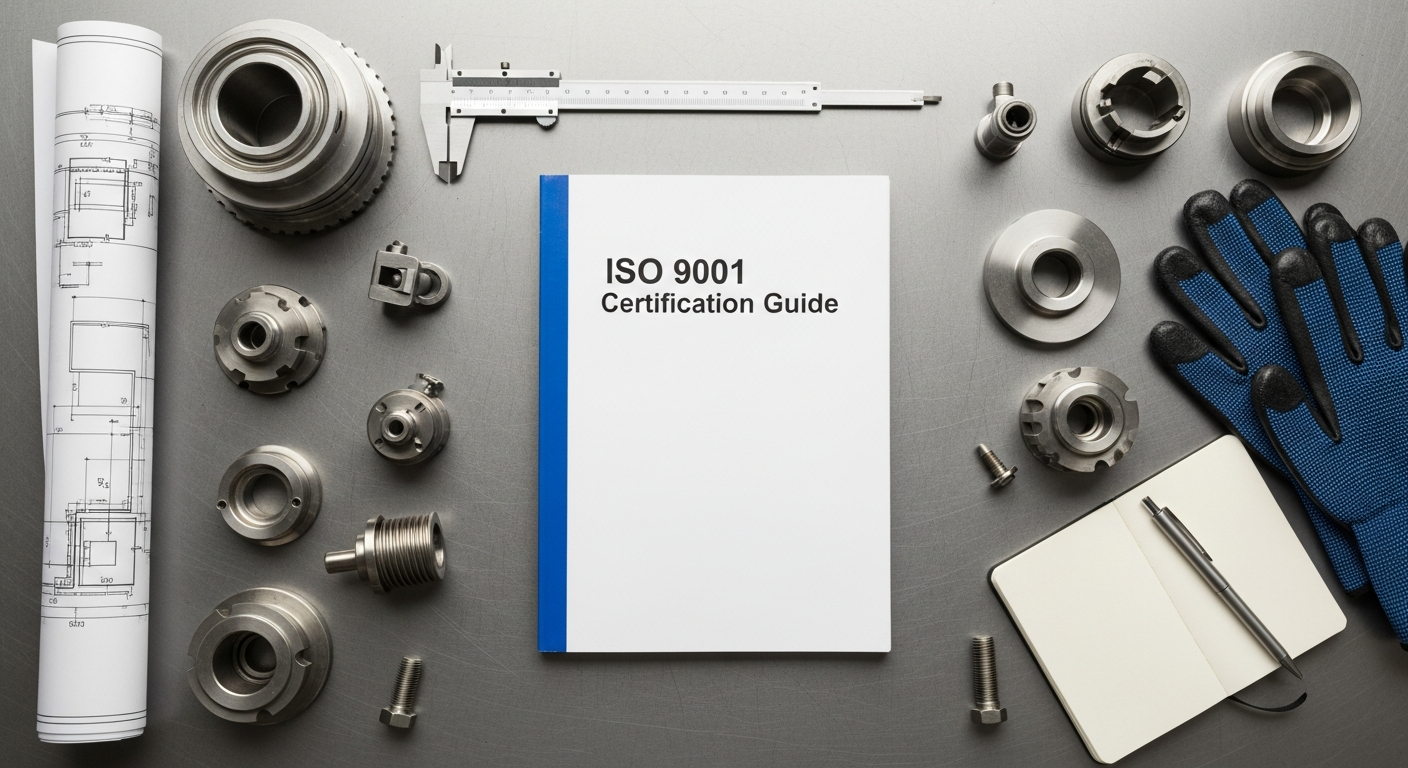
The ISO 9001:2015 standard is built upon seven fundamental Quality Management Principles (QMPs). These principles are not merely guidelines; they form the philosophical bedrock upon which an effective QMS is designed, implemented, and maintained. Understanding and internalizing these principles is crucial for any manufacturing organization embarking on its ISO 9001 certification journey.
- Customer Focus:
- Principle: The primary focus of quality management is to meet customer requirements and to strive to exceed customer expectations.
- Application in Manufacturing: This means understanding what customers value in your products, gathering feedback, and using it to improve product design, manufacturing processes, and service delivery. For instance, if customers demand higher durability, the QMS should drive improvements in material selection, potentially involving deeper insights from
Materials Science In Manufacturing to identify more robust compounds or alloys, and subsequently refine production techniques to ensure these properties are consistently achieved.
- Leadership:
- Principle: Leaders at all levels establish unity of purpose and direction and create conditions in which people are engaged in achieving the organization’s quality objectives.
- Application in Manufacturing: Top management must champion the QMS, setting clear quality policies and objectives, providing necessary resources, and fostering a culture where quality is everyone’s responsibility. This leadership commitment is vital for overcoming resistance to change and ensuring sustained focus on quality initiatives.
- Engagement of People:
- Principle: Competent, empowered and engaged people at all levels throughout the organization are essential to enhance its capability to create and deliver value.
- Application in Manufacturing: Employees are the backbone of any manufacturing operation. Empowering them through training, involvement in decision-making, and recognizing their contributions fosters a sense of ownership and responsibility for quality. A well-trained workforce, understanding their role in the QMS, is critical for operational success.
- Process Approach:
- Principle: Consistent and predictable results are achieved more effectively and efficiently when activities are understood and managed as interrelated processes that function as a coherent system.
- Application in Manufacturing: Instead of viewing manufacturing as isolated tasks, this principle encourages identifying, understanding, and managing all activities as processes. This includes everything from order entry and design to production, inspection, and shipping. Mapping these processes helps identify bottlenecks, improve efficiency, and ensure consistent output, directly supporting
Lean Manufacturing Principles Explained by visualizing the flow and identifying areas for waste reduction.
- Improvement:
- Principle: Successful organizations have an ongoing focus on improvement.
- Application in Manufacturing: This is perhaps one of the most critical principles for long-term success. It means continuously seeking ways to enhance products, processes, and the QMS itself. This active pursuit of improvement is the essence of
Kaizen Continuous Improvement Explained. Manufacturers should regularly conduct internal audits, analyze data, and implement corrective and preventive actions to drive incremental yet significant improvements across the board.
- Evidence-based Decision Making:
- Principle: Decisions based on the analysis and evaluation of data and information are more likely to produce desired results.
- Application in Manufacturing: In manufacturing, this means collecting and analyzing data on production metrics, defect rates, customer feedback, supplier performance, and internal audit findings. Decisions on process changes, new equipment investment, or supplier selection should be informed by objective evidence rather than assumptions or intuition. This data-driven approach strengthens the effectiveness of the QMS.
- Relationship Management:
- Principle: For sustained success, an organization manages its relationships with interested parties, such as suppliers.
- Application in Manufacturing: Strong relationships with suppliers, customers, and other external parties are vital. For manufacturers, this often means collaborating closely with suppliers to ensure the quality of incoming materials and components, ensuring they meet the stringent specifications often dictated by
Materials Science In Manufacturing. Building mutually beneficial relationships with key stakeholders contributes to overall QMS effectiveness and supply chain stability.
By integrating these seven principles into their organizational culture and operational practices, manufacturing companies can build a robust, effective, and continually improving Quality Management System that delivers consistent value.
The Step-by-Step ISO 9001 Certification Process
Step 1: Commitment and Planning
- Top Management Commitment: The journey begins with a clear commitment from top management. This includes allocating resources (time, personnel, budget) and communicating the importance of the QMS to all employees.
- Form a Core Team: Designate an ISO 9001 project manager or core team responsible for overseeing the implementation process. This team will drive documentation, training, and internal audits.
- Define Scope: Clearly define the scope of your QMS. Which products, services, and locations will be covered by the certification?
- Gap Analysis: Conduct an initial assessment of your existing processes against the requirements of ISO 9001:2015. This “gap analysis” identifies areas where your current operations fall short of the standard and helps in planning the necessary changes.
Step 2: Documentation of the Quality Management System (QMS)
- Develop QMS Documentation: Based on the gap analysis, create or update the necessary documentation. This typically includes:
- Quality Manual: A high-level document outlining the organization’s commitment to quality and how it addresses the ISO 9001 requirements.
- Quality Policy and Objectives: Statements of the organization’s overall intentions and direction regarding quality, and specific measurable goals.
- Procedures: Detailed instructions on how specific processes are to be performed (e.g., control of documents, internal audit, corrective action, production control, purchasing).
- Work Instructions: Even more granular instructions for specific tasks, often used on the shop floor.
- Records/Forms: Templates for documenting activities and demonstrating compliance (e.g., inspection reports, training records, maintenance logs).
- Ensure Compliance: All documentation must reflect the actual practices of the organization and demonstrate how each clause of ISO 9001 is addressed.
Step 3: Implementation of the QMS
- Communicate and Train: Roll out the new or updated QMS documentation to all relevant personnel. Provide comprehensive training to ensure everyone understands their roles, responsibilities, and the importance of adhering to the documented processes.
- Integrate into Daily Operations: The QMS should not be a separate system but an integral part of daily operations. Employees must follow the documented procedures, maintain records, and actively participate in the QMS.
- Monitor and Measure: Begin collecting data on key performance indicators (KPIs) related to quality objectives. This includes production output, defect rates, customer complaints, and process efficiency. This step directly supports the “Evidence-based Decision Making” principle.
- Embrace Continuous Improvement: During implementation, foster a culture of
Kaizen Continuous Improvement Explained. Encourage employees to identify minor issues and suggest small, incremental improvements to processes. This proactive approach helps refine the QMS even before the formal audit.
Step 4: Internal Audit
- Conduct Internal Audits: Once the QMS has been implemented for a sufficient period (typically 3-6 months), conduct internal audits. Trained internal auditors (who are independent of the processes being audited) assess the QMS’s conformity to ISO 9001 requirements and its effectiveness.
- Identify Non-conformities and Opportunities: Internal audits identify non-conformities (areas where the QMS does not meet the standard or its own documented procedures) and opportunities for improvement.
Step 5: Management Review
- Top Management Review: Top management must formally review the QMS at planned intervals (e.g., annually). This review assesses the QMS’s suitability, adequacy, and effectiveness, considering internal audit results, customer feedback, process performance, and opportunities for improvement.
- Decision Making: Based on the review, management makes decisions regarding resource allocation, changes to the QMS, and improvement initiatives.
Step 6: Certification Audit (by an External Certification Body)
- Select a Certification Body: Choose an accredited third-party certification body (also known as a registrar).
- Stage 1 Audit (Readiness Review): The certification body reviews your QMS documentation to ensure it meets the requirements of ISO 9001. They will also assess your readiness for the Stage 2 audit.
- Stage 2 Audit (On-site Assessment): Auditors visit your manufacturing facility to evaluate the effective implementation of your QMS. They will interview employees, observe processes, and review records to verify compliance with the standard and your own documented procedures. This is where the practical application of
Lean Manufacturing Principles Explained within your QMS processes will be evident.
- Address Non-conformities: If non-conformities are identified during the Stage 2 audit, you will need to implement corrective actions within an agreed timeframe.
Step 7: Certification and Continual Improvement
- Receive Certification: Upon successful completion of the Stage 2 audit and resolution of any non-conformities, you will be issued an ISO 9001 certificate, typically valid for three years.
- Maintain and Improve: Certification is not the end goal, but the beginning of an ongoing commitment to quality. The QMS requires continuous maintenance and improvement through surveillance audits (annual checks by the certification body), internal audits, management reviews, and a proactive approach to
Kaizen Continuous Improvement Explained. This ensures the QMS remains effective and relevant, continually driving excellence in your manufacturing operations well into 2026 and beyond.
This systematic approach helps manufacturing organizations not only achieve certification but also embed a culture of quality and efficiency throughout their operations.
Key Requirements of ISO 9001:2015 (The Standard’s Clauses)
The ISO 9001:2015 standard is structured into ten main clauses, with clauses 4 through 10 containing the auditable requirements for a Quality Management System. Understanding these clauses is fundamental to designing and implementing an effective QMS for any manufacturing business.
Clause 4: Context of the Organization
This clause requires an organization to understand its internal and external issues, the needs and expectations of interested parties (customers, suppliers, employees, regulators), and to define the scope of its QMS. For manufacturers, this involves analyzing market trends, technological advancements (including those related to
Materials Science In Manufacturing), competitive landscapes, regulatory changes, and internal capabilities.
Clause 5: Leadership
Top management must demonstrate leadership and commitment to the QMS. This includes establishing a quality policy, defining roles and responsibilities, and ensuring the QMS is integrated into business processes. Effective leadership ensures that quality objectives align with the strategic direction of the manufacturing operation.
Clause 6: Planning
This clause focuses on addressing risks and opportunities, establishing quality objectives, and planning for changes to the QMS. Manufacturers must identify potential risks to product quality or delivery (e.g., supply chain disruptions, equipment failure, material defects) and plan actions to mitigate them. Quality objectives should be measurable and relevant to product conformity and customer satisfaction.
Clause 7: Support
This clause covers the resources needed for the QMS. It addresses:
- Resources: Providing adequate personnel, infrastructure (equipment, facilities), and environment for processes.
- Competence: Ensuring employees are competent based on education, training, or experience.
- Awareness: Ensuring employees are aware of the quality policy, objectives, and their contribution to QMS effectiveness.
- Communication: Establishing internal and external communication processes relevant to the QMS.
- Documented Information: Controlling documents and records required by the QMS and the standard. This is crucial for maintaining consistency in manufacturing processes.
Clause 8: Operation
This is arguably the most critical clause for manufacturing organizations, as it directly addresses the planning and control of processes needed to meet requirements for products and services.
- Operational Planning and Control: Planning, implementing, and controlling processes to meet requirements. This includes defining criteria for processes, ensuring necessary resources, and implementing controls.
- Requirements for Products and Services: Determining customer requirements, reviewing them, and ensuring the organization can meet them.
- Design and Development: Managing the design and development of products and services. This is where insights from
Materials Science In Manufacturing are paramount. Selecting the right materials, understanding their properties (strength, durability, corrosion resistance, thermal conductivity), and ensuring they meet design specifications is a critical aspect of product quality and performance. The QMS ensures that material selection, prototyping, testing, and validation processes are rigorously controlled.
- Control of Externally Provided Processes, Products, and Services (Purchasing): Ensuring that externally provided components, raw materials, or services conform to specified requirements. This requires strong supplier evaluation and monitoring, especially when dealing with specialized materials or components where material properties are critical.
- Production and Service Provision: Controlling manufacturing processes, including validation of processes, identification and traceability, property of customers or external providers, preservation of product, and post-delivery activities. This is where the application of
Lean Manufacturing Principles Explained becomes evident in optimizing production flow, reducing lead times, and minimizing defects.
- Release of Products and Services: Ensuring that products are released only after all planned arrangements have been satisfactorily completed.
- Control of Non-conforming Outputs: Dealing with products or services that do not meet requirements, including identification, segregation, and taking appropriate action to prevent unintended use or delivery. Understanding the underlying causes often requires expertise in
Materials Science In Manufacturing to determine if material defects or processing issues led to the non-conformity.
Clause 9: Performance Evaluation
This clause focuses on monitoring, measurement, analysis, and evaluation of the QMS.
- Monitoring, Measurement, Analysis, and Evaluation: Determining what needs to be monitored and measured, and analyzing the results to evaluate QMS performance.
- Internal Audit: Conducting internal audits to determine if the QMS conforms to the organization’s own requirements and the standard, and is effectively implemented and maintained.
- Management Review: As discussed previously, top management reviews the QMS’s effectiveness.
Clause 10: Improvement
This final clause emphasizes the organization’s commitment to continually improve the QMS.
- Nonconformity and Corrective Action: Taking action to control and correct nonconformities, and addressing their root causes to prevent recurrence. This is a direct application of the “Improvement” principle and a core tenet of
Kaizen Continuous Improvement Explained.
- Continual Improvement: Proactively improving the suitability, adequacy, and effectiveness of the QMS. This means regularly seeking opportunities to enhance processes, products, and overall quality performance.
By systematically addressing each of these clauses, manufacturing companies can build a robust QMS that not only meets the requirements for ISO 9001 certification but also drives genuine operational excellence.
Benefits Beyond Compliance: Real-World Impact for Manufacturers
While ISO 9001 certification often begins as a response to market demands or a desire for competitive advantage, its true value extends far beyond mere compliance. For manufacturing organizations, a well-implemented QMS delivers tangible, long-lasting benefits that contribute directly to the bottom line and sustained growth.
- Enhanced Customer Satisfaction and Loyalty: By systematically understanding and meeting customer requirements, manufacturers can consistently deliver products that satisfy or even exceed expectations. This leads to fewer complaints, stronger customer relationships, and increased loyalty, which is invaluable in a competitive market.
- Improved Operational Efficiency and Cost Reduction: The process approach mandated by ISO 9001 encourages manufacturers to map, analyze, and optimize every stage of their operations. This systematic review often uncovers inefficiencies, redundancies, and sources of waste. By implementing
Lean Manufacturing Principles Explained within the ISO 9001 framework, companies can streamline workflows, reduce rework, minimize scrap, and optimize inventory levels, leading to significant cost savings and increased productivity. For instance, a QMS can help identify bottlenecks in a production line that might be caused by inconsistent material properties, prompting an investigation into
Materials Science In Manufacturing to find more suitable or consistent input materials.
- Better Decision-Making Through Data: ISO 9001 emphasizes evidence-based decision making. Manufacturers collect and analyze data on everything from production output and defect rates to supplier performance and customer feedback. This data-driven approach replaces guesswork with informed decisions, leading to more effective problem-solving and strategic planning.
- Increased Employee Engagement and Morale: Involving employees in the QMS development and implementation fosters a sense of ownership and purpose. Training and clear procedures empower staff, reduce frustration from inconsistent processes, and promote a safer, more organized working environment. When employees see their contributions directly impacting product quality and customer satisfaction, morale naturally improves.
- Access to New Markets and Tenders: Many international markets, large corporate buyers, and government contracts require ISO 9001 certification as a prerequisite for doing business. Certification acts as a universal passport, opening doors to lucrative opportunities that would otherwise be inaccessible.
- Stronger Supplier Relationships: The standard requires careful evaluation and management of suppliers. This leads to more robust relationships with vendors, ensuring the consistent quality of incoming raw materials and components, which is critical for maintaining the integrity of manufacturing processes, especially where precise material specifications are involved.
- Proactive Risk Management: By requiring organizations to identify and address risks and opportunities, ISO 9001 helps manufacturers anticipate potential problems before they escalate. This proactive approach minimizes disruptions, reduces potential financial losses, and enhances business continuity.
- Foundation for Other Standards: ISO 9001 provides a solid foundation upon which other management system standards can be built. Many manufacturers expand their QMS to include environmental management (ISO 14001) or occupational health and safety (ISO 45001), creating an integrated management system that further enhances overall business performance.
- Culture of Continual Improvement: Perhaps the most profound benefit is the embedding of a culture where continuous improvement is the norm, not the exception. The cycles of planning, doing, checking, and acting (PDCA) inherent in ISO 9001, combined with the philosophy of
Kaizen Continuous Improvement Explained, ensure that the organization is always seeking ways to get better, innovate, and adapt to changing market conditions. This agility is crucial for long-term success in the dynamic manufacturing sector, keeping your organization at the forefront of quality and efficiency in 2026 and beyond.
Ultimately, ISO 9001 certification transforms a manufacturing company from merely meeting requirements to actively pursuing excellence, fostering resilience and driving sustainable growth in an ever-evolving global economy.
FAQ: Your ISO 9001 Certification Questions Answered
What is the difference between ISO 9000 and ISO 9001?
ISO 9000 is a family of standards, not a single certification. It includes ISO 9000 (which defines the fundamental concepts and vocabulary for quality management systems), ISO 9001 (the standard that specifies the requirements for a QMS and is the only one in the family that organizations can be certified to), and ISO 9004 (guidance for sustained success). When people refer to “ISO 9000 certification,” they are almost always referring to ISO 9001 certification.
How long does the ISO 9001 certification process take for a manufacturing company?
The timeline varies significantly depending on the company’s size, complexity, existing quality practices, and resources allocated. For a small to medium-sized manufacturing firm, it typically takes anywhere from 6 to 18 months from the start of implementation to final certification. Larger or more complex organizations might take longer. Rapid implementation is possible with dedicated resources and external consultancy.
What are the typical costs associated with ISO 9001 certification?
Costs generally fall into two categories: internal implementation costs (time, resources for documentation, training, internal audits, and process changes) and external certification body fees. External fees are based on the size of the organization, number of employees, and complexity of processes, typically ranging from a few thousand to tens of thousands of dollars for the initial audit and annual surveillance audits. Investing in a robust QMS is an investment in long-term efficiency and quality.
Do I need an external consultant to achieve ISO 9001 certification?
No, an external consultant is not strictly required. Many organizations successfully achieve certification using internal resources. However, consultants can provide invaluable expertise, accelerate the process, help interpret the standard’s requirements, and provide objective guidance, especially for companies new to formal quality management systems. The decision depends on your internal capabilities and desired timeline.
What happens after I get my ISO 9001 certificate? Is it a one-time thing?
No, ISO 9001 certification is not a one-time event. The certificate is typically valid for three years. During this period, your certification body will conduct annual “surveillance audits” to ensure your QMS is continuously maintained and improved. At the end of the three-year cycle, a “recertification audit” is required to renew your certificate. This continuous oversight reinforces the principle of
Kaizen Continuous Improvement Explained, ensuring your QMS remains effective and relevant.
How does ISO 9001 help with supplier management in manufacturing?
ISO 9001 Clause 8.4 specifically addresses the control of externally provided processes, products, and services. It requires manufacturers to establish criteria for the evaluation, selection, monitoring of performance, and re-evaluation of external providers. This ensures that raw materials, components, and outsourced services meet your quality requirements and specifications, which is crucial for maintaining product quality and often involves understanding the
Materials Science In Manufacturing aspects of the supplied goods. A robust QMS helps build strong, reliable supply chain partnerships.
Recommended Resources
Explore Roe V Wade Impact Explained for additional insights.
For more on ISO 9001 certification, see How To Write A Resume That Gets Interviews on Diaal News.