


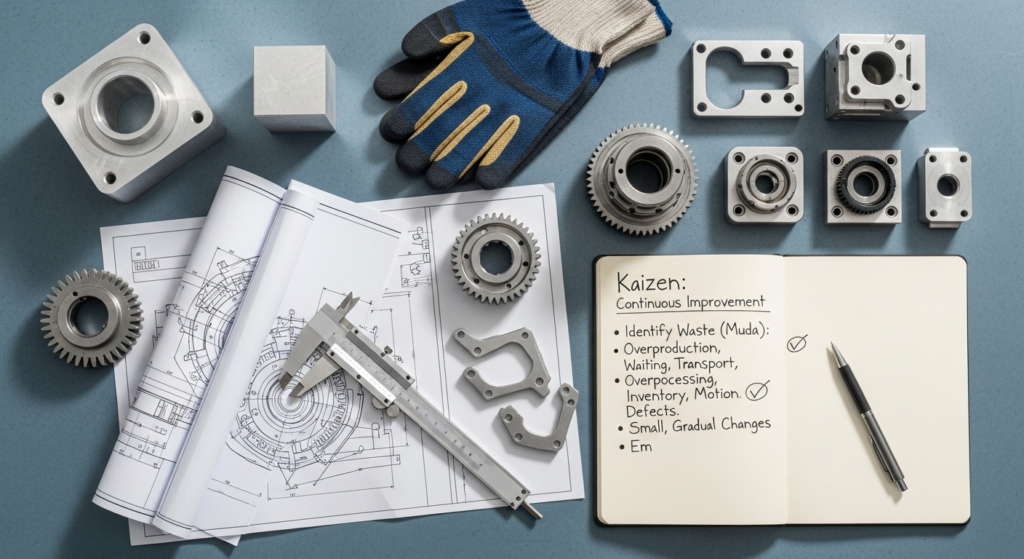
In the dynamic world of manufacturing, staying competitive and efficient is not merely an aspiration but a fundamental necessity. Businesses are constantly seeking methodologies that foster growth, enhance quality, and reduce waste. Among the most powerful and enduring of these approaches is Kaizen, a philosophy that champions continuous improvement. For those looking to understand its profound impact on operational excellence, this article provides a comprehensive exploration of kaizen continuous improvement explained, detailing its origins, principles, implementation, and the transformative benefits it brings to the modern manufacturing landscape.
What is Kaizen? Demystifying the Core Concept of Continuous Improvement
At its heart, Kaizen is a Japanese term that translates to "good change" or "improvement." However, its meaning extends far beyond a simple translation, embodying a philosophy and a set of practices focused on making small, incremental, and continuous improvements to processes, products, and services. Unlike revolutionary changes that are often disruptive and expensive, Kaizen advocates for evolutionary changes that accumulate over time, leading to significant, sustainable advancements.
The essence of Kaizen lies in its belief that everything can be improved. This isn't about seeking perfection in one grand leap, but rather acknowledging that every process, no matter how optimized it seems, has room for refinement. It's a mindset that encourages everyone, from the CEO to the frontline operator, to constantly look for ways to do things better, faster, safer, and with higher quality. This collective and sustained effort is what truly defines Kaizen continuous improvement.
In a manufacturing context, Kaizen manifests as an ongoing quest to eliminate waste (Muda), reduce inconsistencies (Mura), and alleviate overburden (Muri) from every operation. This includes optimizing production lines, streamlining administrative tasks, improving safety protocols, and even refining product designs based on feedback and material characteristics. It’s a holistic approach that views improvement not as a project with an end date, but as an integral part of daily operations. The beauty of Kaizen is its accessibility; improvements don't always require massive capital investment but often stem from clever problem-solving and a deep understanding of the work being performed.
The "continuous" aspect of Kaizen is paramount. It implies a never-ending cycle of identifying problems, implementing solutions, and then evaluating their effectiveness to identify further areas for improvement. This iterative process ensures that an organization is always evolving, adapting to new challenges, and pushing the boundaries of what is possible. For manufacturing firms looking to enhance their agility and resilience in an increasingly complex global market, understanding and embracing the fundamental concept of Kaizen is the crucial first step.
The Historical Roots and Evolution of Kaizen in Industry
The philosophy of Kaizen, while seemingly timeless, has a relatively clear origin rooted in the post-World War II industrial landscape of Japan. Facing severe resource constraints and a devastated industrial base, Japanese manufacturers were compelled to find innovative ways to rebuild and compete. It was during this period that the principles of Kaizen began to coalesce, heavily influenced by insights from American quality management experts.
One of the most significant influences came from Dr. W. Edwards Deming, an American statistician and management consultant. Deming's teachings on statistical process control and the importance of continuous quality improvement resonated deeply with Japanese industrialists. His famous Plan-Do-Check-Act (PDCA) cycle, a structured approach to problem-solving and improvement, became a foundational methodology for Kaizen initiatives. This cycle perfectly encapsulated the iterative nature of Kaizen: plan an improvement, implement it, check its results, and act on what was learned.
The Kaizen philosophy was famously championed and institutionalized by Toyota as a core component of its revolutionary Toyota Production System (TPS). Taiichi Ohno, a key architect of TPS, integrated Kaizen into every facet of Toyota's operations, empowering employees to identify and resolve issues directly on the factory floor. This emphasis on employee involvement, coupled with a relentless focus on eliminating waste and striving for efficiency, allowed Toyota to achieve unprecedented levels of quality, productivity, and flexibility. TPS, with Kaizen at its core, became the blueprint for what would later be known globally as Lean Manufacturing.
As Japanese companies, particularly in the automotive and electronics sectors, began to achieve remarkable success in the global market during the latter half of the 20th century, Western businesses took notice. They started to study and adopt the practices that underpinned this success. Consequently, Kaizen, along with other Lean principles, began its global spread. Consultants, academics, and industry leaders translated, adapted, and popularized these concepts, leading to their widespread adoption across various industries, including aerospace, healthcare, and software development, beyond just manufacturing.
Today, Kaizen continues to evolve. While its core principles remain steadfast, its application adapts to new technologies and global challenges. In 2026, for example, the integration of AI and IoT into manufacturing processes offers new avenues for data-driven Kaizen, allowing for more precise identification of inefficiencies and more effective implementation of improvements. The historical journey of Kaizen underscores its adaptability and enduring relevance as a cornerstone of operational excellence.
Kaizen and Lean Manufacturing: A Synergistic Relationship
The connection between Kaizen and Lean Manufacturing is not merely coincidental; it is foundational. Kaizen serves as the operational engine that drives the principles of Lean Manufacturing, making it a critical component of any successful Lean transformation. Understanding their synergistic relationship is key to fully appreciating the power of Kaizen continuous improvement explained.
Lean Manufacturing Principles Explained: The Foundation
Lean Manufacturing is a systematic approach focused on maximizing customer value while minimizing waste. It identifies seven (sometimes eight) types of waste, or "Muda," that add no value to the final product and should be eliminated. These include:
- Defects: Products or services that are faulty or require rework.
- Overproduction: Producing more than is needed, leading to excess inventory.
- Waiting: Time spent by employees or machines waiting for the next step in a process.
- Non-Utilized Talent: Failing to utilize the skills, creativity, and knowledge of employees.
- Transportation: Unnecessary movement of materials or products.
- Inventory: Excess raw materials, work-in-progress, or finished goods.
- Motion: Unnecessary movement by people.
- Over-processing: Doing more work than is required by the customer.
The ultimate goal of Lean is to create a smooth, efficient flow of value to the customer. This requires a culture of continuous improvement, which is precisely where Kaizen comes into play.
Kaizen as the Engine of Lean
Kaizen provides the practical methodology for implementing Lean Manufacturing Principles Explained. While Lean defines what needs to be achieved (waste reduction, value maximization), Kaizen outlines how these goals are continually pursued on a day-to-day basis. It empowers individuals and teams to actively identify and eliminate the various forms of waste prevalent in manufacturing operations.
- Waste Identification and Elimination: Kaizen encourages employees to "go to the Gemba" (the actual place where work is done) to observe processes firsthand and identify sources of waste. This direct observation is crucial for effective Manufacturing Waste Reduction Strategies. For example, a Kaizen team might notice excessive motion by an operator, leading to a redesign of the workstation layout to reduce unnecessary movement.
- Standardization: Once an improvement is made through Kaizen, it is often standardized to ensure consistency and prevent regression. This standardization then becomes the new baseline for further Kaizen activities, creating a continuous cycle of improvement.
- Problem Solving: Kaizen events and daily Kaizen activities frequently employ structured problem-solving techniques, such as the PDCA cycle or 5 Whys, to get to the root cause of issues that contribute to waste.
- Employee Engagement: Lean success heavily relies on engaged employees. Kaizen fosters this engagement by giving employees ownership over their processes and empowering them to make improvements, transforming them from passive workers into active problem-solvers.
Through Kaizen, manufacturers can systematically chip away at inefficiencies, leading to significant improvements in productivity, quality, and cost-effectiveness. For instance, in 2026, a Kaizen initiative might focus on optimizing material flow on an assembly line, directly addressing "transportation" and "waiting" waste, or refining a quality control process to reduce "defects." This direct, hands-on approach is what makes Kaizen so indispensable to achieving and sustaining Lean excellence.
Key Principles and Pillars of a Successful Kaizen Implementation
Implementing Kaizen effectively goes beyond simply understanding its definition; it requires embedding a set of core principles and pillars into the organizational culture. These foundational elements ensure that continuous improvement becomes an inherent part of how work is done, rather than a temporary initiative. When kaizen continuous improvement explained, these principles are often highlighted as non-negotiable for success.
1. Go to the Gemba (The Actual Place)
Perhaps the most fundamental principle of Kaizen is "Gemba," which means "the actual place." This emphasizes the importance of going to where the work is actually performed – the factory floor, the production line, the customer service desk – to observe, understand, and identify problems firsthand. Solutions are not conjured in meeting rooms but discovered and tested in the real work environment. This direct engagement ensures that improvements are practical, relevant, and address actual operational issues.
2. Standardize Processes
Standardization is crucial for Kaizen. Once an improvement is identified and successfully implemented, it must be documented and standardized to ensure consistency and prevent backsliding. Standardized work provides a baseline from which further improvements can be measured and built upon. Without standardization, improvements are often fleeting, and the continuous improvement cycle breaks down. This also aids in training new employees and maintaining quality across shifts.
3. Empower Employees and Foster Teamwork
Kaizen is inherently a bottom-up philosophy. It relies heavily on the active participation and creativity of all employees, particularly those on the frontline who have the most intimate knowledge of the processes. Empowering employees to identify problems, propose solutions, and implement changes fosters a sense of ownership and boosts morale. Teamwork is essential, as many improvements require collaboration across different functions or departments. Creating cross-functional teams for Kaizen events is a common practice.
4. Embrace Problem-Solving (PDCA Cycle)
The Plan-Do-Check-Act (PDCA) cycle, also known as the Deming Cycle, is the engine of Kaizen. It provides a structured approach to problem-solving and improvement:
- Plan: Identify the problem, analyze its root causes, and develop a potential solution.
- Do: Implement the solution on a small scale or in a controlled environment.
- Check: Monitor the results, measure the impact of the change, and compare against the plan.
- Act: If the change was successful, standardize it. If not, learn from the experience and start the cycle again with a new plan.
This systematic approach ensures that improvements are data-driven and effectively evaluated.
5. Eliminate Waste (Muda, Mura, Muri)
As discussed with Lean Manufacturing, the relentless pursuit and elimination of waste are central to Kaizen. This includes identifying and removing activities that do not add value for the customer. Kaizen initiatives directly target the seven wastes, striving for smoother flow and greater efficiency in all processes.
6. Promote Visual Management
Visual management tools, such as performance boards, Kanban systems, and 5S methodology (Sort, Set in order, Shine, Standardize, Sustain), make problems, progress, and performance visible to everyone. This transparency helps in quickly identifying abnormalities, tracking improvements, and fostering a shared understanding of goals and status across the team. For example, a visual display showing defect rates in 2026 can immediately highlight areas needing Kaizen intervention.
7. Cultivate a Culture of Continuous Learning
Kaizen encourages a learning organization where mistakes are seen as opportunities for improvement, not failures. It promotes experimentation, reflection, and the sharing of knowledge. This culture ensures that improvements are not just implemented but understood, and that lessons learned are applied to future challenges. Training and mentorship play a crucial role in developing the problem-solving skills needed for ongoing Kaizen.
By consistently adhering to these principles, manufacturing companies can build a robust framework for Kaizen that transforms their operational capabilities and fosters a truly continuous improvement mindset throughout the organization.
Implementing Kaizen: Practical Steps and Methodologies
Translating the philosophy of Kaizen into actionable strategies requires structured methodologies and consistent application. For kaizen continuous improvement explained in a practical sense, it’s essential to understand the different approaches to implementation and the tools that facilitate them. Mitsubishi Manufacturing knows that successful deployment involves more than just good intentions; it demands deliberate planning and execution.
1. Leadership Commitment and Vision
The journey begins at the top. Senior leadership must not only endorse Kaizen but actively participate, communicate its importance, and allocate necessary resources. A clear vision for continuous improvement, tied to strategic business objectives, provides direction and motivation for the entire organization. Leaders must demonstrate their commitment by "going to the Gemba" themselves and supporting employee-led initiatives.
2. Training and Education
For Kaizen to thrive, employees at all levels need to understand its principles and methodologies. Comprehensive training should cover:
- The philosophy of Kaizen and its benefits.
- Problem-solving tools like the PDCA cycle, 5 Whys, root cause analysis, and Ishikawa (fishbone) diagrams.
- Lean tools such as 5S, value stream mapping, and standard work.
- Team facilitation and communication skills.
This foundational knowledge empowers employees to identify problems and contribute meaningful solutions.
3. Establishing Kaizen Events (Kaizen Blitzes)
A common and effective way to kickstart Kaizen is through dedicated Kaizen Events, sometimes called "Kaizen Blitzes." These are short, intense, focused improvement projects, typically lasting 3-5 days, involving a cross-functional team. The steps usually include:
- Preparation: Define the scope, objectives, and team members; gather relevant data.
- Observation (Gemba Walk): Team members go to the actual workplace to observe the current state, identify waste, and collect more data.
- Analysis: Use problem-solving tools to analyze root causes and brainstorm solutions.
- Implementation: Rapidly implement proposed changes (often on a trial basis).
- Verification & Standardization: Test the effectiveness of changes, make adjustments, and standardize the new process if successful.
- Follow-up: Monitor results over time and plan future improvements.
Kaizen Events deliver quick wins, build momentum, and train teams in rapid problem-solving, making them excellent Manufacturing Waste Reduction Strategies.
4. Fostering Daily Kaizen
While Kaizen Events address specific, larger problems, daily Kaizen is about embedding continuous improvement into everyday work. This involves:
- Suggestion Systems: Implementing a formal or informal system for employees to submit improvement ideas, no matter how small. Prompt feedback and recognition are crucial.
- Gemba Walks: Regular walks by supervisors and managers to the shop floor to observe processes, ask questions, listen to employees, and identify improvement opportunities.
- Short Daily Meetings (Stand-ups): Brief team meetings to discuss daily goals, identify roadblocks, and brainstorm quick fixes.
- Visual Management Boards: Using boards to track performance metrics, display problems, and highlight ongoing improvement efforts.
Daily Kaizen ensures that the improvement mindset is sustained and becomes part of the organizational DNA, influencing everything from materials handling to final product inspection. In 2026, daily Kaizen might leverage real-time data from IoT sensors to identify micro-inefficiencies in a production line, leading to immediate adjustments.
5. Utilizing 5S Methodology
The 5S methodology is often a prerequisite for successful Kaizen implementation, particularly in manufacturing. It focuses on workplace organization and standardization:
- Sort (Seiri): Eliminate unnecessary items from the workplace.
- Set in Order (Seiton): Arrange necessary items so they are easy to find and use.
- Shine (Seiso): Clean the workplace thoroughly.
- Standardize (Seiketsu): Create rules and procedures to maintain the first three S's.
- Sustain (Shitsuke): Make 5S a habit and continuously improve it.
A clean, organized, and standardized workplace provides a stable foundation for identifying and addressing other forms of waste, making it easier to see abnormalities and implement improvements.
By systematically applying these practical steps and methodologies, companies can build a robust framework for continuous improvement that delivers tangible results and fosters an empowered workforce.
The Tangible Benefits of Embracing Kaizen in Manufacturing
The investment in Kaizen, whether in terms of time, training, or cultural shift, yields a multitude of tangible benefits that directly impact the bottom line and long-term sustainability of manufacturing operations. When considering kaizen continuous improvement explained in terms of its value proposition, the advantages are clear and compelling for any forward-thinking organization like Mitsubishi Manufacturing.
1. Enhanced Productivity and Efficiency
By systematically identifying and eliminating waste (Muda), Kaizen directly leads to smoother, faster, and more efficient production processes. Each small improvement, whether it's optimizing tool placement, reducing unnecessary motion, or streamlining a documentation process, contributes to overall productivity gains. Less time is spent on non-value-added activities, allowing more focus on core manufacturing tasks. This means more output with the same or fewer resources, a critical advantage in competitive markets.
2. Superior Quality and Reduced Defects
Kaizen's emphasis on root cause analysis and process standardization directly improves product quality. By identifying and addressing the underlying reasons for defects, rather than just fixing symptoms, manufacturers can prevent recurrence. This leads to fewer faulty products, less rework, and ultimately, higher customer satisfaction. In areas leveraging Materials Science In Manufacturing, Kaizen can refine testing protocols, material handling procedures, and even supplier quality checks, ensuring that inputs meet stringent specifications from the outset.
3. Significant Cost Reduction
Waste is synonymous with cost. By implementing Manufacturing Waste Reduction Strategies through Kaizen, companies can achieve substantial cost savings. Reducing overproduction minimizes inventory holding costs. Eliminating unnecessary transportation and motion cuts down on operational expenses. Decreasing defects reduces scrap, rework, and warranty costs. Over time, these incremental savings accumulate into significant financial benefits, freeing up capital for further innovation or investment.
4. Increased Employee Engagement and Morale
Empowering employees to identify problems and implement solutions fosters a sense of ownership, value, and purpose. When workers see their ideas being implemented and contributing to tangible improvements, morale increases. This leads to higher job satisfaction, reduced absenteeism, and lower turnover rates. An engaged workforce is also more innovative and committed to the company's success, creating a positive feedback loop for continuous improvement.
5. Enhanced Safety in the Workplace
Many Kaizen initiatives focus on improving workplace ergonomics, reducing hazardous tasks, and standardizing safety procedures. By involving frontline workers in identifying safety risks and proposing solutions, companies can create a safer working environment. This not only protects employees but also reduces incident-related costs, downtime, and regulatory compliance issues. A safer workplace is a more productive workplace.
6. Greater Adaptability and Agility
In a rapidly changing global economy, the ability to adapt quickly to new market demands, technological advancements, and supply chain disruptions is crucial. A Kaizen culture instills an organizational agility where change is viewed as an opportunity, not a threat. Regular, small improvements make the organization more flexible and responsive, capable of pivoting efficiently. For instance, in 2026, a manufacturing facility with a strong Kaizen culture will be better equipped to adjust production lines for new product variations or integrate novel material science breakthroughs without significant disruption.
7. Stronger Competitive Advantage
Ultimately, all these benefits combine to give a manufacturing company a distinct competitive edge. Higher quality, lower costs, faster production, and a more engaged workforce translate into a stronger market position, increased customer loyalty, and improved profitability. Companies committed to Kaizen are better positioned to innovate, attract talent, and navigate future challenges, ensuring long-term success in a demanding industrial landscape.
Overcoming Challenges and Sustaining Kaizen in the Long Term
While the benefits of Kaizen are undeniable, its successful long-term implementation is not without its challenges. The philosophy of continuous improvement requires a profound cultural shift, and sustaining momentum can be as difficult as initiating the process. For kaizen continuous improvement explained fully, it’s crucial to address these potential roadblocks and outline strategies for enduring success, especially for large organizations like Mitsubishi Manufacturing.
1. Resistance to Change
Human nature often resists change, even when it's for the better. Employees may be comfortable with existing routines, fearful of new responsibilities, or skeptical of management's intentions. This resistance can manifest as apathy, passive non-compliance, or outright opposition.
- Strategy: Overcome this by ensuring clear and consistent communication about the "why" behind Kaizen. Involve employees from the outset, solicit their input, and celebrate their contributions. Provide adequate training and support, demonstrating that Kaizen is about empowering them, not adding to their workload or threatening their jobs. Lead by example, with management actively participating in Gemba walks and improvement efforts.
2. Lack of Management Commitment and Support
If leadership views Kaizen as a temporary project rather than a core business philosophy, it will inevitably falter. Insufficient resources, inconsistent messaging, or a failure to act on employee suggestions can quickly undermine the entire initiative.
- Strategy: Senior leadership must demonstrate unwavering commitment. This includes allocating sufficient time, budget, and personnel for training and Kaizen activities. They must actively participate, visibly support efforts, and provide consistent reinforcement through recognition and rewards. Kaizen metrics should be integrated into performance reviews and strategic planning, making it clear that continuous improvement is fundamental to the company's future in 2026 and beyond.
3. "Kaizen Fatigue" and Loss of Momentum
Initial enthusiasm for Kaizen can wane over time, especially if improvements become harder to find or if the organization becomes complacent. The continuous nature of Kaizen means there's no "finish line," which can sometimes lead to burnout or a perception that efforts are endless without clear milestones.
- Strategy: To combat fatigue, diversify Kaizen activities. Mix small, daily improvements with larger, focused Kaizen Events. Continuously provide fresh training and new tools. Crucially, celebrate successes regularly, no matter how small. Recognize individuals and teams publicly, highlighting the tangible benefits their improvements have brought to the organization, from cost savings to enhanced safety. Rotate team members in Kaizen events to keep ideas fresh and spread knowledge.
4. Insufficient Training and Skill Gaps
Without proper training in problem-solving methodologies, data analysis, and change management, employees may struggle to identify root causes or implement effective solutions. This can lead to frustration and ineffective Kaizen efforts.
- Strategy: Invest in ongoing, tailored training programs. Provide coaching and mentorship, especially for new team leaders. Develop internal champions who can guide others. Ensure that training covers not just the "how-to" of tools like PDCA and 5S, but also the "why" – linking it directly to Lean Manufacturing Principles Explained and the company's strategic goals. Consider external experts for specialized training in areas like Manufacturing Waste Reduction Strategies or specific aspects of Materials Science In Manufacturing.
5. Lack of Standardization and Documentation
Improvements are only sustained if they are standardized. Without proper documentation and adherence to new standards, processes can revert to old, less efficient ways, negating the benefits of Kaizen efforts.
- Strategy: Emphasize the importance of standardized work. Develop clear, accessible documentation for all new processes. Implement visual management tools that reinforce standards. Conduct regular audits to ensure adherence and identify any drift. Make standardization an integral part of every Kaizen activity, ensuring that the "Act" phase of PDCA is rigorously applied.
6. Difficulty Measuring and Communicating Impact
If the impact of Kaizen efforts isn't clearly measured and communicated, it can be difficult to demonstrate value and maintain support. Abstract improvements are harder to advocate for.
- Strategy: Establish clear, measurable KPIs (Key Performance Indicators) for Kaizen initiatives. Track metrics related to quality (defect rates), efficiency (cycle time, throughput), cost (scrap, rework), and safety (incident rates). Use visual dashboards to display progress and celebrate achievements. Regularly communicate the collective impact of Kaizen efforts to all stakeholders, demonstrating how continuous improvement contributes to the company's overall success and resilience in the face of future challenges, such as those anticipated in 2026's economic climate.
By proactively addressing these challenges, organizations can build a resilient Kaizen culture that not only initiates improvements but sustains them over the long term, ensuring ongoing operational excellence and competitive advantage.
Frequently Asked Questions About Kaizen Continuous Improvement
What is the primary difference between Kaizen and innovation?
While both Kaizen and innovation aim for improvement, their approaches differ significantly. Kaizen focuses on small, incremental, continuous changes that accumulate over time, often leveraging existing resources and processes. It's about making existing systems better. Innovation, on the other hand, typically involves radical, disruptive changes or the creation of entirely new products, processes, or technologies. It often requires significant investment and carries higher risk. Kaizen is evolutionary; innovation is revolutionary. Both are vital for long-term organizational success, but they serve different purposes.
How does Kaizen relate to Lean Manufacturing Principles Explained?
Kaizen is a fundamental component and enabler of Lean Manufacturing. Lean aims to maximize customer value by minimizing waste (Muda) and creating a smooth flow. Kaizen provides the practical methodology and cultural mindset for achieving this. It empowers employees to identify and eliminate waste, standardize processes, and continuously refine operations, thereby directly implementing the principles of Lean Manufacturing on a daily basis. Without Kaizen, Lean efforts would lack the sustained momentum needed for true transformation.
Can Kaizen be applied outside of manufacturing, such as in office environments?
Absolutely. While Kaizen originated in manufacturing, its principles of continuous improvement are universally applicable to any process or system. In office environments, Kaizen can be used to streamline administrative tasks, improve workflow, reduce paperwork, enhance communication, optimize meeting efficiency, and even refine software development processes. The core idea remains the same: identify waste, empower employees, and make small, continuous improvements to enhance efficiency and quality.
What is a "Kaizen Event" and how does it work?
A Kaizen Event, often called a "Kaizen Blitz," is a focused, short-term (typically 3-5 days) intense improvement project. A cross-functional team is assembled to tackle a specific problem or area of waste. The team follows a structured approach, often using the PDCA cycle: they observe the current state (Gemba), analyze root causes, brainstorm and implement immediate solutions, and then standardize the improved process. Kaizen Events are designed to deliver quick, measurable results and build problem-solving capabilities within the organization.
What role does "Gemba" play in Kaizen?
"Gemba" translates to "the actual place" and is a cornerstone of Kaizen. It emphasizes the importance of going to where the work is actually performed (e.g., the factory floor, the service desk) to observe processes, gather data, and identify problems firsthand. Solutions are not theoretical; they are derived from direct observation and interaction with the process and the people involved. This ensures that improvements are practical, relevant, and address real-world challenges, leading to more effective Manufacturing Waste Reduction Strategies.
How can a company sustain Kaizen over the long term, especially in 2026?
Sustaining Kaizen requires continuous effort and a deeply embedded culture. Key strategies include strong, visible leadership commitment, ongoing employee training and empowerment, regular celebration of successes (both big and small), and the integration of Kaizen metrics into performance management. Establishing a robust system for daily Kaizen, maintaining standardized work, and adapting Kaizen methodologies to leverage new technologies (like AI and IoT for data analysis) will be crucial for long-term success in 2026 and beyond.
Recommended Resources
You might also enjoy Foster Care System Explained from Protect Families Protect Choices.
Related reading: How To Pay Off Debt Quickly (Diaal News).