


Navigating the Future of Efficiency: Lean Manufacturing Principles and Implementation Strategies for 2026
The Enduring Pillars of Lean: Core Principles Reimagined for 2026
The five core principles of lean manufacturing remain the bedrock of operational efficiency, yet their application in 2026 is profoundly enhanced by digital capabilities. Understanding and meticulously applying these principles is crucial for any organization aiming for true excellence.
Mitsubishi Manufacturing Editorial Team
Our industrial engineering writers hold backgrounds in mechanical engineering, manufacturing operations, and industrial technology. Content is reviewed against ISO standards, industry white papers, and manufacturer documentation. This article is for informational purposes only. Last reviewed: March 2026.
-
Define Value from the Customer’s Perspective
In 2026, defining value transcends traditional market research. It involves a granular, data-driven analysis of customer needs and expectations, often leveraging AI-powered analytics of purchasing patterns, feedback loops, and social sentiment. Value, in a lean context, is anything a customer is willing to pay for. Non-value-added activities—or waste—must be systematically identified and eliminated. This requires a deep understanding of the product or service from the end-user’s viewpoint, often facilitated by digital feedback systems and advanced customer relationship management (CRM) platforms integrated directly with production planning.
-
Map the Value Stream
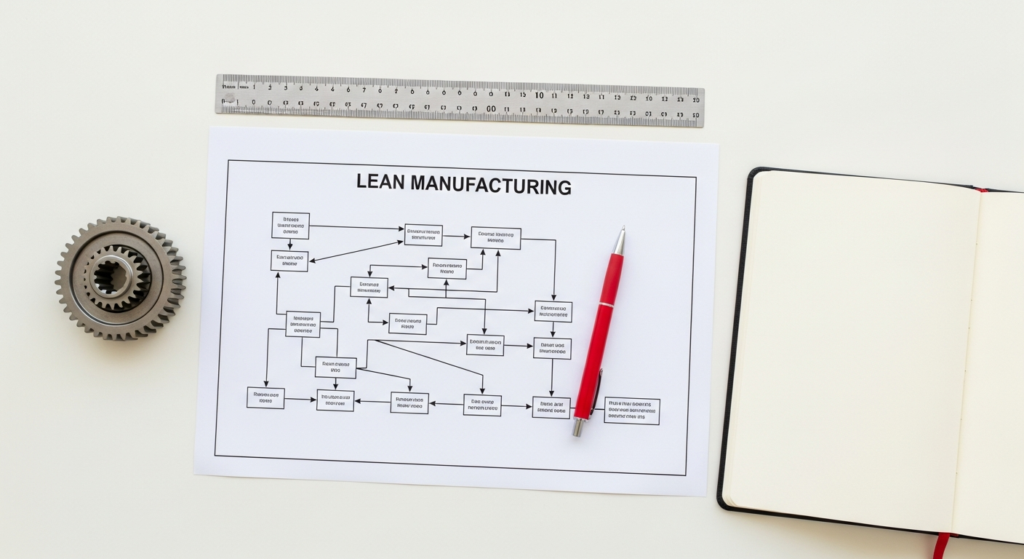
Value Stream Mapping (VSM) is the critical tool for visualizing the entire process, from raw material to finished product delivery. In 2026, VSM is no longer a static, manual exercise. Digital VSM tools, integrated with Manufacturing Execution Systems (MES) and Enterprise Resource Planning (ERP) platforms, provide real-time data on every process step. Process mining algorithms can automatically generate value stream maps, highlighting bottlenecks, delays, and non-value-added activities with unprecedented accuracy. This enables engineers to pinpoint areas for improvement, quantify waste (e.g., waiting time, overproduction, excessive inventory), and simulate future state scenarios for optimal flow.
-
Create Flow
Achieving continuous flow means ensuring that work progresses smoothly through the value stream with minimal interruptions, delays, or batching. This principle is significantly advanced by automation and intelligent systems. Cellular manufacturing, where machines and workstations are arranged to support a continuous flow of a specific product family, is optimized through collaborative robots (cobots) handling repetitive tasks and Automated Guided Vehicles (AGVs) or Autonomous Mobile Robots (AMRs) ensuring seamless material transport. Predictive maintenance, driven by Industrial IoT (IIoT) sensors and AI, prevents equipment breakdowns that disrupt flow, maintaining an OEE (Overall Equipment Effectiveness) target often above 85% for critical assets. The goal is to eliminate idle time and maximize the throughput velocity of products.
-
Establish Pull
A pull system ensures that production is initiated only when there is actual demand from the next process step or the customer, rather than pushing products based on forecasts. This minimizes overproduction and reduces inventory. In 2026, electronic Kanban (e-Kanban) systems, integrated with real-time sales data and predictive analytics, dynamically adjust production schedules and material replenishment. Just-in-Time (JIT) delivery is refined through sophisticated supply chain management software that synchronizes supplier deliveries with precise production needs, often leveraging blockchain for enhanced transparency and traceability. This demand-driven approach significantly reduces inventory holding costs and improves responsiveness to market fluctuations.
-
Pursue Perfection Through Continuous Improvement (Kaizen)
The pursuit of perfection is an ongoing organizational commitment to continuously identify and eliminate waste, improve processes, and enhance quality. Kaizen events, focused improvement initiatives, are now supported by AI-driven anomaly detection and root cause analysis tools (e.g., advanced 5 Whys, Ishikawa diagrams with data correlation). Integration with Six Sigma methodologies (DMAIC: Define, Measure, Analyze, Improve, Control; DFSS: Design for Six Sigma) provides a structured, data-driven framework for reducing variation and defects to near-zero levels (e.g., 3.4 DPMO – Defects Per Million Opportunities). This relentless drive for improvement permeates all levels of the organization, fostering a culture where every employee is empowered to identify and solve problems.
Enabling Technologies: The Digital Backbone of Lean 4.0
The evolution of lean manufacturing into “Lean 4.0” is inextricable from the adoption of advanced digital technologies. These tools provide the data, automation, and intelligence necessary to elevate lean principles to new levels of precision and efficiency.
-
Industrial IoT (IIoT) and Sensor Networks
IIoT sensors deployed across machinery, production lines, and inventory locations collect vast amounts of real-time data on operational parameters such as temperature, pressure, vibration, energy consumption, and cycle times. This data feeds directly into analytical platforms, enabling proactive monitoring, predictive maintenance, and precise OEE calculations. For example, a vibration sensor on a CNC machine can alert maintenance teams to potential bearing failure weeks in advance, preventing unscheduled downtime and maintaining flow. Compliance with standards like OPC UA ensures interoperability between diverse IIoT devices and systems.
-
Artificial Intelligence (AI) and Machine Learning (ML)
AI and ML algorithms are transforming lean by providing predictive and prescriptive capabilities. They enhance demand forecasting accuracy, optimize production scheduling, and perform automated quality control through computer vision systems that detect defects with sub-millimeter precision. ML models can identify patterns in process data to suggest optimal machine settings, reducing scrap rates and energy consumption. AI-driven anomaly detection systems continuously monitor process parameters, flagging deviations that could indicate impending issues, thus supporting the “pursuit of perfection.”
-
Robotics and Automation
Advanced robotics, particularly collaborative robots (cobots), are integral to creating flow and reducing human fatigue in repetitive tasks. Cobots can work safely alongside human operators, handling material loading, assembly, or inspection. AGVs and AMRs automate internal logistics, ensuring materials are delivered precisely where and when needed, minimizing manual material handling and associated waste. This automation not only boosts efficiency but also enhances safety, aligning with OSHA standards for workplace ergonomics and risk reduction.
-
Digital Twin and Simulation
A digital twin is a virtual replica of a physical asset, process, or system, updated in real-time with data from its physical counterpart. In lean manufacturing, digital twins allow engineers to simulate various production scenarios, test process changes, and optimize layouts without disrupting actual operations. This capability is invaluable for value stream mapping, identifying bottlenecks, and validating improvements before implementation, significantly reducing risk and accelerating Kaizen initiatives. For instance, simulating a new cellular manufacturing layout can predict its impact on Takt Time and throughput before any physical changes are made.
-
Advanced Analytics and Business Intelligence (BI)
Beyond raw data collection, sophisticated analytics platforms transform data into actionable insights. Interactive dashboards provide real-time visibility into KPIs like OEE, cycle time, and inventory levels. Prescriptive analytics can recommend specific actions to optimize performance, such as adjusting production schedules based on predicted demand or identifying root causes of quality deviations. These tools empower decision-makers with the information needed to drive continuous improvement and maintain operational control.
-
Manufacturing Execution Systems (MES) and Enterprise Resource Planning (ERP)
MES and ERP systems form the operational and strategic backbone of a lean enterprise. MES platforms manage and monitor work-in-process on the shop floor, providing real-time data on production orders, quality, and resource utilization. ERP systems integrate core business processes, from supply chain management to finance, enabling holistic planning and resource allocation. Seamless integration between these systems ensures data consistency, enhances visibility across the value chain, and supports demand-driven production and precise inventory management.
Strategic Implementation: A Phased Approach to Lean Transformation
Implementing lean manufacturing is a journey, not a destination. A structured, phased approach ensures sustainable transformation and minimizes disruption.
-
Phase 1: Assessment and Visioning
The initial phase involves a thorough assessment of the current state. This includes detailed value stream mapping of key product families, identifying all processes, information flows, and associated waste. Leadership commitment is paramount; a clear vision for the lean transformation, aligned with strategic business objectives, must be established and communicated. Key Performance Indicators (KPIs) such as OEE, lead time, cycle time, and Defects Per Million Opportunities (DPMO) are benchmarked. Adherence to ISO 9001:2015 quality management principles provides a robust framework for documenting processes and ensuring quality consistency from the outset.
-
Phase 2: Pilot Projects and Kaizen Blitzes
Rather than attempting a sweeping overhaul, lean implementation often begins with focused pilot projects or “Kaizen blitzes” in specific areas or product lines. These rapid, intensive improvement events target high-impact areas, aiming for quick wins that demonstrate the tangible benefits of lean. A3 problem solving methodology is frequently employed, providing a structured approach to problem identification, analysis, and solution implementation. The goal is to build momentum, develop internal expertise, and generate enthusiasm for the broader transformation.
-
Phase 3: Scaling and Integration
Once pilot projects demonstrate success, the lean principles and improved processes are scaled across the organization. This involves standardizing best practices, often leveraging ANSI/ASME standards for process documentation, equipment design, and component interchangeability. Cross-functional training programs are essential to embed lean thinking across all departments. Supply chain integration becomes critical, fostering collaborative relationships with suppliers for JIT delivery, vendor-managed inventory (VMI), and shared continuous improvement initiatives. Digital platforms facilitate this integration, ensuring seamless information flow and synchronized operations.
-
Phase 4: Sustaining and Evolving
Sustaining lean gains requires ongoing vigilance and commitment. Regular audits, performance reviews against established KPIs, and continuous training are vital. Organizations must foster a culture of continuous improvement, empowering employees at all levels to identify and address issues. Establishing “lean champions” and dedicated improvement teams helps maintain momentum. Furthermore, the lean system must be adaptable, evolving to incorporate new technologies, respond to market shifts, and integrate new regulatory requirements (e.g., ISO 14001:2015 for environmental management) to ensure long-term relevance and effectiveness.
Measuring Success: Key Performance Indicators and Standards for 2026
Quantifying the impact of lean initiatives is crucial for demonstrating ROI and driving further improvement. A robust set of KPIs, aligned with industry standards, provides objective measures of success.
-
Operational Metrics
- Overall Equipment Effectiveness (OEE): A composite metric (Availability x Performance x Quality) that measures how well a manufacturing asset is utilized. Benchmarks for world-class OEE often exceed 85%.
- Throughput: The rate at which products are completed and delivered.
- Takt Time: The rate at which products must be completed to meet customer demand (e.g., 45 seconds per unit).
- Cycle Time: The time required to complete one cycle of an operation.
- Lead Time (Order-to-Delivery): The total time from customer order placement to product delivery. Lean aims for significant reductions.
- Inventory Turnover: How many times inventory is sold or used over a period. Higher turnover indicates less capital tied up in inventory.
-
Quality Metrics
- Defects Per Million Opportunities (DPMO): A Six Sigma metric measuring the frequency of defects. A 6 Sigma process achieves 3.4 DPMO.
- First Pass Yield (FPY): The percentage of products that pass inspection the first time without rework.
- Customer Return Rate (CRR): The percentage of products returned by customers due to quality issues.
- Compliance: Adherence to quality management standards like ISO 9001:2015, ensuring consistent product and service quality.
- Environmental Compliance: Adherence to ISO 14001:2015 for environmental management, reflecting sustainable manufacturing practices.
-
Financial Metrics
- Cost of Goods Sold (COGS) Reduction: Direct impact of waste elimination on production costs.
- Return on Investment (ROI) for Lean Initiatives: Quantifying the financial benefits against the investment in lean programs.
- Working Capital Optimization: Reduced inventory and improved cash flow from faster production cycles.
-
People Metrics
- Employee Engagement and Satisfaction: Lean empowers employees, often leading to higher morale.
- Training Hours per Employee: Investment in developing lean capabilities.
- Safety Incident Rate: Improvements in workplace safety, often measured against OSHA standards, as lean promotes organized and safe environments.
Overcoming Challenges and Fostering a Lean Culture
While the benefits of lean are substantial, implementation is not without its hurdles. Addressing these challenges proactively is key to successful, sustainable transformation.
-
Resistance to Change
Human resistance to new processes and ways of working is perhaps the most significant challenge. Overcoming this requires transparent communication, involving employees in decision-making, providing extensive training, and demonstrating leadership commitment. Early successes and recognition of efforts help build buy-in.
-
Lack of Data Integration and Interoperability
Many organizations struggle with siloed data systems that prevent a holistic view of operations. Implementing standardized data models, leveraging middleware, and adopting open communication protocols like OPC UA are crucial for achieving seamless data flow between IIoT devices, MES, ERP, and analytical platforms.
-
Maintaining Momentum and Sustaining Gains
The initial enthusiasm for lean can wane without sustained leadership support and continuous reinforcement. Establishing clear accountability, regular performance reviews, visual management boards, and embedding lean principles into daily routines are essential for long-term success. Recognition and reward systems for lean improvements also play a vital role.
-
Talent Gap and Upskilling Workforce
The integration of advanced technologies like AI and robotics necessitates a workforce with new skills in data analytics, automation programming, and system integration. Organizations must invest in upskilling existing employees and attracting new talent with these competencies to fully leverage Lean 4.0 capabilities.
-
Cybersecurity Risks
As manufacturing systems become more interconnected, the attack surface for cyber threats expands. Protecting IIoT devices, operational technology (OT) networks, and sensitive manufacturing data from cyberattacks is paramount. Robust cybersecurity protocols, network segmentation, and continuous monitoring are critical to ensure the integrity and availability of lean-enabled systems.
The Origins of Lean: Foundational Figures, Institutes, and Methodologies
Understanding lean manufacturing requires acknowledging the foundational thinkers and institutions that shaped it:
- Taiichi Ohno (1912–1990) — Vice President of Toyota Motor Corporation and architect of the Toyota Production System (TPS). Ohno developed the concept of the 7 wastes (TIMWOOD) and the just-in-time production system. His book Toyota Production System: Beyond Large-Scale Production (1978) remains a foundational text.
- Shigeo Shingo (1909–1990) — Industrial engineer who developed SMED (Single-Minute Exchange of Die) and poka-yoke (error-proofing) methodologies. The Shingo Prize, awarded by the Shingo Institute at Utah State University, recognizes world-class manufacturing excellence.
- James Womack and Daniel Jones — Authors of The Machine That Changed the World (1990) and Lean Thinking (1996), who coined the term “lean” and extended Toyota’s concepts to global manufacturing.
- Lean Enterprise Institute (LEI) — The leading lean research and education organization (lean.org), founded by James Womack. Offers training, certification, and lean implementation resources.
Industry 4.0 Tools for Lean Implementation: Key Vendors and Platforms
Modern lean implementation leverages digital manufacturing platforms to enable real-time VSM, digital kanban, and predictive quality control:
- Siemens Xcelerator / MindSphere — Industrial IoT platform for real-time OEE monitoring, predictive maintenance, and digital twin-based VSM simulation.
- Rockwell Automation (FactoryTalk) — MES and industrial automation platform integrating lean principles into connected factory operations.
- PTC (ThingWorx) — AR-enabled lean tools including digital work instructions that reduce process steps and defect rates.
- AVEVA MES — Manufacturing Execution System for pull-system automation, real-time production tracking, and lean analytics.
- SAP Digital Manufacturing — Enterprise-level MES integrating lean workflows with ERP data for real-time inventory management.
Lean + Six Sigma lineage: Six Sigma was developed by Motorola in 1986 and popularized by General Electric under Jack Welch. Lean Six Sigma (LSS) combines Toyota’s waste elimination with Motorola’s statistical defect reduction (DMAIC: Define, Measure, Analyze, Improve, Control) methodology.
Advanced Lean Frameworks: Hoshin Kanri, A3, and Muda/Mura/Muri
Muda, Mura, and Muri: The Three Manufacturing Evils
While the 7 wastes (TIMWOOD) are the most commonly cited, Toyota’s lean philosophy identifies three interrelated evils that must be eliminated together:
- Muda (無駄) — Waste: the 7 forms of non-value-added activity (TIMWOOD). Visible and measurable.
- Mura (斑) — Unevenness/variability: fluctuating production demand, inconsistent operator methods, machine speed variation. Mura creates Muda — an uneven schedule forces overproduction in some periods and waiting in others.
- Muri (無理) — Overburden: pushing equipment or people beyond natural limits. Running machines above rated capacity, asking operators to work excessive overtime. Muri causes breakdowns, defects, and safety incidents.
Practical implication: Fix all three together. Eliminating Muda alone while Mura remains results in temporary waste reduction that reverts. Level the production schedule (heijunka) to address Mura, right-size equipment to eliminate Muri, then sustain waste reduction.
Hoshin Kanri (Policy Deployment)
Hoshin Kanri (方針管理) is the lean strategic planning methodology that aligns organizational goals with operational execution. Unlike traditional top-down goal-setting, Hoshin Kanri uses “catchball” — an iterative dialogue where targets are negotiated up and down the organization until everyone from senior leadership to shop floor operators has aligned, measurable targets.
Hoshin Kanri one-page summary:
- Define 3-5 strategic breakthrough objectives (annual + 3-year horizon)
- Cascade into department-level improvement priorities via catchball
- Translate into monthly action plans with clear owners and KPIs
- Review monthly with a PDCA cycle: Plan (target) → Do (execute) → Check (actual vs target) → Act (countermeasures)
- Annual hoshin review: assess progress, revise strategy, repeat
A3 Problem Solving
Named for the international A3 (11″×17″) paper size, A3 problem solving is Toyota’s single-page structured problem-solving methodology. An A3 contains: (1) Background and problem statement, (2) Current state analysis with data and visual (VSM, fishbone, Pareto), (3) Root cause analysis (5 Whys), (4) Target state and gap, (5) Countermeasures and action plan, (6) Follow-up / verification plan. The constraint of a single page forces concise, visual thinking and serves as a communication tool between problem owners and management.
90-Day Lean Implementation Quick-Start Plan
For manufacturers starting their lean journey, here is a practical 90-day sequence proven to generate visible results while building cultural momentum:
- Days 1-30 (Foundation): Conduct value stream map (VSM) of 1 product family. Launch 5S in 1 pilot area (Sort → Set in Order → Shine → Standardize → Sustain). Train 10-15 employees in lean basics. Establish baseline OEE for pilot equipment.
- Days 31-60 (First Kaizen Event): Run a 5-day kaizen event targeting the largest bottleneck identified in VSM. Typical targets: 50% reduction in lead time or WIP in the pilot area, 10%+ OEE improvement. Deploy visual management boards (daily production, quality, safety metrics).
- Days 61-90 (Sustain and Scale): Standardize improvements with SOPs and visual controls. Present results to leadership with ROI evidence. Plan kaizen events for next 2 value stream priority areas. Launch lean steering committee for governance.
ROI calculation example: If a kaizen event reduces changeover time from 90 minutes to 20 minutes (SMED) on a machine running 3 product changeovers per day, that’s (70 min × 3) = 210 minutes/day recovered. At $150/hour machine rate, that’s $525/day × 250 working days = $131,250/year in recovered capacity — from a single 5-day kaizen event costing $20,000-$30,000 in team time.
Related Manufacturing Guides
- Industrial Hydraulics Guide 2026 — How hydraulic systems power lean manufacturing processes.
- Renewable Energy Integration Guide for Factories 2026 — How lean energy management reduces manufacturing costs.