



What is SCADA? Unpacking the Acronym and Its Core Purpose
At its heart, SCADA is an acronym for Supervisory Control and Data Acquisition. It represents a category of industrial control systems designed to collect data from various sensors and equipment, monitor the status of industrial processes, and issue commands to control those processes, often from a centralized location. Unlike simpler control systems, SCADA offers a broad, holistic view of an entire operation, making it invaluable for managing large-scale industrial activities.
The fundamental purpose of a SCADA system is multifaceted:
- Monitoring: It continuously observes and records operational data from equipment, machinery, and processes, providing real-time insights into performance, status, and environmental conditions.
- Control: It allows operators to remotely control processes, adjust parameters, start or stop machinery, and respond to abnormal conditions, thereby optimizing operations and preventing potential issues.
- Data Acquisition: It gathers vast amounts of data from various sources, which is then stored, analyzed, and used for historical trending, reporting, and informed decision-making.
- Alarm Management: It detects and alerts operators to deviations from normal operating conditions, ensuring prompt intervention and minimizing downtime or safety risks.
While SCADA systems are often discussed alongside other industrial control systems like Distributed Control Systems (DCS) and Programmable Logic Controllers (PLCs), it’s crucial to understand their distinct roles. PLCs are typically used for local, real-time control of specific machine functions or small processes. DCS are often employed in process-oriented industries (like chemical plants or refineries) for highly integrated control within a localized plant environment. SCADA, however, typically supervises multiple PLCs and RTUs (Remote Terminal Units) across a wider geographical area, providing the overarching supervisory layer that aggregates data and enables centralized control and monitoring of disparate systems. This hierarchical structure allows for unparalleled visibility and control over complex and geographically dispersed operations, from oil and gas pipelines to power grids and, critically, modern manufacturing facilities.
The Architecture of a SCADA System: Components Working in Harmony

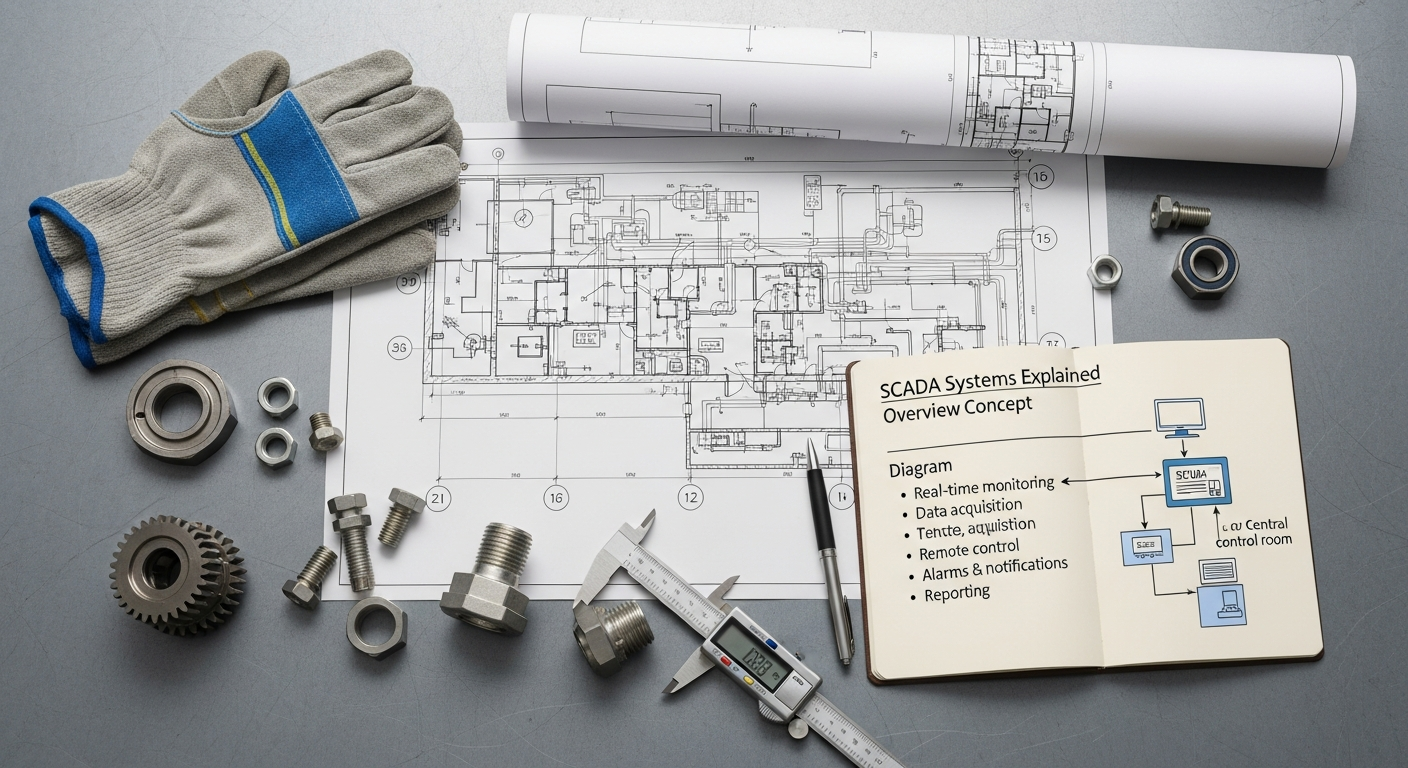
A typical SCADA system is a complex integration of hardware and software components, working in concert to achieve its supervisory and data acquisition functions. Understanding these core elements is key to appreciating the system’s power and flexibility.
- Field Devices (RTUs & PLCs): These are the eyes and hands of the SCADA system on the ground.
- Remote Terminal Units (RTUs): Often used in remote or geographically dispersed areas, RTUs are rugged, microprocessor-controlled electronic devices that interface with sensors and actuators in the field. They collect data (e.g., temperature, pressure, flow rates, motor status), convert it into digital signals, and transmit it back to the central SCADA server. They can also receive commands from the central system and execute control actions.
- Programmable Logic Controllers (PLCs): More commonly found within localized manufacturing plants, PLCs are industrial computers that automate specific processes or machines. They are highly reliable and execute control logic based on inputs from sensors, sending outputs to actuators. In a SCADA architecture, PLCs often act as the primary controllers for individual pieces of equipment or production lines, with the SCADA system providing the supervisory layer over multiple PLCs.
- Communication Infrastructure: This forms the backbone of the SCADA system, enabling data exchange between field devices and the central control system. It can involve various technologies depending on the distance, environment, and required speed, including:
- Wired networks (Ethernet, fiber optics)
- Wireless technologies (radio, cellular, satellite)
- Industrial communication protocols (Modbus, Profibus, OPC UA, DNP3, IEC 60870-5)
The robustness and reliability of the communication infrastructure are paramount for ensuring real-time data flow and control.
- Master Terminal Unit (MTU) / SCADA Server: This is the brain of the SCADA system. The MTU, often a server or a cluster of servers, is responsible for:
- Polling RTUs and PLCs for data.
- Processing incoming data and managing alarms.
- Storing historical data.
- Providing data to the HMI and other applications.
- Executing supervisory control commands.
Modern SCADA servers often run on robust operating systems and incorporate redundancy for high availability.
- Human-Machine Interface (HMI): The HMI is the graphical user interface that allows operators to interact with the SCADA system. It presents real-time data from the field devices in an intuitive, visual format, typically through dynamic screens, mimic diagrams, and trending graphs. Operators use the HMI to:
- Monitor the status of processes and equipment.
- View alarms and events.
- Issue control commands (e.g., open a valve, change a setpoint).
- Analyze historical data and generate reports.
A well-designed HMI is crucial for effective operator situational awareness and efficient incident response.
- Data Historian: This component is a specialized database designed to store the massive amounts of time-stamped data collected by the SCADA system. The historian enables:
- Long-term data storage and retrieval.
- Trending and analysis of process variables over time.
- Compliance reporting and audit trails.
- Support for advanced analytics and predictive modeling.
The data historian is indispensable for performance analysis, troubleshooting, and continuous improvement initiatives.
This integrated architecture ensures that data flows seamlessly from the factory floor to the control room, empowering operators and managers with the information and control necessary to maintain optimal operations.
The Operational Power of SCADA: How It Drives Efficiency and Control
- Real-time Monitoring and Control: The most immediate benefit of SCADA is its ability to provide operators with a real-time view of every critical process parameter. From machine temperatures and pressures to production rates and energy consumption, data is continuously collected and displayed on the HMI. This allows for immediate detection of anomalies and rapid intervention, preventing minor issues from escalating into costly breakdowns or quality deviations. Operators can remotely adjust setpoints, start/stop equipment, or modify production recipes, optimizing processes without physical presence on the factory floor.
- Enhanced Data Collection and Analysis: SCADA systems are prodigious data collectors. They gather vast quantities of historical data, which, when coupled with the data historian, becomes an invaluable resource for in-depth analysis. This wealth of information can be leveraged to identify trends, pinpoint inefficiencies, and understand the root causes of production issues. For instance, analyzing historical data on machine performance can reveal patterns that indicate impending equipment failure, enabling proactive maintenance rather than reactive repairs.
- Improved Alarm Management: Modern SCADA systems feature sophisticated alarm management capabilities. Instead of simply generating a generic alert, they can prioritize alarms based on severity, group related alarms, and provide contextual information to operators. This reduces alarm fatigue and ensures that critical issues receive immediate attention, improving response times and minimizing potential damage or downtime.
- Remote Operation and Automation: For geographically dispersed operations or large facilities, SCADA enables centralized control from a single location. This reduces the need for constant on-site personnel and allows for more efficient resource allocation. Furthermore, SCADA facilitates higher levels of automation by integrating with PLCs and other control devices, enabling complex sequences and interlocks that ensure safe and efficient operation.
- Predictive Maintenance: By continuously monitoring equipment parameters such as vibration, temperature, and current draw, SCADA systems provide the data necessary for predictive maintenance strategies. Algorithms can analyze this data to forecast potential equipment failures, allowing maintenance teams to schedule interventions before a catastrophic breakdown occurs. This approach significantly reduces unplanned downtime, extends equipment lifespan, and optimizes maintenance costs.
- Quality Control and Compliance: In industries with stringent quality requirements, SCADA plays a crucial role. It ensures that processes adhere to specified parameters, automatically logging deviations and providing an auditable trail of operational conditions. This is particularly vital in sectors like pharmaceuticals, food and beverage, and automotive, where product consistency and regulatory compliance are non-negotiable.
A key aspect where SCADA’s operational power shines is in supporting Lean Manufacturing Principles Explained. By providing granular data on every step of the production process, SCADA helps identify and eliminate the seven wastes of Lean: overproduction, waiting, unnecessary transport, over-processing, excess inventory, unnecessary motion, and defects. For example, real-time monitoring of work-in-progress inventory levels can prevent overproduction, while detailed operational data can pinpoint bottlenecks causing waiting times. Similarly, SCADA is an invaluable tool for implementing effective Manufacturing Waste Reduction Strategies. By tracking energy consumption, material usage, and scrap rates in real-time, manufacturers can identify areas of significant waste and implement targeted strategies to reduce them, leading to substantial cost savings and environmental benefits. The ability to precisely control process parameters, informed by SCADA data, directly contributes to minimizing material waste and energy consumption, aligning perfectly with sustainability goals.
SCADA in the Modern Industrial Landscape: IoT, AI, and Cybersecurity
The industrial landscape is in a constant state of evolution, driven by technological advancements. SCADA systems, far from being static, are at the forefront of this transformation, integrating with emerging technologies like the Internet of Things (IoT) and Artificial Intelligence (AI), while simultaneously grappling with the critical challenges of cybersecurity. As we look towards 2026, these integrations will define the next generation of industrial control.
- Integration with IoT Devices: The proliferation of smart sensors, edge devices, and industrial IoT (IIoT) platforms is significantly enhancing SCADA capabilities. IIoT devices can feed an even richer, more diverse stream of data into the SCADA system, from environmental conditions in a warehouse to the precise performance metrics of individual tools on an assembly line. This granular data enriches the SCADA historian, providing a more complete picture of operations and enabling more sophisticated analytics. The convergence of SCADA and IIoT is a cornerstone of Industry 4.0, facilitating truly connected and intelligent manufacturing environments.
- AI and Machine Learning for Advanced Analytics: The sheer volume of data collected by modern SCADA systems, especially when augmented by IIoT, presents an unprecedented opportunity for Artificial Intelligence and Machine Learning. AI algorithms can analyze this data to:
- Predictive Analytics: Go beyond basic trending to predict equipment failures with greater accuracy, optimizing maintenance schedules and minimizing downtime.
- Process Optimization: Identify optimal operating parameters for efficiency, quality, and resource utilization, even in complex, multi-variable processes.
- Anomaly Detection: Automatically detect subtle deviations from normal behavior that might indicate impending issues, often before human operators can perceive them.
- Automated Decision-Making: In some cases, AI can even automate minor control adjustments in response to predicted events or detected anomalies, under human supervision.
This transforms SCADA from a reactive monitoring system into a proactive, intelligent control platform.
- Cloud-Based SCADA: While traditional SCADA systems have largely been on-premise, there’s a growing trend towards cloud-based solutions. Cloud SCADA offers several advantages:
- Scalability: Easily scale resources up or down based on demand without significant hardware investment.
- Accessibility: Enable secure access to SCADA data and controls from anywhere, supporting remote work and distributed teams.
- Reduced IT Overhead: Shift infrastructure management to cloud providers, reducing the burden on internal IT teams.
- Enhanced Data Storage: Leverage the vast storage and processing power of cloud platforms for historical data and advanced analytics.
However, careful consideration of data security and latency is crucial for cloud-based industrial control.
- Cybersecurity Challenges and Solutions: As SCADA systems become more interconnected, the threat of cyberattacks intensifies. A successful attack on an industrial control system can lead to production shutdowns, equipment damage, data theft, and even safety hazards. Addressing cybersecurity is paramount for any modern SCADA deployment. Key strategies include:
- Network Segmentation: Isolating the operational technology (OT) network from the information technology (IT) network.
- Robust Authentication and Authorization: Implementing strong access controls, multi-factor authentication, and role-based access.
- Regular Patching and Updates: Keeping SCADA software, operating systems, and firmware up-to-date to address known vulnerabilities.
- Intrusion Detection Systems (IDS): Monitoring network traffic for suspicious activity.
- Employee Training: Educating personnel about cybersecurity best practices and phishing awareness.
- Incident Response Plans: Developing clear procedures for detecting, responding to, and recovering from cyberattacks.
Mitsubishi Manufacturing recognizes that a resilient and secure SCADA infrastructure is non-negotiable for protecting critical operations in 2026 and beyond.
- Mobile Access: Modern SCADA systems increasingly offer mobile applications and web interfaces, allowing authorized personnel to monitor key performance indicators (KPIs), receive alarms, and even perform basic control actions from smartphones or tablets. This enhances flexibility and responsiveness, especially for supervisors and maintenance technicians on the go.
The convergence of these technologies transforms SCADA into an intelligent, adaptive, and highly responsive system, capable of navigating the complexities of modern manufacturing while safeguarding operations against evolving threats.
Implementing and Optimizing SCADA Systems: A Strategic Approach
Successfully implementing and continuously optimizing a SCADA system requires a strategic, well-planned approach that considers both technological capabilities and organizational readiness. It’s not merely a software installation; it’s a comprehensive project that impacts operations, personnel, and overall business strategy.
Considerations for Implementation:
- System Design and Planning: The initial phase is critical. This involves a thorough assessment of current operational needs, future growth projections, and specific control requirements. Key decisions include defining the scope of control, identifying all necessary data points, selecting appropriate RTUs/PLCs, and designing a robust communication architecture. A well-defined system architecture ensures scalability, reliability, and security from the outset.
- Vendor Selection and Integration: Choosing the right SCADA vendor is paramount. This involves evaluating vendor expertise, the system’s compatibility with existing infrastructure, ease of integration, and ongoing support. Mitsubishi Manufacturing, for instance, offers robust automation solutions designed for seamless integration and long-term reliability. Integration with existing enterprise resource planning (ERP) systems, manufacturing execution systems (MES), and other business applications is crucial for a unified data environment.
- Hardware and Software Procurement: This involves acquiring the necessary servers, network equipment, HMIs, and SCADA software licenses. Careful consideration must be given to hardware specifications to ensure adequate processing power, storage, and redundancy.
- Installation and Configuration: Physical installation of field devices, network infrastructure, and SCADA servers, followed by meticulous software configuration. This includes setting up communication drivers, defining data tags, designing HMI screens, and configuring alarm thresholds and reporting functions. Thorough testing is essential at every stage.
- Training and Change Management: A SCADA system is only as effective as the people who operate it. Comprehensive training for operators, engineers, and maintenance staff on how to use the new system, interpret data, respond to alarms, and perform routine maintenance is vital. Effective change management strategies are also necessary to address any resistance to new technologies and ensure a smooth transition.
- Scalability and Future-Proofing: A well-implemented SCADA system should be designed with future expansion in mind. The ability to easily add new field devices, production lines, or functionalities without a complete overhaul ensures the system remains relevant as the business grows and evolves.
Optimization Strategies:
- Regular Maintenance and Updates: Just like any critical IT system, SCADA requires ongoing maintenance. This includes software updates, patching vulnerabilities, hardware checks, and regular backups of configurations and historical data. Keeping the system current ensures optimal performance and security.
- Performance Tuning: Over time, as processes change or new equipment is added, the SCADA system may require tuning. This could involve optimizing polling rates, refining alarm logic, or improving HMI screen layouts for better operator efficiency.
- Data Utilization and Analytics: The true power of SCADA lies in its data. Regularly analyzing historical data can reveal opportunities for process improvement, energy savings, and waste reduction. Integrating SCADA data with advanced analytics platforms can uncover deeper insights and support predictive modeling.
- Continuous Improvement with Feedback Loops: Establish feedback loops where operational data and insights from SCADA are regularly reviewed by cross-functional teams. This supports a culture of continuous improvement, allowing for iterative adjustments to processes and SCADA configurations based on real-world performance.
The effective implementation and optimization of SCADA systems are deeply intertwined with core manufacturing principles. For instance, understanding Materials Science In Manufacturing is critical when configuring SCADA to monitor and control processes involving specific material properties. For example, precise temperature control during heat treatment of metals, or accurate pressure regulation during injection molding of polymers, directly influences material integrity and final product quality. SCADA systems, through their precise data acquisition and control capabilities, ensure that these material-specific parameters are maintained within optimal ranges, preventing defects and ensuring consistent performance. By applying these strategic approaches, manufacturers can ensure their SCADA investments yield maximum returns, driving operational excellence and competitive advantage well into 2026 and beyond.
The Future of Industrial Control: SCADA’s Enduring Relevance in 2026 and Beyond
As the manufacturing industry continues its relentless march towards greater automation, intelligence, and connectivity, the role of SCADA systems is not diminishing but rather evolving and expanding. Looking ahead to 2026 and beyond, SCADA will remain an indispensable cornerstone of industrial control, adapting to new technologies and challenges while continuing to provide the foundational capabilities that underpin efficient and resilient operations.
The trajectory of SCADA is clear: it will become even more integrated, intelligent, and secure. We can anticipate deeper convergence with emerging technologies. The symbiotic relationship between SCADA and the Industrial Internet of Things (IIoT) will strengthen, with SCADA platforms acting as the central nervous system that orchestrates data from a vast array of smart sensors and connected devices. This will lead to an unprecedented level of granularity in operational visibility, enabling manufacturers to monitor every aspect of their production lines, from individual tool performance to environmental conditions across multiple facilities.
Artificial Intelligence and Machine Learning will continue to transform SCADA from a supervisory system into a truly predictive and proactive intelligence hub. AI algorithms will not only identify anomalies but will also suggest optimal control strategies, anticipate equipment failures with increasing accuracy, and even autonomously make micro-adjustments to processes to maintain peak efficiency and quality. This shift towards AI-driven automation promises to unlock new levels of productivity and reduce human intervention in routine tasks, allowing human operators to focus on higher-level strategic decisions and problem-solving.
Cybersecurity will remain a paramount concern, driving continuous innovation in SCADA system design and implementation. As systems become more interconnected, the attack surface expands, necessitating advanced threat detection, robust authentication protocols, and resilient architectures. Manufacturers will increasingly adopt a “security by design” philosophy, integrating cybersecurity measures at every layer of the SCADA system from inception. Regulatory bodies will likely introduce stricter guidelines for industrial control system security, further cementing its importance.
Furthermore, cloud-based and hybrid SCADA solutions will gain more traction, offering greater flexibility, scalability, and accessibility. This will enable smaller and medium-sized enterprises (SMEs) to leverage sophisticated SCADA capabilities that were once exclusive to large corporations, democratizing access to advanced industrial control. The trend towards modular, open-architecture SCADA systems will also continue, facilitating easier integration with diverse hardware and software components and fostering greater innovation within the ecosystem.
For Mitsubishi Manufacturing, the enduring relevance of SCADA lies in its ability to empower businesses to achieve greater operational agility, reduce waste, enhance product quality, and secure their intellectual property and physical assets. As industries navigate global supply chain complexities, evolving regulatory landscapes, and the relentless pursuit of sustainability, SCADA systems will provide the critical intelligence and control necessary to adapt, optimize, and thrive. In 2026 and beyond, SCADA will not just be about controlling processes; it will be about creating smarter, safer, and more sustainable manufacturing operations, positioning companies for long-term success in an ever-competitive world.
Frequently Asked Questions
What is the primary difference between SCADA and a PLC?▾
How does SCADA contribute to Lean Manufacturing?▾
What are the key cybersecurity concerns for SCADA systems?▾
Can SCADA systems be integrated with cloud platforms?▾
How does SCADA help in reducing manufacturing waste?▾
What role does Materials Science play in SCADA implementation?▾
Recommended Resources
Explore Hpv Vaccine Importance Guide for additional insights.
Explore Emergency Fund Guide How Much To Save for additional insights.