


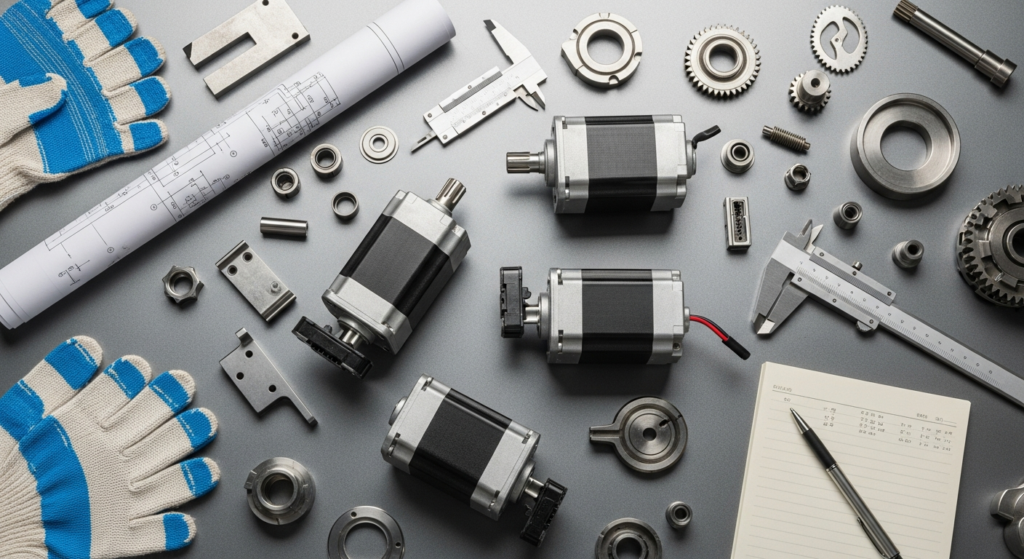
Understanding Servo Motors: The Core of Precision Motion Control
A servo motor is a rotary actuator or linear actuator that allows for precise control of angular or linear position, velocity, and acceleration. Unlike standard motors, which simply spin when power is applied, a servo motor operates within a closed-loop system, constantly receiving feedback about its current state and making real-time adjustments to achieve the desired motion profile. This fundamental difference is what elevates servo technology to an indispensable tool in industrial automation.
Components of a Servo System
A typical servo system comprises several key components working in concert:
- Servo Motor: This is the electromechanical device that converts electrical energy into mechanical energy. Servo motors can be AC (alternating current) or DC (direct current), with AC servo motors being more prevalent in high-power industrial applications due to their efficiency and maintenance-free operation.
- Servo Drive (Amplifier): The drive acts as the brain of the system, receiving command signals from a controller and supplying the appropriate current and voltage to the motor. It interprets the feedback signal and adjusts the motor’s output to correct any deviations from the desired position or speed.
- Feedback Device: Essential for the closed-loop operation, this device (typically an encoder or resolver) is mounted on the motor shaft and provides continuous information about the motor’s actual position, velocity, or even acceleration. This data is fed back to the servo drive, allowing for precise control.
- Controller: This external device (e.g., a PLC, CNC, or dedicated motion controller) generates the command signals that dictate the desired motion profile for the servo system.
How Servo Motors Achieve Unparalleled Precision
The magic of a servo motor lies in its closed-loop control. When a controller sends a command for the motor to move to a specific position or at a certain speed, the servo drive powers the motor. Simultaneously, the feedback device monitors the motor’s actual movement. If there’s a discrepancy between the commanded position/speed and the actual position/speed, the drive immediately makes adjustments to the motor’s power output until the desired state is achieved. This continuous monitoring and correction cycle ensures extremely high accuracy and repeatability, often within fractions of a degree or micron.
This level of control is a stark contrast to open-loop systems like those often found with stepper motors, which operate without direct feedback on their actual position, assuming each step is executed perfectly. While stepper motors are suitable for many applications, their limitations in terms of speed, torque at higher speeds, and lack of absolute position verification make them less ideal for tasks demanding the dynamic performance and pinpoint accuracy that define modern industrial automation.
Why Servo Motors are Indispensable in Modern Industrial Automation

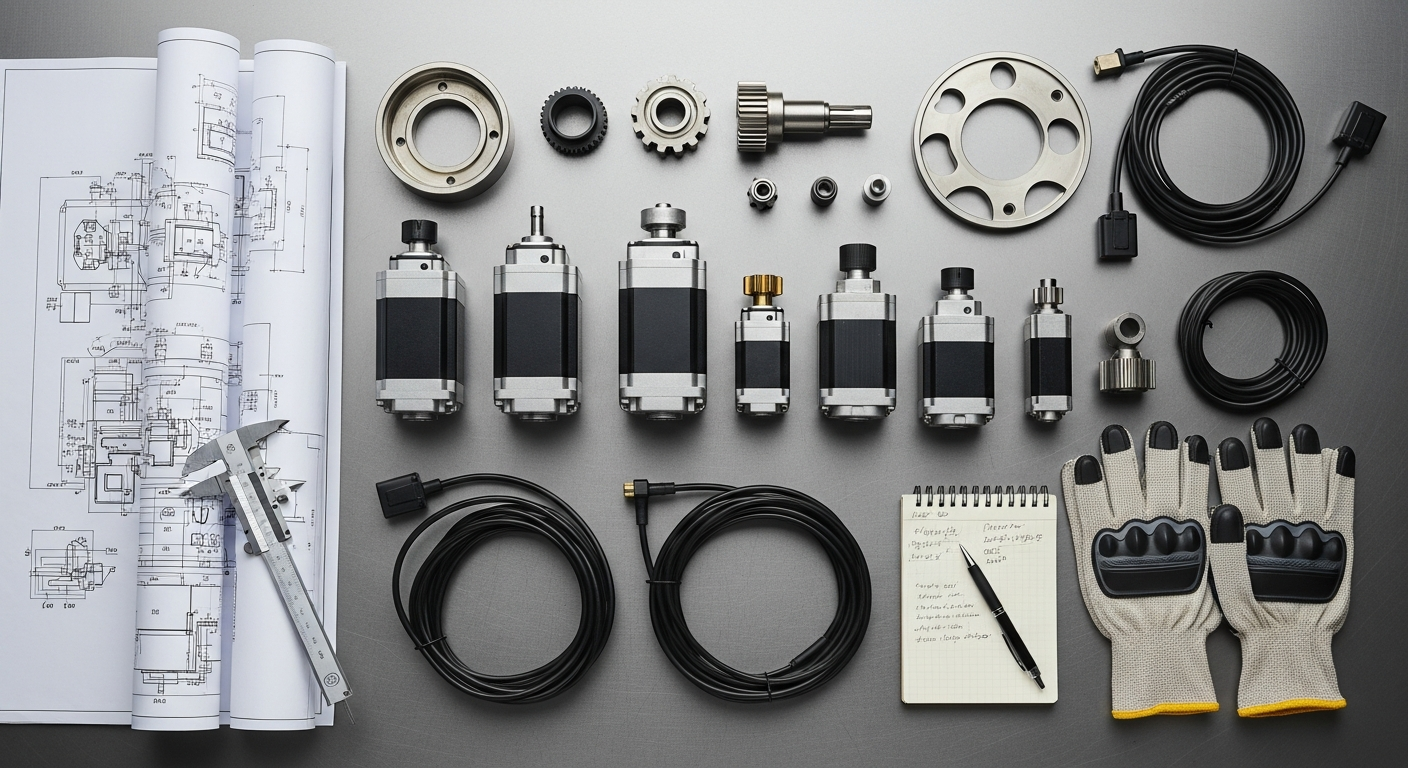
The unique capabilities of servo motors make them critical enablers for the sophisticated, high-performance machinery that drives today’s manufacturing plants. Their benefits extend far beyond simple motion, influencing productivity, quality, and operational costs.
Key Advantages in Industrial Settings
- Exceptional Precision and Accuracy: As highlighted, the closed-loop feedback system allows servo motors to achieve and maintain exact positions, speeds, and torque levels. This is crucial for tasks requiring tight tolerances, such as intricate assembly, precise cutting, or delicate material handling. The repeatability of servo systems ensures consistent product quality, minimizing defects and rework.
- Dynamic Performance and Responsiveness: Servo motors excel in applications requiring rapid acceleration and deceleration, quick reversals, and high torque output across a wide speed range. They can swiftly respond to changes in load or command signals, making them ideal for dynamic processes like pick-and-place robotics or high-speed packaging.
- High Efficiency and Energy Savings: Modern servo motors and drives are engineered for high efficiency. They consume power proportional to the load, meaning they only draw the energy necessary for the task at hand. Many advanced servo drives also feature regenerative braking capabilities, where energy generated during deceleration is fed back into the power supply, leading to significant energy savings over time. This aligns perfectly with broader sustainability goals and Manufacturing Waste Reduction Strategies focused on energy optimization.
- Flexibility and Programmability: Servo systems are highly adaptable. Their motion profiles can be easily programmed and modified, allowing for quick changeovers between different products or processes. This flexibility is vital in today’s manufacturing environment, where mass customization and smaller batch sizes are becoming increasingly common.
- Reliability and Durability: Designed for continuous operation in demanding industrial environments, servo motors and drives are built to be robust and long-lasting. Their precise control also reduces mechanical stress on the machinery, contributing to extended equipment life and reduced maintenance requirements.
- Smooth Operation and Low Noise: The precise control of torque and speed results in smoother motion, reducing vibrations and noise levels compared to less controlled motor types. This can improve working conditions and contribute to the overall quality of sensitive processes.
These advantages collectively empower manufacturers to push the boundaries of what’s possible, enabling faster production cycles, superior product quality, and more efficient resource utilization across the board.
Key Applications of Servo Motors Across Industries
Robotics and Automation
Perhaps one of the most recognizable applications, servo motors are the muscles and joints of industrial robots. Articulated robot arms, SCARA robots, and even collaborative robots rely on servo motors for each of their axes of motion. This enables robots to perform complex tasks with incredible accuracy and speed, whether it’s welding, painting, assembly, or material handling.
CNC Machining and Metalworking
In Computer Numerical Control (CNC) machines, servo motors drive the axes that position cutting tools and workpieces with extreme precision. From milling and turning to grinding and laser cutting, servo motors ensure that intricate contours are followed accurately, leading to high-quality finished parts with tight tolerances. The dynamic response of servos allows for rapid feed rates and quick changes in direction, optimizing machining time.
Packaging and Material Handling
The packaging industry demands speed, synchronization, and accuracy. Servo motors are widely used in filling machines, sealing equipment, labeling machines, and cartoners to precisely control product movement, material feeding, and sealing processes. In material handling, they power automated guided vehicles (AGVs), conveyor systems, and palletizers, ensuring efficient and damage-free movement of goods.
Printing and Textile Industries
In printing presses, servo motors control web tension, registration, and precise paper feeding to ensure consistent print quality and minimize waste. Similarly, in textile machinery, they manage yarn tension, fabric cutting, and sewing operations with high accuracy, contributing to the production of high-quality garments and fabrics.
Electronics Manufacturing
The production of electronic components and devices requires microscopic precision. Servo motors are integral to pick-and-place machines for surface-mount technology (SMT), wire bonding equipment, and automated inspection systems, where components must be positioned with micron-level accuracy.
Food and Beverage Processing
Maintaining hygiene and precise portion control is critical in food and beverage production. Servo motors are used in slicing machines, filling equipment, and packaging lines to handle products delicately, ensure accurate measurements, and operate reliably in washdown environments.
Medical Device Manufacturing
The manufacturing of medical devices often involves extremely small components and stringent quality standards. Servo motors provide the necessary precision for micro-assembly, fluid dispensing, and testing equipment, where accuracy can be a matter of life or death.
These diverse applications underscore the fundamental adaptability and critical importance of servo motors in industrial automation across virtually every sector of modern manufacturing.
Integrating Servo Systems: From Design to Deployment
Successfully leveraging the power of servo motors requires careful consideration during every stage, from initial system design to ongoing maintenance. A well-integrated servo system maximizes performance, minimizes downtime, and delivers optimal return on investment.
System Design and Sizing
The first critical step involves accurately sizing the servo system for the specific application. This includes calculating the required torque, speed, acceleration, and inertia of the load. Over-sizing can lead to unnecessary costs and reduced efficiency, while under-sizing will result in poor performance and potential system failure. Engineers must consider factors such as:
- Load Characteristics: Mass, friction, external forces, and duty cycle.
- Motion Profile: Desired acceleration, deceleration, constant velocity periods, and settling time.
- Environmental Factors: Temperature, humidity, vibration, and ingress protection (IP) ratings.
- Safety Requirements: Ensuring the system meets all necessary safety standards and incorporates appropriate safety functions.
Selecting the right motor type (e.g., synchronous, asynchronous, direct drive), the appropriate drive capacity, and the correct feedback device is paramount. Mitsubishi Manufacturing, for instance, offers a comprehensive range of servo motors and amplifiers, providing solutions tailored to a wide array of industrial demands, from compact, high-speed applications to heavy-duty, high-torque requirements.
Control Architecture and Communication
Modern servo systems are typically integrated into larger control architectures, often communicating with a central PLC (Programmable Logic Controller) or a dedicated motion controller. The choice of communication protocol (e.g., EtherCAT, PROFINET, CC-Link IE Field Basic) is vital for ensuring high-speed, deterministic data exchange, which is critical for synchronized multi-axis motion and real-time control. The sophistication of today’s communication networks allows for seamless integration with other factory automation components, creating a cohesive and highly responsive manufacturing ecosystem.
Programming and Commissioning
Once hardware is installed, the servo system needs to be programmed and commissioned. This involves:
- Motion Profile Definition: Creating the precise sequences of acceleration, velocity, and position that the motor will follow.
- Parameter Tuning: Adjusting the servo drive’s control loop parameters (e.g., gain values) to achieve optimal responsiveness, stability, and accuracy for the specific mechanical load. This often requires specialized software and expertise to eliminate oscillations, reduce settling time, and ensure smooth operation.
- HMI Integration: Developing Human-Machine Interface (HMI) screens that allow operators to monitor system status, change parameters, and troubleshoot issues efficiently.
- Safety Verification: Thoroughly testing all safety functions to ensure compliance with machine safety directives.
Maintenance and Troubleshooting
While servo systems are highly reliable, regular maintenance and proactive troubleshooting are essential for maximizing their lifespan and preventing unplanned downtime. This includes:
- Preventive Maintenance: Regular inspections of cables, connectors, and cooling systems.
- Predictive Maintenance: Leveraging data from the servo drive (e.g., motor temperature, current draw, vibration analysis) to predict potential failures before they occur. This data-driven approach, a hallmark of Industry 4.0, allows for scheduled maintenance, avoiding costly production interruptions.
- Diagnostic Tools: Utilizing advanced diagnostic features within servo drives and software to quickly identify and resolve issues, minimizing repair times.
Proper integration, from meticulous design to proactive maintenance, ensures that servo motors in industrial automation deliver their full potential, contributing significantly to overall operational efficiency and productivity.
The Role of Servo Motors in Achieving Lean Manufacturing
The principles of Lean Manufacturing, which originated from the Toyota Production System, focus on maximizing customer value while minimizing waste. Servo motors are not just components; they are critical enablers that help manufacturers achieve these lean objectives by directly addressing various forms of waste and improving process efficiency.
Lean Manufacturing Principles Explained
At its core, Lean Manufacturing seeks to eliminate waste (muda) in all its forms across the production process. The most commonly identified types of waste include:
- Overproduction: Producing more than is needed or sooner than needed.
- Waiting: Idle time for people, machines, or materials.
- Unnecessary Transport: Moving materials or products more than required.
- Over-processing: Performing unnecessary work on a product.
- Excess Inventory: Holding more raw materials, work-in-progress, or finished goods than necessary.
- Unnecessary Motion: Any movement by people or machines that doesn’t add value.
- Defects: Errors, rework, or scrap that require additional resources.
Servo motors, with their inherent precision, speed, and flexibility, offer powerful tools for implementing effective Manufacturing Waste Reduction Strategies across these areas.
How Servo Motors Drive Waste Reduction
- Eliminating Overproduction: Servo motors enable highly precise control over production volumes and speeds. This facilitates just-in-time (JIT) manufacturing, where products are made only when needed and in the exact quantities required. Their quick changeover capabilities mean lines can be rapidly adjusted for smaller, demand-driven batches, avoiding the build-up of excess inventory that often leads to overproduction.
- Reducing Defects: The unparalleled accuracy and repeatability of servo systems drastically reduce the likelihood of manufacturing errors. Whether it’s precise positioning for assembly, accurate cutting, or consistent material handling, servos ensure that each operation is performed correctly every time. This minimizes scrap, rework, and the associated costs and time waste.
- Minimizing Unnecessary Motion: Servo motors allow for optimized motion profiles, ensuring that movements are efficient, direct, and swift. In robotics, for example, servo-driven axes execute the shortest and most effective paths, reducing cycle times and energy consumption. This directly addresses the waste of unnecessary motion for both machines and, indirectly, for operators.
- Decreasing Waiting Time: The high reliability and robust design of industrial servo motors contribute to reduced machine downtime. When machines operate consistently and predictably, waiting times for subsequent processes or for maintenance personnel are significantly cut. Furthermore, their rapid acceleration and deceleration capabilities minimize the time between operational steps.
- Optimizing Inventory: By enabling flexible manufacturing and precise production control, servo motors support lower work-in-progress (WIP) and finished goods inventory levels. The ability to quickly adapt to demand fluctuations means less buffer stock is required, freeing up capital and physical space.
- Streamlining Over-processing: With precise control over processes, servo motors ensure that each manufacturing step is executed optimally, without unnecessary actions or redundant operations. For instance, in a packaging line, a servo-controlled filler will dispense the exact amount, eliminating the need for subsequent adjustments or re-filling.
By directly combating these forms of waste, servo motors in industrial automation are not just about raw performance; they are fundamental instruments for achieving the lean ideal of continuous improvement, higher quality, and increased profitability.
Future Trends and Innovations in Servo Technology for 2026
The landscape of industrial automation is constantly evolving, driven by technological advancements and the increasing demands for efficiency, intelligence, and connectivity. Servo motor technology is at the forefront of this evolution, with several exciting trends anticipated to shape its future through 2026 and beyond.
Enhanced Connectivity and Industry 4.0 Integration
The drive towards Industry 4.0 and the Industrial Internet of Things (IIoT) will continue to profoundly impact servo technology. Expect to see even more sophisticated communication protocols and integrated intelligence within servo drives, enabling seamless data exchange with cloud platforms, enterprise resource planning (ERP) systems, and other factory devices. This enhanced connectivity will facilitate real-time performance monitoring, predictive maintenance, and machine learning-driven optimization of motion control processes. Data collected from servo systems will be instrumental in identifying bottlenecks, improving overall equipment effectiveness (OEE), and enabling more autonomous manufacturing operations.
Increased Intelligence at the Edge
The trend of pushing computational power closer to the data source – “edge computing” – will see servo drives become even more intelligent. Future servo drives will likely incorporate more advanced processing capabilities, allowing them to execute complex motion algorithms, perform self-diagnostics, and even make minor adjustments autonomously without constant communication with a central controller. This distributed intelligence enhances system responsiveness, reduces network traffic, and improves overall system resilience.
Greater Energy Efficiency and Sustainability
As global emphasis on sustainability grows, the development of more energy-efficient servo motors and drives will accelerate. Innovations will focus on:
- Higher Power Density: Achieving more power from smaller, lighter motors, reducing material consumption.
- Advanced Regenerative Drives: Improving the efficiency of energy recovery during braking, further reducing overall power consumption.
- Optimized Control Algorithms: Software enhancements that minimize energy usage during various motion profiles.
- Material Innovations: The field of Materials Science In Manufacturing will play a crucial role. Research into new magnet materials (e.g., alternatives to rare-earth magnets), advanced winding techniques, and improved bearing technologies will lead to motors with lower losses and extended operational lifespans.
Miniaturization and Integration
The demand for more compact and integrated automation solutions will drive further miniaturization of servo components. This includes smaller motor footprints, integrated motor-drive units, and increasingly compact feedback devices. Such developments are crucial for applications in collaborative robotics, mobile automation (e.g., smaller AGVs/AMRs), and highly space-constrained environments.
Advanced Safety and Human-Robot Collaboration
With the rise of collaborative robots (cobots), servo technology will continue to evolve to meet stringent safety requirements for human-robot interaction. This includes integrated functional safety features within servo drives, advanced torque and speed monitoring, and faster reaction times to ensure that robots can safely operate alongside human workers without the need for physical barriers.
Artificial Intelligence and Machine Learning in Motion Control
AI and ML are poised to revolutionize motion control. By 2026, we can expect to see servo systems that use AI to:
- Self-Tune: Automatically optimize tuning parameters for varying loads and operating conditions.
- Predict Failures: More accurately predict impending failures based on subtle changes in performance data.
- Optimize Paths: Dynamically generate the most efficient motion paths for complex tasks, adapting in real-time to environmental changes.
These innovations promise to make servo motors in industrial automation not just powerful, but also smarter, more adaptable, and even more integral to the intelligent factories of the future.
Frequently Asked Questions
What is the primary advantage of servo motors over stepper motors in industrial automation?▾
How do servo motors contribute to energy efficiency in manufacturing?▾
Can servo motors be used in harsh industrial environments?▾
What role do feedback devices (like encoders) play in a servo system?▾
How do servo motors align with the principles of Industry 4.0?▾
What is Mitsubishi’s contribution to servo motor technology for industrial automation?▾
Recommended Resources
Learn more about this topic in Benefits Of Meditation For Stress at Diaal News.
Learn more about this topic in Fertility Treatment Options Overview at Protect Families Protect Choices.