



What is Six Sigma? A Foundation for Operational Excellence
Six Sigma is a data-driven, disciplined methodology that aims to eliminate defects and variation in any process – from manufacturing to transactional and product development. Its core philosophy revolves around understanding and managing process variation to produce products or services that consistently meet customer expectations. The “Six Sigma” term itself is derived from statistics and literally refers to a process that produces no more than 3.4 defects per million opportunities (DPMO). This level of performance signifies near perfection, representing an incredibly high standard of quality and reliability.
The origins of Six Sigma can be traced back to Motorola in the 1980s, where engineer Bill Smith developed the concept to improve manufacturing processes and reduce defects. It gained widespread prominence when Jack Welch championed its implementation at General Electric in the mid-1990s, transforming it into a global standard for operational excellence. Since then, its principles have been adopted by countless organizations across various sectors, demonstrating its versatility and effectiveness beyond traditional manufacturing.
At its heart, Six Sigma is about measuring and improving the quality of outputs by identifying and removing the causes of defects and minimizing variability in manufacturing and business processes. It employs a set of quality management methods, primarily empirical and statistical methods, and creates a special infrastructure of people within the organization who are experts in these methods. Each Six Sigma project undertaken within an organization follows a defined sequence of steps and has quantified financial targets, such as cost reduction or profit increase. The methodology emphasizes a rigorous, fact-based approach, ensuring that improvements are not based on intuition but on solid data analysis.
For manufacturers, the benefits of adopting Six Sigma are multifaceted. It leads to significant reductions in defect rates, minimizing rework, scrap, and warranty claims. This directly translates to substantial cost savings and improved profitability. Furthermore, by standardizing processes and reducing variation, Six Sigma enhances product consistency and reliability, which in turn boosts customer satisfaction and loyalty. The disciplined problem-solving approach inherent in Six Sigma also fosters a culture of continuous learning and improvement, empowering employees at all levels to identify issues and contribute to solutions. It provides a common language and a structured framework for tackling complex operational challenges, making it an indispensable tool for any manufacturing entity striving for peak performance in 2026 and beyond.
The DMAIC Methodology: Driving Process Improvement

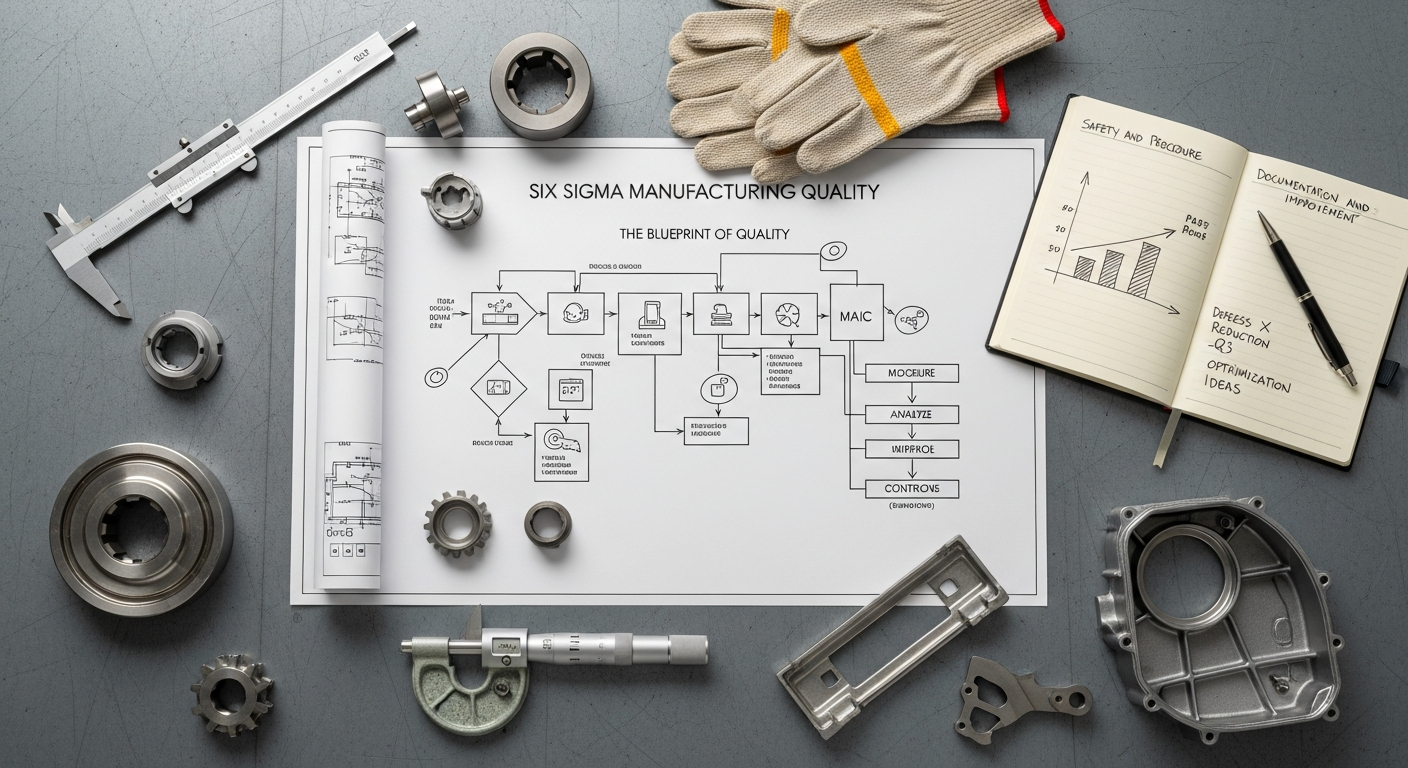
The cornerstone of Six Sigma implementation is the DMAIC methodology, a structured, five-phase approach designed to improve existing business processes. DMAIC stands for Define, Measure, Analyze, Improve, and Control. Each phase has specific objectives and tools, guiding teams through a systematic process of problem-solving and optimization. While DMAIC is used for improving existing processes, a similar methodology called DMADV (Define, Measure, Analyze, Design, Verify), also known as Design for Six Sigma (DFSS), is employed for developing new processes or products.
Define Phase: Setting the Stage for Success
The first phase, Define, is critical for establishing the project’s scope and objectives. It involves clearly articulating the problem, understanding customer needs (Voice of the Customer – VOC), and outlining the project’s goals. Key activities include creating a project charter, which details the problem statement, business case, project scope, goals, and team members. During this phase, teams also identify the process to be improved and map its high-level steps. A well-defined problem and clear objectives are essential to ensure the project stays focused and delivers tangible results.
Measure Phase: Quantifying Performance
In the Measure phase, the focus shifts to collecting data to quantify the current state of the process and establish a baseline performance. This involves identifying key process output variables (Y’s) and input variables (X’s). Teams use various tools such as process mapping, data collection plans, and measurement system analysis (MSA) to ensure the accuracy and reliability of the data. Understanding the current performance metrics, such as defect rates, cycle times, or costs, is crucial for assessing the impact of future improvements. This phase often reveals hidden inefficiencies and variations that were previously overlooked.
Analyze Phase: Uncovering Root Causes
The Analyze phase is where the collected data is meticulously examined to identify the root causes of defects and variations. This is perhaps the most critical phase, requiring rigorous statistical analysis. Tools like Pareto charts, fishbone diagrams (Ishikawa diagrams), scatter plots, hypothesis testing, regression analysis, and failure mode and effects analysis (FMEA) are employed to pinpoint the fundamental issues rather than just treating symptoms. By systematically delving into the ‘why’ behind the problems, teams can develop targeted and effective solutions. A deep understanding of the root causes ensures that improvements address the actual source of the problem, leading to sustainable change.
Improve Phase: Implementing Solutions
Once root causes are identified, the Improve phase focuses on developing and implementing solutions to eliminate or mitigate them. This involves brainstorming potential solutions, evaluating their feasibility and impact, and selecting the most effective ones. Techniques such as design of experiments (DOE), lean tools for waste reduction, and creative problem-solving are often utilized. Pilot testing the proposed solutions on a small scale helps validate their effectiveness before full-scale implementation. The goal is to implement changes that directly address the identified root causes, leading to measurable improvements in process performance.
Control Phase: Sustaining the Gains
The final phase, Control, is dedicated to sustaining the improvements achieved and preventing regression. This involves implementing control mechanisms to monitor the improved process and ensure it continues to operate at the desired level of performance. Tools such as statistical process control (SPC) charts, standard operating procedures (SOPs), visual management, and regular audits are essential for maintaining the gains. Training employees on new procedures and establishing clear ownership for the process are also vital. The Control phase ensures that the hard work of the previous phases translates into long-term operational excellence, safeguarding the investment made in the Six Sigma project.
Six Sigma Roles and Responsibilities: Building a Champion Team
Champions/Sponsors: The Visionary Leaders
At the highest level are the Champions or Sponsors, typically senior leaders within the organization. Their role is pivotal: they champion the Six Sigma initiative, identify potential projects, allocate resources, and remove organizational barriers. Champions provide the strategic direction and ensure that Six Sigma projects align with the company’s overall business objectives. Their visible support and commitment are crucial for fostering a culture receptive to change and data-driven decision-making. They also mentor Master Black Belts and Black Belts, ensuring the methodology is effectively deployed and sustained.
Master Black Belts (MBB): The Coaches and Mentors
Master Black Belts are highly experienced Six Sigma experts who function as mentors and coaches to Black Belts and Green Belts. They possess extensive knowledge of Six Sigma principles, tools, and statistical methods. MBBs are responsible for training, certifying, and guiding Black Belts, providing technical support, and ensuring the consistent application of the methodology across the organization. They often play a strategic role in developing and deploying the Six Sigma program, acting as internal consultants for complex projects and facilitating organizational learning. Their deep expertise in `Materials Science In Manufacturing` might also be leveraged to optimize material properties and process parameters in critical projects.
Black Belts (BB): The Full-Time Project Leaders
Black Belts are full-time Six Sigma professionals who lead complex, cross-functional improvement projects. They are highly trained in the DMAIC methodology and a wide array of statistical and problem-solving tools. Black Belts are responsible for forming project teams, defining project scope, conducting data analysis, implementing solutions, and tracking project benefits. They work closely with process owners and stakeholders to drive significant improvements and achieve project goals. Their role demands strong leadership, analytical skills, and the ability to manage change effectively.
Green Belts (GB): The Part-Time Project Contributors
Green Belts are employees who have received Six Sigma training and apply the methodology to smaller-scale projects within their functional areas or support Black Belts on larger projects. They typically dedicate a portion of their time to Six Sigma activities while maintaining their primary job responsibilities. Green Belts are proficient in core Six Sigma tools and the DMAIC framework, enabling them to identify and solve problems within their immediate work environments. They are crucial for embedding Six Sigma principles into the daily operations of the organization and fostering widespread engagement in continuous improvement.
Yellow Belts (YB): The Engaged Team Members
Yellow Belts possess a foundational understanding of Six Sigma concepts and tools. They typically participate as team members on Six Sigma projects led by Green Belts or Black Belts, contributing their process knowledge and assisting with data collection and analysis. Yellow Belts are instrumental in supporting improvement initiatives and understanding the language and objectives of Six Sigma. They often become advocates for the methodology within their teams, helping to build a broader culture of quality and efficiency.
White Belts (WB): The Awareness Advocates
White Belts represent the entry-level of Six Sigma knowledge. They have a basic understanding of what Six Sigma is, its goals, and how it contributes to organizational success. White Belts are typically introduced to Six Sigma concepts through awareness training and understand their role in supporting Six Sigma initiatives by identifying potential problems and participating in local improvement efforts. They form the broad base of support that helps integrate Six Sigma thinking into the daily operations and decision-making processes across the entire manufacturing floor.
This structured belt system ensures that Six Sigma expertise is distributed throughout the organization, from strategic leadership to operational execution. Each role contributes uniquely to the successful deployment and sustainability of the methodology, creating a powerful engine for continuous improvement and operational excellence. The clear delineation of responsibilities ensures that projects are well-managed, data-driven decisions are made, and improvements are sustained over the long term.
Integrating Six Sigma with Lean and Kaizen: A Holistic Approach
While Six Sigma is a powerful methodology on its own, its effectiveness is significantly amplified when integrated with other continuous improvement frameworks, particularly Lean Manufacturing and Kaizen. This synergistic approach creates a holistic strategy for operational excellence, addressing both efficiency and quality in a comprehensive manner. Many organizations, including Mitsubishi Manufacturing, recognize that combining these methodologies allows for a more robust and sustainable path to superior performance.
Lean Manufacturing Principles Explained: Eliminating Waste, Enhancing Flow
Lean Manufacturing Principles Explained focuses primarily on identifying and eliminating waste (Muda), overburden (Muri), and unevenness (Mura) within processes to improve flow and speed. The core objective of Lean is to deliver maximum value to the customer with minimum waste. Lean principles emphasize value stream mapping, 5S, just-in-time (JIT) production, pull systems, and single-piece flow. By systematically removing non-value-added activities, Lean helps to reduce lead times, inventory, and operational costs, making processes more efficient and responsive.
Where Six Sigma focuses on reducing variation and defects, Lean excels at streamlining processes and optimizing resource utilization. When integrated, Lean principles can quickly identify areas of waste and inefficiency, which then become prime candidates for Six Sigma projects. For example, a Lean value stream mapping exercise might uncover excessive waiting times or unnecessary transportation. A subsequent Six Sigma project could then analyze the root causes of these delays and implement data-driven solutions to reduce variability in those specific process steps, thereby solidifying the gains from Lean.
Kaizen Continuous Improvement Explained: The Power of Small, Incremental Steps
Kaizen Continuous Improvement Explained is a philosophy that champions ongoing, incremental improvements involving everyone from top management to the shop floor. The word “Kaizen” is Japanese for “change for the better.” Unlike the large-scale, project-based nature of Six Sigma, Kaizen encourages small, daily improvements that accumulate over time to yield significant results. Kaizen events, or workshops, are short, focused improvement bursts designed to quickly solve specific problems or improve certain processes. These events often utilize visual management, standardized work, and rapid prototyping to implement changes.
The integration of Kaizen with Six Sigma is particularly powerful for sustaining improvements. Once a Six Sigma project has achieved significant breakthroughs by reducing defects and variation, Kaizen principles help to embed a culture of continuous monitoring and refinement. Small Kaizen initiatives can ensure that the improved process remains stable and adapts to minor shifts over time. Furthermore, Kaizen can be used to address smaller issues identified during the Control phase of a Six Sigma project, preventing them from escalating into larger problems that would require another major Six Sigma initiative. This complementary relationship ensures that both breakthrough improvements and daily fine-tuning contribute to overall operational excellence.
The Synergy: Lean for Speed, Six Sigma for Quality, Kaizen for Agility
Combining these methodologies creates a robust framework often referred to as “Lean Six Sigma.” This approach leverages the strengths of each:
- Lean provides the tools to eliminate waste and improve process flow, making processes faster and more efficient.
- Six Sigma provides the analytical rigor and statistical tools to reduce variation and improve quality, making processes more consistent and reliable.
- Kaizen fosters a culture of ongoing engagement and empowers employees to make continuous, small improvements, ensuring that the gains are sustained and the organization remains agile.
In practice, a manufacturing facility might first apply Lean principles to identify and remove obvious wastes, streamlining the process. Then, a Six Sigma team might tackle a specific bottleneck or quality issue identified during the Lean assessment, using DMAIC to reduce variation and defects. Finally, Kaizen events and daily management practices would ensure that the improved process is maintained and further refined, fostering a proactive approach to problem-solving. This integrated strategy is crucial for organizations aiming for world-class manufacturing performance, allowing them to optimize for both speed and quality while maintaining an adaptive and engaged workforce in 2026 and beyond.
The Role of Data and Technology in Modern Six Sigma
In the 21st century, the effectiveness of the Six Sigma methodology is inextricably linked to the intelligent use of data and advanced technology. The fundamental principle of Six Sigma – making data-driven decisions to reduce variation and defects – has been significantly enhanced by the advent of Big Data, the Internet of Things (IoT), artificial intelligence (AI), and sophisticated statistical software. For Mitsubishi Manufacturing, leveraging these technological advancements is not just an option but a necessity to maintain a competitive edge and achieve higher sigma levels.
Data Accuracy and Integrity: The Foundation
At the core of any successful Six Sigma project is the quality of data. Without accurate, reliable, and relevant data, even the most advanced statistical tools will yield flawed insights. Modern manufacturing environments generate vast amounts of data, from sensor readings on production lines to quality control measurements and customer feedback. Ensuring the integrity of this data through robust data collection plans, proper measurement system analysis (MSA), and secure storage systems is paramount. Data governance, including clear definitions, standards, and validation processes, becomes a critical component in the Measure and Analyze phases of DMAIC.
Statistical Software: Empowering Analysis
The manual calculations once associated with complex statistical analysis in Six Sigma have largely been replaced by powerful software tools. Programs like Minitab, JMP, R, and Python with libraries like SciPy and Pandas are indispensable for Six Sigma Black Belts and Green Belts. These tools enable efficient execution of a wide range of statistical analyses, including:
- Descriptive Statistics: Summarizing and visualizing data to understand current process performance.
- Hypothesis Testing: Statistically validating assumptions about process inputs and outputs.
- Regression Analysis: Identifying relationships between variables to understand cause and effect.
- Design of Experiments (DOE): Systematically varying input factors to optimize process outputs and identify optimal settings.
- Statistical Process Control (SPC): Monitoring process stability and detecting out-of-control conditions in real-time.
These software packages not only accelerate the analysis phase but also allow for more sophisticated and nuanced investigations, revealing insights that might be missed with simpler tools. They democratize complex statistical methods, making Six Sigma accessible to a broader range of practitioners.
Sensors, IoT, and Big Data Analytics: Real-time Insights
The proliferation of sensors and the Internet of Things (IoT) in manufacturing has revolutionized data collection. Machines equipped with IoT sensors can continuously monitor critical parameters such as temperature, pressure, vibration, and flow rates, generating real-time data streams. This Big Data can then be aggregated, processed, and analyzed using advanced analytics platforms. For Six Sigma, this means:
- Real-time Process Monitoring: SPC charts can be updated continuously, allowing immediate detection of deviations and proactive intervention before defects occur.
- Predictive Maintenance: Analyzing sensor data can predict equipment failures, reducing unplanned downtime and maintenance costs.
- Enhanced Root Cause Analysis: Comprehensive data sets from various sources provide a richer context for identifying underlying problems, moving beyond simple correlations to deeper causal links.
- Optimized Process Parameters: AI and machine learning algorithms can analyze vast amounts of operational data to identify optimal operating conditions, pushing processes to their highest sigma levels.
The ability to collect and analyze data at such a granular level transforms the Measure and Analyze phases, providing unparalleled visibility into process performance and enabling more precise and effective improvement actions. This is particularly relevant for sectors demanding high precision, where even minor variations can have significant impacts, for example, in the context of `Materials Science In Manufacturing` where precise control over material properties and processing conditions is paramount.
Artificial Intelligence and Machine Learning: Towards Predictive Six Sigma
The integration of AI and Machine Learning (ML) is pushing Six Sigma into a new era of predictive and prescriptive analytics. AI/ML models can:
- Identify subtle patterns: Detect complex, non-linear relationships in data that traditional statistical methods might miss, leading to more accurate root cause identification.
- Predict defects: Develop predictive models to forecast when a process is likely to go out of control or produce defects, allowing for preventive actions.
- Recommend optimal actions: Prescribe specific adjustments to process parameters to maintain quality or improve efficiency, moving beyond reactive problem-solving to proactive optimization.
In 2026, a modern Six Sigma methodology guide will undoubtedly emphasize the synergy between human expertise and machine intelligence. While human judgment and deep process knowledge remain invaluable, technology provides the tools to amplify analytical capabilities, accelerate insight generation, and enable a level of process control and optimization previously unimaginable. By embracing these technological advancements, manufacturing organizations can achieve new heights of operational excellence, driving down costs, enhancing quality, and significantly improving customer satisfaction.
Real-World Applications and Future Outlook for Six Sigma in Manufacturing
The Six Sigma methodology, far from being a theoretical concept, has a rich history of real-world application across diverse manufacturing sectors. Its impact extends beyond mere defect reduction, touching upon every aspect of operational efficiency, cost management, and customer satisfaction. As we look towards 2026 and beyond, the relevance and evolution of Six Sigma in manufacturing continue to grow, driven by technological advancements and increasingly complex global supply chains.
Diverse Applications Across Manufacturing Sectors
Six Sigma has proven its versatility in a myriad of manufacturing environments:
- Automotive Industry: Manufacturers use Six Sigma to reduce defects in assembly lines, improve paint quality, enhance engine performance, and optimize supply chain logistics. The focus is often on achieving zero defects in critical components to ensure vehicle safety and reliability.
- Electronics Manufacturing: In an industry characterized by rapid innovation and miniaturization, Six Sigma helps reduce defects in circuit board production, improve component reliability, and optimize testing processes. This leads to higher yields and reduced scrap in complex manufacturing processes.
- Pharmaceutical Manufacturing: Here, Six Sigma is critical for ensuring product purity, consistency, and compliance with stringent regulatory standards. Projects often focus on reducing variation in dosage, improving batch yields, and streamlining quality control procedures.
- Food and Beverage: Six Sigma is applied to ensure product consistency, reduce waste in packaging, optimize ingredient mixing, and improve shelf life. It helps maintain product quality and safety from raw material to finished goods.
- Heavy Machinery and Aerospace: For large-scale, complex products, Six Sigma helps in error reduction during fabrication, improving the precision of machining operations, and optimizing the assembly of intricate components. This is where `Materials Science In Manufacturing` directly benefits, as Six Sigma projects can optimize alloy compositions, heat treatments, and joining processes to meet stringent performance requirements and extend product lifespans.
In each of these sectors, the core objective remains the same: to identify and eliminate the sources of variation and defects, leading to significant improvements in quality, efficiency, and ultimately, profitability.
Beyond Defect Reduction: Broader Benefits
While defect reduction is the primary aim, the successful implementation of Six Sigma yields a host of additional benefits for manufacturing organizations:
- Cost Savings: By reducing scrap, rework, warranty claims, and inefficient resource utilization, Six Sigma projects consistently deliver substantial financial returns.
- Enhanced Customer Satisfaction: Consistent quality, reliable products, and faster delivery times directly translate to higher customer loyalty and positive brand perception.
- Improved Cycle Time: Streamlining processes and eliminating bottlenecks lead to shorter production cycles and quicker market responsiveness.
- Employee Engagement and Skill Development: Involving employees in Six Sigma projects fosters a sense of ownership, provides valuable problem-solving skills, and promotes a culture of continuous learning.
- Data-Driven Decision Making: The emphasis on empirical data instills a culture where decisions are based on facts rather than assumptions, leading to more effective and sustainable improvements.
- Competitive Advantage: Organizations that consistently deliver high-quality products with efficient processes gain a significant edge in the marketplace.
Future Outlook: Six Sigma in 2026 and Beyond
The future of Six Sigma in manufacturing is dynamic and promises even greater integration with emerging technologies:
- AI and Machine Learning Integration: As discussed, AI and ML will increasingly power predictive analytics, enabling manufacturers to anticipate and prevent defects before they occur. This moves Six Sigma from reactive problem-solving to proactive optimization.
- Industry 4.0 and Smart Factories: The proliferation of connected devices, sensors, and real-time data from smart factories will provide an unprecedented level of visibility into processes. Six Sigma will leverage this data to fine-tune operations, optimize resource allocation, and manage complex interdependencies within the manufacturing ecosystem.
- Digital Twin Technology: Creating virtual replicas of physical assets and processes will allow for simulation and testing of Six Sigma improvements in a risk-free environment before actual implementation, accelerating the Improve phase.
- Sustainable Manufacturing: Six Sigma will increasingly be applied to optimize environmental performance, reduce energy consumption, minimize waste generation, and improve resource efficiency, aligning with global sustainability goals.
- Broader Application Scope: While traditionally focused on production, Six Sigma principles will continue to expand into areas like product design (Design for Six Sigma), supply chain optimization, and even administrative processes within manufacturing companies.
In 2026, Six Sigma will not just be about achieving “six sigma” quality levels, but about leveraging cutting-edge technology and a holistic view of operations to create truly intelligent, adaptive, and resilient manufacturing systems. Its fundamental principles of data-driven problem-solving and variation reduction will remain timeless, serving as a critical framework for navigating the complexities of modern industrial challenges and ensuring Mitsubishi Manufacturing, along with its peers, continues to lead in operational excellence.
The six sigma methodology guide is more than just a set of tools; it’s a philosophy for achieving unparalleled operational excellence. By systematically reducing variation and defects, manufacturers can unlock significant cost savings, enhance product quality, and elevate customer satisfaction to new heights. The journey to Six Sigma excellence is a continuous one, demanding dedication, data-driven insights, and a commitment to continuous improvement. For Mitsubishi Manufacturing, embracing this methodology is not just about staying competitive but about defining the future of high-quality, efficient, and sustainable production in a rapidly evolving global landscape. The principles outlined in this guide provide a robust roadmap for any organization committed to achieving world-class performance in 2026 and beyond, ensuring processes are not only efficient but also consistently exceptional.
Frequently Asked Questions (FAQ) about Six Sigma Methodology
1. What is the fundamental difference between Six Sigma and Lean Manufacturing?
The fundamental difference lies in their primary focus: Six Sigma is primarily concerned with reducing process variation and defects, aiming for near-perfect quality by using statistical analysis to identify and eliminate root causes. Its goal is consistency and predictability. Lean Manufacturing Principles Explained, on the other hand, focuses on eliminating waste (non-value-added activities) to improve process flow, speed, and efficiency. While Six Sigma makes processes more consistent, Lean makes them faster and more agile. They are often combined in “Lean Six Sigma” to achieve both efficiency and high quality.
2. Can Six Sigma be applied to non-manufacturing processes, such as administrative or service processes?
Absolutely. While Six Sigma originated in manufacturing, its principles and methodologies are universally applicable to any process where there are measurable inputs and outputs, and where variation or defects can occur. This includes administrative processes (e.g., invoice processing, HR onboarding), service industries (e.g., call centers, healthcare), and even software development. The DMAIC framework provides a structured approach to problem-solving that is effective regardless of the specific domain.
3. What are the key statistical tools used in Six Sigma projects?
Key statistical tools in Six Sigma include: Descriptive Statistics (mean, median, standard deviation, range) to summarize data; Measurement System Analysis (MSA) to ensure data accuracy; Process Capability Analysis to determine if a process meets specifications; Hypothesis Testing (t-tests, ANOVA) to validate assumptions; Regression Analysis to understand relationships between variables; Control Charts (SPC) to monitor process stability; and Design of Experiments (DOE) to optimize process inputs. These tools are often facilitated by specialized statistical software.
4. How long does a typical Six Sigma project take to complete?
The duration of a Six Sigma project can vary significantly depending on its complexity, scope, and the resources allocated. Smaller, well-defined projects led by Green Belts might take 2-4 months. More complex, cross-functional projects led by Black Belts could take 4-6 months, or even longer for very ambitious initiatives. The key is not to rush the process but to ensure each DMAIC phase is thoroughly completed with data-driven insights to achieve sustainable improvements.
5. What is the role of leadership in the success of Six Sigma implementation?
Leadership, embodied by Champions or Sponsors, plays a crucial role. Leaders provide the strategic vision, align Six Sigma initiatives with business goals, allocate necessary resources (time, money, personnel), and remove organizational roadblocks. Their active involvement, visible support, and commitment to fostering a data-driven culture are essential for driving employee engagement, ensuring projects are prioritized, and sustaining the gains achieved through Six Sigma projects.
6. How does Kaizen Continuous Improvement Explained complement Six Sigma?
Kaizen Continuous Improvement Explained complements Six Sigma by fostering a culture of ongoing, incremental improvements. While Six Sigma focuses on breakthrough improvements through large, data-intensive projects to eliminate significant variation and defects, Kaizen encourages small, daily changes made by everyone in the organization. Kaizen helps sustain the gains made by Six Sigma projects and addresses minor issues that arise, preventing them from escalating. It ensures that the process remains optimized and adaptable, promoting an agile approach to problem-solving and quality maintenance after a Six Sigma project has achieved its primary objectives.
Recommended Resources
Explore Emergency Fund Guide How Much To Save for additional insights.
You might also enjoy Roe V Wade Impact Explained from Protect Families Protect Choices.
What is Six Sigma? A Foundation for Operational Excellence
Six Sigma is a data-driven, disciplined methodology that aims to eliminate defects and variation in any process – from manufacturing to transactional and product development. Its core philosophy revolves around understanding and managing process variation to produce products or services that consistently meet customer expectations. The “Six Sigma” term itself is derived from statistics and literally refers to a process that produces no more than 3.4 defects per million opportunities (DPMO). This level of performance signifies near perfection, representing an incredibly high standard of quality and reliability.
The origins of Six Sigma can be traced back to Motorola in the 1980s, where engineer Bill Smith developed the concept to improve manufacturing processes and reduce defects. It gained widespread prominence when Jack Welch championed its implementation at General Electric in the mid-1990s, transforming it into a global standard for operational excellence. Since then, its principles have been adopted by countless organizations across various sectors, demonstrating its versatility and effectiveness beyond traditional manufacturing.
At its heart, Six Sigma is about measuring and improving the quality of outputs by identifying and removing the causes of defects and minimizing variability in manufacturing and business processes. It employs a set of quality management methods, primarily empirical and statistical methods, and creates a special infrastructure of people within the organization who are experts in these methods. Each Six Sigma project undertaken within an organization follows a defined sequence of steps and has quantified financial targets, such as cost reduction or profit increase. The methodology emphasizes a rigorous, fact-based approach, ensuring that improvements are not based on intuition but on solid data analysis.
For manufacturers, the benefits of adopting Six Sigma are multifaceted. It leads to significant reductions in defect rates, minimizing rework, scrap, and warranty claims. This directly translates to substantial cost savings and improved profitability. Furthermore, by standardizing processes and reducing variation, Six Sigma enhances product consistency and reliability, which in turn boosts customer satisfaction and loyalty. The disciplined problem-solving approach inherent in Six Sigma also fosters a culture of continuous learning and improvement, empowering employees at all levels to identify issues and contribute to solutions. It provides a common language and a structured framework for tackling complex operational challenges, making it an indispensable tool for any manufacturing entity striving for peak performance in 2026 and beyond.
Six Sigma Metrics & Formulas
Understanding and applying the right metrics and formulas is crucial for the successful implementation of Six Sigma. Here are key metrics and their significance:
- DPMO (Defects Per Million Opportunities): Calculated as Defects / (Units × Opportunities) × 1,000,000. It helps in determining the defect rate and converting it to a Sigma Level.
- Sigma Level: A measure of process capability, indicating how often defects are likely to occur. Higher sigma levels correspond to fewer defects.
- Process Capability (Cp, Cpk, Pp, Ppk): Metrics that compare the output of a process to its specification limits (USL/LSL). Cp and Cpk measure capability during stable conditions, while Pp and Ppk consider overall performance.
- COPQ (Cost of Poor Quality): Encompasses costs related to prevention, evaluation, internal failures, and external failures, highlighting financial impacts of defects.
- MSA/Gage R&R: Measurement System Analysis ensures data accuracy. Gage R&R assesses the precision of measurement systems, with criteria like %GRR, bias, linearity, and stability.
DMAIC Execution Toolkit
The DMAIC methodology is central to Six Sigma, guiding process improvement through five phases:
- Define: Establish project scope and objectives. Use SIPOC (Suppliers, Inputs, Process, Outputs, Customers) to map processes and CTQ Trees to translate VOC into measurable requirements.
- Measure: Collect data to establish baseline performance. Ensure data reliability through MSA.
- Analyze: Identify root causes using statistical tools like Pareto charts and fishbone diagrams.
- Improve: Develop and implement solutions. Pilot testing and DOE are crucial for validating changes.
- Control: Sustain improvements with SPC charts and SOPs. Establish a Control Plan with KPIs, process ownership, and reaction plans.
Project Selection Matrix helps prioritize projects based on financial impact, CTQ affected, feasibility, and other criteria.
Decision Framework & Standards
Choosing the right methodology is crucial for success:
- DMAIC vs DMADV/DFSS: Use DMAIC for improving existing processes. Opt for DMADV/DFSS when designing new processes or products.
- ISO 13053 / ISO 18404: These standards provide a framework for Six Sigma execution and define competencies for Lean Six Sigma professionals.
Integrating Lean and Kaizen with Six Sigma creates a holistic approach, enhancing both efficiency and quality.
Frequently Asked Questions (FAQ) about Six Sigma Methodology
1. How is the Sigma Level and DPMO calculated in practice?
The Sigma Level is determined by calculating the DPMO, which is Defects / (Units × Opportunities) × 1,000,000. This figure is then converted to a Sigma Level using a standard conversion table.
2. What deliverables should each phase of DMAIC produce?
Each phase of DMAIC should produce specific deliverables: Define – Project Charter and SIPOC; Measure – Data Collection Plan and Baseline Metrics; Analyze – Root Cause Analysis; Improve – Solution Implementation Plan; Control – Control Plan and Monitoring System.
3. When should DMAIC, DMADV/DFSS, Lean, or Kaizen be used?
Use DMAIC for process improvements, DMADV/DFSS for new designs, Lean for waste reduction, and Kaizen for continuous, incremental improvements.
4. How do you validate the reliability of measurement systems and process capability?
Validation involves conducting MSA/Gage R&R studies to ensure measurement accuracy and using Cp, Cpk, Pp, and Ppk metrics to assess process capability against specification limits.
5. How is a Six Sigma project with clear ROI and business priority selected?
Projects are selected using a Project Selection Matrix, evaluating criteria such as financial impact, CTQ affected, feasibility, sponsor support, data availability, and project duration.
Recommended Resources
Explore Emergency Fund Guide How Much To Save for additional insights.
You might also enjoy Roe V Wade Impact Explained from Protect Families Protect Choices.
From Our Network
- fertility preservation options guide (en Protectfamiliesprotectchoices)
- healthy meal prep ideas for the week (en Diaalnews)