


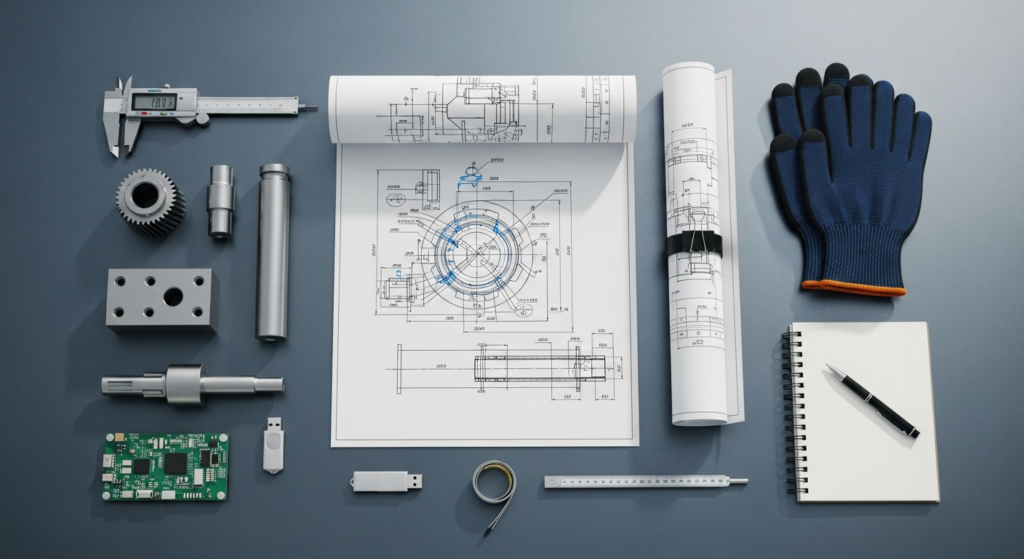
What is a Smart Factory? Defining the Next Industrial Revolution
At its core, a smart factory represents a paradigm shift from traditional manufacturing processes, integrating advanced digital technologies to create a highly autonomous, self-optimizing, and responsive production system. It is more than just automation; it is the convergence of information technology (IT) and operational technology (OT) to enable real-time data exchange, analysis, and decision-making across the entire value chain. Imagine a manufacturing facility where machines communicate with each other, production lines adapt to changing demands, and quality control happens proactively – this is the essence of the smart factory.
Key characteristics that define a smart factory include:
- Connectivity and Interoperability: All machines, systems, and devices are interconnected, forming a seamless network that facilitates data flow and communication. This allows for horizontal integration across the supply chain and vertical integration from the shop floor to the enterprise level.
- Data-Driven Decision Making: Vast amounts of data are collected from sensors, machines, and processes. This data is then analyzed using advanced analytics and artificial intelligence to provide actionable insights, enabling predictive maintenance, optimized resource allocation, and proactive problem-solving.
- Automation and Autonomy: While traditional automation focuses on repetitive tasks, smart factories leverage advanced robotics, autonomous systems, and AI to perform complex operations, make independent decisions, and even self-correct, significantly reducing human intervention in routine tasks.
- Adaptability and Flexibility: Smart factories are designed to be agile, capable of rapidly reconfiguring production lines, adjusting to new product designs, and accommodating fluctuating market demands, including mass customization and lot-size-one production.
- Predictive Capabilities: Through machine learning and data analysis, smart factories can predict potential issues such as equipment failure, material shortages, or quality deviations, allowing for preventative actions rather than reactive responses.
Unlike conventional manufacturing, which often operates in silos with limited data exchange, a smart factory operates as a holistic ecosystem. It leverages a digital thread that connects every stage, from product design and engineering to production, supply chain, and customer service. This integrated approach not only boosts efficiency but also fosters innovation, allowing manufacturers to bring new products to market faster and with higher quality. The smart factory is not a futuristic concept; it is rapidly becoming a present-day reality, driven by the imperative to achieve greater resilience, sustainability, and competitive advantage in a dynamic global economy.
Key Technologies Powering the Smart Factory Revolution
The realization of a smart factory hinges on the seamless integration and sophisticated application of several cutting-edge technologies. These foundational elements work in concert to create the intelligent, connected, and adaptive manufacturing environments we envision. Understanding these technologies is crucial for any organization embarking on its smart factory journey.
- Industrial Internet of Things (IIoT): The backbone of connectivity, IIoT involves a network of interconnected sensors, devices, machines, and other physical objects that collect and exchange data. These sensors monitor everything from temperature and pressure to machine performance and vibration, providing real-time insights into the operational status of the factory floor. This constant stream of data is critical for monitoring, diagnostics, and optimization.
- Artificial Intelligence (AI) and Machine Learning (ML): AI and ML algorithms are the brains of the smart factory. They process the massive datasets collected by IIoT devices to identify patterns, predict outcomes, and automate decision-making. Applications include predictive maintenance (forecasting equipment failures before they occur), optimizing production schedules, enhancing quality control through automated visual inspection, and improving energy efficiency.
- Advanced Robotics and Automation: Beyond traditional industrial robots, smart factories deploy collaborative robots (cobots) that can work safely alongside human operators, autonomous mobile robots (AMRs) for material handling, and highly flexible robotic systems capable of performing diverse tasks. These robots increase productivity, enhance safety by taking over dangerous jobs, and provide the flexibility needed for varied production runs.
- Cloud and Edge Computing: Cloud computing provides the scalable infrastructure for storing and processing the vast amounts of data generated by a smart factory, offering powerful analytics capabilities and global accessibility. Edge computing, conversely, brings computation and data storage closer to the data source (the factory floor). This reduces latency, enables real-time decision-making for critical processes, and enhances data security by processing sensitive information locally before sending aggregated data to the cloud.
- Digital Twin Technology: A digital twin is a virtual replica of a physical asset, process, or system. By creating digital twins of machinery, production lines, or even entire factories, manufacturers can simulate scenarios, test changes, predict performance, and identify potential issues in a virtual environment before implementing them physically. This significantly reduces risk, optimizes operations, and accelerates innovation.
- Augmented Reality (AR) and Virtual Reality (VR): AR and VR technologies are transforming human-machine interaction in smart factories. AR overlays digital information onto the real world, assisting technicians with maintenance tasks, providing real-time operational data, or guiding assembly workers. VR creates immersive simulated environments for training employees on complex machinery or for product design and prototyping, offering a safe and cost-effective learning platform.
- Cybersecurity: As factories become more connected, they also become more vulnerable to cyber threats. Robust cybersecurity measures are paramount to protect sensitive operational data, intellectual property, and to ensure the integrity and continuous operation of production systems. This includes network security, data encryption, access controls, and regular threat monitoring to safeguard the entire digital ecosystem of the smart factory.
The Pillars of Smart Manufacturing: Operational Excellence and Continuous Improvement
One of the foundational philosophies that smart factories revolutionize is Lean Manufacturing Principles Explained. Traditionally, Lean focuses on identifying and eliminating waste (muda) across all aspects of production to maximize customer value. In a smart factory, IIoT sensors continuously monitor processes, providing real-time data on machine uptime, cycle times, defect rates, and inventory levels. This granular data allows for an incredibly precise and dynamic application of Lean principles:
- Real-time Value Stream Mapping: Digital twins and data analytics can create dynamic visualizations of the value stream, instantly highlighting bottlenecks, non-value-added activities, and areas of inefficiency that might be invisible in manual assessments.
- Just-In-Time (JIT) Reinforcement: Predictive analytics can optimize inventory management with unparalleled accuracy, ensuring materials arrive precisely when needed, minimizing storage costs and reducing waste associated with overproduction or excess inventory.
- Enhanced Error Proofing (Poka-Yoke): AI-powered vision systems can detect defects in real-time, preventing errors from propagating down the production line and reducing rework or scrap.
- Optimized Resource Allocation: Data insights allow for dynamic adjustment of workforce, machinery, and energy usage based on real-time demand and production flow, leading to significant cost savings and reduced environmental impact.
Similarly, the smart factory environment is a powerful accelerator for Kaizen Continuous Improvement Explained. Kaizen, the Japanese philosophy of continuous, incremental improvement involving all employees, thrives on feedback and data. In a smart factory, this process is supercharged:
- Data-Backed Hypothesis Testing: Every proposed improvement, no matter how small, can be rigorously tested and its impact measured using real-time production data, providing undeniable evidence of its effectiveness.
- Rapid Feedback Loops: Performance dashboards and automated alerts provide immediate feedback on process changes, allowing teams to quickly assess the impact of their Kaizen initiatives and make further adjustments.
- Empowered Workforce: With accessible data and user-friendly interfaces (often enhanced by AR/VR), frontline workers are empowered to identify inefficiencies, propose solutions, and see the immediate results of their efforts, fostering a culture of ownership and innovation.
- Predictive Quality and Maintenance: Rather than reacting to failures or defects, smart factories use AI to predict them. This allows for proactive maintenance scheduling and process adjustments, ensuring consistent quality and minimizing downtime, which are fundamental to continuous improvement.
By integrating these operational philosophies with advanced technologies, smart manufacturing creates an ecosystem where data not only informs but drives continuous optimization. It transforms factories into learning organizations, constantly evolving to achieve higher levels of productivity, quality, and responsiveness, ensuring sustained competitive advantage in the global market.
Strategic Implementation: A Roadmap to Your Smart Factory
Embarking on the journey to transform into a smart factory requires a well-defined strategy and a phased approach. It’s not an overnight switch but a continuous evolution, demanding careful planning, investment, and a commitment to cultural change. Here’s a roadmap to guide your implementation:
-
Vision and Assessment: Define Your ‘Why’:
Begin by clearly articulating the business drivers for adopting smart factory concepts. What specific problems are you trying to solve? Is it reducing costs, improving quality, increasing flexibility, or accelerating innovation? Conduct a thorough assessment of your current manufacturing capabilities, infrastructure, and workforce skills. Identify existing pain points, technological gaps, and areas with the highest potential for impact. This initial vision will guide all subsequent decisions.
-
Start Small, Think Big: Pilot Projects and Phased Rollout:
Resist the temptation to overhaul everything at once. Instead, identify a specific bottleneck, a single production line, or a particular process as a pilot project. Implement smart factory technologies in this confined scope, measure the results, and learn from the experience. A phased approach minimizes risk, allows for iterative improvements, and demonstrates tangible value, building internal support and expertise for broader rollout. This aligns perfectly with Kaizen Continuous Improvement Explained, by taking small, manageable steps towards a larger goal.
-
Technology Stack Selection and Integration:
Choose technologies that align with your strategic goals and existing infrastructure. Prioritize interoperability to ensure seamless communication between new and legacy systems. Partner with technology providers who offer robust solutions and strong support. Consider the scalability of chosen platforms – can they grow with your needs? Focus on creating a unified data architecture where information can flow freely across departments and systems.
-
Workforce Development and Cultural Transformation:
Technology alone is insufficient; your people are the most critical component of a successful smart factory. Invest heavily in training and upskilling your workforce to operate and maintain new systems. This includes training in data analytics, robotics programming, and cybersecurity. Foster a culture of continuous learning, innovation, and collaboration. Address potential resistance to change by involving employees early, communicating the benefits, and demonstrating how smart technologies can augment their roles, making them more productive and safer.
-
Data Governance and Cybersecurity Strategy:
With an explosion of data comes the critical need for robust data governance. Establish clear policies for data collection, storage, access, and usage to ensure data quality, compliance, and ethical handling. Simultaneously, implement a comprehensive cybersecurity strategy to protect your interconnected systems from threats. This includes network segmentation, access controls, regular vulnerability assessments, and employee training on security best practices. A breach can cripple production and severely damage reputation.
-
Continuous Monitoring and Optimization:
The journey doesn’t end after implementation. A smart factory is a dynamic entity that requires continuous monitoring and optimization. Leverage the data generated to track KPIs, identify new opportunities for improvement, and fine-tune processes. Regularly review your technology stack and strategy to ensure they remain aligned with evolving business needs and technological advancements. This iterative process of measurement, analysis, and adjustment embodies the core tenets of both Lean Manufacturing Principles Explained and Kaizen.
Benefits and Challenges of Smart Factory Adoption
The allure of the smart factory is undeniable, promising a future of unprecedented efficiency and innovation. However, like any significant transformation, its adoption comes with a unique set of benefits and challenges that businesses must carefully weigh and prepare for.
Tangible Benefits of Smart Factory Adoption:
- Enhanced Efficiency and Productivity: Automation of repetitive tasks, optimized production flows, and predictive maintenance significantly reduce downtime and increase throughput. Real-time data allows for immediate adjustments, leading to more efficient use of resources and higher output per shift. This directly translates to the core goals of Lean Manufacturing Principles Explained by minimizing waste in all its forms.
- Superior Product Quality: AI-powered vision systems and continuous monitoring detect defects early in the production process, preventing costly rework and scrap. Predictive analytics can identify process deviations before they impact product quality, ensuring consistent standards and reducing warranty claims.
- Significant Cost Reduction: By optimizing energy consumption, reducing material waste, extending equipment lifespan through predictive maintenance, and streamlining labor-intensive processes, smart factories can achieve substantial operational cost savings.
- Increased Agility and Flexibility: Smart factories can rapidly adapt to changing market demands, accommodate product variations, and even facilitate mass customization. This agility allows manufacturers to respond quickly to customer needs and market shifts, offering a competitive edge.
- Improved Workplace Safety: Automation of hazardous tasks and the use of collaborative robots in dangerous environments significantly reduce the risk of accidents and injuries for human workers. Real-time monitoring can also alert to unsafe conditions.
- Innovation and New Business Models: The data-rich environment of a smart factory fosters innovation, enabling faster prototyping, product development, and the creation of entirely new services (e.g., product-as-a-service models based on performance data).
Key Challenges in Smart Factory Adoption:
- Substantial Initial Investment: The upfront capital expenditure for implementing smart factory technologies – including sensors, software, robotics, and IT infrastructure – can be significant, posing a barrier for some organizations, especially SMEs.
- Complexity of Integration: Integrating disparate legacy systems with new smart technologies can be a complex and time-consuming endeavor. Ensuring interoperability and a seamless flow of data across different platforms requires expertise and careful planning.
- Cybersecurity Risks: A highly connected environment presents a larger attack surface for cyber threats. Data breaches, intellectual property theft, or operational disruptions due to cyberattacks are serious concerns that require robust and continuous cybersecurity measures.
- Data Management and Analytics Expertise: Generating vast amounts of data is only useful if it can be effectively managed, analyzed, and translated into actionable insights. Many organizations lack the in-house expertise in data science, AI, and machine learning to fully leverage this information.
- Workforce Resistance and Skill Gaps: Employees may resist new technologies due to fear of job displacement or the need to learn new skills. Addressing skill gaps through comprehensive training and managing change effectively are crucial for successful adoption.
- Return on Investment (ROI) Justification: Quantifying the exact ROI for smart factory investments can be challenging, particularly in the early stages. The benefits often extend beyond direct cost savings to include intangible gains like increased market responsiveness and brand reputation.
Despite the challenges, the long-term strategic advantages of smart factory adoption often outweigh the initial hurdles. With careful planning, a phased approach, and a commitment to continuous improvement, manufacturers can successfully navigate these challenges and unlock the transformative potential of intelligent production.
The Future of Manufacturing: Beyond 2026
As we look beyond 2026, the trajectory of smart factory evolution promises even more profound transformations, pushing the boundaries of what is possible in manufacturing. The foundational technologies of today will mature, converge, and give rise to a new generation of intelligent, autonomous, and sustainable production ecosystems.
One significant trend will be the acceleration towards Hyper-personalization and Lot-Size-One Production. Leveraging advanced AI, additive manufacturing (3D printing), and highly flexible robotic systems, factories will be able to produce customized products at the cost and speed of mass production. Consumers will have unprecedented control over product design, and manufacturers will gain the agility to respond to individual preferences in real-time.
Sustainable Manufacturing will move from a desirable goal to an imperative. Smart factories will play a pivotal role in achieving a circular economy by optimizing resource utilization, minimizing waste, and reducing carbon footprints. AI will manage energy consumption dynamically, predictive analytics will reduce scrap, and advanced recycling technologies will integrate seamlessly into production cycles. The entire supply chain will be transparent, allowing for ethical sourcing and responsible disposal, driven by consumer demand and regulatory pressure.
The role of human workers will continue to evolve towards enhanced Human-Machine Collaboration. Rather than replacing humans, advanced robotics and AI will augment human capabilities. Collaborative robots will assist with physically demanding tasks, AR/VR will provide real-time information and training, and AI will handle complex data analysis, freeing human workers to focus on innovation, problem-solving, and creative design. The factory of the future will be a highly collaborative environment where humans and intelligent systems work in synergy.
Decentralized Manufacturing and Resilient Global Supply Chains will become more prevalent. The reliance on centralized production hubs and elongated supply lines proved vulnerable to global disruptions. Smart factories, potentially leveraging micro-factories and localized production, will enable greater resilience, faster response times, and reduced logistics costs. Blockchain technology could provide unprecedented transparency and traceability across these complex, distributed networks.
At the heart of future product innovation will be breakthroughs in Materials Science In Manufacturing. The smart factory will be a testing ground for developing and integrating advanced materials such as self-healing polymers, lightweight composites, smart sensors embedded directly into products, and biomimetic materials. These innovations will drive product performance, durability, and sustainability, influencing everything from aerospace components to consumer electronics. AI and machine learning will accelerate materials discovery and characterization, enabling manufacturers to design products with unprecedented functionalities and environmental profiles, further optimizing resource utilization in the smart factory.
Finally, emerging technologies like quantum computing and more sophisticated forms of AI will unlock new levels of optimization and problem-solving capabilities previously unimaginable. The smart factory of beyond 2026 will not just be automated; it will be truly intelligent, adaptive, and continuously learning, representing the pinnacle of industrial innovation.
Frequently Asked Questions
What is the primary goal of a smart factory?▾
How does a smart factory differ from traditional automation?▾
What are the biggest challenges in implementing a smart factory?▾
How does a smart factory benefit small and medium-sized enterprises (SMEs)?▾
What role does data play in a smart factory?▾
What is the typical timeline for seeing ROI from smart factory investments?▾
Recommended Resources
For more on smart factory concepts, see Endometriosis Diagnosis And Care on Protect Families Protect Choices.
For more on smart factory concepts, see How To Get A Promotion At Work on Diaal News.