


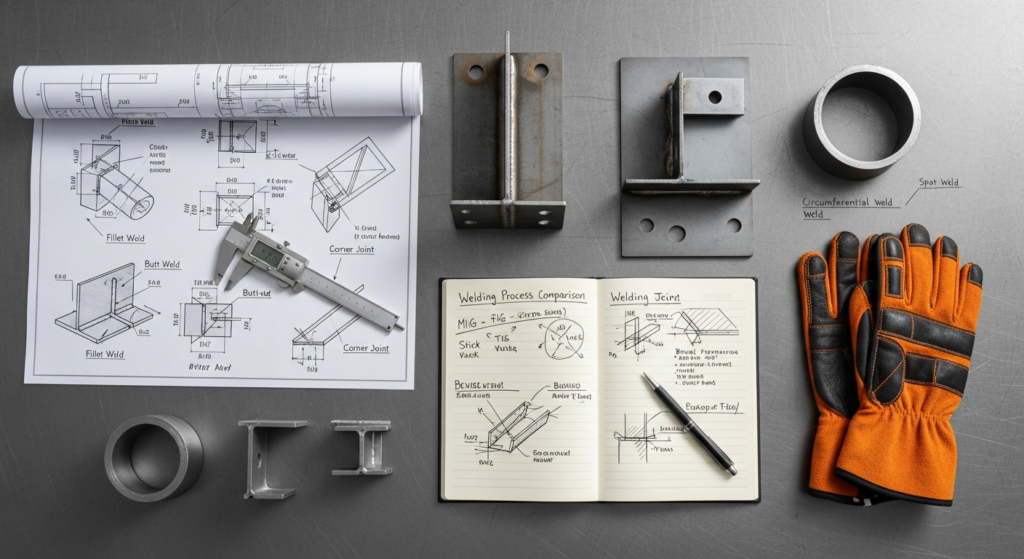
The Foundation of Fabrication: Understanding Welding’s Core Principles
At its heart, welding is a fabrication process that joins materials, usually metals or thermoplastics, by causing coalescence. This is typically achieved by melting the workpieces and adding a filler material to form a molten pool that cools to become a strong joint. However, some welding techniques utilize pressure alone or a combination of heat and pressure. The goal is always to create a bond that is often as strong as, or even stronger than, the parent material itself.
The science behind welding involves complex metallurgical interactions. When materials are heated to their melting point, their atomic structures become more mobile. As they cool, these atoms rearrange and interlock, forming new crystalline structures that create a continuous, unified piece. The choice of welding process depends heavily on the type of material, its thickness, the desired joint strength, the production environment, and cost considerations. Understanding these core principles is the first step in appreciating the intricate dance between heat, pressure, and material science that defines effective welding.
Arc Welding Processes: The Workhorses of Industry

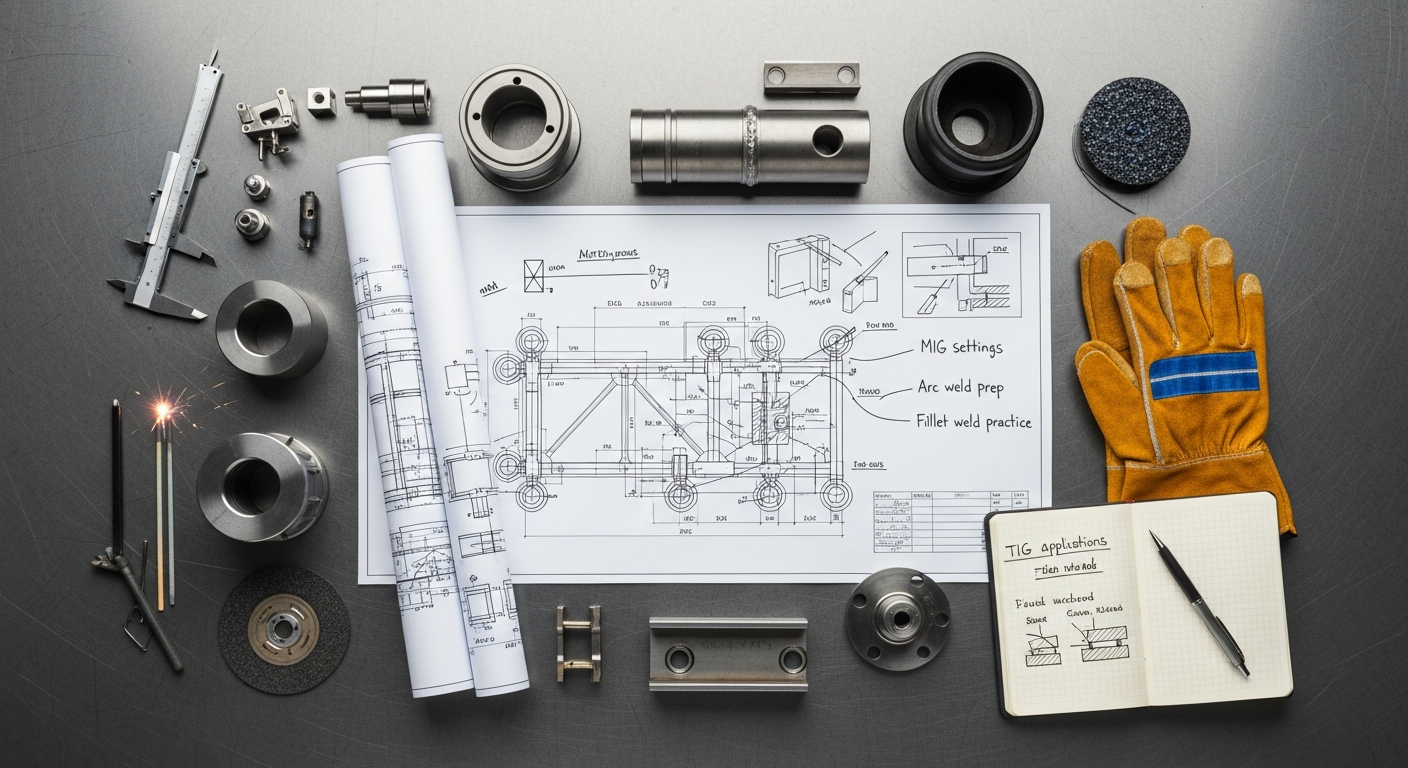
Arc welding encompasses a family of welding processes that use an electric arc to create the heat needed to melt and join metals. These are arguably the most common and versatile welding methods, widely employed across various industries due to their adaptability and strength.
Shielded Metal Arc Welding (SMAW) / Stick Welding
- Description: SMAW, commonly known as stick welding, uses a consumable electrode coated in flux. An electric arc forms between the electrode and the workpiece, melting both. The flux coating disintegrates, producing a shielding gas that protects the weld pool from atmospheric contamination and a slag layer that protects the cooling weld.
- Principle: Heat from the electric arc melts the electrode and the base metal, creating a molten puddle. The molten filler metal from the electrode is transferred across the arc to the weld pool.
- Applications: Stick welding is incredibly versatile and robust, making it suitable for heavy fabrication, structural steelwork, pipeline construction, shipbuilding, and field repairs where portability is crucial. It can be used on a wide range of ferrous metals, including carbon steels, low-alloy steels, and stainless steels.
- Pros:
- Highly portable and relatively inexpensive equipment.
- Excellent for outdoor use and challenging environments due to its robust shielding.
- Effective on rusty or dirty materials.
- Versatile for various joint types and material thicknesses.
- Cons:
- Requires frequent electrode changes, which can slow down production.
- Produces significant slag that needs to be chipped off, adding post-weld cleaning time.
- Lower deposition rates compared to other arc welding processes.
- Steeper learning curve for producing high-quality welds.
Gas Metal Arc Welding (GMAW) / MIG Welding
- Description: MIG welding uses a continuously fed consumable wire electrode and an inert or semi-inert gas mixture (like argon, CO2, or a blend) to shield the weld pool from contaminants. The wire is fed through a welding gun, and an electric arc melts the wire and the base metal.
- Principle: A constant voltage power source maintains a stable arc, melting the continuously fed wire and the workpiece. The shielding gas protects the molten metal from atmospheric oxygen and nitrogen.
- Applications: MIG welding is a staple in automotive manufacturing, light to medium fabrication, robotics, and automated welding lines. It’s excellent for joining thin to medium gauge metals, including carbon steel, stainless steel, and aluminum, due to its speed and relatively clean welds.
- Pros:
- High deposition rates and faster welding speeds.
- Less post-weld cleaning as it produces minimal slag.
- Easier to learn and operate than SMAW or GTAW.
- Suitable for automation, aligning well with Lean Manufacturing Principles Explained by reducing manual effort and increasing throughput.
- Cons:
- Less portable due to the need for a gas cylinder.
- Susceptible to drafts, which can blow away the shielding gas, leading to porous welds.
- Can struggle with dirty or rusty materials.
- More complex equipment than SMAW.
Gas Tungsten Arc Welding (GTAW) / TIG Welding
- Description: TIG welding uses a non-consumable tungsten electrode to produce the arc and heat. A separate filler rod is manually fed into the weld pool, and an inert shielding gas (usually pure argon or helium) protects the weld area.
- Principle: The non-consumable tungsten electrode creates a highly concentrated arc, providing precise heat control. The filler metal is added independently, allowing for exceptional control over the weld bead.
- Applications: TIG welding is renowned for producing extremely high-quality, precise, and aesthetically pleasing welds. It is indispensable in aerospace, medical device manufacturing, bicycle frames, automotive roll cages, and any application requiring critical, clean welds on thin materials or exotic metals like titanium, magnesium, and nickel alloys.
- Pros:
- Produces exceptionally clean, precise, and high-quality welds with excellent appearance.
- Allows for welding very thin materials and exotic metals.
- No spatter or slag to clean up.
- Offers precise heat control for delicate work.
- Cons:
- Slower welding speed and lower deposition rates.
- Requires significant skill and dexterity, making it difficult to master.
- More expensive equipment and consumables.
- Less suitable for outdoor conditions due to shielding gas sensitivity.
Flux-Cored Arc Welding (FCAW)
- Description: FCAW uses a continuously fed tubular wire electrode filled with flux. This flux provides shielding gas and slag protection, similar to SMAW, but in a continuous wire format. Some FCAW processes also use external shielding gas (gas-shielded FCAW), while others rely solely on the flux (self-shielded FCAW).
- Principle: The flux within the tubular wire generates shielding gases and slag as it burns, protecting the weld pool. The continuous wire feed allows for higher deposition rates.
- Applications: FCAW is ideal for heavy fabrication, structural steel, shipbuilding, and outdoor applications where wind might disrupt gas shielding. It excels in welding thick materials and in out-of-position welding.
- Pros:
- High deposition rates and faster travel speeds, especially on thicker materials.
- Excellent for outdoor welding and on dirty or rusty surfaces (self-shielded).
- Good penetration and mechanical properties.
- Less pre-weld cleaning required compared to MIG.
- Cons:
- Produces more smoke and fumes than MIG.
- Requires slag removal after welding.
- Can be more expensive than solid wire for MIG.
- Less precise than TIG.
Submerged Arc Welding (SAW)
- Description: SAW uses a continuously fed consumable electrode that is “submerged” under a blanket of granular flux. The arc is not visible during welding, as it is completely covered by the flux.
- Principle: The flux blanket protects the arc and weld pool from atmospheric contamination. A portion of the flux melts to form a protective slag, and the rest remains granular for collection and reuse.
- Applications: SAW is primarily used for high-production, high-quality welds on thick plates and for long, continuous welds. Common applications include shipbuilding, pressure vessel fabrication, structural steel, and manufacturing of large pipes. It’s often automated for maximum efficiency.
- Pros:
- Extremely high deposition rates and welding speeds, ideal for automation.
- Produces very high-quality welds with excellent mechanical properties.
- Minimal fumes and spatter due to the submerged arc.
- Deep penetration, suitable for thick materials.
- Cons:
- Limited to flat or horizontal positions.
- Requires significant setup and specialized equipment.
- Not suitable for thin materials or intricate work.
- Post-weld slag removal is necessary.
Resistance Welding and Solid-State Processes: Precision and Efficiency
Resistance Spot Welding (RSW)
- Description: RSW joins metals by applying pressure and passing an electric current through the workpieces held between two electrodes. The resistance of the materials to the current generates heat, melting a small spot to create a weld nugget.
- Principle: Electrical resistance heating at the interface of the two workpieces generates localized heat, causing a molten pool to form, which then solidifies under pressure.
- Applications: Dominant in the automotive industry for joining sheet metal components, appliance manufacturing, and electronics. It’s highly automated and essential for high-volume production.
- Pros:
- Extremely fast and efficient for high-volume production.
- Clean process with no filler material, fumes, or external shielding gas.
- Easily automated, contributing to Manufacturing Waste Reduction Strategies by ensuring consistent, repeatable welds.
- Low cost per weld.
- Cons:
- Limited to overlapping joint designs.
- Requires access to both sides of the joint.
- Less suitable for very thick materials.
- Equipment can be expensive for initial setup.
Resistance Seam Welding (RSEW)
- Description: Similar to spot welding, but instead of pointed electrodes, RSEW uses two rotating wheel electrodes to create a continuous series of overlapping spot welds, forming a leak-tight seam.
- Principle: Continuous resistance heating and pressure from rotating electrodes create a continuous or near-continuous weld.
- Applications: Manufacturing of fuel tanks, radiators, exhaust systems, and other components requiring leak-proof joints.
- Pros:
- Creates strong, hermetic (leak-proof) joints.
- High welding speeds for continuous seams.
- Clean process with no filler material.
- Cons:
- Limited to linear joints.
- Requires precise control of pressure, current, and speed.
- High initial equipment cost.
Friction Stir Welding (FSW)
- Description: FSW is a solid-state welding process where a non-consumable rotating tool with a specially designed pin and shoulder is plunged into the joint line between two workpieces. The friction generates heat, softening the material, and the tool’s rotation stirs and forges the softened material together.
- Principle: Mechanical friction and plastic deformation, without reaching the melting point, create a solid-state bond.
- Applications: Aerospace (fuselage panels, fuel tanks), marine (ship panels), automotive (aluminum components), and railway industries. It’s particularly effective for joining aluminum alloys and dissimilar metals that are difficult to weld by traditional fusion methods.
- Pros:
- Produces high-quality, defect-free welds with excellent mechanical properties.
- Can join dissimilar metals and alloys that are otherwise unweldable.
- Environmentally friendly with no fumes, spatter, or shielding gas.
- Lower distortion and residual stress compared to fusion welding.
- Cons:
- Limited to linear joints.
- Requires robust clamping and high-force equipment.
- Slower welding speeds compared to some fusion processes.
- Tool wear can be a factor.
Ultrasonic Welding (USW)
- Description: USW uses high-frequency ultrasonic vibrations to create a solid-state weld. A vibrating tool (sonotrode) applies pressure and ultrasonic energy to the parts, causing localized heating and molecular interlocking at the interface.
- Principle: Vibrational energy creates friction and heat at the interface, softening the material and allowing atomic interdiffusion and bonding without bulk melting.
- Applications: Primarily used for joining thermoplastics (e.g., in medical devices, automotive interiors, packaging) and for welding thin, non-ferrous metals in electronics (e.g., wire bonding, battery tabs).
- Pros:
- Very fast welding times (often less than a second).
- No filler materials, fluxes, or external heat required.
- Produces clean, strong bonds with minimal thermal impact on surrounding materials.
- Excellent for delicate components and dissimilar materials.
- Cons:
- Limited to specific material types and thicknesses.
- Joint design is critical.
- Initial equipment cost can be high.
- Not suitable for large or heavy components.
High Energy Beam Welding: The Cutting Edge
High energy beam welding processes utilize highly concentrated beams of energy to achieve extremely precise and deep welds, often in specialized environments.
Laser Beam Welding (LBW)
- Description: LBW uses a focused laser beam (CO2, Nd:YAG, fiber laser) as a heat source to produce a very narrow, deep weld. The intense energy melts and vaporizes the material, creating a keyhole that allows for deep penetration.
- Principle: The concentrated laser beam provides precise and localized heating, leading to rapid melting and solidification.
- Applications: Automotive (body-in-white, gear assemblies), medical devices (implants, surgical tools), aerospace, electronics, and precision sheet metal fabrication. It’s ideal for high-speed, high-precision applications, often in automated setups.
- Pros:
- Extremely high welding speeds and deep penetration.
- Minimal heat affected zone (HAZ) and low distortion.
- Can weld a wide range of materials, including dissimilar metals.
- Highly adaptable to automation and robotic systems.
- No physical contact with the workpiece.
- Cons:
- High initial equipment cost.
- Requires precise joint fit-up.
- Safety concerns related to laser radiation.
- Can be challenging to weld reflective materials.
Electron Beam Welding (EBW)
- Description: EBW uses a focused beam of high-velocity electrons to generate heat and melt the materials. This process is typically performed in a vacuum chamber to prevent electron scattering and oxidation.
- Principle: Kinetic energy of electrons is converted into thermal energy upon impact with the workpiece, causing highly localized melting.
- Applications: Aerospace (jet engine components, airframes), nuclear industries, medical implants, and other critical applications requiring ultra-high quality, deep penetration welds in difficult-to-weld materials.
- Pros:
- Produces extremely deep, narrow welds with minimal distortion.
- Very high precision and repeatability.
- Excellent for reactive and refractory metals (e.g., titanium, zirconium).
- High purity welds due to vacuum environment.
- Cons:
- Very high initial equipment cost due to the vacuum chamber.
- Limited part size by the vacuum chamber dimensions.
- Batch process, which can slow down production.
- X-ray radiation safety concerns.
Emerging Welding Technologies and Their Impact on Modern Manufacturing
The field of welding is not static; it continually evolves, driven by demands for higher quality, greater efficiency, and more sustainable practices. As we look towards 2026, several emerging trends and technologies are set to redefine how manufacturing operates.
Robotic Welding: The integration of robots into welding processes has revolutionized industries, particularly in high-volume production like automotive. Robotic MIG, TIG, and laser welding systems offer unparalleled precision, repeatability, and speed. This automation directly supports Lean Manufacturing Principles Explained by minimizing human error, optimizing cycle times, and ensuring consistent quality, thereby reducing rework and improving overall productivity. Robots can operate continuously, boosting output and enabling manufacturers to meet tighter deadlines.
Additive Manufacturing (WAAM): Wire Arc Additive Manufacturing (WAAM) is an increasingly prominent form of 3D printing that uses arc welding processes (like MIG or TIG) to deposit layers of metal wire, building up complex parts from scratch. This technology is particularly valuable for producing large-scale metal components with intricate geometries, significantly reducing material waste compared to traditional subtractive manufacturing. WAAM aligns perfectly with Manufacturing Waste Reduction Strategies by only using the necessary material and enabling the creation of lighter, optimized designs.
Smart Welding Systems: Future welding machines are becoming “smarter,” incorporating sensors, artificial intelligence, and machine learning. These systems can monitor weld parameters in real-time, detect defects, and even adjust settings autonomously to maintain optimal weld quality. This proactive approach to quality control minimizes costly errors and enhances process reliability.
Hybrid Welding: Combining two or more welding processes into a single operation, such as Laser-MIG hybrid welding, offers synergistic benefits. For instance, combining the deep penetration and speed of a laser with the gap-bridging capability and high deposition rate of MIG welding results in faster, higher-quality welds on thicker materials with less distortion. This innovation pushes the boundaries of what’s possible in terms of weld strength and efficiency.
Simulation and Analysis: Before a single weld is made, advanced simulation tools are increasingly used to predict weld behavior. Finite Element Analysis Explained is a prime example, allowing engineers to model thermal stresses, distortion, and residual stresses in welded structures. This predictive capability helps optimize joint designs, select appropriate welding parameters, and prevent potential issues, leading to stronger, more reliable products and further reducing waste from trial-and-error manufacturing.
These advancements collectively contribute to a future where welding is not just a fabrication tool but a highly sophisticated, data-driven process that underpins the efficiency and innovation of manufacturing worldwide.
Selecting the Right Welding Process: A Strategic Decision
Choosing the optimal welding process is a critical decision that significantly impacts product quality, production cost, and manufacturing efficiency. It’s not a one-size-fits-all scenario, and careful consideration of several factors is essential:
- Material Type and Thickness: Different metals (steel, aluminum, titanium, copper) and their alloys react differently to heat. Thin materials require precise heat control (e.g., TIG, Laser), while thick materials benefit from high deposition rates and deep penetration (e.g., SAW, FCAW, high-power MIG).
- Joint Design and Accessibility: The geometry of the parts and the type of joint (butt, lap, corner, T-joint) dictate the feasibility of certain processes. For instance, resistance spot welding requires overlapping joints and access from both sides.
- Required Weld Quality and Strength: Critical applications (aerospace, nuclear) demand extremely high-quality, defect-free welds (e.g., TIG, EBW, FSW). Less critical applications might prioritize speed and cost (e.g., MIG, FCAW).
- Production Volume and Speed: High-volume production often necessitates automated, fast processes (e.g., Robotic MIG, RSW, LBW). Low-volume or custom work might favor manual, versatile methods (e.g., SMAW, TIG).
- Cost Considerations: This includes equipment purchase, consumables (filler wire, electrodes, shielding gas, flux), labor costs, and post-weld processing. A seemingly cheaper process might incur higher labor or cleaning costs.
- Environmental Factors: Outdoor or dirty environments might favor robust processes like self-shielded FCAW or SMAW. Indoor, clean environments allow for gas-shielded processes. Fume generation and noise levels are also important for worker safety and compliance.
- Operator Skill Level: Some processes, like TIG, require highly skilled welders, while others, like MIG, have a shallower learning curve.
- Distortion Control: Heat input can cause material distortion. Processes with low heat input or high speed (e.g., Laser, EBW, FSW) are preferred for minimizing distortion.
A thorough analysis of these factors, often supported by simulation tools like Finite Element Analysis, helps engineers and manufacturers make informed decisions that optimize the entire production chain. The expertise in making these strategic choices is what differentiates leading manufacturers and contributes significantly to their competitive edge.
The Future of Welding: Innovation and Sustainability
As we advance into 2026 and beyond, the welding industry is poised for continued innovation, with a strong focus on sustainability, intelligence, and integration. The drive for greener manufacturing practices means exploring welding processes that consume less energy, produce fewer harmful fumes, and generate less waste. Technologies like solid-state welding (FSW, USW) and advanced laser systems are inherently more energy-efficient and cleaner.
The trend towards “Industry 4.0” and smart factories will see welding equipment becoming increasingly connected, gathering data, and communicating with other manufacturing systems. This will enable predictive maintenance, real-time quality control, and adaptive process optimization, further embedding welding within a fully integrated digital manufacturing ecosystem. Augmented reality (AR) and virtual reality (VR) are also making inroads into welder training, offering immersive and safe environments for skill development.
Ultimately, the future of welding is about more than just joining materials; it’s about intelligent, sustainable, and highly efficient fabrication that continues to be the backbone of industrial progress, enabling the creation of stronger, lighter, and more complex structures and products for a rapidly evolving world.
Frequently Asked Questions
What is the most common welding process used in industry today?▾
What are the primary safety concerns associated with welding, and how are they mitigated?▾
Can welding processes be automated, and what are the benefits?▾
What role does material science play in successful welding?▾
How does efficient welding contribute to manufacturing waste reduction?▾
What is the fundamental difference between welding, brazing, and soldering?▾
Recommended Resources
Learn more about this topic in Journaling Benefits And How To Start at Diaal News.
You might also enjoy Wic Program Eligibility And Benefits from Protect Families Protect Choices.