
Shift Scheduling Models for 24/7 Manufacturing Operations
TL;DR: Effective 24/7 manufacturing shift scheduling balances operational demands, cost efficiency, and employee well-being. This post explores various models from traditional fixed shifts to advanced rotating patterns, emphasizing the role of technology like APS and AI, compliance, and continuous improvement for sustainable, high-performance operations.
Understanding the Fundamentals of 24/7 Operations and Traditional Models
The core challenge of 24/7 manufacturing lies in perpetually staffing every required role across all shifts, every day of the year, while adhering to labor laws and maintaining a productive, safe environment. Traditional shift scheduling models, while foundational, often serve as a starting point for more complex systems. The most common traditional models are fixed 8-hour and 12-hour shifts.
Fixed 8-Hour Shifts: This model typically divides the 24-hour day into three distinct shifts (e.g., 7 AM-3 PM, 3 PM-11 PM, 11 PM-7 AM). Employees are usually assigned to the same shift indefinitely (e.g., always working the day shift, or always the night shift).
- Pros: Predictability for employees, allowing for stable personal routines; easier management of specific skill sets on certain shifts; simpler payroll calculation.
- Cons: Potential for “shift-work fatigue” for those on permanent night shifts, leading to health issues and lower morale; difficulty in covering absences; higher overtime costs if not managed carefully; can create a perception of unfairness if certain shifts are less desirable. This model often requires a larger total workforce to cover all shifts adequately, especially when accounting for days off, holidays, and vacations.
Fixed 12-Hour Shifts: This model typically divides the 24-hour day into two shifts (e.g., 7 AM-7 PM, 7 PM-7 AM). Employees often work fewer days per week but for longer durations.
- Pros: Fewer shift changes and handovers, potentially reducing communication errors; more consecutive days off for employees, which can improve work-life balance and reduce commute times; requires fewer employees per shift, potentially simplifying management.
- Cons: Increased risk of fatigue towards the end of long shifts, impacting safety and productivity; can be challenging for employees with family commitments; requires strict adherence to break policies and fatigue management protocols. This model also demands a highly resilient workforce capable of sustaining focus over extended periods. Implementing 12-hour shifts often necessitates a robust framework for breaks, rest periods, and ergonomic considerations to mitigate the inherent risks of extended work durations.
When selecting a traditional model, manufacturers must consider the nature of their operations, the physical demands of the work, and the preferences and demographics of their workforce. While seemingly straightforward, even these basic models require careful planning to ensure continuous coverage, compliance with labor laws regarding hours and breaks, and employee satisfaction. The choice between 8-hour and 12-hour fixed shifts often comes down to a trade-off between daily fatigue and the benefits of more consecutive days off, a decision that has profound implications for both operational efficiency and employee well-being.
Exploring Rotating Shift Models for Enhanced Coverage and Equity

To address the drawbacks of fixed shifts, particularly issues of fatigue, fairness, and consistent coverage, many 24/7 manufacturing operations adopt rotating shift models. These models distribute the burden of less desirable shifts (like nights or weekends) more equitably among the workforce, often providing more structured time off. Understanding the mechanics and implications of common rotating patterns is crucial for effective implementation.
1. The DuPont Schedule (4 Crews, 12-Hour Shifts):
This highly popular schedule uses four teams (crews) and 12-hour shifts to provide 24/7 coverage. A common pattern involves each crew working 4 consecutive day shifts, followed by 3 days off, then 3 night shifts, 1 day off, 3 day shifts, 3 days off, 4 night shifts, and 7 days off. The cycle then repeats.
- Pros: Offers employees long blocks of days off (including a 7-day break within each cycle), which significantly improves work-life balance; reduces the frequency of shift changes compared to 8-hour rotations; simplifies handovers due to fewer daily changes.
- Cons: Long stretches of 12-hour shifts can lead to fatigue; the rotation from day to night shifts can be challenging for some individuals’ circadian rhythms; requires a larger pool of skilled workers to staff the four crews.
2. The Pitman Schedule (2-3-2 Pattern / Continental Schedule) (4 Crews, 12-Hour Shifts):
Another widely used 12-hour rotating schedule, the Pitman (or Continental) schedule also utilizes four crews. A typical pattern is “2 on, 3 off, 2 on, 3 off, 2 on, 2 off,” repeating over a cycle. Each crew works 2 consecutive days, then has 2 or 3 days off, then works 2 or 3 nights, followed by 2 or 3 days off. This specific structure can vary slightly but generally ensures continuous coverage.
- Pros: Provides a good balance of workdays and days off, including alternating weekends off; the shorter blocks of consecutive shifts (2-3 days) can help mitigate fatigue compared to longer blocks; offers consistent coverage without excessive overtime.
- Cons: The frequent switching between day and night shifts can be disruptive to sleep patterns and social life; requires careful management to ensure all legal rest periods are met.
3. The Modified Continental Schedule (5 Crews, 8-Hour Shifts):
While 12-hour shifts are common for rotating patterns, some operations prefer 8-hour shifts due to the nature of the work or regulatory requirements. A modified continental schedule with five crews can achieve 24/7 coverage with 8-hour shifts. This often involves a complex rotation where crews rotate through day, evening, and night shifts over a longer cycle (e.g., 5 weeks), ensuring each crew gets a fair share of each shift type and adequate time off.
- Pros: Reduces daily fatigue compared to 12-hour shifts; can be easier to integrate into existing 8-hour work cultures; more frequent shift changes can keep employees engaged.
- Cons: More frequent shift changes can be disruptive to personal life; requires a larger workforce (five crews) than 12-hour models, increasing coordination complexity; managing the rotation to ensure fairness and compliance can be intricate.
Implementing rotating schedules demands meticulous planning. Factors such as the number of available personnel, skill sets, legal rest periods, and union agreements must be thoroughly considered. Effective communication with employees about the chosen schedule, its benefits, and challenges is vital for successful adoption and to maintain morale. Regular review and adjustment based on feedback and operational performance are also key to long-term success with any rotating shift model.
Demand-Driven and Flexible Scheduling Strategies
In today’s dynamic manufacturing landscape, static shift schedules can often lead to inefficiencies, either through overstaffing during low demand or understaffing during peak periods. Demand-driven and flexible scheduling strategies leverage real-time data and predictive analytics to align labor resources precisely with production requirements, optimizing costs and efficiency. This approach moves beyond rigid patterns to create agile, responsive staffing models.
1. Leveraging Demand Forecasting: The foundation of demand-driven scheduling is accurate forecasting. This involves analyzing historical production data, sales forecasts, seasonal trends, marketing promotions, and even external factors like supply chain disruptions. Advanced analytics and machine learning algorithms can process vast datasets to predict future labor needs with greater precision. For example, if a particular product line experiences predictable spikes in demand during certain months, the schedule can be proactively adjusted to increase staffing during those periods, rather than relying on reactive overtime.
2. Variable Staffing Levels: Instead of maintaining a constant number of staff per shift, flexible models allow for variable staffing. This might involve a core team for base operations, supplemented by a flexible pool of employees for peak times. This flexible pool can include:
- Part-time workers: Utilized for specific shifts or during peak hours.
- On-call staff: Employees who are available to fill gaps or respond to unexpected demand spikes.
- Cross-trained employees: Workers who can be deployed to different departments or production lines as demand shifts, maximizing internal flexibility.
This approach requires robust training programs to ensure cross-functional capabilities and a clear communication system for deploying flexible staff.
3. Employee Self-Scheduling and Preferences: Modern flexible scheduling often incorporates elements of employee choice. While core shifts remain, employees might have the option to bid on open shifts, swap shifts with colleagues, or indicate their preferred shifts within certain parameters. This not only empowers employees but can also improve satisfaction and reduce absenteeism. Software platforms can facilitate this by providing transparent shift availability and managing requests, ensuring that operational requirements are still met. While offering flexibility, it’s crucial to maintain clear rules and oversight to prevent scheduling conflicts or imbalances.
4. Agile Manufacturing Principles: Applying agile principles to scheduling means being able to quickly adapt to changes. This involves:
- Short-term planning cycles: Instead of planning months in advance, scheduling might be refined weekly or even daily based on the latest demand signals.
- Continuous feedback: Regularly assessing the effectiveness of the schedule against KPIs like efficiency, overtime, and employee satisfaction.
- Scenario planning: Using simulation tools to model the impact of different scheduling decisions under various demand scenarios (e.g., sudden increase in orders, equipment breakdown) to build resilience.
Implementing demand-driven and flexible strategies requires a significant investment in data analytics capabilities, flexible HR policies, and, often, advanced scheduling software. However, the benefits in terms of cost savings, increased efficiency, and improved employee morale can be substantial, making it a critical strategy for competitive 24/7 manufacturing operations.
Prioritizing Employee Well-being, Compliance, and Retention
While operational efficiency and cost-effectiveness are paramount, neglecting employee well-being, compliance, and retention in 24/7 manufacturing scheduling can lead to severe long-term consequences, including high turnover, decreased productivity, increased safety incidents, and legal penalties. A sustainable scheduling model must holistically integrate these human-centric factors.
1. Adherence to Labor Laws and Regulations:
This is non-negotiable. Manufacturers must rigorously comply with local, national, and international labor laws regarding:
- Maximum working hours: Daily, weekly, and over specific periods.
- Minimum rest periods: Between shifts and during shifts (breaks).
- Overtime regulations: Proper calculation and payment for hours exceeding standard workweeks.
- Specific rules for minors or vulnerable workers: If applicable.
- Union agreements: Collective bargaining agreements often include specific clauses on scheduling, rotations, and shift preferences.
Non-compliance not only results in hefty fines but also damages reputation and employee trust. Advanced scheduling software can be configured with these rules, providing alerts for potential violations, thereby acting as a crucial compliance safeguard.
2. Mitigating Fatigue and Burnout:
Shift work, especially night and rotating shifts, significantly impacts circadian rhythms, leading to chronic fatigue, sleep disorders, and increased risk of errors and accidents. Strategies to mitigate this include:
- Adequate recovery time: Ensuring sufficient days off and rest between shifts, particularly after night shifts or long blocks of work.
- Forward-rotating schedules: Where possible, rotating shifts in a clockwise direction (day to evening to night) is generally considered less disruptive to circadian rhythms than backward rotation.
- Limiting consecutive long shifts: Avoiding more than 3-4 consecutive 12-hour shifts.
- Providing rest facilities: Access to quiet break rooms, healthy food options, and even designated napping areas can help.
- Fatigue risk management systems: Implementing systems to monitor and manage employee fatigue, potentially including self-assessment tools or supervisor observation.
3. Fostering Work-Life Balance and Employee Engagement:
Employees are more likely to stay and be productive if they feel their personal lives are respected.
- Predictability: Providing schedules well in advance allows employees to plan their personal lives.
- Fairness and transparency: Ensuring that less desirable shifts are distributed equitably and that scheduling decisions are transparent.
- Employee input: Where feasible, allowing employees some input into their schedules (e.g., preference for fixed vs. rotating, shift swap options) can significantly boost morale and retention.
- Access to support: Offering resources for shift workers, such as counseling services, health programs, or support groups for managing the challenges of shift work.
4. Safety Implications:
Fatigue directly correlates with increased accident rates. By prioritizing well-being, manufacturers inherently improve workplace safety. Reduced fatigue leads to better concentration, quicker reaction times, and fewer mistakes, which is critical in environments with heavy machinery or hazardous materials. Investing in ergonomic workstation design and regular safety training also complements a well-designed, employee-centric schedule.
Ultimately, a scheduling model that prioritizes employee well-being and compliance is not just an ethical choice but a strategic imperative. It leads to a healthier, more engaged workforce, reduced absenteeism, lower turnover, higher productivity, and a stronger safety record, all contributing to a more resilient and profitable manufacturing operation.
Leveraging Advanced Planning and Scheduling (APS) Systems and AI
The complexity of 24/7 manufacturing operations, coupled with the need for demand-driven flexibility and employee well-being, often overwhelms manual or rudimentary spreadsheet-based scheduling methods. This is where Advanced Planning and Scheduling (APS) systems, augmented by Artificial Intelligence (AI) and Machine Learning (ML), become indispensable tools for optimizing shift schedules.
1. The Power of Advanced Planning and Scheduling (APS) Systems:
APS systems are sophisticated software solutions designed to optimize production plans and schedules. For shift scheduling, they offer significant advantages:
- Optimization Algorithms: APS systems use complex algorithms to generate schedules that balance multiple objectives simultaneously – minimizing labor costs (e.g., overtime), maximizing machine utilization, ensuring full coverage, adhering to labor laws, and accommodating employee preferences. They can quickly evaluate thousands of potential schedules to find the optimal solution.
- Constraint Management: These systems can incorporate a vast array of constraints, including individual employee skills and certifications, equipment availability, maintenance schedules, union rules, and specific regulatory requirements. This ensures that only feasible and compliant schedules are generated.
- Real-time Adjustments: Manufacturing environments are prone to unexpected disruptions (e.g., machine breakdowns, sudden surges in orders, employee absenteeism). APS systems can dynamically re-optimize schedules in real-time, providing immediate solutions to maintain operational continuity with minimal disruption.
- Scenario Planning and Simulation: Before implementing a schedule, APS allows planners to run “what-if” scenarios. For instance, they can simulate the impact of adding a new production line, changing a shift pattern, or increasing demand, helping identify potential bottlenecks or cost implications without affecting live operations.
- Integration with Enterprise Systems: Modern APS solutions integrate seamlessly with other enterprise systems like Enterprise Resource Planning (ERP) and Manufacturing Execution Systems (MES). This integration ensures a unified data flow, where production orders from ERP inform scheduling decisions, and real-time production data from MES can trigger schedule adjustments.
2. The Role of Artificial Intelligence (AI) and Machine Learning (ML):
AI and ML elevate APS capabilities by introducing predictive intelligence and continuous learning:
- Predictive Demand Forecasting: ML algorithms can analyze historical sales data, seasonal trends, macroeconomic indicators, and even weather patterns to predict future demand with unprecedented accuracy. This allows for proactive rather than reactive scheduling.
- Predictive Absenteeism/Turnover: AI can learn from past employee data to predict likely absenteeism or turnover, enabling proactive adjustments to staffing levels or recruitment strategies.
- Automated Schedule Generation: AI can automate the initial generation of complex schedules, learning from past successful schedules and continuously refining its approach based on operational outcomes and feedback.
- Employee Preference Learning: ML can learn individual employee preferences over time, even subtle ones, to create more personalized and satisfactory schedules, which contributes to higher morale and retention.
- Anomaly Detection: AI can identify unusual patterns in operational data (e.g., unexpected dips in productivity on a specific shift, higher defect rates with certain crew combinations) that might indicate a suboptimal schedule, prompting human review and adjustment.
Implementing APS with AI capabilities represents a significant technological leap for 24/7 manufacturing. It transforms scheduling from a time-consuming, error-prone administrative task into a strategic, data-driven process that enhances efficiency, reduces costs, improves compliance, and fosters a more satisfied workforce. The initial investment is often outweighed by the long-term gains in operational agility and competitive advantage.
Implementing KPIs and Fostering Continuous Improvement in Scheduling
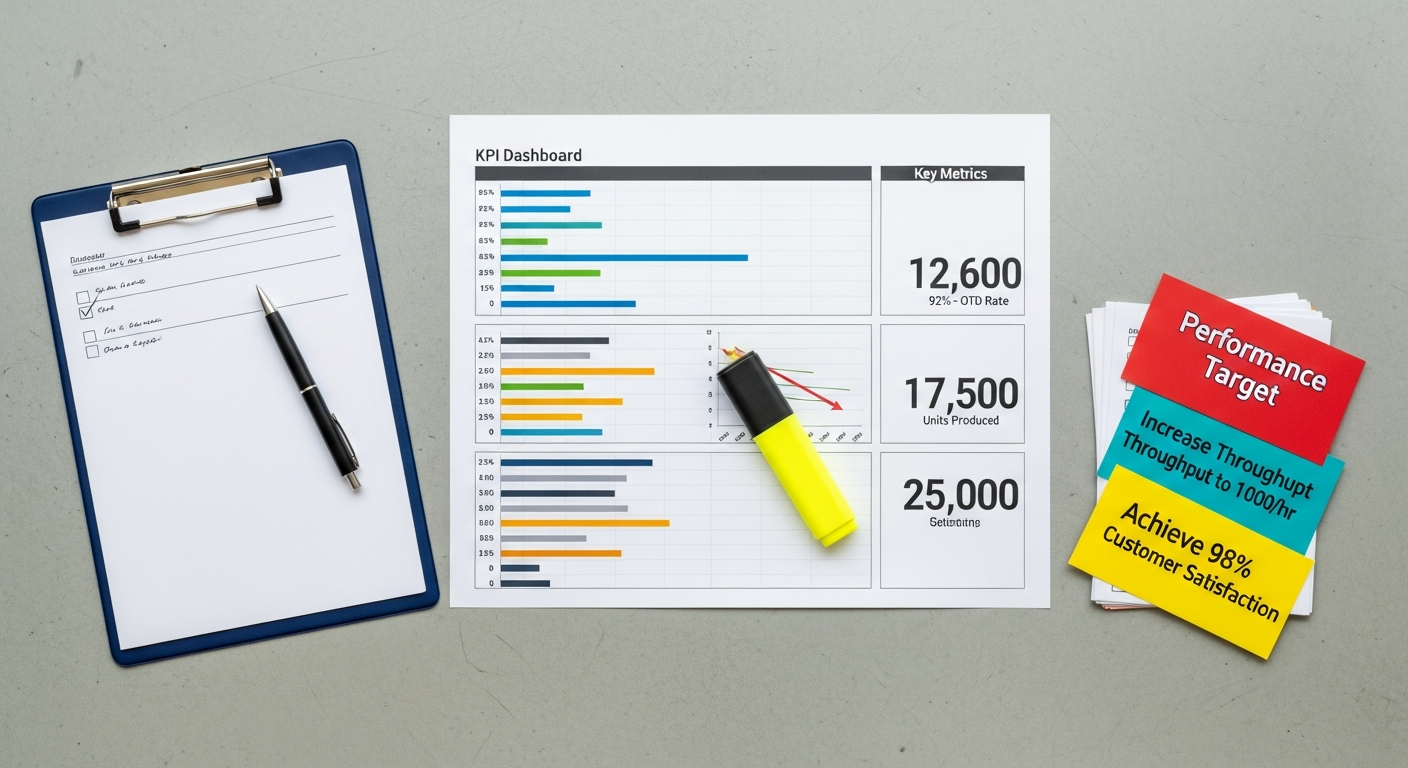
Developing and deploying an optimal shift scheduling model is not a one-time event; it’s an ongoing process of monitoring, evaluation, and refinement. To ensure long-term success and adaptability, 24/7 manufacturing operations must establish clear Key Performance Indicators (KPIs) and embed a culture of continuous improvement in their scheduling practices.
1. Defining Key Performance Indicators (KPIs) for Scheduling:
Effective KPIs provide measurable insights into the performance of your scheduling model. These should cover various aspects of the operation:
- Operational Efficiency:
- Production Output per Shift/Hour: Measures how much is produced relative to labor input.
- Machine Utilization Rate: Ensures that expensive machinery is running as close to its capacity as possible.
- On-Time Delivery Rate: Directly linked to having the right staff at the right time to meet production deadlines.
- Overtime Hours/Costs: A critical financial metric, indicating inefficient scheduling if consistently high.
- Setup/Changeover Time: Can be impacted by the consistency and skill level of the shift crew.
- Labor Management:
- Absenteeism Rate: High rates often indicate dissatisfaction or fatigue with the schedule.
- Turnover Rate: Especially for shift workers, high turnover points to systemic issues, potentially including scheduling.
- Employee Satisfaction Scores (related to schedule): Direct feedback on how employees perceive their work-life balance and fairness.
- Compliance Incidents: Number of violations of labor laws or internal policies.
- Training Hours/Cross-training Completion: Ensuring flexibility and skill depth for demand-driven scheduling.
- Safety & Quality:
- Safety Incidents/Near Misses per Shift: Fatigue-related errors often manifest as safety issues.
- Defect Rate/Rework Percentage: Can be influenced by worker fatigue or inadequate staffing leading to rushed work.
2. Data Collection, Analysis, and Reporting:
Once KPIs are defined, robust systems for data collection are essential. This often involves integrating data from:
- Time and Attendance Systems: For actual hours worked, absenteeism, and overtime.
- MES/SCADA Systems: For production output, machine utilization, and quality metrics.
- HR Systems: For turnover rates, employee demographics, and training records.
- Safety Management Systems: For incident reporting.
- Employee Surveys/Feedback Platforms: For qualitative insights into satisfaction.
Regular analysis of this data, perhaps through dedicated dashboards or business intelligence tools, allows management to identify trends, pinpoint areas of concern, and understand the direct impact of scheduling decisions.
3. Implementing Feedback Loops and Iterative Refinement:
Continuous improvement thrives on feedback. This involves:
- Regular Review Meetings: Scheduled meetings with production managers, shift supervisors, HR, and even employee representatives to discuss scheduling performance against KPIs.
- Post-Implementation Reviews: After rolling out a new schedule or making significant changes, conduct a thorough review after a set period (e.g., 3-6 months) to assess its effectiveness.
- Employee Surveys and Focus Groups: Actively solicit feedback from the workforce on how the schedule impacts their work-life balance, fatigue levels, and overall satisfaction.
- Benchmarking: Compare your scheduling KPIs against industry best practices or similar operations to identify areas for improvement and innovation.
- Pilot Programs: For major changes, consider piloting new scheduling models in a single department or on a specific line before a broader rollout.
By systematically monitoring KPIs and fostering a culture of continuous learning and adaptation, manufacturing operations can ensure their shift scheduling models remain optimized, compliant, and supportive of both operational excellence and employee well-being, even as internal and external conditions evolve.
Comparison Table: Shift Scheduling Models and Systems
| Model/System | Description | Pros | Cons | Best Use Cases |
|---|---|---|---|---|
| Fixed 8-Hour Shifts | Three 8-hour shifts (Day, Evening, Night) with employees typically assigned to the same shift permanently. | Predictable for employees; stable personal routines; simpler payroll. | High potential for shift-work fatigue on fixed nights; difficulty covering absences; higher total workforce requirement. | Operations with stable demand, less physically demanding work, or strong employee preference for fixed shifts. |
| Fixed 12-Hour Shifts | Two 12-hour shifts (Day, Night) with employees typically assigned permanently. | Fewer shift changes; more consecutive days off; simpler handovers. | Increased fatigue risk over long shifts; challenging for employees with family commitments; requires robust fatigue management. | Operations where continuous monitoring is key, fewer handovers are desired, and employees value longer blocks of time off. |
| DuPont Schedule (12-Hour Rotating) | 4 crews, 12-hour shifts. Cycle often includes 4 days on, 3 off; 3 nights on, 1 off; 3 days on, 3 off; 4 nights on, 7 off. | Long blocks of days off (incl. 7-day break); reduced shift change frequency; improved work-life balance. | Long 12-hour shifts can cause fatigue; challenging day-to-night rotation; requires 4 skilled crews. | Continuous process industries (chemical, paper), operations valuing long breaks for employees. |
| Pitman/Continental Schedule (12-Hour Rotating) | 4 crews, 12-hour shifts. Common 2-3-2 pattern (2 on, 3 off; 2 on, 2 off; 3 on, 2 off). | Good balance of workdays and days off; includes alternating weekends off; shorter work blocks than DuPont. | Frequent day/night switching can disrupt sleep; requires careful management of rest periods. | Manufacturing plants needing 24/7 coverage with shorter consecutive shifts and fair weekend distribution. |
| Modified Continental (8-Hour Rotating) | 5 crews, 8-hour shifts. Complex rotation through Day, Evening, Night shifts over an extended cycle. | Reduced daily fatigue vs. 12-hour; easier integration into existing 8-hour cultures. | More frequent shift changes; requires larger workforce (5 crews); intricate rotation management. | Operations with physically demanding work, strict 8-hour regulations, or strong preference for shorter shifts. |
| Demand-Driven/Flexible Scheduling | Variable staffing levels based on real-time and forecasted production demand using part-time, on-call, or cross-trained staff. | Optimizes labor costs; matches staff to demand; increases agility; can boost employee satisfaction with choice. | Requires robust forecasting and management tools; complex to implement; potential for inconsistent work for flexible staff. | Manufacturing with highly fluctuating demand, seasonal peaks, or diverse product lines. |
| Advanced Planning & Scheduling (APS) Systems | Software utilizing algorithms to optimize schedules based on multiple constraints and objectives. | Automated optimization; real-time adjustments; scenario planning; ensures compliance; integrates with ERP/MES. | Significant upfront investment; requires data integration; complexity of configuration and maintenance. | Large-scale, complex 24/7 manufacturing with multiple variables, high compliance needs, and dynamic environments. |
| AI/Machine Learning for Scheduling | Augments APS with predictive analytics for demand, absenteeism, and automated, adaptive schedule generation. | Highly accurate forecasting; predictive insights; continuous learning; further automation; personalized schedules. | Requires large datasets; specialized expertise for implementation and tuning; ethical considerations for employee data. | Organizations seeking cutting-edge optimization, predictive capabilities, and highly adaptive scheduling. |