The Transformative Power of 3D Printing in Modern Manufacturing
The manufacturing sector stands at the precipice of a new industrial revolution, driven by digital transformation and advanced technologies. At the heart of this revolution is 3D printing, also known as additive manufacturing (AM), a process that builds three-dimensional objects layer by layer from a digital design. Unlike traditional subtractive methods that remove material from a larger block, AM adds material only where it is needed, leading to significant advantages in material efficiency, design complexity, and production flexibility.
For decades, conventional manufacturing processes such as machining, molding, and casting have dominated production lines. While highly efficient for mass production of standardized parts, these methods often involve high tooling costs, long lead times, and significant material waste. 3D printing offers a compelling alternative, enabling the creation of intricate geometries, customized components, and complex internal structures that are impossible or prohibitively expensive to produce with traditional techniques. This capability extends beyond mere novelty; it unlocks entirely new possibilities for product innovation, performance enhancement, and supply chain optimization.
The shift towards additive manufacturing represents a fundamental change in how manufacturers approach design and production. It empowers engineers with unprecedented design freedom, allowing them to optimize parts for strength, weight, and function without being constrained by manufacturing limitations. This paradigm shift supports agile manufacturing practices, where design iterations can be executed rapidly, and production can scale from one-off prototypes to small-batch customized runs with remarkable speed. The implications for industries ranging from aerospace and automotive to medical devices and consumer goods are profound, promising a future where manufacturing is more responsive, sustainable, and innovative.
Core Technologies and Processes Driving Additive Manufacturing
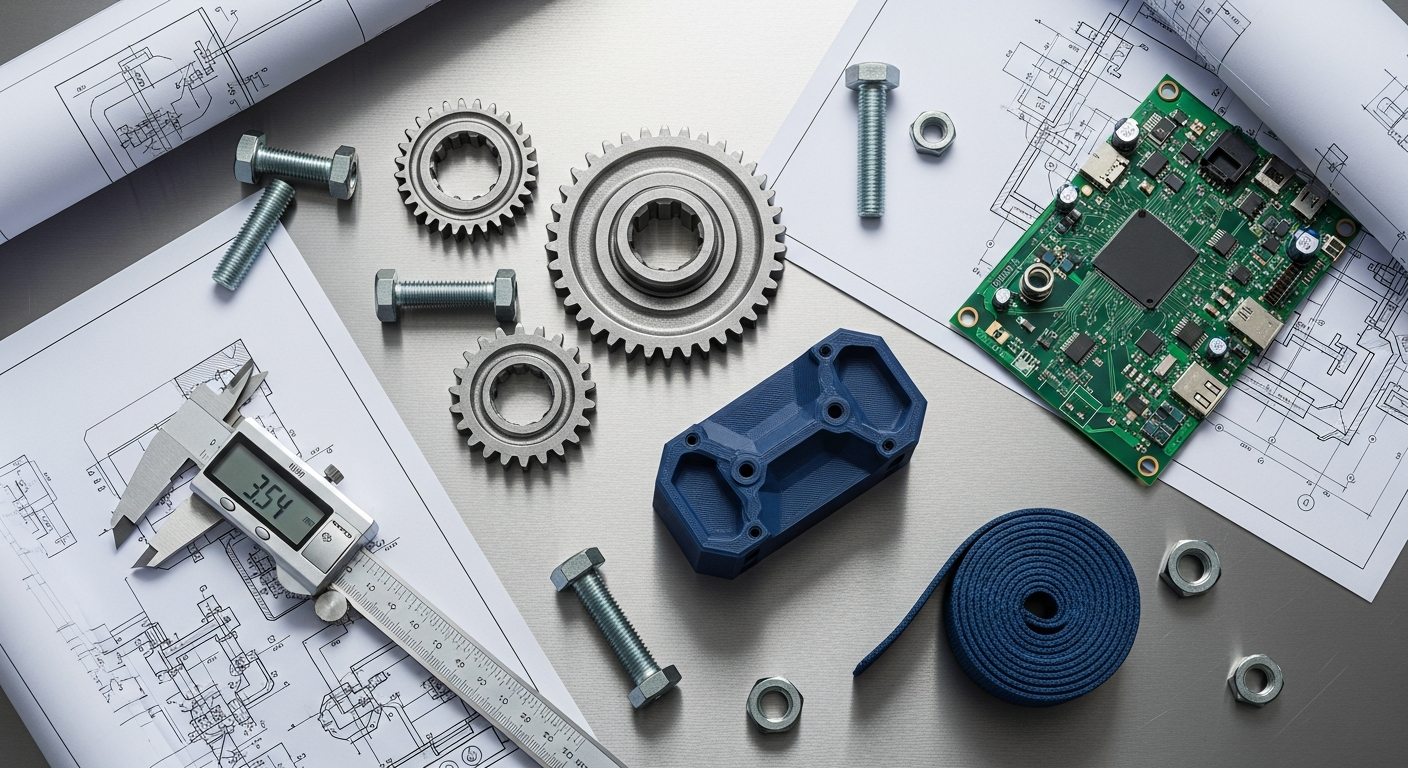
The umbrella term “3D printing” encompasses a diverse array of technologies, each with unique capabilities, material compatibility, and application sweet spots. Understanding these core processes is crucial for selecting the right additive manufacturing solution for specific industrial needs.
The most widely recognized industrial 3D printing technologies include:
- Fused Deposition Modeling (FDM) / Fused Filament Fabrication (FFF): This process extrudes a thermoplastic filament through a heated nozzle, depositing it layer by layer onto a build platform. FDM is known for its versatility, cost-effectiveness, and ability to use a wide range of engineering-grade plastics. It is commonly used for prototyping, tooling, jigs, fixtures, and end-use parts where material properties like strength and temperature resistance are critical.
- Stereolithography (SLA): One of the earliest 3D printing technologies, SLA uses a UV laser to cure liquid photopolymer resin layer by layer. It is renowned for producing parts with exceptionally smooth surfaces, high resolution, and intricate details. SLA parts are ideal for visual prototypes, master patterns for molding, and applications requiring fine features and aesthetic quality.
- Selective Laser Sintering (SLS): SLS employs a high-power laser to selectively fuse powdered material (typically nylon-based polymers) layer by layer. Unfused powder supports the part during printing, eliminating the need for support structures. SLS parts are known for their excellent mechanical properties, durability, and suitability for functional prototypes and end-use components in various industries.
- Direct Metal Laser Sintering (DMLS) / Selective Laser Melting (SLM): These metal additive manufacturing processes use a laser to melt and fuse metallic powder particles together. DMLS/SLM can produce highly complex metal parts with properties comparable to or exceeding those of conventionally manufactured parts. They are indispensable for high-performance applications in aerospace, medical implants, and tooling, enabling lightweight designs and optimized thermal management structures.
- Binder Jetting: This process involves depositing a liquid binding agent onto layers of powder material (metal, sand, ceramic) to bind the particles together. After printing, metal parts typically require post-processing like sintering or infiltration to achieve full density and strength. Binder jetting is known for its speed, ability to produce large parts, and cost-effectiveness for metal parts and sand casting molds.
- Material Jetting (e.g., PolyJet, MultiJet Modeling): Similar to inkjet printing, material jetting deposits droplets of photopolymer resin onto a build tray, which are then cured by a UV light. This technology excels at producing multi-material and multi-color parts with fine details and smooth finishes, often used for realistic prototypes and medical models.
Each of these technologies requires specific considerations regarding material selection, part design, post-processing, and operational costs. The continuous evolution of these processes, coupled with advancements in machine capabilities, is steadily pushing the boundaries of what is achievable with additive manufacturing.
Strategic Advantages of Integrating 3D Printing into Production Workflows
Unlocking Design Freedom and Complexity
One of the most compelling benefits of 3D printing is its ability to create geometries and internal structures previously considered impossible with traditional manufacturing. Engineers can design parts with organic shapes, lattice structures, and intricate internal channels, leading to components that are lighter, stronger, and more functionally optimized. This design freedom facilitates innovation, allowing for the creation of parts with superior performance characteristics, such as improved airflow, enhanced heat dissipation, or reduced material usage.
Accelerated Product Development and Prototyping
3D printing dramatically reduces the time and cost associated with prototyping. Instead of waiting weeks or months for tooling and machining, designers can print multiple iterations of a prototype within hours or days. This rapid feedback loop is a cornerstone of Kaizen Continuous Improvement Explained methodologies, enabling engineers to quickly test, refine, and validate designs. The ability to rapidly iterate allows for more thorough design exploration, reduces risks, and ultimately brings innovative products to market faster.
Customization and Personalization at Scale
The digital nature of 3D printing makes mass customization economically viable. Each part can be uniquely tailored to specific requirements without incurring additional tooling costs. This capability is invaluable in industries like medical (prosthetics, implants), automotive (bespoke interiors), and consumer goods, where personalized products command premium value. Manufacturers can respond to individual customer needs with unprecedented agility, opening new market opportunities and strengthening customer loyalty.
Optimized Supply Chains and Reduced Inventory
3D printing facilitates a shift towards on-demand and distributed manufacturing. Parts can be printed only when and where they are needed, significantly reducing the reliance on large inventories of spare parts and finished goods. This aligns perfectly with Lean Manufacturing Principles Explained, which emphasize minimizing waste and optimizing flow. By producing parts closer to the point of use, manufacturers can reduce shipping costs, shorten lead times, and mitigate supply chain disruptions, enhancing overall resilience.
Cost Efficiency for Low-Volume Production and Tooling
While often perceived as expensive, 3D printing can offer substantial cost savings, particularly for low-volume production runs, custom parts, and complex geometries. Eliminating the need for expensive molds and tooling, which can run into hundreds of thousands of dollars, significantly lowers upfront investment. Furthermore, 3D printing is increasingly used to create jigs, fixtures, and custom tooling for traditional manufacturing processes, improving efficiency and reducing costs on the production floor.
Sustainability and Waste Reduction
As an additive process, 3D printing inherently produces less material waste compared to subtractive methods. This benefit is compounded by the ability to optimize part designs for minimal material usage and the potential to recycle unused powder materials. Furthermore, localized, on-demand production reduces transportation emissions and the environmental footprint associated with traditional global supply chains, contributing to more sustainable manufacturing practices.
Advanced Materials: The Backbone of Industrial 3D Printing
The capabilities of 3D printing are inextricably linked to advancements in material science. The continuous development of new and improved materials is a critical driver behind the industrial adoption of additive manufacturing, enabling the production of parts with specific mechanical, thermal, and chemical properties required for demanding applications. The field of Materials Science In Manufacturing plays a pivotal role in pushing the boundaries of what 3D printing can achieve.
Polymers and Composites
The earliest and most widely used materials in 3D printing were polymers. Today, the range has expanded dramatically to include high-performance thermoplastics and thermosets capable of withstanding extreme conditions. Examples include:
- Nylon (Polyamide): A versatile polymer known for its strength, flexibility, and chemical resistance, widely used in SLS for functional prototypes and end-use parts.
- ABS (Acrylonitrile Butadiene Styrene): A common FDM material offering good mechanical properties and heat resistance, suitable for general-purpose prototyping and tooling.
- PEEK (Polyether Ether Ketone) and PEKK (Polyetherketoneketone): High-performance polymers that offer exceptional strength-to-weight ratio, chemical resistance, and high-temperature performance, critical for aerospace, medical, and automotive applications.
- Carbon Fiber Composites: Polymers reinforced with chopped or continuous carbon fibers significantly enhance strength, stiffness, and dimensional stability, opening doors for lightweight structural components.
- Elastomers and Rubbers: Flexible materials used for seals, gaskets, and soft robotics, enabling the creation of components with varying degrees of pliability.
Metals and Alloys
Metal 3D printing has revolutionized industries requiring high-strength, durable, and lightweight components. The ability to print complex metal geometries has transformed sectors like aerospace and medical implants. Key metal materials include:
- Titanium Alloys (e.g., Ti-6Al-4V): Renowned for their high strength-to-weight ratio, corrosion resistance, and biocompatibility, making them ideal for aerospace components, medical implants, and performance automotive parts.
- Aluminum Alloys (e.g., AlSi10Mg): Offering excellent thermal conductivity and lightweight properties, these are crucial for heat exchangers, automotive parts, and structural components.
- Stainless Steels (e.g., 316L, 17-4 PH): Widely used for their corrosion resistance, strength, and cost-effectiveness in various industrial applications, including tooling and functional parts.
- Nickel-based Superalloys (e.g., Inconel 718, Hastelloy X): These materials possess exceptional high-temperature strength, creep resistance, and corrosion resistance, making them indispensable for jet engine components, gas turbines, and other high-stress environments.
- Precious Metals: Gold, silver, and platinum are used in jewelry and specialized electronics, demonstrating the versatility of metal AM.
Ceramics and Advanced Materials
Beyond polymers and metals, the scope of 3D printable materials is expanding to include technical ceramics and advanced composites, pushing the boundaries of what can be manufactured:
- Technical Ceramics (e.g., Alumina, Zirconia): Known for extreme hardness, high-temperature resistance, and chemical inertness, ceramic 3D printing is emerging for applications in aerospace, electronics, and biomedical fields.
- Multi-material Printing: The ability to print with multiple materials simultaneously, combining different polymers, metals, or even integrating electronics, is a frontier promising highly functional and integrated components.
- Bio-inks: In biomedical applications, specialized materials are being developed for bioprinting, enabling the creation of tissues, organs, and medical devices.
The collaboration between material scientists, equipment manufacturers, and end-users is vital for continuing to innovate in this space, developing materials that meet increasingly stringent performance requirements and expand the addressable market for 3D printing.
Real-World Applications Across Industries and Mitsubishi’s Vision
The impact of 3D printing is reverberating across virtually every industrial sector, transforming product development, manufacturing processes, and supply chain strategies. Mitsubishi Manufacturing recognizes the profound potential of this technology and is actively exploring and integrating additive solutions to drive innovation and efficiency.
Aerospace and Defense
Perhaps no industry has embraced metal 3D printing more enthusiastically than aerospace. Manufacturers leverage AM to produce lightweight, high-performance components such as turbine blades, structural brackets, and intricate ducting. The ability to create complex internal geometries allows for optimized designs that reduce weight, improve fuel efficiency, and enhance thermal management, directly contributing to aircraft performance and operational cost savings. Parts that once took months to machine can now be printed in days, significantly shortening development cycles for critical components.
Automotive Industry
In automotive, 3D printing is used extensively for rapid prototyping of new vehicle designs, tooling, jigs, and fixtures on the assembly line. Furthermore, high-performance vehicles and motorsport teams utilize AM for custom, lightweight parts, improving aerodynamics and reducing vehicle mass. As the technology matures, we are seeing 3D printed end-use components, particularly for electric vehicles, where lightweighting and thermal management are paramount. Mass customization of interior components and aftermarket parts is also a growing application.
Medical and Dental
The medical sector benefits immensely from 3D printing’s ability to create highly customized, patient-specific devices. This includes surgical guides, anatomical models for pre-operative planning, custom prosthetics, and orthopedic implants tailored precisely to an individual’s anatomy. Dental applications range from clear aligners and crowns to surgical guides for implant placement, demonstrating significant improvements in fit, function, and patient outcomes.
Consumer Goods and Electronics
From bespoke eyewear frames to customized footwear and intricate jewelry, 3D printing is enabling a new era of personalized consumer products. In electronics, it facilitates the rapid prototyping of enclosures and functional components, accelerating product development cycles. The ability to produce complex designs without expensive tooling also supports niche markets and direct-to-consumer models.
Tooling, Jigs, and Fixtures
Beyond end-use parts, one of the most immediate and impactful applications of 3D printing is in the creation of manufacturing aids. Customized jigs, fixtures, and tooling can be produced quickly and affordably, optimizing assembly lines, improving worker ergonomics, and enhancing overall production efficiency. This application perfectly embodies the spirit of Kaizen Continuous Improvement Explained by providing agile solutions for incremental process enhancements.
Mitsubishi’s Vision for Additive Manufacturing
At Mitsubishi Manufacturing, our commitment to excellence and innovation drives our exploration and adoption of cutting-edge technologies like 3D printing. We envision additive manufacturing playing a crucial role in several key areas:
- Optimized Component Production: Leveraging AM for lighter, stronger, and more efficient components in our industrial machinery, vehicles, and energy solutions.
- Accelerated R&D: Utilizing rapid prototyping capabilities to significantly shorten development cycles for new products and technologies, aligning with Lean Manufacturing Principles Explained by reducing waste in the design process.
- Enhanced Customization: Offering tailored solutions and specialized parts to meet unique customer demands across our diverse product portfolio.
- Sustainable Manufacturing: Reducing material waste and energy consumption through efficient additive processes and localized production.
- Digital Transformation: Integrating 3D printing into our broader digital manufacturing ecosystem, enhancing data-driven decision-making and smart factory capabilities.
By strategically integrating 3D printing, Mitsubishi aims to strengthen its position as a leader in innovative and sustainable manufacturing, delivering superior value to our customers and contributing to a more advanced industrial future.
Overcoming Challenges and Looking to the Future of Additive Manufacturing
While the advantages of 3D printing are undeniable, its widespread industrial adoption still faces several challenges. Addressing these hurdles is crucial for realizing the full potential of additive manufacturing.
Scalability and Production Speed
For many traditional mass production scenarios, 3D printing currently struggles to match the speed and cost-effectiveness of conventional manufacturing methods. While AM excels in low-volume, high-complexity production, scaling up to millions of identical parts can be challenging. Advancements in multi-laser systems, larger build volumes, and continuous printing processes are addressing this, but high-volume production remains an area of active development.
Material Costs and Availability
Industrial-grade 3D printing materials, particularly metal powders and high-performance polymers, can be significantly more expensive than their traditional counterparts. The range of available materials, while growing, is still narrower than that for traditional manufacturing processes. Ongoing research in Materials Science In Manufacturing is focused on developing more cost-effective, high-performance materials and improving material recycling capabilities.
Post-Processing Requirements
Most 3D printed parts require some form of post-processing, such as support removal, surface finishing, heat treatment, or infiltration, to achieve desired mechanical properties and aesthetic quality. These steps can be time-consuming, labor-intensive, and add to the overall cost and lead time, sometimes negating some of the initial benefits of rapid printing. Automation of post-processing steps is a key area of focus for the industry.
Quality Assurance and Certification
Ensuring consistent part quality, repeatability, and reliability for critical applications (e.g., aerospace, medical) requires robust quality assurance protocols. The layer-by-layer nature of 3D printing introduces unique challenges in process control, defect detection, and material traceability. Developing standardized certification processes and advanced in-situ monitoring technologies is essential for building confidence in AM parts for highly regulated industries.
Design for Additive Manufacturing (DfAM) Expertise
To fully leverage the capabilities of 3D printing, engineers need to think differently about design. Traditional design rules, optimized for subtractive manufacturing, often do not apply. Designing for additive manufacturing (DfAM) requires specialized knowledge to create parts that maximize AM’s benefits (e.g., lightweighting, consolidation, complex internal features) while accounting for process limitations. Bridging this skill gap through training and advanced software tools is critical.
Integration into Existing Workflows
Integrating 3D printing into existing digital threads and production workflows, particularly in large manufacturing enterprises, can be complex. This involves data management, software interoperability, and seamlessly connecting AM machines with CAD/CAM, ERP, and MES systems. Solutions that enable smooth data flow and process automation are key to unlocking efficiency gains.
The Future Landscape: 3D Printing Trends and Innovations Towards 2026
The trajectory of 3D printing suggests a future where additive manufacturing becomes an even more integral and transformative force in the global industrial landscape. Several key trends and innovations are poised to shape this evolution towards 2026 and beyond.
Increased Automation and AI Integration
Future 3D printing systems will feature higher levels of automation, from automated material handling and part removal to robotic post-processing. Artificial intelligence and machine learning will play a crucial role in optimizing print parameters, predicting part quality, and performing in-situ monitoring to ensure consistency and reduce errors. This integration will make AM more reliable, efficient, and easier to operate, aligning with the principles of Lean Manufacturing Principles Explained by automating non-value-added tasks.
Multi-Material and Hybrid Manufacturing
The ability to print with multiple materials simultaneously, creating parts with functionally graded properties or integrated electronics, is a major frontier. Imagine a single print job producing a component with a rigid core, a flexible outer layer, and embedded sensors. Hybrid manufacturing systems, combining additive and subtractive processes in one machine, will offer the best of both worlds, enabling the creation of highly complex parts with excellent surface finishes and tight tolerances.
Advanced Materials and Process Development
The pace of material innovation will continue to accelerate, driven by sophisticated Materials Science In Manufacturing research. We can expect new polymers with enhanced properties, more affordable and diverse metal alloys, and advanced composites capable of higher performance. New printing processes will emerge, offering faster build speeds, larger part envelopes, and the ability to work with an even broader range of materials, including ceramics and bio-inks for highly specialized applications.
Decentralized and Localized Manufacturing
As 3D printing technology matures and becomes more accessible, it will increasingly enable decentralized and localized manufacturing. Companies will be able to produce parts closer to their customers or points of consumption, reducing lead times, shipping costs, and environmental impact. This shift supports resilient supply chains and allows for rapid, on-demand production, aligning with just-in-time principles and fostering local economic development.
Sustainability and Circular Economy Focus
Sustainability will be a core driver for AM innovation. This includes developing more energy-efficient printers, creating recyclable and biodegradable printing materials, and optimizing designs for minimal material usage and end-of-life recyclability. 3D printing’s potential to reduce waste, enable repair over replacement, and facilitate localized production positions it as a key technology for a circular economy.
Integration with Digital Twins and IoT
3D printing will become seamlessly integrated into the broader digital manufacturing ecosystem. Digital twins of parts and processes will enable real-time monitoring, predictive maintenance, and continuous optimization. IoT sensors within printers will provide vast amounts of data, feeding into AI algorithms to improve print quality, efficiency, and material utilization. This digital synergy will unlock unprecedented levels of control and insight, furthering the goals of Kaizen Continuous Improvement Explained at an enterprise level.
By 2026, 3D printing will be an even more indispensable tool in the manufacturer’s arsenal, not just for prototyping but for mainstream production of complex, customized, and high-performance components. Manufacturers that strategically invest in understanding and implementing these evolving technologies will be best positioned to thrive in the competitive global marketplace.
Frequently Asked Questions
Recommended Resources
Explore How To Write A Resume That Gets Interviews for additional insights.
Related reading: Reproductive Healthcare Access Guide (Protect Families Protect Choices).
From Our Network
- mental health support for new parents (en Protectfamiliesprotectchoices)
- how to start exercising when out of shape (en Diaalnews)