CAD Software Guide for Engineers 2026: Navigating the Future of Precision Design and Manufacturing
The journey from concept to finished product is more intricate than ever, demanding unparalleled accuracy, efficiency, and collaboration. Modern CAD systems are far more than digital drafting boards; they are sophisticated platforms enabling everything from advanced simulation and generative design to seamless integration with manufacturing processes. This article will delve into the evolving CAD ecosystem, explore core modalities and advanced capabilities, provide criteria for strategic software selection, and outline the essential skills for the future-proof engineer, all through the lens of achieving Mitsubishi’s stringent standards for quality and performance.
The Evolving Landscape of CAD in 2026: A Paradigm Shift in Design
The turn towards 2026 marks a significant inflection point for CAD technology. What was once desktop-bound is now increasingly cloud-native, and what required manual iteration is now augmented by intelligent algorithms. Key trends reshaping the CAD landscape include:
- Cloud-Native CAD Platforms: Moving beyond traditional on-premise installations, cloud-native CAD solutions offer unparalleled accessibility, scalability, and real-time collaboration. Teams can work concurrently on complex assemblies from anywhere, reducing geographical barriers and accelerating design cycles. Data integrity is maintained through centralized version control, significantly mitigating errors and ensuring compliance with data management protocols. Performance metrics here include reduced IT overhead by up to 25% and an increase in collaborative efficiency by 30-40% through simultaneous access and live updates.
- Artificial Intelligence and Machine Learning (AI/ML) Integration: AI is no longer a futuristic concept but an integral part of advanced CAD. Generative design, a standout application, leverages AI to explore thousands of design permutations based on specified functional requirements, material properties, and manufacturing constraints. This capability allows engineers to discover novel, optimized geometries that would be impossible to conceive manually, leading to parts with superior strength-to-weight ratios (often exceeding 20% improvement) and optimized material utilization. Predictive analytics within CAD can also identify potential design flaws early, reducing costly physical prototyping.
- Digital Twins and Extended Reality (XR): The concept of a digital twin – a virtual replica of a physical product or system – is becoming increasingly sophisticated, with CAD models serving as its foundational element. Integrated with real-time sensor data and simulation, digital twins enable proactive maintenance, performance monitoring, and iterative design improvements. Furthermore, Augmented Reality (AR) and Virtual Reality (VR) are transforming design reviews and training, offering immersive experiences that allow engineers and stakeholders to interact with 3D models at scale, identifying ergonomic issues or assembly challenges before physical production. This reduces design review cycles by up to 15% and enhances comprehension of complex designs.
- Enhanced Collaboration and Data Interoperability: Modern CAD emphasizes open standards and seamless data exchange. Adherence to standards like ISO 10303 (STEP AP203/AP214) and ISO 14306 (JT) ensures robust data transfer between different CAD systems and downstream applications (CAE, CAM, PLM). This interoperability is crucial for global supply chains and multi-vendor projects, minimizing data translation errors and maintaining design intent across the product lifecycle.
These advancements collectively contribute to a significant reduction in time-to-market, enhanced product performance, and a substantial decrease in design-related errors, directly impacting manufacturing efficiency and profitability.
Core CAD Modalities and Their Strategic Application
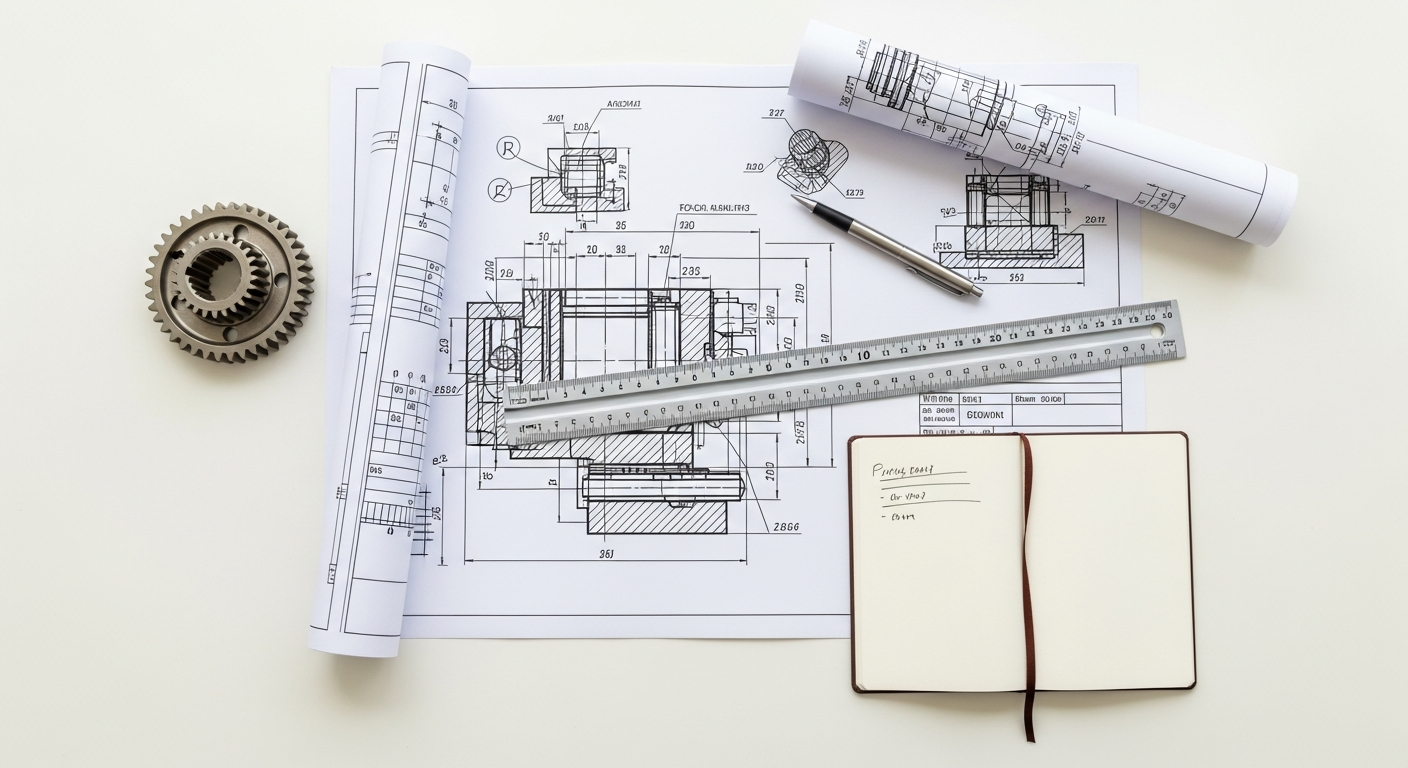
While the underlying technology evolves, the fundamental approaches to 3D modeling remain critical, each serving distinct purposes in the engineering workflow:
- Parametric Feature-Based Modeling: This remains the bedrock of precision engineering. Software like Dassault Systèmes CATIA, PTC Creo, Siemens NX, and Autodesk Inventor excel in creating designs where dimensions, relationships, and features are parametrically driven. Changes to a single parameter automatically update the entire model, ensuring design intent is maintained and facilitating robust revision control. This modality is indispensable for complex mechanical assemblies, engine components, and aerospace structures where tight tolerances (e.g., ±0.01mm) and strict adherence to geometric dimensioning and tolerancing (GD&T) per ASME Y14.5 are paramount. Its strength lies in its ability to manage complexity and facilitate design changes efficiently, often reducing redesign time by up to 50%.
- Direct Modeling: Offering a more intuitive, “push-pull” approach, direct modeling (found in tools like ANSYS SpaceClaim or aspects of Autodesk Fusion 360) allows engineers to manipulate geometry directly without being constrained by a feature tree. This is particularly advantageous for conceptual design, rapid prototyping, and making quick modifications to imported models where the original parametric history is unavailable or irrelevant. It complements parametric modeling by providing agility, especially in the early stages of product development or for non-native CAD data repair.
- Subdivision Modeling (Sub-D): Essential for industrial design and consumer products requiring organic, aesthetically pleasing surfaces, Sub-D modeling allows for the creation of smooth, free-form shapes with high fidelity. While traditionally separate, modern CAD systems are integrating Sub-D capabilities, bridging the gap between artistic design and engineering precision. This is critical for achieving ergonomic forms and distinctive product aesthetics while maintaining manufacturability.
- Generative Design and Topology Optimization: Representing a significant leap, these techniques leverage computational power to automatically generate optimal geometries. Topology optimization refines an existing design to remove excess material while maintaining structural integrity, often resulting in highly efficient, lightweight parts. Generative design takes this further, exploring a vast solution space based on performance criteria, material type (e.g., metals, composites), and manufacturing process (e.g., additive manufacturing, casting). For instance, an aerospace bracket designed generatively can achieve a 40% weight reduction compared to traditionally designed counterparts, directly impacting fuel efficiency and material costs.
- Cloud-Native CAD Platforms: Solutions like Onshape and Autodesk Fusion 360 (hybrid) exemplify the advantages of cloud architecture. They provide version control, data management, and collaborative tools inherent to the platform, eliminating the need for separate PDM systems for smaller teams. This reduces infrastructure costs and improves data accessibility, offering a robust environment for distributed engineering teams.
Advanced CAD Capabilities for Engineering Excellence
Beyond core modeling, modern CAD systems integrate powerful capabilities crucial for comprehensive product development:
- Integrated Simulation (CAE): Finite Element Analysis (FEA) for structural integrity (stress, strain, deformation, fatigue life), Computational Fluid Dynamics (CFD) for thermal management and fluid flow optimization, and Kinematics for motion analysis are increasingly embedded within CAD environments. This “design-validate” loop significantly reduces the need for expensive physical prototypes. Engineers can simulate complex scenarios, such as the thermal expansion of an engine block under operational temperatures or the aerodynamic performance of a vehicle component, ensuring compliance with standards like ASME Boiler and Pressure Vessel Code or ISO 13485 for medical devices. High-fidelity simulations can predict failure points with over 95% accuracy, leading to more robust designs.
- CAM Integration (Computer-Aided Manufacturing): The seamless transition from a CAD model to manufacturing instructions (toolpath generation, G-code) is vital. Integrated CAM modules allow engineers to optimize manufacturing processes directly from the design environment, adhering to principles of Design for Manufacturability (DFM) and Design for Assembly (DFA). This reduces programming errors, shortens setup times, and improves machine utilization, directly impacting production costs and schedules. For complex 5-axis machining, integrated CAM can reduce programming time by 30% and improve surface finish quality.
- Product Lifecycle Management (PLM) Integration: For large-scale enterprises and complex product portfolios, PLM systems are indispensable. CAD systems tightly integrate with PLM to manage product data, revisions, bills of material (BOMs), engineering change orders (ECOs), and workflows across the entire product lifecycle. This centralized data repository ensures traceability, supports regulatory compliance (e.g., ISO 9001 quality management), and facilitates global collaboration, providing a single source of truth for all product-related information. Effective PLM integration can reduce engineering change order processing time by up to 20%.
- Model-Based Definition (MBD) / Digital Product Definition (DPD): MBD represents a paradigm shift from 2D drawings as the primary design authority to the 3D CAD model. All necessary manufacturing information—GD&T, annotations, material specifications, surface finishes, notes—is embedded directly within the 3D model. This eliminates potential misinterpretations between 2D drawings and 3D models, streamlines inspection processes, and forms the foundation of the digital thread. MBD, compliant with standards like ASME Y14.41, reduces manufacturing errors by an average of 15% and accelerates inspection by enabling direct digital measurement.
Selecting the Right CAD Solution for Your Engineering Needs
Choosing the optimal CAD software in 2026 requires a strategic evaluation based on several critical factors, aligning with your organization’s specific goals and operational context:
- Industry-Specific Requirements: Different industries have unique demands. Aerospace and automotive require robust surfacing, large assembly management, and advanced simulation capabilities. Consumer electronics may prioritize industrial design and miniaturization. Heavy machinery focuses on structural integrity, durability, and robust PDM/PLM integration. Ensure the chosen CAD system offers specialized modules or capabilities pertinent to your sector.
- Scalability and Ecosystem: Evaluate if the software can scale from individual users or small project teams to enterprise-wide deployments. Consider its compatibility and integration with your existing PDM/PLM, ERP, CAM, and CAE systems. An open API (Application Programming Interface) is crucial for custom integrations and automating workflows.
- Performance Metrics and Hardware Requirements: Assess the software’s performance with large assemblies (e.g., loading times, rebuild speeds), complex simulations (e.g., solver speed, memory efficiency), and high-resolution rendering. This directly impacts engineering productivity. Modern CAD often benefits from multi-core processors, ample RAM (32GB+ is common), and professional-grade GPUs (e.g., NVIDIA Quadro, AMD Radeon Pro). Cloud-native solutions may reduce local hardware dependency but necessitate robust internet connectivity.
- User Experience and Learning Curve: An intuitive interface and comprehensive training resources are vital for user adoption and productivity. While advanced features require training, the basic workflow should be accessible. Consider the availability of online communities, tutorials, and certified training programs.
- Cost of Ownership: Beyond initial licensing (perpetual vs. subscription), factor in maintenance, support, training, and hardware upgrades. Cloud solutions often shift costs from capital expenditure to operational expenditure, but long-term subscription costs must be carefully analyzed.
- Data Security and Intellectual Property (IP) Protection: Especially for cloud-based CAD, scrutinize data encryption protocols, compliance certifications (e.g., ISO 27001), and access control mechanisms. Protecting proprietary designs is paramount.
The Future-Proof Engineer: Skills and Adaptations for 2026 and Beyond
The evolution of CAD demands a corresponding evolution in the skills and mindset of engineers. To thrive in 2026 and beyond, engineers must cultivate a broader and more interdisciplinary skill set:
- Proficiency in Advanced CAD Capabilities: Beyond traditional parametric modeling, engineers must be adept at leveraging generative design tools, interpreting simulation results (FEA, CFD), and understanding the implications of MBD. This involves a deeper understanding of computational methods and data analysis.
- Understanding of AI/ML Fundamentals: While not requiring data science expertise, engineers need to grasp how AI and machine learning influence design processes, interpret AI-generated solutions, and effectively guide generative algorithms by defining appropriate constraints and objectives.
- Data Management and PLM Acumen: With the increasing volume and complexity of product data, engineers must understand PLM principles, effective data organization, version control, and change management processes to maintain data integrity across the product lifecycle.
- Interdisciplinary Knowledge: A holistic understanding of materials science, advanced manufacturing processes (e.g., additive manufacturing, robotics), and supply chain dynamics is crucial. Designs must be conceived with manufacturability, assembly, and sustainability in mind from the outset.
- Collaboration and Communication Skills: Working in distributed, global teams necessitates strong communication, digital collaboration proficiency, and the ability to effectively convey complex technical information using tools like MBD.
- Continuous Learning and Adaptability: The rapid pace of technological change means that lifelong learning is no longer optional. Engineers must actively seek out new knowledge, adapt to new software versions, and embrace emerging methodologies to remain competitive and innovative.