


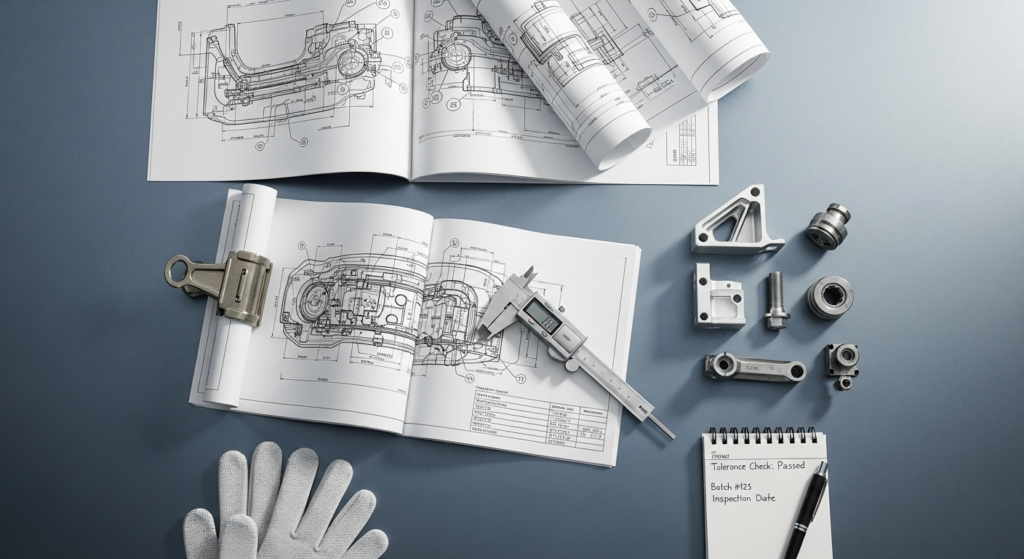
The Genesis and Evolution of Automotive Quality Control
Automotive quality control is a discipline forged in the crucible of necessity. In the early days of automotive manufacturing, quality was often reactive, primarily focused on inspecting finished products and repairing defects. However, as vehicles grew more complex and production volumes soared, this approach proved inefficient and costly. The mid-20th century saw a pivotal shift, largely influenced by figures like W. Edwards Deming and Joseph Juran, who championed statistical methods and proactive quality management. Their principles, initially embraced by Japanese manufacturers, revolutionized the industry, demonstrating that quality could be built-in rather than inspected-in.
This paradigm shift led to the development of sophisticated quality management systems that emphasized prevention over detection. The advent of global supply chains further amplified the need for standardized quality protocols, ensuring consistency and interoperability across countless suppliers and manufacturing sites. Today, automotive quality control is an integrated, holistic process that spans the entire product lifecycle, from initial concept and design through manufacturing, assembly, and post-sale service. It encompasses everything from the meticulous selection of raw materials and the precision of machining operations to the robustness of software and the integrity of assembly processes. The unique demands of the automotive sector, including high production volumes, long product lifecycles, and safety-critical applications, necessitate an unparalleled level of rigor and continuous improvement in quality assurance.
Cornerstone Quality Management Systems: IATF 16949 and ISO 9001
The global automotive industry relies on a robust framework of standards to ensure consistent quality across its vast and intricate supply chain. At the pinnacle of these standards are IATF 16949 and its foundational predecessor, ISO 9001. Understanding these systems is crucial for any entity operating within or supplying to the automotive sector.
ISO 9001: The Global Benchmark for Quality Management
ISO 9001 is the internationally recognized standard for quality management systems (QMS). Published by the International Organization for Standardization (ISO), it provides a generic framework that can be applied to any organization, regardless of its size or industry. The core principles of ISO 9001 revolve around a strong customer focus, the motivation and implication of top management, the process approach, and continual improvement. It requires organizations to:
- Identify and define processes necessary for the QMS and their application throughout the organization.
- Determine the sequence and interaction of these processes.
- Determine criteria and methods required to ensure the effective operation and control of these processes.
- Ensure the availability of resources and information necessary to support the operation and monitoring of these processes.
- Monitor, measure, and analyze these processes.
- Implement actions necessary to achieve planned results and continual improvement.
While ISO 9001 provides the essential groundwork for a strong QMS, the automotive industry’s unique demands necessitated a more specialized standard.
IATF 16949: The Automotive Industry’s Definitive Quality Standard
IATF 16949 is the automotive industry’s specific QMS standard. Developed by the International Automotive Task Force (IATF), a group of automotive manufacturers including BMW Group, Stellantis, Ford Motor Company, General Motors, Mercedes-Benz AG, Volkswagen AG, and others, it supersedes the previous ISO/TS 16949. IATF 16949 is not a standalone QMS but an addition to, and in conjunction with, ISO 9001:2015. This means that an organization must comply with both ISO 9001 and IATF 16949 requirements to achieve certification.
The primary aim of IATF 16949 is to develop a QMS that provides for continual improvement, emphasizing defect prevention and the reduction of variation and waste in the supply chain. It incorporates several unique automotive-specific requirements, including:
- Customer-Specific Requirements (CSRs): These are additional requirements mandated by individual automotive customers (OEMs) that extend beyond the general IATF 16949 framework.
- Product Safety: Enhanced requirements for managing product safety-related parts and processes.
- Risk Analysis: A heightened focus on risk analysis, including the use of tools like Failure Mode and Effects Analysis (FMEA).
- Manufacturing Process Control: Strict requirements for process control, including statistical techniques.
- Supplier Management: Robust processes for managing and developing suppliers throughout the supply chain.
- Warranty Management: Procedures for handling customer complaints and warranty claims.
- Employee Competence and Awareness: Specific requirements for training, qualification, and awareness of employees, particularly those affecting product quality.
Certification to IATF 16949 is a mandatory prerequisite for many companies wishing to supply components, systems, or services directly to major automotive OEMs. It signifies a supplier’s commitment to maintaining world-class quality and their capability to meet the rigorous demands of the automotive sector, thereby reducing the need for multiple certifications and audits across the supply chain.
Pillars of Automotive Quality Control: Methodologies and Tools
Advanced Product Quality Planning (APQP)
APQP is a structured process used in the automotive industry to ensure that new products or processes meet customer requirements. It is a five-phase process that guides product and process development from concept to launch:
- Planning and Defining Program: Understanding customer needs and expectations, establishing project scope and objectives.
- Product Design and Development: Designing the product to meet specifications, including design validation and verification. This phase heavily utilizes tools like Finite Element Analysis Explained, which allows engineers to simulate real-world conditions and predict component behavior under stress, identifying potential failure points long before physical prototyping.
- Process Design and Development: Designing the manufacturing processes, including equipment, tooling, and methods, to produce the product efficiently and consistently.
- Product and Process Validation: Verifying that the product and manufacturing process can consistently meet customer requirements, typically through production trials and testing.
- Feedback, Assessment, and Corrective Action: Continuous improvement based on ongoing performance, lessons learned, and customer feedback.
APQP ensures that quality is designed into the product and process from the outset, reducing costly rework and delays.
Failure Mode and Effects Analysis (FMEA)
FMEA is a systematic, proactive method for identifying potential failure modes in a product or process, assessing their effects, and prioritizing them for mitigation. There are typically two main types:
- Design FMEA (DFMEA): Focuses on potential failures in the product design itself, such as material selection or structural integrity.
- Process FMEA (PFMEA): Focuses on potential failures in the manufacturing or assembly process, such as incorrect tool settings or operator errors.
For each potential failure mode, FMEA assesses its severity (impact on the customer), occurrence (likelihood of happening), and detection (likelihood of being caught before reaching the customer). These values are multiplied to generate a Risk Priority Number (RPN), which helps prioritize corrective actions. FMEA is a critical tool for defect prevention and risk reduction.
Production Part Approval Process (PPAP)
PPAP is a standardized process that verifies that a supplier can consistently meet customer requirements for production parts. It involves a formal submission of documentation and samples to the customer, demonstrating that the supplier has understood all design and specification requirements and has a manufacturing process capable of producing parts that consistently meet these requirements. The PPAP submission typically includes elements such as:
- Design Records (drawings, specifications)
- Engineering Change Documents
- Customer Engineering Approval
- Design FMEA (DFMEA)
- Process Flow Diagram
- Process FMEA (PFMEA)
- Control Plan
- Measurement System Analysis (MSA) studies
- Dimensional Results
- Material and Performance Test Results
- Initial Process Studies (SPC data)
- Qualified Laboratory Documentation
- Appearance Approval Report (AAR)
- Sample Production Parts
- Master Sample
- Checking Aids
- Customer-Specific Requirements
- Part Submission Warrant (PSW)
PPAP is a gatekeeping mechanism that ensures only fully validated parts and processes enter mass production.
Statistical Process Control (SPC)
SPC is a method of quality control that uses statistical methods to monitor and control a process to ensure that it operates at its full potential to produce conforming product. It involves collecting data from a process, plotting it on control charts, and analyzing these charts to identify variations that are outside expected statistical limits. This allows manufacturers to:
- Detect and prevent defects rather than discover them.
- Reduce waste and scrap.
- Improve process efficiency and consistency.
- Understand process capability.
Common SPC tools include control charts (X-bar and R charts, P charts, C charts), histograms, and Pareto charts. By continuously monitoring critical process parameters, manufacturers can identify and correct issues before they lead to non-conforming products.
Measurement System Analysis (MSA)
MSA is a formal study to determine the capability and accuracy of a measurement system. If a measurement system is inaccurate or unreliable, then any data collected from it will be flawed, leading to incorrect decisions about product quality or process performance. MSA typically evaluates two key aspects:
- Accuracy: How close the measured values are to the true value (e.g., bias, linearity).
- Precision: How close repeated measurements are to each other (e.g., repeatability, reproducibility).
By ensuring that measurement systems are robust and reliable, MSA provides confidence in the data used for SPC, FMEA, and other quality activities.
Embracing Lean Principles for Superior Quality
The pursuit of automotive quality is inextricably linked with the adoption of Lean Manufacturing Principles, a philosophy we detail in our dedicated piece, Lean Manufacturing Principles Explained. Lean is not just about efficiency; it is fundamentally about quality by systematically eliminating waste (Muda), unevenness (Mura), and overburden (Muri) from all processes. By reducing these non-value-added activities, Lean directly contributes to higher quality outputs and operational excellence.
Key Lean Principles and Their Impact on Quality:
- Value Stream Mapping: This tool helps visualize the entire flow of materials and information required to bring a product or service to a customer. By identifying bottlenecks, non-value-added steps, and areas of waste, organizations can streamline processes and improve quality flow.
- Just-In-Time (JIT): Producing only what is needed, when it is needed, and in the amount needed. JIT drastically reduces inventory (a major form of waste), which in turn exposes quality problems more quickly. When less inventory acts as a buffer, defects are immediately apparent and cannot be hidden, forcing prompt resolution. This principle significantly contributes to Manufacturing Waste Reduction Strategies.
- Jidoka (Autonomation): This principle means “automation with a human touch” or “automation with intelligence.” It involves building in mechanisms to detect abnormalities and automatically stop production or signal for human intervention when a defect occurs. The goal is to prevent defects from being passed down the line, ensuring that every subsequent process only receives quality parts.
- Poka-Yoke (Mistake-Proofing): Designing processes and products in such a way that it is impossible or highly difficult for errors to occur. Poka-Yoke devices or methods prevent defects by either stopping an error from happening (e.g., a connector that only fits one way) or immediately detecting an error if it does occur (e.g., a sensor detecting a missing component).
- Standardized Work: Documenting the current best practices for every task, ensuring consistency in how work is performed. This reduces variation, which is a key source of defects, and provides a baseline for continuous improvement.
- Continuous Improvement (Kaizen): The philosophy that all processes can and should be continuously improved through small, incremental changes. Kaizen encourages all employees, from the shop floor to management, to identify problems and propose solutions, fostering a culture where quality is everyone’s responsibility.
Integrating Lean principles into automotive manufacturing shifts the focus from merely detecting defects to proactively preventing them. By empowering employees, optimizing processes, and relentlessly pursuing the elimination of waste, Lean methodologies cultivate an environment where high quality becomes an inherent outcome of the production system.
The Indispensable Role of Technology in Modern Automotive Quality Control
As vehicles become increasingly sophisticated and production scales grow, technological innovation has become an indispensable ally in maintaining and enhancing automotive quality. The advent of Industry 4.0 and smart manufacturing concepts has revolutionized how quality is managed, shifting towards predictive, real-time, and data-driven approaches.
Real-time Data Collection and Analytics
The proliferation of sensors embedded throughout the manufacturing process, from raw material handling to final assembly, allows for the collection of vast amounts of data in real-time. This data, encompassing parameters like temperature, pressure, torque, dimensional measurements, and material properties, is fed into advanced analytics platforms. These platforms can then:
- Identify trends: Spot subtle shifts in process parameters that might indicate an impending quality issue before it escalates.
- Predict failures: Utilize machine learning algorithms to predict equipment malfunctions or potential product defects based on historical data patterns.
- Optimize processes: Provide insights into how process variables can be adjusted to improve efficiency and reduce variation, directly enhancing product quality.
Automated Inspection Systems
Manual inspection, while still relevant, is increasingly augmented or replaced by automated systems that offer superior speed, accuracy, and consistency. These include:
- Vision Systems: High-resolution cameras and image processing software can detect minute surface defects, misalignments, or missing components with incredible precision and speed, often exceeding human capability.
- Robotics: Robots equipped with sensors and end-effectors perform repetitive and precise inspection tasks, such as dimensional checks using laser scanners or ultrasonic testing, ensuring uniformity across thousands of parts.
- Non-Destructive Testing (NDT): Advanced NDT techniques like X-ray, eddy current, and thermal imaging are automated to inspect internal structures for flaws without damaging the component, crucial for critical safety parts.
Artificial Intelligence (AI) and Machine Learning (ML)
AI and ML algorithms are transforming quality control by moving beyond mere data analysis to intelligent decision-making:
- Predictive Quality: ML models can analyze complex datasets to predict the likelihood of defects for specific batches or individual components, enabling proactive intervention.
- Root Cause Analysis: AI can rapidly sift through vast amounts of process and product data to pinpoint the most probable root causes of quality deviations, accelerating problem resolution.
- Adaptive Process Control: AI-powered systems can automatically adjust machine settings in real-time to maintain optimal process conditions, compensating for environmental variations or material inconsistencies.
Digital Twins
A digital twin is a virtual replica of a physical product, process, or system. In automotive quality control, digital twins allow manufacturers to:
- Simulate Performance: Test design changes or process modifications in a virtual environment before implementing them physically, predicting their impact on quality.
- Monitor in Real-time: Continuously compare the performance of physical assets (e.g., a vehicle on the road, a production line) against their digital twins, instantly flagging deviations or potential failures.
- Predict Maintenance: Use data from the digital twin to predict when components might fail, enabling proactive maintenance and preventing quality issues related to equipment breakdown.
Blockchain for Supply Chain Traceability
The complexity of the automotive supply chain makes traceability a significant challenge. Blockchain technology offers a decentralized, immutable ledger to track every component from its origin as raw material through to its installation in a finished vehicle. This enhances quality control by:
- Ensuring Authenticity: Verifying the origin and authenticity of parts, combating counterfeit components that pose safety and quality risks.
- Rapid Recall Management: In the event of a defect or recall, blockchain can quickly and precisely identify affected components and vehicles, minimizing the scope and cost of recalls.
- Transparency: Providing an auditable trail of quality checks, certifications, and compliance at every stage of the supply chain.
By leveraging these cutting-edge technologies, automotive manufacturers are moving towards a future where quality control is not just about detecting errors, but about preventing them proactively, ensuring unparalleled safety, reliability, and customer satisfaction.
Challenges and the Future Outlook for Automotive Quality in 2026 and Beyond
The automotive industry is in a state of unprecedented transformation, driven by electrification, autonomous driving, and connectivity. While these advancements promise exciting new capabilities, they also introduce significant challenges for maintaining and elevating quality standards. Looking towards 2026 and beyond, automotive manufacturers must navigate a complex landscape to ensure the continued excellence of their products.
Emerging Challenges in Automotive Quality:
- Increasing Complexity of Vehicles: Modern vehicles, especially Electric Vehicles (EVs) and those equipped with Advanced Driver-Assistance Systems (ADAS), integrate vast amounts of software, complex electronics, and new materials. This complexity exponentially increases the potential points of failure and makes comprehensive testing and validation more challenging.
- Software Quality Assurance: Software is now a critical component of vehicle functionality, from infotainment to powertrain control and autonomous driving algorithms. Ensuring the quality, reliability, and cybersecurity of millions of lines of code, often developed by multiple suppliers, is a monumental task. Over-the-air (OTA) updates, while convenient, also introduce new risks if not rigorously tested and deployed.
- Global Supply Chain Vulnerabilities: Geopolitical events, natural disasters, and pandemics have exposed the fragility of global supply chains. Ensuring consistent quality from diverse suppliers across different continents, often with varying regulatory environments and quality maturity levels, remains a persistent challenge.
- Battery Technology and EV Powertrain Quality: The reliability, safety, and longevity of high-voltage battery packs are paramount for EVs. New quality control measures are needed for battery cell manufacturing, module assembly, thermal management systems, and charging infrastructure.
- Cybersecurity Risks: Connected vehicles are vulnerable to cyber threats, which can compromise functionality, data privacy, and even vehicle safety. Quality control now extends to securing vehicle software and hardware against malicious attacks, requiring robust security-by-design principles.
- Rapid Technological Evolution: The pace of innovation, particularly in AI, sensors, and computing, means that quality standards and testing methodologies must constantly evolve to keep pace, preventing obsolescence.
Future Outlook for Automotive Quality in 2026 and Beyond:
- Predictive and Prescriptive Quality: The industry will move further away from reactive quality control towards predictive and prescriptive models. Leveraging AI, machine learning, and vast data lakes, manufacturers will anticipate potential defects, equipment failures, and process deviations before they occur, implementing corrective actions proactively.
- Integrated Quality Lifecycle Management: Quality will be managed holistically across the entire product lifecycle, from concept and design (with heavy reliance on simulation and virtual validation) through manufacturing, in-use performance (via connected vehicle data), and end-of-life considerations.
- Software-Defined Quality: With vehicles becoming “computers on wheels,” software quality assurance will take center stage. This includes continuous integration/continuous deployment (CI/CD) practices, rigorous software testing (unit, integration, system, and acceptance testing), and robust cybersecurity protocols embedded into the development process.
- Hyper-Personalization and Customization: As consumer demand for personalized vehicles grows, manufacturing processes will need to adapt to produce highly customized vehicles while maintaining mass-production quality standards, requiring flexible and adaptive quality control systems.
- Sustainability and Circular Economy: Quality will increasingly incorporate environmental considerations. This includes ensuring the quality and durability of recycled materials, designing for recyclability, and minimizing waste throughout the product lifecycle, aligning with broader sustainability goals.
- Enhanced Human-Machine Collaboration: While automation will expand, human expertise will remain vital. Advanced quality systems will augment human decision-making, providing real-time insights and decision support for complex problem-solving.
The automotive industry’s commitment to quality will only intensify in the coming years. Manufacturers like Mitsubishi Manufacturing will continue to invest heavily in advanced technologies, robust methodologies, and highly skilled personnel to meet these evolving challenges, ensuring that the vehicles of 2026 and beyond are not just innovative, but also impeccably reliable and safe.
Frequently Asked Questions
What is IATF 16949 and why is it important for the automotive industry?▾
How do Lean Manufacturing principles improve automotive quality?▾
What is the difference between quality control (QC) and quality assurance (QA) in automotive manufacturing?▾
Why is Failure Mode and Effects Analysis (FMEA) crucial in automotive manufacturing?▾
How does technology contribute to automotive quality control in the modern era?▾
What are the biggest challenges for automotive quality in 2026 and beyond?▾
Recommended Resources
Check out Domestic Violence Resources For Families on Protect Families Protect Choices for a deeper dive.
For more on automotive quality control, see How To Be More Productive At Home on Diaal News.