
The Circular Economy Guide for Manufacturing Companies 2026: Engineering Sustainable Value
A circular economy represents a systemic shift, moving beyond simply reducing negative impacts to actively creating positive ones. It is fundamentally about designing out waste and pollution, keeping products and materials in use, and regenerating natural systems. For the manufacturing sector, this paradigm shift demands a re-engineering of every stage of the product lifecycle—from conceptual design and material selection to production processes, consumption models, and end-of-life strategies. Embracing circularity is not just about compliance; it is about securing long-term competitiveness, fostering innovation, and building robust, future-proof enterprises in an increasingly resource-constrained world.
Foundational Principles and Strategic Imperatives for a Circular Future
The transition to a circular economy in manufacturing is predicated on three core principles, as articulated by leading organizations such as the Ellen MacArthur Foundation. Understanding these principles is the first step toward developing a coherent strategy for 2026 and beyond:
- Design Out Waste and Pollution: This principle emphasizes proactive intervention at the design stage. Instead of managing waste as an inevitable byproduct, circular design seeks to eliminate it entirely. This involves selecting non-toxic, durable, and recyclable materials, designing products for ease of disassembly, repair, and remanufacturing, and optimizing processes to minimize material and energy losses.
- Keep Products and Materials in Use: Maximizing the utility and lifespan of resources is central to circularity. This moves beyond single-use consumption to models that promote reuse, repair, refurbishment, and remanufacturing of products and components. When products reach their functional end, their constituent materials are recovered and recycled at the highest possible value, maintaining them within the economic loop.
- Regenerate Natural Systems: Beyond minimizing harm, a circular economy aims to restore and enhance natural capital. This includes integrating renewable energy sources, optimizing water usage, and returning biological materials safely to the biosphere, thereby contributing to ecological health and resilience.
For manufacturing companies, these principles translate into several strategic imperatives. Firstly, a shift from linear resource consumption to resource optimization must permeate organizational culture and investment decisions. Secondly, fostering collaboration across the entire value chain—from suppliers to customers and even competitors—is essential for creating closed-loop systems. Thirdly, integrating circular economy principles into core business strategy, including R&D, procurement, production planning, and financial models, is critical for sustained success. This requires a paradigm shift from viewing materials as commodities to be consumed, to assets to be managed and circulated with precision and foresight.
Pillars of Circular Manufacturing: A Technical and Methodological Deep Dive
Implementing a circular economy requires a multi-faceted approach, integrating advanced technologies, innovative methodologies, and strategic business model shifts across the manufacturing lifecycle.
Circular Design and Material Innovation
The journey to circularity begins at the drawing board. Engineers are challenged to design products not just for function and aesthetics, but for their entire lifecycle and subsequent cycles. Key aspects include:
- Design for Disassembly (DfD): Products are engineered for easy and efficient separation of components and materials, facilitating repair, upgrade, and recycling. This often involves modular architectures, standardized fasteners, and minimizing mixed material constructions.
- Modularity and Repairability: Designing products with easily replaceable or upgradable modules extends product lifespan and simplifies maintenance. This is particularly critical for complex industrial equipment and electronics.
- Material Selection and Innovation: Prioritizing materials that are durable, non-toxic, renewable, or derived from high-recycled content streams. This includes advanced composites, bio-based polymers, and alloys optimized for multiple recycling cycles. The concept of “material passports” – digital records detailing a product’s material composition, origin, and end-of-life pathways, often enabled by blockchain technology – is gaining traction to ensure transparency and traceability.
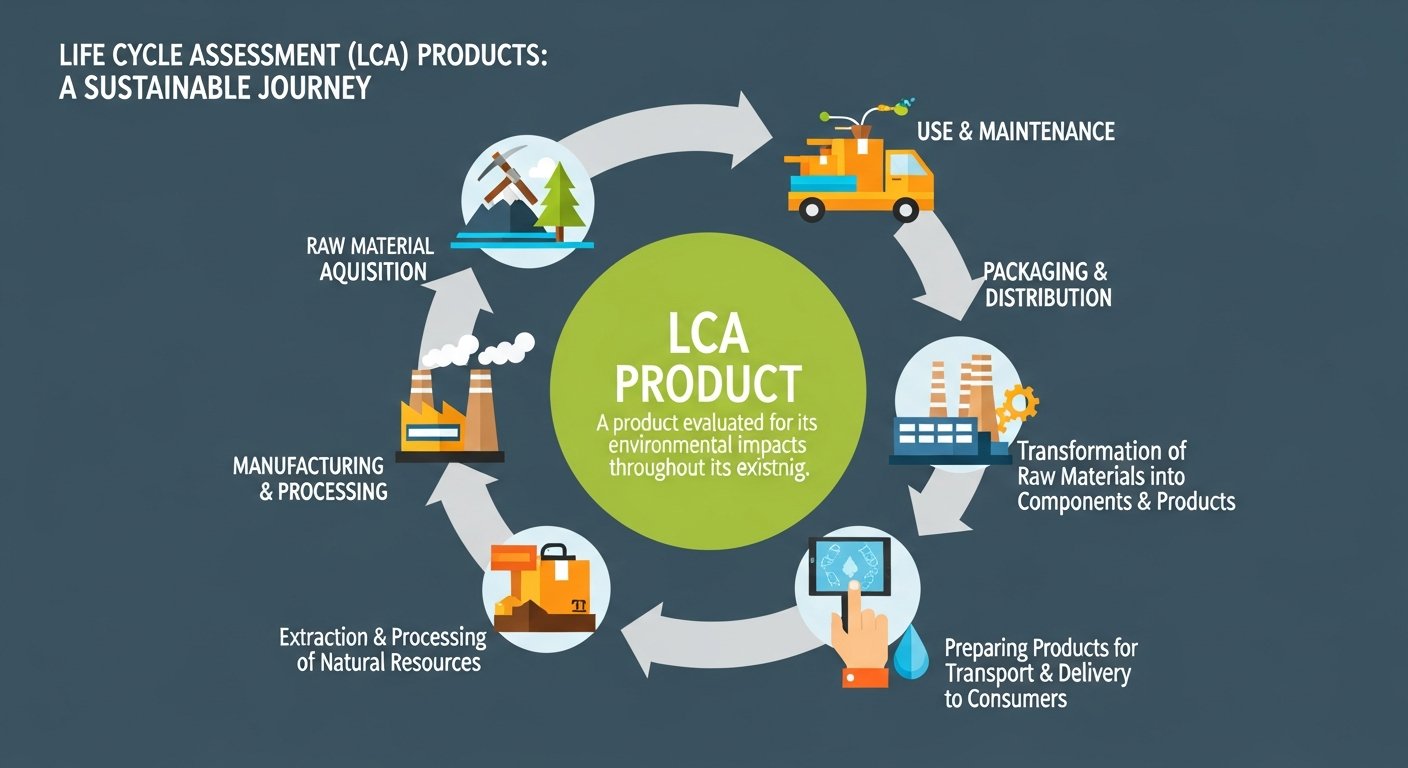
- Lifecycle Assessment (LCA): Utilizing sophisticated LCA software (e.g., SimaPro, GaBi) to quantify the environmental impacts of product designs from raw material extraction to end-of-life, enabling data-driven decisions for material and process selection.
Advanced Manufacturing and Resource Optimization
Modern manufacturing processes offer significant opportunities for resource efficiency and waste reduction:
- Additive Manufacturing (AM) / 3D Printing: By building objects layer by layer, AM significantly reduces material waste compared to subtractive methods. It also enables on-demand production of spare parts, reducing inventory and supporting product longevity, and facilitates lightweighting through optimized geometries.
- Smart Factories (Industry 4.0): Integrating IoT sensors for real-time monitoring of energy, water, and material flows across production lines. Artificial Intelligence (AI) and Machine Learning (ML) algorithms analyze this data to predict equipment failures (predictive maintenance), optimize process parameters for reduced waste, identify energy inefficiencies, and dynamically adjust production schedules for optimal resource utilization.
- Process Intensification and Energy Recovery: Implementing technologies such as microreactors, compact heat exchangers, and waste heat recovery systems (e.g., Organic Rankine Cycle) to maximize process efficiency, minimize energy consumption, and capture valuable thermal energy for reuse.
Reverse Logistics and Value Recovery Systems
Closing the loop necessitates robust systems for retrieving and processing end-of-use products and materials:
- Product-as-a-Service (PaaS) Models: Shifting from product ownership to service provision (e.g., leasing industrial machinery, lighting services). This incentivizes manufacturers to design for durability, repairability, and easy retrieval, as they retain ownership and responsibility for the product’s entire lifecycle.
- Remanufacturing and Refurbishment: Restoring used products or components to “as-new” or “better-than-new” performance specifications, often with warranties equivalent to new products. This involves rigorous cleaning, inspection, repair, replacement of worn parts, and reassembly. Precision engineering and quality control are paramount to ensure performance integrity.
- Advanced Recycling Technologies: Beyond traditional mechanical recycling, chemical recycling (e.g., pyrolysis, gasification, depolymerization) breaks down complex materials into their molecular building blocks, enabling the creation of virgin-quality secondary raw materials. Biological recycling leverages microbes for material decomposition.
- Industrial Symbiosis: Fostering collaborative networks where waste or by-products from one industrial process become valuable inputs for another. This optimizes regional resource flows and reduces overall environmental impact.
Digital Enablers: Data-Driven Pathways to Circularity
Digital technologies are not merely supportive; they are foundational to the scalable implementation of circular economy strategies.
- Digital Twins: Creating virtual replicas of products, processes, or entire manufacturing facilities. Digital twins allow engineers to simulate various circular interventions—such as design modifications for disassembly, predictive maintenance schedules, or optimal remanufacturing sequences—before physical implementation. This reduces risk, optimizes performance, and provides real-time insights into asset health and material flows.
- Blockchain for Supply Chain Traceability: A distributed, immutable ledger system that can record every transaction and transformation of materials and products across the supply chain. This enables robust “material passports,” verifying the origin of recycled content, tracking product ownership for PaaS models, and ensuring ethical sourcing. Its transparency builds trust and accountability among all stakeholders.
- Artificial Intelligence and Machine Learning: Beyond process optimization, AI/ML algorithms can analyze vast datasets to predict demand for remanufactured goods, optimize collection routes for reverse logistics, enhance sorting accuracy in recycling facilities through computer vision, and identify new opportunities for industrial symbiosis by matching waste streams with potential users.
- Data Analytics Platforms: Integrating data from IoT sensors, ERP (Enterprise Resource Planning) systems, CRM (Customer Relationship Management) platforms, and external market intelligence. These platforms provide a holistic view of circularity performance, enabling comprehensive reporting, strategic decision-making, and continuous improvement.
Standards, Metrics, and Compliance Frameworks for 2026
To effectively implement and measure circular economy initiatives, manufacturers must adhere to recognized standards and metrics, while also navigating an evolving regulatory landscape.
Key Standards and Certifications:
- ISO 14001 (Environmental Management Systems): While not specific to circular economy, ISO 14001 provides a foundational framework for managing environmental impacts, which is a prerequisite for any robust circular strategy.
- ISO 59000 Series (Circular Economy Management): Currently under development by ISO/TC 323, this emerging series will provide comprehensive guidance on terminology, principles, and management systems specifically for the circular economy. Staying abreast of these developments is crucial for future-proofing strategies.
- ISO 20400 (Sustainable Procurement): Guides organizations in integrating sustainability considerations, including circularity, into their procurement processes, influencing supply chain choices.
- Cradle to Cradle Certified®: A rigorous product certification standard that assesses products for material health, material reutilization (circularity), renewable energy and carbon management, water stewardship, and social fairness. Achieving this certification demonstrates a high level of circular design and material management.
Performance Metrics for Circularity:
- Material Circularity Indicator (MCI) by Ellen MacArthur Foundation: A quantitative metric that assesses how restorative the material flows of a product or company are. It considers the proportion of recycled content, the product’s lifespan, and its recyclability.
- Resource Efficiency Ratio (RER): Quantifies the output generated per unit of resource input, providing a direct measure of operational efficiency.
- Waste Diversion Rate: The percentage of total waste generated that is diverted from landfill or incineration through reuse, recycling, or composting.
- Recycled Content Percentage: The proportion of recycled material used in the production of new goods.
- Product Lifespan Extension Ratio: Measures the increase in product lifespan achieved through repair, refurbishment, or remanufacturing compared to its original design life.
- Carbon Footprint (tCO2e) and Water Footprint: Essential environmental metrics that often see significant reductions through circular economy initiatives, providing quantifiable benefits.
Compliance and Reporting Frameworks:
- GHG Protocol: The most widely used international accounting tool for measuring and managing greenhouse gas emissions across Scope 1, 2, and 3. Circular economy strategies directly impact Scope 3 emissions (supply chain and end-of-life).
- Task Force on Climate-related Financial Disclosures (TCFD): Provides recommendations for companies to disclose climate-related financial risks and opportunities, which increasingly include circular economy strategies as a means of risk mitigation and value creation.
- Corporate Sustainability Reporting Directive (CSRD) (EU): Mandates comprehensive sustainability reporting for a wide range of companies, including detailed disclosures on circular economy aspects, material flows, and resource usage. While an EU directive, its influence extends globally through supply chains.
Implementing a Circular Economy Roadmap: A Phased Approach for Manufacturers
Adopting a circular economy is a transformative journey that benefits from a structured, phased implementation strategy:
- Phase 1: Assessment and Baseline Establishment: Conduct a thorough material flow analysis across all operations, identifying key waste streams, resource hotspots, and energy consumption patterns. Perform lifecycle assessments of existing product portfolios to pinpoint environmental impact drivers. Engage key stakeholders internally and externally to understand perceptions and identify opportunities.
- Phase 2: Pilot Projects and Innovation: Select specific product lines, components, or operational processes for initial circular economy pilot projects. Experiment with circular design principles (e.g., modular components for a specific product), explore PaaS models for a segment of machinery, or establish a remanufacturing line for a high-value component. Focus on learning and demonstrating tangible benefits.
- Phase 3: Scaling and Integration: Expand successful pilot projects across the organization. Embed circular economy principles into core functions: R&D will prioritize circular design; procurement will focus on sustainable sourcing; production will optimize for resource efficiency; and sales will explore new circular business models. Develop internal expertise and train staff across all levels.
- Phase 4: Supply Chain Collaboration and Industrial Symbiosis: Engage proactively with upstream suppliers to secure circular materials and design for circularity. Collaborate with downstream partners and customers to establish effective reverse logistics networks. Explore opportunities for industrial symbiosis with other businesses in the region to exchange resources and by-products.
- Phase 5: Continuous Improvement and Transparent Reporting: Establish robust monitoring systems for circularity metrics (MCI, waste diversion, recycled content). Regularly review performance against targets, identify areas for further improvement, and iterate on strategies. Transparently report progress to stakeholders, enhancing brand reputation and attracting responsible investment.
Critical to this phased approach is fostering an organizational culture that values innovation, collaboration, and long-term value creation over short-term gains. Leadership commitment and cross-functional teams are essential drivers of success.
The Business Case for Circularity: Economic and Environmental Value Creation
The transition to a circular economy is not merely an environmental obligation; it presents a compelling business case for manufacturers seeking to thrive in 2026 and beyond.
Economic Benefits:
- Cost Reduction: Reduced reliance on volatile virgin raw material markets, lower waste disposal costs, and optimized energy consumption directly impact the bottom line. Remanufacturing, for instance, can reduce production costs by 40-60% compared to new manufacturing.
- New Revenue Streams: Circular business models like Product-as-a-Service (PaaS), sales of remanufactured or refurbished goods, and the valorization of industrial by-products create diverse and resilient income streams.
- Enhanced Resilience and Supply Chain Security: Diversifying material sources through recycling and remanufacturing reduces dependency on singular, often geopolitical, supply chains, mitigating risks associated with resource scarcity and price volatility.
- Competitive Advantage and Brand Reputation: Differentiating products and services through superior environmental performance and innovative circular models attracts sustainability-conscious customers, investors, and top talent. Leading on circularity enhances brand equity and market positioning.
- Innovation and Market Leadership: The challenge of circularity drives radical innovation in design, materials, processes, and business models, opening new market opportunities and fostering intellectual property development.
Environmental Benefits:
- Resource Depletion Mitigation: Significantly reduces the extraction of virgin materials, preserving finite natural resources.
- Emissions Reduction: Lower energy consumption in production processes (e.g., recycling and remanufacturing often require less energy than primary production), reduced transportation emissions, and decreased waste incineration/landfilling lead to substantial reductions in greenhouse gas emissions (tCO2e).
- Pollution Prevention: Minimizing waste generation and the use of hazardous substances prevents air, water, and soil pollution, contributing to healthier ecosystems and communities.
- Biodiversity Protection: Reduced demand for virgin materials lessens the pressure on ecosystems and biodiversity often impacted by resource extraction.