
Updated May 2026. As factories become increasingly interconnected, the sheer volume of data generated on the shop floor can quickly overwhelm traditional cloud infrastructures. That is exactly where the power of edge computing in manufacturing comes into play, offering a decentralized approach that brings critical data processing directly to the source.
Instead of sending every single machine sensor reading to a distant server, modern smart factories rely on localized networks to analyze information in real time. This shift enables manufacturing facilities to process data locally, drastically reducing latency and ensuring that automated systems can react instantly to potential mechanical disruptions. From predictive maintenance alerts to enhanced quality control mechanisms, deploying localized processing power is no longer just a futuristic concept—it has become a daily operational necessity for competitive production.
In this guide, we will explore how industrial leaders are leveraging these advanced architectures to build resilient, highly responsive production lines. Whether you are looking to optimize your existing robotics or build a fully integrated Industry 4.0 ecosystem from the ground up, understanding how to deploy distributed devices effectively is the first step toward true operational excellence.
What are the core benefits of localized processing for factories?
Implementing decentralized data architectures brings transformative advantages to the shop floor. By processing information closer to where it is generated, facilities can overcome the inherent limitations of traditional cloud-reliant systems.
Drastic Reduction in Latency
The most immediate benefit is the near-elimination of network latency. When a robotic arm or CNC machine relies on a distant server to process safety-critical data, even a 50-millisecond delay can result in catastrophic equipment failure or compromised product quality. Localized nodes process this telemetry in microseconds, enabling real-time reactions that keep production lines running smoothly.
Proactive Predictive Maintenance
Instead of waiting for a machine to break down, localized algorithms continuously analyze vibration, temperature, and acoustic data. These predictive models identify micro-anomalies that precede mechanical failures. By catching these warning signs early, maintenance teams can schedule repairs during planned downtime, saving millions in lost productivity.
Enhanced Quality Control
High-speed manufacturing requires instantaneous quality checks. High-resolution cameras and sensors inspect products as they move down the assembly line. Processing these massive image files locally allows the system to instantly reject defective items without bogging down the broader enterprise network bandwidth.
Types of Edge Applications and When to Deploy Them
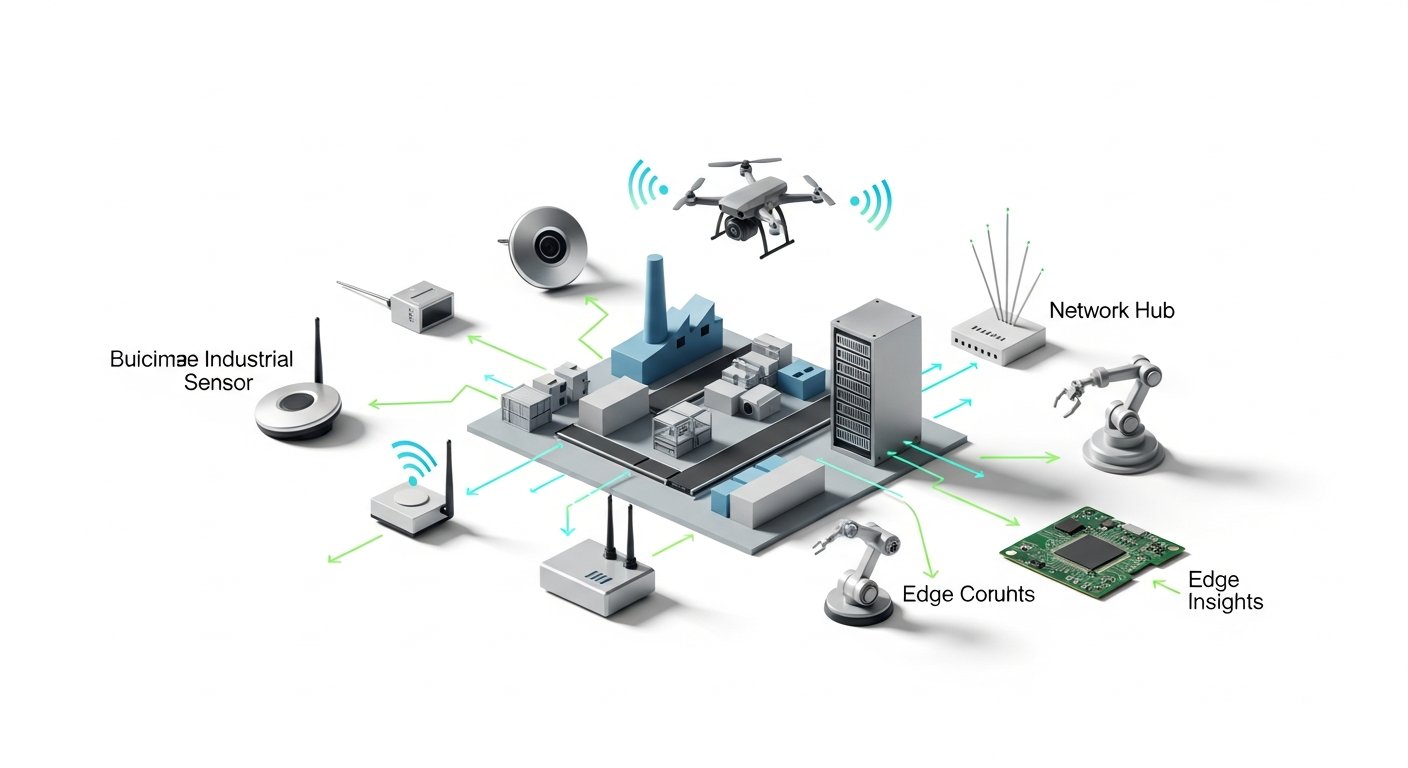
The versatility of distributed computing allows it to be tailored to specific operational needs. Understanding the different deployment models is crucial for maximizing return on investment.
Real-Time Asset Tracking and Logistics
In sprawling facilities, tracking the exact location of raw materials, automated guided vehicles (AGVs), and finished goods is a logistical nightmare. Local gateways process RFID and IoT sensor data instantly, providing an accurate map of all assets. This is particularly useful for optimizing supply chain signals and reducing material search times.
Augmented Reality (AR) for Maintenance
Equipping technicians with AR headsets allows them to see real-time machine diagnostics overlaid onto physical equipment. Because AR requires rendering high-definition 3D models and processing spatial data without lag, it relies heavily on localized computing power. Sending this data to the cloud would induce motion sickness and render the tool unusable.
Dynamic Energy Management
Energy consumption is a massive overhead cost. Localized controllers monitor power usage across heavy machinery in real time. During peak demand periods, these systems can autonomously throttle non-essential equipment or shift loads to battery storage, drastically reducing utility expenses without interrupting core production.
[INLINE IMAGE 2: A factory floor diagram showing asset tracking and augmented reality maintenance nodes.]
How Edge Architectures Drive Data-Driven Decisions
Sensor Integration and Data Ingestion
Modern shop floors generate terabytes of raw telemetry daily. High-fidelity sensors mounted directly on CNC spindles measure vibration frequencies and thermal output at millisecond intervals. Instead of sending this massive data payload across the network, local gateways ingest the streams immediately. This proximity eliminates latency. When a milling tool begins to wear out, the vibration signature shifts slightly. Local ingestion captures this micro-shift instantly, triggering an immediate tool retraction before catastrophic spindle failure occurs. This localized data capture forms the foundational layer for automated quality control in manufacturing, intercepting defects before a part moves to the next assembly station.
Local Processing and Analytics Engines
Raw data holds little value without immediate interpretation. Industrial PCs embedded directly in the production line run lightweight machine learning models to analyze telemetry on the fly. By filtering out normal operational noise, these engines isolate anomalies. This localized approach works because it drastically reduces the physical distance data must travel, cutting response times from seconds to milliseconds. When integrating AI in manufacturing processes, algorithms rely on micro-batching—the technique of processing incoming data streams in small, frequent segments rather than continuous flows—to maintain high throughput without overloading local CPU resources. The resulting speed allows automated systems to adjust parameters dynamically mid-production.
Connectivity and Network Topologies
Reliable communication infrastructure dictates the success of distributed computing. Factory environments often deploy hybrid network topologies to handle diverse data requirements. Wired industrial Ethernet provides the robust backbone, while private 5G networks offer high-bandwidth wireless coverage for mobile assets. According to a 2026 report by Gartner, 78% of industrial enterprises now utilize Time-Sensitive Networking (TSN) to guarantee deterministic data delivery across nodes. This strict synchronization prevents packet collisions and ensures data arrives at exact intervals. When implementing collaborative robots in manufacturing, deterministic networking ensures that safety-critical motion data reaches the controller precisely when expected, preventing dangerous physical collisions on the floor.
Seamless Integration with Cloud Platforms
Decentralized processing does not replace centralized data centers. They serve distinct, complementary roles. Local nodes handle immediate, tactical execution. The cloud manages long-term strategic analysis. Local controllers strip away redundant operational data, transmitting only aggregated summaries and anomaly logs to the central server. This filtered transmission reduces cloud ingress costs and preserves enterprise bandwidth.
Up in the cloud, aggregated data feeds complex simulations, powering digital twin technology in manufacturing to optimize facility-wide layouts. Once the central server finishes training a new predictive model on months of historical data, it pushes the updated, compressed algorithm back down to the local controllers. This continuous feedback loop ensures that local analytics engines grow smarter over time without sacrificing their microsecond reaction speeds.
What challenges arise when implementing distributed solutions in industrial settings?
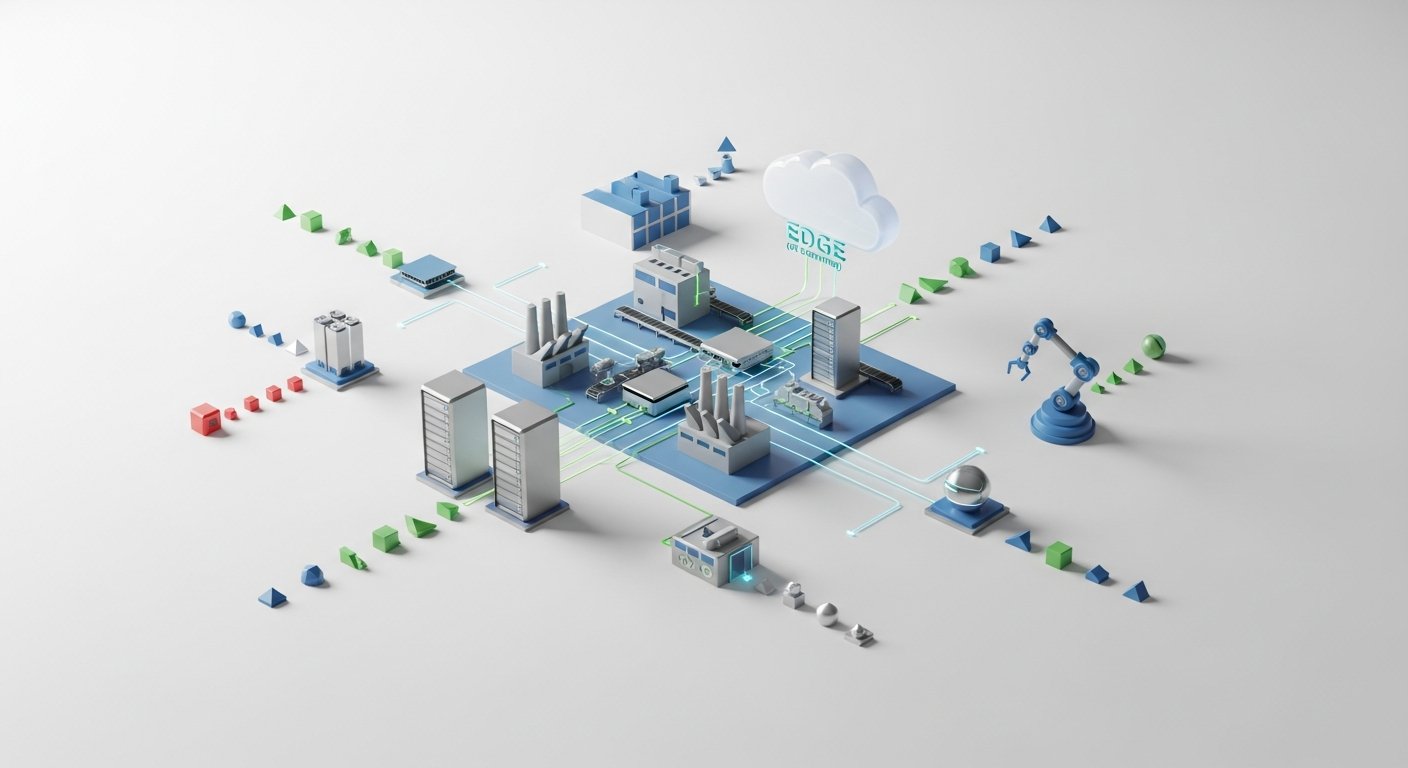
Data Management and Storage Complexity
Distributing processing power to the factory floor introduces massive data ingestion hurdles. Consider a high-speed bottling line generating 50,000 data points per second from vibration and temperature sensors. Local nodes possess finite physical storage capacity. Because localized hardware cannot retain endless raw telemetry, incoming streams quickly cause buffer overflows. This results in critical packet loss before aggregation occurs. To prevent system crashes, administrators must implement strict data triage, which is the automated process of discarding non-essential telemetry directly at the sensor level. Even with these filters, 68% of industrial facilities struggle with localized data bottlenecks during decentralized deployments (Forrester, 2026).
Cybersecurity and Data Governance Concerns
Moving computation away from centralized data centers fundamentally expands the attack surface. Factories transition from protecting a single secure server room to defending dozens of exposed physical devices scattered across active production zones. Malicious actors can target individual machine gateways.
Governance policies must adapt rapidly. Managing secure firmware updates across hundreds of heterogeneous endpoints requires specialized orchestration tools. Without rigorous access controls, compromised localized hardware provides a direct bridge into broader enterprise networks.

Integration with Legacy Operational Technology (OT) Systems
Modern localized processing relies heavily on containerized microservices. Unfortunately, many production facilities still operate using decades-old programmable logic controllers. Bridging these modern software environments with proprietary legacy protocols presents a formidable barrier. Engineers must deploy specialized protocol converters to translate signals. This translation layer introduces latency. It also complicates the overall network architecture. When modern analytics tools attempt to query legacy machines, mismatched data formats often trigger system timeouts.
Skill Gaps and Workforce Training Requirements
The convergence of IT and OT demands entirely new hybrid skill sets. Maintenance personnel face new realities. They must now troubleshoot software containers alongside traditional mechanical faults. Plant managers struggle to find technicians fluent in both industrial automation and distributed network orchestration. Traditional IT staff rarely understand the strict real-time constraints of physical production lines. Consequently, organizations must invest heavily in cross-training programs. Developing a workforce capable of maintaining these complex hybrid environments remains a primary bottleneck for scaling decentralized industrial networks.
[INLINE IMAGE 4: Diagram illustrating expanded cybersecurity attack surface with distributed edge computing nodes in manufacturing.]
The Strategic Imperative of Decentralized Networks for Industry 4.0
Transitioning to a fully interconnected industrial framework requires robust localized processing power. Centralized architectures simply cannot keep up. Agility dictates market survival, making these investments a core pillar of modern Manufacturing Solutions.
Enabling Digital Twins and Virtual Commissioning
Creating a highly accurate virtual replica of a physical asset demands relentless data synchronization. Transmitting terabytes of telemetry data to a central cloud introduces severe round-trip latency and bandwidth bottlenecks. By processing sensor inputs locally on the shop floor, the virtual model updates with millisecond accuracy. This localized execution is why real-time synchronization succeeds. Without it, the virtual model perpetually lags behind physical reality.
Consider a high-speed bottling facility processing 800 units per minute. A local controller analyzes vibration anomalies in a capping machine’s servo motor. It feeds this data directly into the virtual model. The system predicts an impending stall and adjusts the motor’s torque instantly, averting a catastrophic line jam.
Facilitating AI and Machine Learning at the Source
Bringing algorithmic inference directly to the equipment level unlocks rapid autonomous responses. Manufacturers increasingly rely on federated learning, a distributed AI approach where decentralized nodes train shared models locally without exporting raw proprietary data. This preserves operational privacy while continuously refining predictive maintenance algorithms across the enterprise.
Paving the Way for Lights-Out Manufacturing
The ultimate goal for many modern facilities is autonomous production. Localized intelligence provides the required logic to operate without human oversight. Facilities can instantly reroute materials if a robotic cell malfunctions. The local network handles the immediate logic, keeping production moving seamlessly.
Currently, 75% of enterprise-generated data is created and processed outside traditional data centers (Gartner, 2026). This massive shift makes dark factories viable. Continuous operation relies on immediate localized decision-making, rather than waiting for cloud-based directives that might drop during network outages.
Competitive Advantages in Production Agility and Innovation
Decentralized processing allows facilities to reconfigure production lines dynamically based on real-time supply chain signals. If a specific raw material arrives with slight variations in moisture content, the localized system instantly recalibrates the drying ovens. This capability accelerates innovation cycles across the enterprise. Plant managers achieve distinct competitive advantages through localized control:
- Dynamic reconfiguration of assembly parameters based on immediate material variances.
- Isolated testing of experimental operational algorithms on single localized nodes.
- Highly resilient production capable of surviving external network outages without throughput loss.
Manufacturers utilizing these localized frameworks achieve a highly adaptable infrastructure. They can pivot operations instantly to meet shifting global demands.
Sources & References
- Gartner. (2022). Hype Cycle for Edge Computing. Gartner Research.
- McKinsey & Company. (2021). The edge playbook: How to succeed in edge computing.
- World Economic Forum. (2020). Data Excellence: Transforming manufacturing and supply systems.
- Shi, W., et al. (2016). Edge Computing: Vision and Challenges. IEEE Internet of Things Journal, 3(5), 637-646.
About the Author
Dr. Omar Hassan, Automotive & Industrial AI Strategist — I’m an automotive and industrial AI strategist focused on leveraging data and machine learning to drive efficiency and innovation in manufacturing and mobility.
Reviewed by Marcus Thorne, Senior Technical Editor — Last reviewed: April 25, 2026