


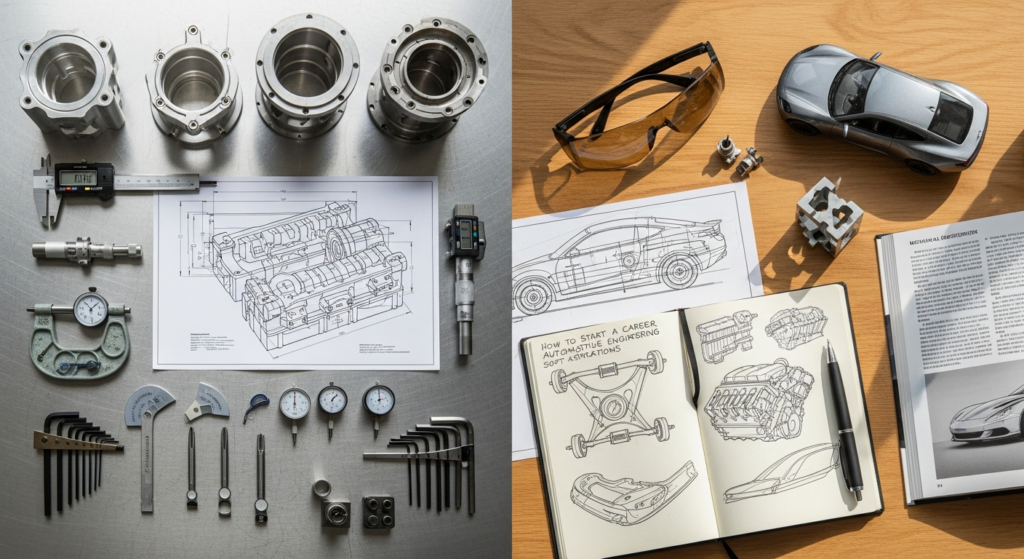
Understanding Automotive Engineering: What it is and Why it Matters
Automotive engineering is a specialized branch of engineering that encompasses the design, development, manufacturing, testing, and maintenance of all types of vehicles and their components. It is a highly multidisciplinary field, drawing heavily from mechanical, electrical, electronic, software, and materials engineering principles. At its core, an automotive engineer is tasked with optimizing vehicle performance, fuel efficiency, safety, emissions, and overall functionality, often balancing these competing priorities to create superior products.
The relevance of automotive engineering extends far beyond the assembly line. It is a critical driver of economic growth, technological progress, and societal change. Modern automotive engineers are not just designing cars; they are crafting complex systems that integrate cutting-edge artificial intelligence, advanced battery technologies, sophisticated sensor arrays, and robust communication networks. This evolution means that the automotive industry is no longer solely about hardware; software and data are increasingly becoming the differentiating factors.
For a company like Mitsubishi Manufacturing, automotive engineering is the lifeblood of our operations. It dictates our ability to innovate, to meet stringent regulatory standards, and to deliver vehicles that exceed customer expectations globally. The continuous pursuit of excellence in this field enables us to contribute to safer roads, reduce environmental impact through electrification and alternative powertrains, and enhance the driving experience through advanced driver-assistance systems (ADAS) and connectivity. The challenges are immense, from developing lightweight, high-strength materials to integrating autonomous driving capabilities, but the rewards are equally significant: the opportunity to shape the future of transportation for millions.
Educational Pathways: Degrees, Specializations, and Certifications

A solid educational foundation is the cornerstone of a successful career in automotive engineering. While there isn’t always a direct “automotive engineering” undergraduate degree, several paths lead to this dynamic field.
- Bachelor’s Degree: The most common entry point is a Bachelor of Science (B.S.) in Mechanical Engineering. This degree provides a broad understanding of physics, mechanics, thermodynamics, fluid dynamics, and materials science, all of which are fundamental to vehicle design and operation. Other relevant undergraduate degrees include Electrical Engineering (crucial for EVs, electronics, and control systems), Computer Engineering (for embedded systems, software, and AI), or a dedicated Automotive Engineering program if available. A strong curriculum will include courses in calculus, differential equations, linear algebra, physics, chemistry, and engineering mechanics.
- Master’s and Ph.D. Degrees: For those aspiring to roles in research and development, advanced design, or specialized areas such as autonomous driving, powertrain development, or advanced materials, a Master’s (M.S.) or Ph.D. is highly beneficial. These programs allow for deep dives into specific areas, often involving significant research projects, and can open doors to leadership positions or highly technical specialist roles. Common Master’s specializations include Automotive Systems Engineering, Vehicle Dynamics, Powertrain Engineering, Electric Vehicle Technology, and Advanced Manufacturing.
- Key Coursework and Specializations: Regardless of the primary degree, look for opportunities to specialize through electives and projects. Essential areas of study include:
- Vehicle Dynamics: Understanding how a vehicle moves and responds.
- Powertrain Systems: Design and optimization of engines, transmissions, and electric propulsion systems.
- Materials Science: Selection and application of metals, composites, and polymers for lightweighting and safety.
- CAD/CAE Software: Proficiency in computer-aided design (CAD) and computer-aided engineering (CAE) tools like CATIA, SolidWorks, ANSYS, and MATLAB/Simulink is non-negotiable.
- Control Systems: Designing electronic control units (ECUs) for various vehicle functions.
- Power Electronics: Critical for hybrid and electric vehicle development.
- Embedded Systems and Software Engineering: For infotainment, ADAS, and autonomous vehicle control.
- Certifications: While not a replacement for a degree, professional certifications can enhance your profile. These might include Project Management Professional (PMP) for leadership roles, specific software certifications, or even a Professional Engineer (PE) license in certain jurisdictions, though this is less common for direct automotive design roles than in fields like civil or structural engineering. Staying abreast of industry standards and acquiring relevant certifications demonstrates a commitment to continuous professional development.
Gaining Practical Experience: Internships, Projects, and Co-ops
- Internships: Internships are perhaps the most vital component of practical experience. They offer invaluable exposure to corporate environments, industry processes, and specific engineering tasks. Seek internships with Original Equipment Manufacturers (OEMs) like Mitsubishi, Tier 1 suppliers (e.g., Bosch, Continental, Magna), engineering consulting firms, or even automotive startups. During an internship, you might be involved in:
- Assisting with design modifications.
- Conducting simulations or tests.
- Analyzing data from vehicle prototypes.
- Supporting manufacturing process improvements.
- Contributing to quality assurance initiatives.
An internship provides a direct insight into the daily life of an automotive engineer and often serves as a pipeline for full-time employment after graduation.
- Co-op Programs: Co-operative education programs are similar to internships but are typically longer (e.g., 6-12 months) and often involve alternating periods of academic study with full-time work experience. These programs offer a deeper, more immersive experience, allowing students to take on more significant responsibilities and contribute to projects over an extended duration. The continuity of co-op placements often results in more substantive learning and stronger professional relationships.
- University Projects and Student Competitions: Actively participating in university-led engineering projects or student competitions is an excellent way to gain practical skills. Programs like Formula SAE (Society of Automotive Engineers), Baja SAE, Eco-Marathon, or university robotics teams provide hands-on experience in designing, building, testing, and refining actual vehicles or components. These projects foster teamwork, problem-solving, project management, and budgeting skills, replicating many aspects of a professional engineering environment. They also offer opportunities to work with CAD/CAE software, manufacturing tools, and testing equipment.
- Personal Projects: Don’t underestimate the value of personal projects. Whether it’s restoring an old car, building a custom electric skateboard, programming an Arduino-controlled system, or designing a component with 3D printing, personal initiatives demonstrate passion, initiative, and a self-driven desire to apply engineering principles. Documenting these projects, including challenges faced and solutions implemented, can be a powerful addition to your portfolio.
- Research Opportunities: If your university offers research opportunities with professors working on automotive-related topics, seize them. This can provide exposure to cutting-edge technologies, advanced analytical techniques, and the process of scientific inquiry, particularly valuable if you’re considering a Master’s or Ph.D.
By actively pursuing these practical experiences, you not only enhance your skill set but also build a compelling narrative that showcases your aptitude, dedication, and readiness to contribute meaningfully to the automotive industry.
Essential Skills for the Modern Automotive Engineer

The automotive industry is in a constant state of flux, driven by technological advancements, regulatory pressures, and evolving consumer demands. To thrive in this environment, modern automotive engineers require a robust blend of technical acumen and critical soft skills.
Technical Skills:
- CAD/CAE Software Proficiency: Mastery of Computer-Aided Design (CAD) software (e.g., CATIA, SolidWorks, Siemens NX) for 3D modeling and drafting, and Computer-Aided Engineering (CAE) tools (e.g., ANSYS, Abaqus for FEA; MATLAB/Simulink for simulations and control systems) is non-negotiable. These tools are fundamental for design, analysis, and virtual testing of components and systems.
- Programming and Software Development: With the rise of software-defined vehicles, proficiency in programming languages like C, C++, Python, and potentially Java or embedded C is increasingly vital. This applies to developing embedded systems, ADAS algorithms, infotainment systems, and even data analysis tools. Understanding software architecture, version control (e.g., Git), and agile development methodologies is highly beneficial.
- Data Analysis and Machine Learning: Modern vehicles generate vast amounts of data. The ability to collect, process, analyze, and interpret this data using tools like Python (with libraries like Pandas, NumPy, Scikit-learn) or R is crucial for performance optimization, predictive maintenance, and the development of intelligent systems. Basic understanding of machine learning principles for autonomous driving or predictive analytics is a significant advantage.
- Electrical and Electronics Fundamentals: As vehicles become more electrified and packed with sensors and ECUs, a strong grasp of electrical circuits, power electronics, sensor technology, and communication protocols (CAN, LIN, Ethernet) is essential.
- Manufacturing Processes: An understanding of manufacturing techniques such as stamping, welding, casting, machining, injection molding, and assembly processes is critical for designing components that are not only functional but also manufacturable efficiently and cost-effectively. This includes knowledge of Industry 4.0 principles, additive manufacturing, and advanced robotics.
- Materials Science: Knowledge of various materials (steel, aluminum, composites, plastics) and their properties, processing, and application in vehicle design for lightweighting, strength, and durability is fundamental.
Soft Skills:
- Problem-Solving and Critical Thinking: Automotive engineering is inherently about solving complex problems, from optimizing fuel efficiency to integrating new safety features. The ability to analyze issues systematically, identify root causes, and develop innovative solutions is paramount.
- Communication: Engineers must effectively communicate technical information to diverse audiences, including fellow engineers, project managers, marketing teams, and even non-technical stakeholders. This includes strong written communication for reports and documentation, and verbal communication for presentations and team discussions.
- Teamwork and Collaboration: Vehicle development is a highly collaborative effort, involving large, cross-functional teams. The ability to work effectively with others, share knowledge, resolve conflicts, and contribute positively to a team environment is crucial.
- Adaptability and Continuous Learning: The automotive landscape is evolving rapidly. Engineers must be adaptable to new technologies, tools, and methodologies, and possess a strong desire for continuous learning and professional development to stay current.
- Project Management: Even without a formal project management role, engineers often manage their own tasks, timelines, and resources. Basic project management skills, including planning, execution, and risk assessment, are highly valuable.
- Attention to Detail and Quality Focus: Given the safety-critical nature of vehicles, meticulous attention to detail and an unwavering commitment to quality are absolutely essential.
Cultivating both technical mastery and robust soft skills will position you as a highly competitive and valuable asset in any automotive engineering team.
Navigating the Job Market: Networking, Applications, and Interviews
Securing your first role in automotive engineering requires a strategic approach to the job market. It’s a competitive field, but with careful preparation and persistent effort, you can distinguish yourself among applicants.
Networking:
- Industry Events and Conferences: Attend automotive expos, engineering conferences, and career fairs. These events are excellent opportunities to meet professionals, learn about emerging trends, and discover potential employers. Organizations like SAE International often host such events.
- University Career Services: Leverage your university’s career center. They often have strong connections with recruiters from automotive companies, facilitate on-campus interviews, and provide resume workshops.
- LinkedIn: Build a professional LinkedIn profile that highlights your education, skills, projects, and internships. Connect with recruiters, engineers, and companies in the automotive sector. Engage with industry content and participate in relevant discussions. Many job opportunities are posted here directly.
- Alumni Networks: Reach out to alumni from your university who are working in the automotive industry. They can offer advice, insights, and potentially make introductions.
Applications:
- Tailor Your Resume/CV: Do not use a generic resume. Customize it for each job application, highlighting skills and experiences that directly match the job description. Use keywords from the posting. Quantify your achievements whenever possible (e.g., “Reduced test time by 15%,” “Designed a component that saved X kg”).
- Craft a Compelling Cover Letter: Your cover letter is your opportunity to express genuine interest in the specific company and role. Explain why you are a good fit, linking your skills and experiences to their needs, and demonstrating an understanding of their products or mission (e.g., “I am particularly drawn to Mitsubishi Manufacturing’s commitment to sustainable mobility and believe my expertise in battery management systems aligns perfectly with your EV initiatives.”).
- Showcase Your Portfolio: For roles involving design or software, a portfolio of your projects (university, personal, or internship) can be incredibly impactful. This could be a website, a PDF document, or even a GitHub repository for software projects.
Interviews:
- Technical Interviews: Be prepared for in-depth technical questions related to your field of study. This might include questions on vehicle dynamics, thermodynamics, electrical circuits, materials properties, or specific software tools. Practice solving engineering problems and explaining your thought process.
- Behavioral Interviews: These interviews assess your soft skills and cultural fit. Be ready to answer questions using the STAR method (Situation, Task, Action, Result) to describe past experiences that demonstrate your problem-solving, teamwork, communication, and leadership abilities.
- Case Studies or Design Challenges: Some companies may present you with a hypothetical engineering problem to solve or a component to design during the interview process. This evaluates your analytical skills and practical application of knowledge.
- Research the Company: Before any interview, thoroughly research the company. Understand their product line, recent innovations, corporate values, and market position. This shows initiative and genuine interest. For example, for Mitsubishi Manufacturing, understand our commitment to safety and reliability, and our ongoing efforts in electrification.
- Ask Thoughtful Questions: Prepare insightful questions to ask your interviewers about the role, the team, company culture, and future projects. This demonstrates engagement and helps you assess if the role is a good fit for you.
The job search is a marathon, not a sprint. Be persistent, learn from each experience, and continuously refine your approach. Your dedication will eventually lead you to the right opportunity.
Career Progression and Future Trends in Automotive Engineering
A career in automotive engineering offers diverse paths for growth and specialization. The industry is dynamic, constantly reshaped by technological breakthroughs and societal shifts, ensuring a future filled with exciting challenges and opportunities.
Typical Career Progression:
- Entry-Level Roles (0-3 years experience):
- Design Engineer: Responsible for specific component or system design using CAD/CAE tools.
- Test Engineer: Conducting physical or simulated tests, analyzing data, and reporting results.
- Manufacturing Engineer: Optimizing production processes, ensuring quality control on the assembly line.
- Quality Engineer: Ensuring products meet strict quality standards and addressing defect prevention.
- Software/Embedded Systems Engineer: Developing code for ECUs, infotainment, or ADAS.
- Mid-Level Roles (3-8 years experience):
- Senior Engineer: Taking on more complex design or analysis tasks, mentoring junior engineers.
- Project Engineer/Lead: Managing specific sub-projects or components, coordinating cross-functional teams.
- Specialist Engineer: Deep expertise in a particular area like NVH (Noise, Vibration, Harshness), aerodynamics, or battery technology.
- Senior and Leadership Roles (8+ years experience):
- Engineering Manager: Leading teams of engineers, overseeing multiple projects, managing budgets and resources.
- Technical Fellow/Principal Engineer: Becoming a recognized expert in a specific domain, driving innovation and strategy.
- Director of Engineering/VP of R&D: Setting strategic direction for engineering departments, contributing to overall company vision.
Future Trends Shaping Automotive Engineering:
The next decade, particularly leading up to 2026 and beyond, promises to be transformative for the automotive industry. Engineers entering the field now will be at the forefront of these paradigm shifts.
- Electrification (EVs and Hybrids): The transition away from internal combustion engines is accelerating. This requires expertise in battery technology (chemistry, thermal management, packaging), power electronics, electric motor design, charging infrastructure, and energy management systems.
- Autonomous Driving and ADAS: Self-driving vehicles and advanced driver-assistance systems (ADAS) are evolving rapidly. This demands specialists in sensor fusion (radar, lidar, cameras), artificial intelligence, machine learning, computer vision, control algorithms, and functional safety.
- Connectivity (V2X and Infotainment): Vehicles are becoming increasingly connected to each other (V2V), to infrastructure (V2I), and to the cloud. This trend requires engineers skilled in cybersecurity, telematics, wireless communication protocols, and developing intuitive user interfaces for infotainment systems.
- Lightweighting and Advanced Materials: To improve efficiency and performance (especially for EVs), there’s a continuous drive for lighter yet stronger materials. Expertise in advanced composites, high-strength steels, aluminum alloys, and multi-material joining techniques is highly sought after.
- Sustainable Manufacturing and Circular Economy: Focus on reducing the environmental footprint of vehicle production and end-of-life. This includes developing processes for recycling, using sustainable materials, and optimizing energy consumption in factories.
- Digitalization and Industry 4.0: The integration of digital technologies like IoT, AI, big data, and cloud computing into manufacturing processes. This ties into predictive maintenance, smart factories, and highly automated production lines.
Staying abreast of these trends through continuous learning and professional development will be crucial for long-term success and impact in automotive engineering.
The Role of Innovation and Safety in Automotive Manufacturing
At Mitsubishi Manufacturing, innovation and safety are not mere buzzwords; they are the fundamental pillars upon which we build our vehicles and our reputation. These two principles are deeply intertwined, driving every stage of the automotive engineering and manufacturing process.
Innovation in Manufacturing:
The automotive industry is a pioneer in adopting cutting-edge manufacturing technologies. Digital automation, for instance, is no longer a luxury but a necessity, transforming everything from design validation to final assembly. Much like the “Digital automation priorities for oil and gas companies” focus on optimizing resource extraction and refining processes through data analytics, IoT, and AI, automotive manufacturing leverages these same principles to enhance efficiency, reduce waste, and accelerate production cycles. Robotic process automation (RPA), advanced robotics for assembly and painting, predictive maintenance for machinery using IoT sensors, and AI-driven quality inspection systems are standard. This automation not only speeds up production but also improves consistency and precision, which directly contributes to product quality and safety. Engineers are crucial in designing, implementing, and maintaining these sophisticated automated systems, ensuring seamless integration and optimal performance on the factory floor.
Furthermore, innovation in manufacturing extends to the adoption of additive manufacturing (3D printing) for prototyping and specialized tooling, augmented reality (AR) for technician training and assembly guidance, and the development of smart factories that are interconnected and self-optimizing. This constant push for innovative manufacturing solutions ensures that our designs can be brought to life efficiently, economically, and with the highest degree of quality.
Unwavering Commitment to Safety:
Safety is paramount in automotive engineering, directly impacting human lives. The design phase incorporates rigorous safety standards, focusing on both active safety (systems that prevent accidents, like ABS, ESC, ADAS) and passive safety (features that protect occupants during a crash, like airbags, crumple zones, seatbelts). Engineers are constantly simulating crash scenarios using advanced CAE tools, optimizing vehicle structures, and developing sophisticated restraint systems.
However, product safety doesn’t end with design; it’s meticulously maintained throughout the manufacturing process. “How manufacturing companies keep products safe” involves a multi-layered approach:
- Robust Quality Management Systems: Adherence to international standards like ISO/TS 16949 (now IATF 16949) ensures systematic control over every stage of production, from supplier selection to final vehicle inspection.
- Rigorous Testing and Validation: Components and complete vehicles undergo extensive testing, both in simulated environments and real-world conditions, to validate performance, durability, and safety under various stresses.
- Supply Chain Integrity: Ensuring that all sourced components meet stringent quality and safety specifications from Tier 1, 2, and 3 suppliers is critical. This involves strict auditing and continuous monitoring.
- Traceability: Implementing systems to trace every component back to its origin helps in identifying and isolating issues quickly if a defect arises.
- Continuous Improvement: Feedback from field performance, customer reports, and recall data drives iterative improvements in design and manufacturing processes.
In the era of connected and autonomous vehicles, cybersecurity has also emerged as a critical aspect of safety. Just as “Social engineering examples that impact corporate employees” highlight vulnerabilities in human systems that can lead to data breaches or system compromises, similar threats exist for vehicle software and connectivity. Automotive engineers must design secure architectures, implement robust encryption, and develop over-the-air (OTA) update capabilities to patch vulnerabilities promptly. Protecting vehicle systems from malicious attacks, unauthorized access, or accidental software glitches is a vital safety imperative, ensuring the reliability and trustworthiness of our advanced automotive technologies. The integrity of our corporate IT infrastructure and employee awareness of social engineering threats directly contributes to the overall security posture that safeguards our product’s software from development to deployment.
Ultimately, the fusion of innovation and an uncompromising dedication to safety defines excellence in automotive manufacturing. Engineers play a pivotal role in upholding these values, building a future where mobility is not only advanced but also inherently secure and reliable.
FAQ: Starting a Career in Automotive Engineering
Is a Master’s degree necessary to start a career in automotive engineering?
While not strictly necessary for an entry-level position, a Bachelor’s degree in Mechanical, Electrical, or a related engineering discipline is typically the minimum requirement. A Master’s degree can provide a significant advantage, particularly for roles in research and development, specialized technical fields (like autonomous driving or advanced powertrains), or for faster career progression into leadership positions. It allows for deeper specialization and often involves advanced project work or thesis research that is highly valued by employers.
What’s the primary difference between automotive engineering and mechanical engineering?
Mechanical engineering is a broad discipline covering the design, analysis, manufacturing, and maintenance of mechanical systems. Automotive engineering is a specialized subset of mechanical engineering, focusing specifically on the application of these principles to vehicles and their subsystems. While a mechanical engineer might work on anything from robotics to HVAC systems, an automotive engineer applies that foundational knowledge directly to vehicle dynamics, powertrain design, chassis development, and other automotive-specific challenges. Many automotive engineers begin with a mechanical engineering degree and specialize through coursework, internships, and initial job roles.
How important is coding for automotive engineers in 2026?
Coding is increasingly critical for automotive engineers in 2026 and beyond. With the rise of electric vehicles, autonomous driving, and connected car technologies, vehicles are becoming sophisticated software platforms. Engineers need to understand programming languages like C, C++, Python for embedded systems, control algorithms, data analysis, and AI development. Even mechanical or design engineers benefit from scripting for automation, simulation, and data processing. A strong grasp of software principles is becoming as fundamental as understanding mechanics or thermodynamics.
What are the biggest challenges facing automotive engineers today?
The biggest challenges include the rapid transition to electrification, requiring innovation in battery technology, charging infrastructure, and electric powertrain efficiency. Developing safe and reliable autonomous driving systems, addressing the complex cybersecurity threats to connected vehicles, and integrating vast amounts of data for vehicle performance and user experience are also significant hurdles. Additionally, the industry faces pressure to adopt sustainable manufacturing practices and lightweighting materials while maintaining cost-effectiveness and meeting stringent global emissions regulations.
How can I stand out as a candidate for an automotive engineering job?
To stand out, focus on gaining practical experience through internships, co-op programs, and participation in university projects like Formula SAE. Develop strong proficiency in industry-standard software (CAD/CAE, MATLAB/Simulink, programming languages). Cultivate strong soft skills such as problem-solving, teamwork, and communication. Tailor your resume and cover letter to each specific job, highlighting relevant experiences and demonstrating genuine interest in the company and the automotive industry. Networking and maintaining a professional online presence (e.g., LinkedIn) are also crucial.
What’s the typical salary range for an entry-level automotive engineer in 2026?
The typical salary range for an entry-level automotive engineer in 2026 can vary significantly based on location, company size, specific role, and educational background. However, generally, a bachelor’s degree holder starting in the U.S. might expect to earn between $65,000 and $85,000 annually. Those with a Master’s degree or highly specialized skills (e.g., in AI or battery technology) might command higher starting salaries, potentially ranging from $75,000 to $95,000 or more. These figures are subject to market fluctuations and economic conditions.
Recommended Resources
Learn more about this topic in Morning Habits Of Successful People at Diaal News.
You might also enjoy Adoption Process In The United States from Protect Families Protect Choices.