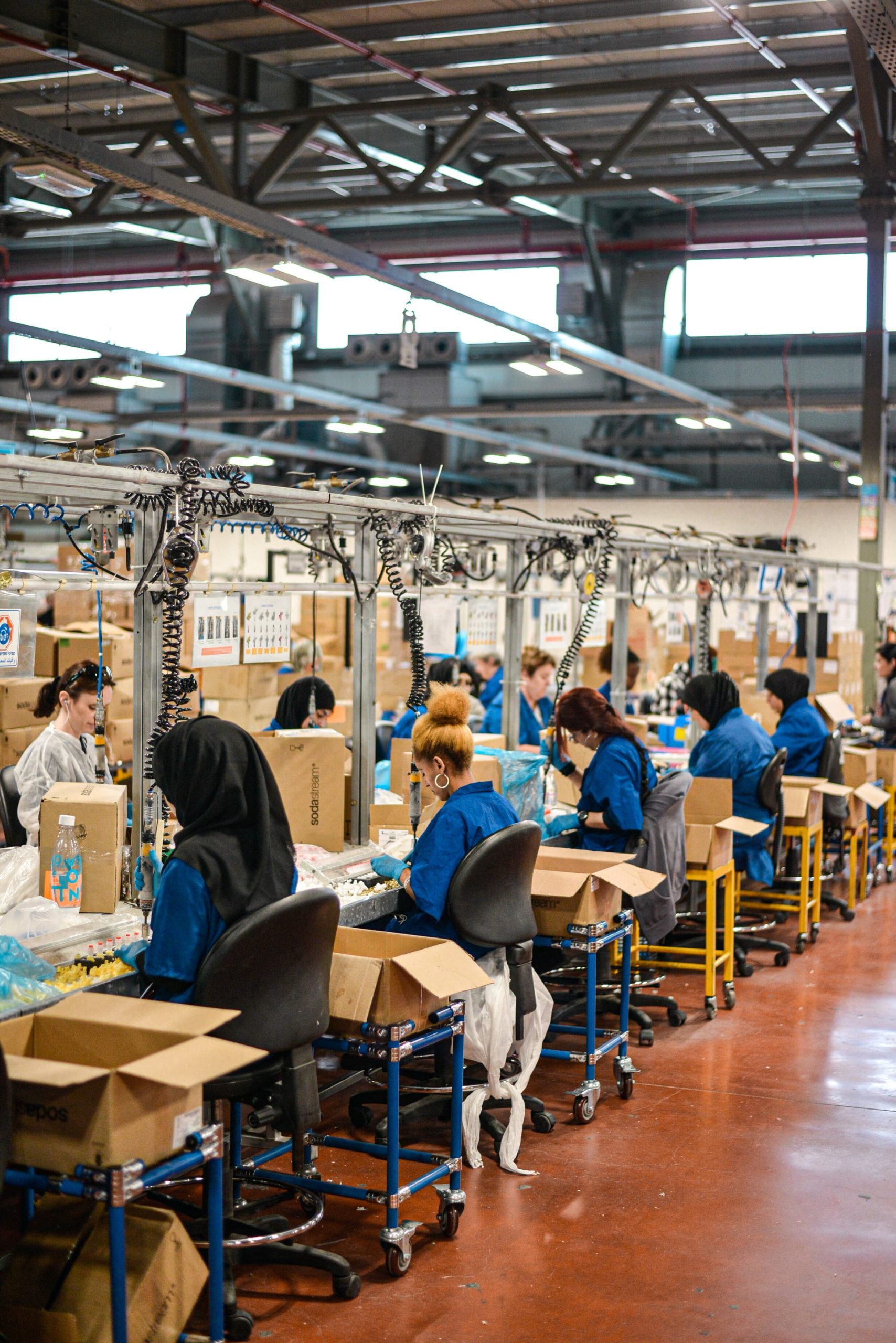
Updated October 2023. The global manufacturing landscape is undergoing a tectonic shift. As we head into 2026, the era of “gut feeling” decision-making on the floor has been permanently replaced by data-driven precision. Leveraging Industrial IoT for factory optimization is no longer a futuristic concept reserved for tech giants; it is the fundamental infrastructure required for any facility seeking to remain competitive in an increasingly volatile market.
For manufacturing professionals and industrial engineers, this connected technology represents the bridge between legacy hardware and the cognitive enterprise. By embedding sensors, connectivity, and advanced analytics into every facet of production, companies are achieving unprecedented levels of efficiency, safety, and sustainability. This transition moves beyond simple automation—it is about creating a “living” production ecosystem that senses, reacts, and evolves. This guide explores the critical pillars of smart integration and how they are redefining the benchmarks for operational excellence in the modern age.
The Science of Real-Time Asset Monitoring and Digital Twins
Overall Equipment Effectiveness (OEE) remains the gold standard for measuring manufacturing productivity. Historically, OEE was calculated retrospectively, often using manual logs that were prone to error and delayed by shifts or even days. In 2026, sensor-driven asset monitoring has transformed OEE into a real-time metric. By deploying vibration sensors, acoustic monitors, and power consumption trackers, engineers can now gain a granular view of machine performance.
The integration of Digital Twins—virtual replicas of physical assets—allows for a deeper level of operational enhancement. A digital twin consumes real-time data from its physical counterpart, allowing engineers to run “what-if” scenarios without interrupting production. Mitsubishi Manufacturing leverages these advanced virtual models to achieve seamless integration. For instance, if an injection molding machine is showing a slight deviation in cycle time, the digital twin can simulate the impact of adjusting hydraulic pressure or temperature parameters. This predictive modeling ensures that when changes are implemented on the floor, they are already optimized for maximum throughput. Furthermore, real-time monitoring identifies “micro-stoppages”—those brief, two-minute pauses that often go unrecorded but can aggregate into significant lost capacity over a fiscal quarter.
[INLINE IMAGE 1: Diagram illustrating smart architecture for facility enhancement with sensors, edge computing, and cloud analytics.]
How Does Predictive Maintenance Reduce Unplanned Downtime?
For the industrial engineer, downtime is the ultimate enemy. Traditional maintenance strategies usually fall into two camps: reactive (fix it when it breaks) or preventative (fix it on a schedule). Both are inefficient. Reactive maintenance leads to costly emergency repairs and halted production, while preventative maintenance often results in the replacement of perfectly functional parts, wasting both capital and labor.
Connected infrastructure introduces the Predictive Maintenance (PdM) paradigm. By utilizing machine learning algorithms that analyze data from network sensors, facilities can predict equipment failure before it occurs. For example, a slight increase in the heat signature of a bearing or a subtle change in the frequency spectrum of a motor often precedes a catastrophic failure by weeks.
In 2026, these systems have become sophisticated enough to not only alert maintenance teams to a potential issue but to automatically trigger a work order in the CMMS (Computerized Maintenance Management System) and check the inventory for the necessary spare parts. This “self-healing” logistics chain ensures that maintenance occurs at the exact moment it is needed—no sooner, no later—reducing unplanned downtime by as much as 30% to 50% in highly automated environments.
Types of Energy Optimization Strategies and When to Apply Them
Sustainability is no longer a corporate social responsibility (CSR) footnote; it is a core operational requirement. Regulatory pressures and rising energy costs have made energy management a vital component of facility upgrades. Smart networks provide the visibility required to treat energy as a variable cost that can be managed just like raw materials.
Smart meters and enabled sub-metering allow plant managers to see exactly where energy is being consumed—down to the specific machine or production line. This data reveals “energy vampires”—machines that draw significant power even when in standby mode—and identifies inefficiencies in HVAC or compressed air systems, which are notoriously energy-intensive.
By correlating energy usage with production cycles, industrial engineers can implement peak-shaving strategies. For example, energy-heavy processes can be scheduled during off-peak hours when utility rates are lower. Additionally, as we move through 2026, platforms are increasingly integrating with renewable energy sources on-site, such as solar arrays or battery storage, dynamically balancing the load to minimize the carbon footprint of every unit produced. This level of transparency is essential for meeting the stringent ESG (Environmental, Social, and Governance) reporting standards now required by global stakeholders.
Categories of Edge-to-Cloud Integration and Their Supply Chain Benefits
The “factory walls” are effectively dissolving as smart networks connect the shop floor directly to the global supply chain. In 2026, operational enhancements extend beyond the assembly line to include the real-time tracking of raw materials and finished goods. Using a combination of RFID, Bluetooth Low Energy (BLE), and Ultra-Wideband (UWB) sensors, manufacturers can maintain 99.9% inventory accuracy without manual counting.
This connectivity enables a Just-in-Time (JIT) 2.0 approach. When the system detects that raw material consumption on Line 4 is accelerating beyond the forecast, it can automatically signal suppliers to adjust delivery schedules. This prevents “stock-outs” that stall production and reduces the “bullwhip effect” that causes inventory gluts.
Moreover, the integration of Edge Computing—where data is processed locally on the floor rather than being sent to a distant cloud server—ensures that these decisions happen in milliseconds. For high-speed environments like bottling or electronics assembly, the latency involved in cloud processing is unacceptable. By leveraging edge gateways, facilities can maintain high-speed optimization loops that are resilient even if the primary internet connection is lost.
What Are the Impacts on Worker Safety, Cybersecurity, and Robotics?
The “Industrial” in this technological revolution includes the people. Facility upgrades in 2026 heavily emphasize the safety and productivity of the human workforce through the use of wearables and collaborative robotics (cobots). Network-enabled wearables can monitor worker vitals and environmental conditions (such as heat stress or gas exposure), providing early warnings to prevent workplace injuries.
Furthermore, Location-Based Services (LBS) within the framework can enforce “geofencing” around hazardous areas. If an unauthorized worker enters a zone where heavy automated guided vehicles (AGVs) are operating, the system can instantly slow or stop the machinery to prevent a collision.
Beyond cobots, specific types of industrial robots—such as SCARA, Delta, and Cartesian robots—are being seamlessly integrated into the ecosystem. Mitsubishi Manufacturing leverages these high-speed, precision robots to achieve sub-millimeter accuracy in assembly lines, feeding real-time positional data back to the central network.
Furthermore, as connectivity increases, so does the need for robust industrial control system cybersecurity. Protecting these robotic assets and the broader OT network requires Zero Trust architectures and hardware-based encryption, ensuring that production data remains secure from external threats. By optimizing the human element and securing the robotic fleet, facilities see a direct improvement in quality control and a reduction in the “Cost of Poor Quality” (COPQ).
[INLINE IMAGE 5: A side-by-side comparison of SCARA and Delta robots operating on a network-enabled assembly line.]
The Role of AI and Private 5G in 2026 Factory Ecosystems
As we look at the landscape of 2026, two technologies are acting as the primary catalysts for expansion: Private 5G networks and Artificial Intelligence. Traditional Wi-Fi often struggles in the “noisy” electromagnetic environment of a facility filled with steel and high-voltage equipment. Private 5G provides the ultra-reliable, low-latency connectivity required to link thousands of sensors in a single location.
Artificial Intelligence acts as the “brain” of the system. While sensors collect data, AI interprets it. In 2026, we are seeing the rise of Autonomous Process Control. Instead of an engineer manually adjusting a thermostat or a conveyor speed, the AI analyzes the interplay of humidity, raw material consistency, and machine wear to make those adjustments autonomously in real-time. The integration of AI in predictive maintenance further amplifies these capabilities.
This level of enhancement reaches its peak in “Lights-Out” manufacturing segments, where portions of the facility operate with minimal human intervention. However, for most industrial engineers, the value lies in AI-driven insights that suggest process improvements which were previously invisible to the human eye. Whether it’s identifying a 2% waste reduction in a chemical blending process or optimizing the path of an AGV fleet to reduce battery wear, the combination of smart sensors, 5G, and AI is the definitive engine of growth for the coming years.
What Are the Most Common Questions About Implementation?
Q1: What is the first step for a legacy facility to implement these systems?
A: The first step is a “sensor audit” combined with identifying a high-value pilot project. Rather than attempting a floor-wide rollout, focus on a single bottleneck or a high-maintenance asset. Install vibration or temperature sensors on that specific machine to demonstrate ROI through reduced downtime before scaling the infrastructure.
Q2: How does this technology improve cybersecurity on the floor?
A: While connectivity increases the “attack surface,” modern 2026 standards utilize “Zero Trust” architectures and hardware-based encryption. By segmenting the OT (Operational Technology) network from the IT network and using edge gateways to filter data, manufacturers can protect sensitive production data while still benefiting from cloud analytics.
Q3: Can these upgrades help with the current labor shortage in manufacturing?
A: Absolutely. Smart networks optimize labor by automating routine data collection and monitoring tasks, allowing your skilled engineers to focus on high-level problem-solving rather than manual logging. AR-guided maintenance also helps onboard new employees faster, mitigating the impact of the “Silver Tsunami” (retiring experienced workers).
Q4: What is the difference between standard IoT and the industrial version?
A: While standard IoT focuses on consumer convenience (like smart thermostats), the industrial version focuses on high-precision, mission-critical applications. It requires much higher levels of durability, lower latency, and integration with complex industrial protocols like Modbus, OPC UA, or MQTT.
Q5: Is 5G necessary for data-driven facility optimization?
A: While not strictly necessary for every application, 5G is becoming the standard for 2026. It supports a much higher density of devices (up to 1 million per square kilometer) and provides the low latency (under 10ms) required for real-time robotic control and safety-critical systems that Wi-Fi simply cannot guarantee.
The Imperative of Connectivity and Future Excellence
Embracing advanced connectivity is no longer a luxury—it is a prerequisite for survival in the 2026 manufacturing sector. The ability to extract actionable intelligence from every machine, sensor, and worker allows for a level of agility that was previously impossible. By focusing on OEE, predictive maintenance, energy efficiency, and human-machine collaboration, industrial engineers can transform their facilities into highly resilient, sustainable, and profitable hubs of innovation.
The journey toward a fully optimized ecosystem is iterative. It begins with data, matures with analytics, and excels through autonomous action. As global competition intensifies and consumer demands for customization and speed increase, the “Connected Factory” stands as the only viable path forward. For professionals in the field, the mission is clear: embrace the digital thread, integrate the silos, and lead the charge into the future of industrial excellence. The tools are here; the data is waiting. It is time to turn that data into your most valuable asset.
Sources & References
- National Institute of Standards and Technology (NIST). “Framework for Improving Critical Infrastructure Cybersecurity.” NIST Cybersecurity Framework, Version 1.1.
- International Organization for Standardization (ISO). “ISO 11011:2013 – Compressed air — Energy efficiency — Assessment.”
- World Economic Forum. “Fourth Industrial Revolution: Beacons of Technology and Innovation in Manufacturing.” WEF White Papers.
- Industrial Internet Consortium (IIC). “Industrial Internet Reference Architecture (IIRA).”
Reviewed by Marcus Thorne, Senior Technical Editor — Last reviewed: April 25, 2026