The Dawn of Automation: A Historical Perspective on Industrial Robots in Manufacturing
The journey of industrial automation is a testament to humanity’s continuous quest for efficiency and improvement. While the concept of automated machines can be traced back centuries, the true genesis of the modern industrial robot in manufacturing began in the mid-20th century. The first industrial robot, Unimate, introduced in the 1960s, revolutionized the automotive industry by performing hazardous tasks like spot welding, thereby improving safety and consistency. This initial breakthrough paved the way for a rapid evolution, marked by advancements in hydraulics, pneumatics, and eventually, sophisticated electronics and software.
Early robots were primarily designed for repetitive, heavy-duty, and dangerous tasks, freeing human workers from physically demanding or hazardous environments. Their programming was often rigid and task-specific, requiring significant downtime for reprogramming when production needs changed. However, as microprocessors became more powerful and affordable, robots gained greater dexterity, intelligence, and adaptability. The introduction of computer numerical control (CNC) further enhanced their precision and versatility, allowing them to execute complex movements and perform intricate assembly tasks with unprecedented accuracy.
Mitsubishi Manufacturing has played a pivotal role in this historical trajectory, contributing significantly to the development and deployment of advanced robotic technologies. From developing early Cartesian and SCARA robots to pioneering cutting-edge collaborative robots (cobots) and AI-driven systems, our commitment has always been to push the boundaries of what’s possible in automation. This relentless pursuit of innovation has not only shaped the capabilities of individual robots but also influenced the broader adoption of industrial robots in manufacturing across various sectors, from automotive and electronics to food and pharmaceuticals. Today, the legacy of those early innovations continues to inspire the development of robots that are not just tools, but intelligent partners in the manufacturing process, capable of learning, adapting, and collaborating in dynamic production environments.
Key Benefits of Industrial Robots in Modern Manufacturing
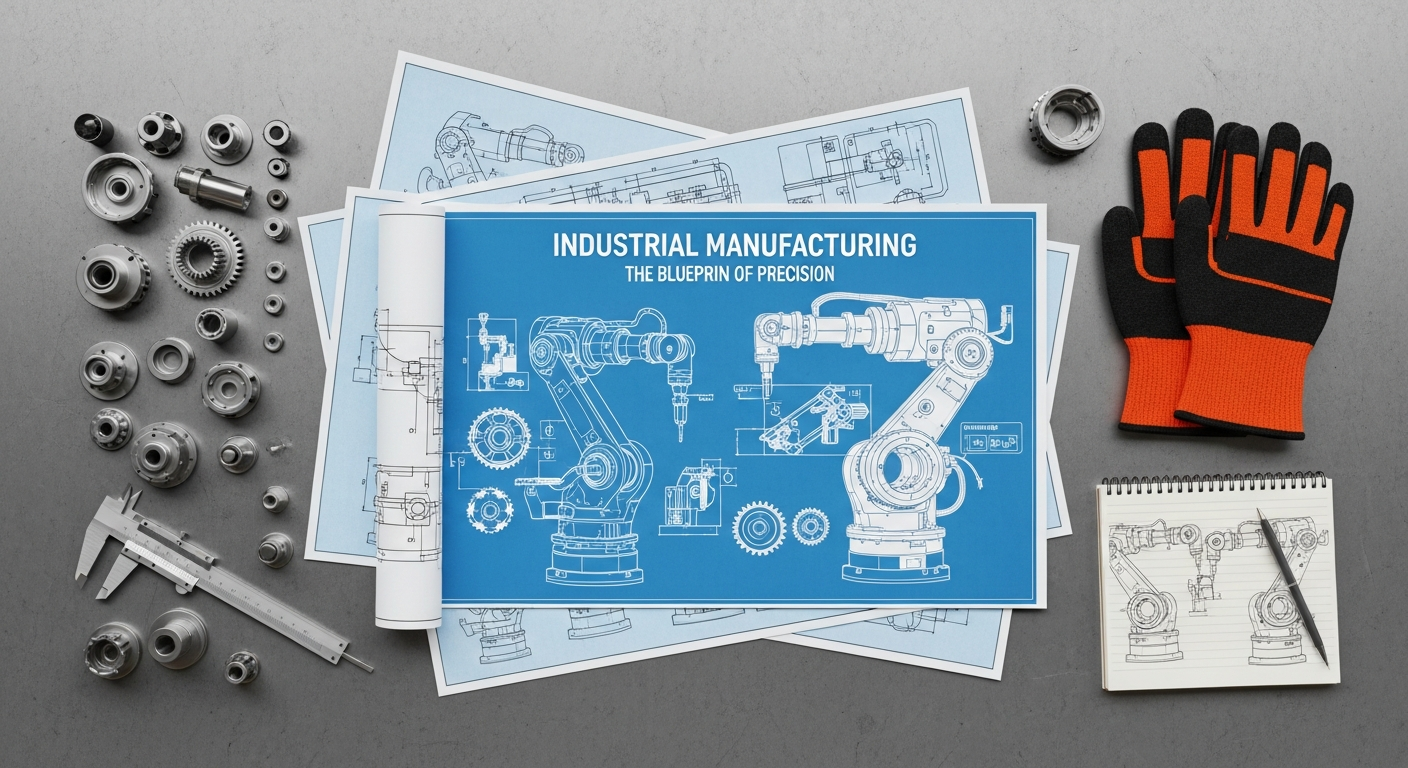
The integration of industrial robots in manufacturing facilities offers a myriad of compelling benefits that directly address the core challenges faced by modern industries. These advantages extend far beyond mere labor replacement, impacting productivity, quality, safety, and ultimately, a company’s bottom line.
- Enhanced Precision and Accuracy: One of the most significant advantages of industrial robots is their unparalleled ability to perform tasks with extreme precision and repeatability. Unlike human operators, robots do not experience fatigue, distractions, or variations in performance. This consistency is critical for applications requiring tight tolerances, such as intricate assembly, precision welding, or detailed inspection processes. The result is a dramatic reduction in manufacturing defects and rework, leading to higher product quality and customer satisfaction.
- Increased Productivity and Throughput: Robots can operate continuously, 24/7, without breaks or downtime, except for scheduled maintenance. This relentless operational capability significantly boosts production rates and overall throughput. By automating repetitive and time-consuming tasks, manufacturers can achieve higher output volumes in shorter periods, enabling them to meet growing market demands and improve their competitive edge.
- Improved Worker Safety: Industrial environments often involve tasks that are inherently dangerous, strenuous, or expose workers to hazardous materials and extreme conditions. Robots excel at performing these “3D” tasks – dirty, dull, and dangerous – thereby removing human workers from harm’s way. Whether it’s handling heavy loads, working in extreme temperatures, operating in environments with toxic fumes, or performing intricate tasks that could lead to repetitive strain injuries, robots significantly enhance workplace safety and reduce the risk of accidents and occupational hazards.
- Reduced Operational Costs: While the initial investment in industrial robots can be substantial, the long-term cost savings are significant. Robots reduce labor costs associated with wages, benefits, and overtime. Furthermore, their precision minimizes material waste, and their consistent performance reduces the need for costly rework and scrap. By optimizing processes and increasing efficiency, robots contribute to a lower cost per unit, improving profitability. This directly ties into effective Manufacturing Waste Reduction Strategies, as the elimination of defects and optimized material usage are central tenets.
- Consistent Quality Control: The repeatability of robots ensures that every product is manufactured to the exact same specifications, eliminating the variability inherent in manual processes. This consistency is invaluable for maintaining high-quality standards across entire product lines. Robots equipped with advanced sensors and vision systems can also perform automated quality checks and inspections, identifying defects early in the production cycle and preventing faulty products from reaching the market.
- Flexibility and Adaptability: Modern industrial robots are increasingly flexible and easy to reprogram. This adaptability allows manufacturers to quickly switch between different product lines or adjust to changes in design and production requirements. This agility is crucial in today’s fast-paced markets, where rapid product innovation and customization are key differentiators.
Ultimately, the strategic deployment of industrial robots in manufacturing empowers companies to optimize their operations, reduce costs, enhance product quality, and create a safer, more productive work environment, laying a robust foundation for future growth and innovation.
Types of Industrial Robots and Their Applications
- Articulated Robots: These are the most common type of industrial robot, resembling a human arm with rotating joints. They typically have between four and six axes, providing a high degree of flexibility and reach.
- Applications: Widely used for welding (spot and arc), painting, material handling, machine tending, assembly, and packaging. Their versatility makes them suitable for a vast array of tasks across industries like automotive, aerospace, and general manufacturing.
- SCARA (Selective Compliance Assembly Robot Arm) Robots: SCARA robots are known for their high speed and precision in a horizontal plane, with vertical compliance. They typically have four axes.
- Applications: Ideal for high-speed pick-and-place operations, assembly, and packaging where precise vertical motion is required for insertion, but horizontal flexibility is paramount. Common in electronics manufacturing and consumer goods.
- Delta (Parallel) Robots: These robots feature a distinctive parallel kinematic structure, allowing for extremely high-speed, precise movements. They are often suspended above the workspace.
- Applications: Predominantly used for ultra-fast pick-and-place tasks, sorting, and packaging of lightweight products, especially in food and beverage, pharmaceuticals, and electronics industries where speed and hygiene are critical.
- Cartesian (Gantry) Robots: Also known as gantry robots, these robots move along three linear axes (X, Y, Z) arranged at right angles to each other. They often span large workspaces.
- Applications: Excellent for large-scale material handling, pick-and-place of heavy objects, stacking, and palletizing. Their rigidity and ability to cover extensive areas make them suitable for automotive body shops and large assembly lines.
- Collaborative Robots (Cobots): Representing a newer frontier in industrial robots in manufacturing, cobots are designed to work safely alongside human operators without the need for extensive safety guarding. They are typically smaller, lighter, and equipped with advanced sensors for collision detection.
- Applications: Ideal for tasks requiring human dexterity and robotic strength/repeatability, such as assembly assistance, quality inspection, machine tending, and packaging in environments where flexibility and human interaction are crucial. They are particularly valuable for small and medium-sized enterprises (SMEs) due to their ease of programming and deployment.
- Mobile Robots (AGVs/AMRs): While not typically fixed-arm robots, Automated Guided Vehicles (AGVs) and Autonomous Mobile Robots (AMRs) are increasingly integral to modern manufacturing. AGVs follow fixed paths, while AMRs navigate autonomously.
- Applications: Used for transporting materials, components, and finished goods within a factory or warehouse, optimizing
Recommended Resources
Explore Healthy Meal Prep Ideas For The Week for additional insights.
Related reading: Miscarriage Support And Resources (Protect Families Protect Choices).