


What is Just-in-Time (JIT) Manufacturing?
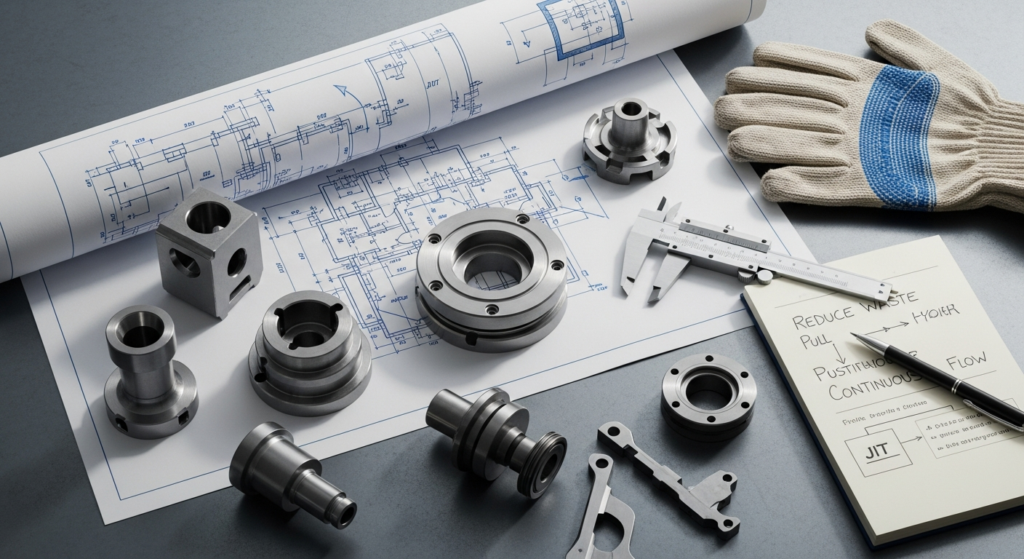
Just-in-Time (JIT) manufacturing is a production strategy focused on increasing efficiency and decreasing waste by receiving goods only as they are needed in the production process, thereby reducing inventory costs. Originating in Japan, most famously pioneered by Toyota in the mid-20th century, JIT is often referred to as the “Toyota Production System” (TPS). Its fundamental premise is to eliminate waste (muda) in all forms, including overproduction, waiting, unnecessary transportation, over-processing, excess inventory, unnecessary movement, and defects. The core idea is to produce or deliver goods precisely when they are required, in the exact quantities needed, avoiding the accumulation of excess inventory that ties up capital, requires storage space, and risks obsolescence.
Historically, traditional manufacturing models operated on a “push” system, where production schedules were based on forecasts, and goods were produced in large batches and “pushed” through the system, often resulting in significant inventories of raw materials, work-in-progress (WIP), and finished goods. In contrast, JIT operates on a “pull” system. Production is triggered by actual customer demand or the need for a component in the next stage of assembly. When a customer places an order, it “pulls” the required product from the final stage of production. This, in turn, pulls components from the preceding stage, and so on, back through the entire supply chain to the raw material suppliers. This demand-driven approach ensures that nothing is produced until it is needed, drastically reducing inventory levels and their associated costs.
The philosophy behind JIT extends beyond mere inventory management; it encompasses a holistic approach to manufacturing excellence. It mandates a deep understanding of process flows, an unwavering commitment to quality, and a culture of continuous improvement. For JIT to succeed, every element of the production system—from supplier relationships to machine maintenance to employee training—must be finely tuned and synchronized. This meticulous coordination helps to identify and eliminate bottlenecks, streamline operations, and enhance overall productivity. Ultimately, JIT is about creating a lean, agile, and responsive manufacturing environment capable of adapting quickly to changes in demand and market conditions, providing a significant competitive edge for companies like Mitsubishi Manufacturing operating in diverse industrial sectors.
The Core Principles and Pillars of JIT Manufacturing
To truly understand how Just-in-Time manufacturing transforms operations, it’s essential to delve into its core principles. These pillars are interconnected and mutually reinforcing, forming a robust framework for operational excellence:
- Demand-Pull System: As discussed, this is the cornerstone of JIT. Production is initiated only when there is an actual demand from the next stage of production or from the end customer. This contrasts sharply with the traditional “push” system, where goods are produced based on forecasts and then pushed down the supply chain. The pull system minimizes overproduction and excess inventory, aligning production directly with consumption.
- Waste Reduction (Muda Elimination): JIT is inherently a waste-reduction strategy. It identifies seven main types of waste (the “Seven Mudas”):
- Overproduction: Producing more than is needed or sooner than needed.
- Waiting: Idle time for workers or machines.
- Transportation: Unnecessary movement of materials or products.
- Over-processing: Doing more work than is necessary to produce a product.
- Inventory: Excess raw materials, WIP, or finished goods.
- Motion: Unnecessary movement by people.
- Defects: Errors that require rework or scrap.
By systematically targeting and eliminating these wastes, JIT aims for maximum efficiency and cost-effectiveness.
- Continuous Flow: JIT strives to create a smooth, uninterrupted flow of work through the production process, minimizing bottlenecks and delays. This often involves reconfiguring factory layouts, optimizing machine setups, and ensuring a balanced workload across workstations. The goal is to move from batch production to single-piece flow or small-batch production, reducing lead times and improving responsiveness.
- Quick Changeovers and Setup Time Reduction (SMED): To achieve continuous flow and minimize inventory, machines must be able to switch between producing different products quickly and efficiently. Single-Minute Exchange of Die (SMED) is a methodology integral to JIT that focuses on drastically reducing the time it takes to change over a process or machine, allowing for smaller production runs and greater flexibility.
- Total Quality Management (TQM) and Zero Defects: In a JIT system, there is no buffer inventory to hide defects. Therefore, quality must be built into every stage of the process. JIT promotes a culture where every employee is responsible for quality, aiming for “zero defects.” Tools like Jidoka (automation with a human touch, meaning machines stop automatically when a defect is detected) and Poka-Yoke (mistake-proofing devices) are critical to achieving this.
- Strong Supplier Relationships: JIT relies heavily on frequent, small deliveries of high-quality materials from suppliers. This necessitates extremely close and collaborative relationships with a select group of trusted suppliers who can consistently meet precise delivery schedules and quality standards.
- Employee Empowerment and Cross-Training: JIT systems thrive on engaged, highly skilled, and flexible employees. Workers are often cross-trained to perform multiple tasks, contributing to process flexibility and problem-solving. Empowerment allows employees at all levels to identify and address issues, driving continuous improvement.
These principles, when integrated effectively, create a manufacturing system that is not only efficient but also highly adaptable and resilient, capable of producing high-quality goods with minimal waste and maximum responsiveness to customer needs. This holistic approach ensures that every resource, from raw materials to human capital, is utilized to its fullest potential.
The Symbiotic Relationship Between JIT and Lean Manufacturing Principles Explained
The core tenets of Lean Manufacturing are: identifying customer value, mapping the value stream, creating flow, establishing a pull system, and pursuing perfection. JIT directly addresses several of these principles:
- Value Stream Mapping: JIT implementation naturally requires a meticulous mapping of the value stream to identify all steps involved in delivering a product or service, distinguishing value-adding activities from waste. This clarity is essential for optimizing flow and implementing the pull system effectively.
- Creating Flow: JIT’s emphasis on continuous flow and quick changeovers is a direct application of Lean’s goal to eliminate interruptions and bottlenecks, ensuring a smooth progression of work through the system.
- Establishing a Pull System: This is arguably the most direct overlap. JIT’s demand-driven production model is the quintessential “pull system” in Lean, ensuring that resources are only consumed when needed, preventing overproduction and excess inventory.
- Pursuing Perfection (Kaizen): Both JIT and Lean are deeply committed to continuous improvement. The constant pursuit of waste elimination and efficiency gains within JIT systems aligns perfectly with Lean’s “pursuit of perfection,” which is often driven by methodologies like Kaizen.
The relationship is truly symbiotic. Lean provides the overarching strategic framework and cultural mindset for waste reduction and value creation, while JIT offers a powerful set of tactical tools and operational practices to achieve these goals, particularly in the realm of inventory management and production scheduling. A company adopting Lean principles will almost certainly explore and implement JIT techniques as a means to achieve its objectives of efficiency, quality, and responsiveness. Conversely, a successful JIT implementation relies on the foundational understanding and cultural support provided by a Lean mindset. Without the broader Lean context, JIT can be seen merely as an inventory reduction strategy, potentially exposing the organization to risks if quality or supplier relationships are not simultaneously addressed. Together, they form a formidable combination for manufacturing excellence, driving Mitsubishi Manufacturing towards unparalleled operational agility and cost-effectiveness in 2026 and beyond.
Key Benefits and Advantages of Implementing JIT Manufacturing
The strategic adoption of Just-in-Time manufacturing offers a multitude of compelling benefits that can significantly enhance a company’s competitive position. These advantages span across financial, operational, and qualitative dimensions:
- Reduced Inventory Costs: This is arguably the most direct and significant benefit. By minimizing raw materials, work-in-progress (WIP), and finished goods inventory, companies dramatically reduce storage costs (warehouse space, utilities, labor), insurance premiums, and the capital tied up in inventory. This frees up cash flow for other investments and improves financial liquidity.
- Improved Product Quality: JIT’s philosophy of “no buffer to hide defects” forces a proactive approach to quality. Problems are identified and addressed immediately at their source, rather than being passed down the line. This leads to higher quality output, less rework, reduced scrap, and fewer warranty claims. The emphasis on Kaizen Continuous Improvement Explained within a JIT framework further refines processes and elevates quality standards over time.
- Shorter Lead Times: By streamlining processes, reducing queues, and fostering continuous flow, JIT significantly cuts down the time it takes for a product to move from raw material to finished good. This responsiveness allows companies to react more quickly to customer orders and market changes.
- Increased Efficiency and Productivity: Eliminating waste in all its forms (overproduction, waiting, unnecessary motion, etc.) directly translates into more efficient use of resources—labor, machinery, and materials. This boosts overall productivity and capacity utilization.
- Greater Flexibility and Adaptability: With smaller batch sizes and quick changeovers, JIT systems are inherently more flexible. They can rapidly adjust to changes in product mix, demand fluctuations, or even new product introductions without incurring massive costs associated with retooling or liquidating large inventories of obsolete components.
- Enhanced Supplier Relationships: The necessity for frequent, high-quality, and on-time deliveries forces companies to cultivate stronger, more collaborative relationships with their suppliers. This often leads to mutual benefits, including shared knowledge, process improvements, and even cost reductions through integrated supply chain management.
- Better Use of Space: Reduced inventory means less need for large warehouses and storage areas. This frees up valuable floor space that can be reallocated for production, offices, or other value-adding activities.
- Empowered Workforce: JIT often requires a more skilled, cross-trained, and engaged workforce. Employees are encouraged to identify problems, suggest solutions, and take ownership of quality and efficiency. This empowerment can lead to higher job satisfaction and lower employee turnover.
- Competitive Advantage: The cumulative effect of these benefits—lower costs, higher quality, faster delivery, and greater flexibility—provides a significant competitive edge in the marketplace. Companies practicing JIT can often offer better prices, superior products, and quicker service than their less agile competitors.
For a manufacturing powerhouse like Mitsubishi Manufacturing, these advantages are not merely theoretical; they are tangible drivers of profitability, market share, and long-term sustainability. The ability to produce precisely what the customer wants, when they want it, with minimal waste, positions an organization to excel in an increasingly demanding global economy.
Challenges and Considerations in JIT Implementation
While the benefits of Just-in-Time manufacturing are compelling, its successful implementation is not without significant challenges. Adopting JIT requires a radical transformation of processes, culture, and relationships, and companies must carefully consider these potential hurdles:
- High Dependence on Reliable Suppliers: The bedrock of JIT is a highly reliable supply chain. Any disruption—such as late deliveries, quality issues from a supplier, or unexpected supplier shutdowns—can bring the entire production line to a halt, as there are minimal buffer inventories. This vulnerability necessitates robust supplier vetting, strong communication, and sometimes even dual sourcing for critical components.
- Vulnerability to Supply Chain Disruptions: Beyond individual supplier reliability, global events like natural disasters, geopolitical issues, or pandemics (as seen in recent years) can severely impact the flow of materials. Without significant inventory buffers, JIT systems are particularly susceptible to these broader supply chain shocks, potentially leading to production stoppages and missed deadlines.
- Initial Investment and Cultural Shift: Implementing JIT often requires substantial upfront investment in new machinery, factory layout redesigns, IT systems for real-time data tracking, and extensive employee training. More importantly, it demands a profound cultural shift towards continuous improvement, problem-solving, and cross-functional collaboration, which can be difficult to instill.
- Quality Control Must Be Impeccable: In a JIT system, there’s no room for error. A single defective component can halt an entire assembly line. This means that quality control must be integrated into every stage of the process, and a “zero defects” mentality must prevail. This requires rigorous process control, advanced inspection techniques, and a commitment to immediate root cause analysis for any identified issue.
- Forecasting Accuracy is Crucial: While JIT operates on a pull system, some level of demand forecasting is still necessary for long-term planning, capacity management, and supplier coordination. Inaccurate forecasts can lead to either overproduction (defeating the JIT purpose) or underproduction (resulting in stockouts and lost sales).
- Requires Data and Technology Infrastructure: Real-time visibility into production status, inventory levels, and supplier performance is critical for JIT. This necessitates robust IT systems, potentially involving IoT sensors, enterprise resource planning (ERP) systems, and advanced analytics to monitor and manage the complex interdependencies of a JIT system.
- Resistance to Change: Employees accustomed to traditional batch production methods may resist the changes required by JIT, such as new work procedures, increased responsibility for quality, and the pressure of continuous flow. Effective change management and comprehensive training are vital to overcome this resistance.
- Risk of Stockouts: Although JIT aims to eliminate excess inventory, it also carries the inherent risk of stockouts if demand surges unexpectedly or if there are unforeseen delays in the supply chain. Balancing the desire for minimal inventory with the need to meet customer demand requires careful planning and robust risk management strategies.
For a large-scale operation like Mitsubishi Manufacturing, navigating these challenges requires a strategic, phased approach, strong leadership commitment, and a deep understanding of both internal capabilities and external supply chain dynamics. While the potential rewards are immense, neglecting these considerations can lead to significant operational disruptions and financial losses.
The Role of Technology and Data in Modern JIT Systems
In the 21st century, the principles of Just-in-Time manufacturing have been significantly amplified and refined by advancements in technology and data analytics. Modern JIT systems are no longer solely reliant on manual Kanban cards or visual cues; they are intricately woven with sophisticated digital tools that provide unprecedented levels of visibility, control, and predictive capability. These technological integrations are crucial for navigating the complexities of global supply chains and achieving the precision demanded by JIT in 2026 and beyond.
- Internet of Things (IoT) and Sensors: IoT devices deployed across the factory floor and supply chain provide real-time data on machine performance, inventory levels, material movement, and product quality. Sensors can automatically trigger reorders when stock falls below a certain threshold, monitor the status of production lines to identify bottlenecks, and track the location and condition of goods in transit. This instantaneous data flow is fundamental to maintaining continuous flow and responsiveness in a JIT environment.
- Advanced Analytics and Artificial Intelligence (AI): Leveraging the vast amounts of data collected by IoT and other systems, AI and machine learning algorithms can provide predictive insights. They can forecast demand with greater accuracy, anticipate potential supply chain disruptions, optimize production schedules, and even identify subtle process inefficiencies that might otherwise go unnoticed. This predictive capability helps JIT systems to be more proactive rather than purely reactive.
- Enterprise Resource Planning (ERP) Systems: Modern ERP systems are the backbone of integrated manufacturing operations. They centralize data from various departments—production, inventory, sales, purchasing, finance—providing a unified view of the entire business. For JIT, ERP systems facilitate real-time inventory tracking, automate purchase orders to suppliers, manage production schedules based on demand, and ensure seamless communication across the organization and with supply chain partners.
- Robotics and Automation: Automated guided vehicles (AGVs) can deliver materials precisely when and where they are needed on the factory floor, supporting the continuous flow principle and reducing manual transportation waste. Collaborative robots (cobots) can perform repetitive tasks with high precision, improving quality and consistency, which is vital for JIT’s zero-defect goal.
- Digital Twin Technology: Creating virtual replicas of physical assets, processes, or even entire supply chains allows manufacturers to simulate different scenarios, test process changes, and identify potential bottlenecks or inefficiencies before implementing them in the real world. This helps optimize JIT flows and reduce risks.
- Cloud Computing: Cloud platforms enable scalable and accessible data storage and processing, facilitating collaboration across geographically dispersed teams and supply chain partners. This is particularly important for managing global JIT operations where real-time information sharing is paramount.
- Blockchain for Supply Chain Transparency: While still emerging, blockchain technology offers the potential for unprecedented transparency and traceability across the supply chain. This can enhance trust with suppliers, verify the origin and quality of materials (critical for Materials Science In Manufacturing applications where material properties are paramount), and provide an immutable record of transactions and events, further strengthening the reliability needed for JIT.
For Mitsubishi Manufacturing, integrating these technologies is not just about staying competitive; it’s about pushing the boundaries of what JIT can achieve. By harnessing the power of data and advanced digital tools, JIT systems can become even more agile, resilient, and precise, enabling unparalleled efficiency and responsiveness in meeting customer demands and navigating the complexities of modern industrial production.
JIT in Practice: Real-World Applications and Future Outlook
Just-in-Time manufacturing, while originating in the automotive sector, has demonstrated its versatility and effectiveness across a wide array of industries. Its core principles of waste reduction, efficiency, and demand-driven production are universally applicable, albeit with adaptations to suit specific industry contexts. From electronics to healthcare, and from food processing to aerospace, the influence of JIT is pervasive.
Real-World Applications:
- Automotive Industry: Toyota remains the quintessential example, but virtually every major automotive manufacturer today employs JIT principles. Components arrive at assembly plants just hours before they are needed, minimizing vast inventories of parts. This requires intricate coordination with hundreds of suppliers, often located in industrial parks adjacent to the main assembly plants.
- Electronics Manufacturing: Companies producing consumer electronics, where product lifecycles are short and demand can fluctuate wildly, heavily rely on JIT. They need to rapidly assemble products based on current orders, avoiding the costly accumulation of obsolete components. This is especially true for companies dealing with high-value, rapidly evolving components where Materials Science In Manufacturing plays a crucial role in component longevity and performance.
- Food and Beverage: In industries with perishable goods, JIT is critical. Ingredients and packaging materials are delivered just before processing, minimizing spoilage and ensuring freshness. This also helps reduce waste from products nearing their expiration date.
- Retail and E-commerce: While not manufacturing in the traditional sense, the principles of JIT are applied in inventory management and logistics for retailers. Products are restocked on shelves or in distribution centers only as needed, driven by real-time sales data, optimizing warehouse space and reducing carrying costs.
- Aerospace: Given the extremely high cost of components and the complexity of aircraft assembly, JIT helps manage the flow of specialized parts, ensuring they arrive precisely when needed for specific stages of construction, minimizing storage costs and the risk of damage to expensive, custom-made items.
Future Outlook for JIT in 2026 and Beyond:
The future of JIT manufacturing is robust and continues to evolve, adapting to new technological advancements and global challenges. Several trends indicate its continued relevance and transformation:
- Increased Digital Integration: As discussed, the fusion of JIT with Industry 4.0 technologies (AI, IoT, big data, cloud computing) will deepen. Predictive analytics will make demand forecasting more precise, and real-time monitoring will enhance supply chain visibility and responsiveness, making JIT systems even more resilient.
- Enhanced Supply Chain Resilience: The lessons learned from recent global disruptions will drive JIT practitioners to build more resilient supply chains. This might involve a strategic re-evaluation of single-sourcing, developing regional supplier networks, or incorporating AI-driven risk assessment tools, all while maintaining the core JIT philosophy of waste reduction.
- Sustainability and Circular Economy: JIT’s inherent focus on waste reduction aligns perfectly with sustainability goals. In the future, JIT will increasingly integrate with circular economy principles, optimizing material usage, facilitating recycling and reuse, and minimizing environmental impact across the entire product lifecycle.
- Hyper-Personalization and Mass Customization: As consumer demand shifts towards personalized products, JIT’s flexibility and ability to handle small batch sizes will become even more critical. Advanced manufacturing techniques, coupled with JIT, will enable companies to offer highly customized products with lead times comparable to mass-produced items.
- Human-Machine Collaboration: The role of the human workforce will continue to evolve, with greater emphasis on problem-solving, continuous improvement (Kaizen), and overseeing automated processes. JIT will empower workers with data and tools to make real-time decisions, further optimizing flow and quality.
For Mitsubishi Manufacturing, embracing these future trends means continuously refining our JIT strategies, investing in cutting-edge technology, and fostering a culture of innovation and adaptability. JIT is not a static methodology but a dynamic framework that promises to remain a cornerstone of efficient, high-quality, and responsive manufacturing for decades to come, ensuring our leadership in the industrial sector.
Frequently Asked Questions
What is the primary goal of Just-in-Time (JIT) manufacturing?▾
How does JIT differ from traditional manufacturing?▾
What are the main benefits of implementing JIT?▾
What are the biggest risks or challenges associated with JIT?▾
Is JIT still relevant in 2026 given global supply chain issues?▾
How does JIT relate to Lean Manufacturing and Kaizen?▾
Recommended Resources
You might also enjoy Parenting Support Programs Guide from Protect Families Protect Choices.
Check out Morning Habits Of Successful People on Diaal News for a deeper dive.