Lean Manufacturing Principles in 2026
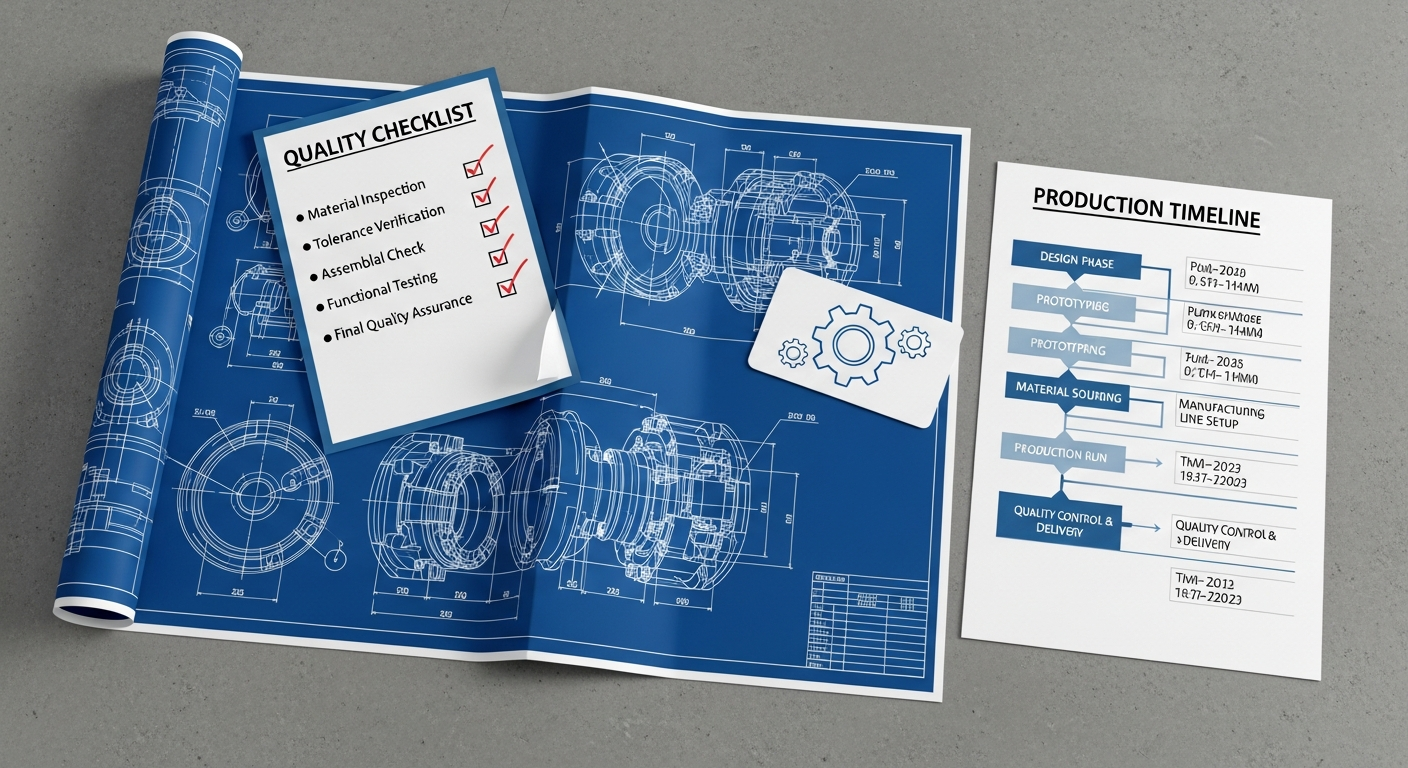
As we approach 2026, Lean Manufacturing continues to evolve, integrating cutting-edge technologies and responding to new challenges. The incorporation of AI-assisted waste detection, Industry 4.0 integration, digital twins, and predictive maintenance is reshaping the landscape. These advancements, coupled with the growing emphasis on ESG (Environmental, Social, and Governance) criteria and supply chain resilience, are redefining how lean principles are applied in modern manufacturing environments.
The Genesis of Lean: A Brief History and Enduring Philosophy
The origins of Lean Manufacturing are deeply rooted in post-World War II Japan, specifically within the Toyota Motor Corporation. Faced with limited resources and a small domestic market, Toyota could not afford the inefficiencies inherent in the mass production systems prevalent in the West. This challenging environment spurred pioneers like Taiichi Ohno, an industrial engineer, and Shigeo Shingo, a consultant, to develop what would eventually become known as the Toyota Production System (TPS). The central objective of TPS was to create a system that could produce goods efficiently and with high quality, only when needed, and in the quantities needed, thereby reducing waste and maximizing responsiveness to customer demand.
The core philosophy of TPS, and subsequently Lean Manufacturing, is elegantly simple yet profoundly impactful: identify and eliminate waste (known as Muda in Japanese) from all processes, thereby delivering maximum value to the customer. This philosophy contrasts sharply with traditional manufacturing models that often accumulate inventory “just in case” or push products through based on forecasts rather than actual demand. Lean champions a customer-centric view, where “value” is defined solely by what the customer is willing to pay for. Anything that does not contribute directly to this perceived value is considered waste and targeted for elimination.
The global manufacturing community began to recognize the power of TPS in the 1980s and 1990s, particularly after the publication of “The Machine That Changed the World” in 1990, which coined the term “Lean Manufacturing.” This seminal work brought the principles of TPS to a wider audience, demonstrating how Toyota’s approach consistently outperformed traditional mass production in terms of quality, cost, and delivery speed. Since then, Lean has transcended its automotive origins, finding successful application across virtually every industry, from healthcare and software development to service industries and, of course, a wide array of manufacturing sectors. Its enduring appeal lies in its versatile framework for continuous improvement and its unwavering focus on efficiency and customer satisfaction.
The Five Core Principles of Lean Manufacturing Explained
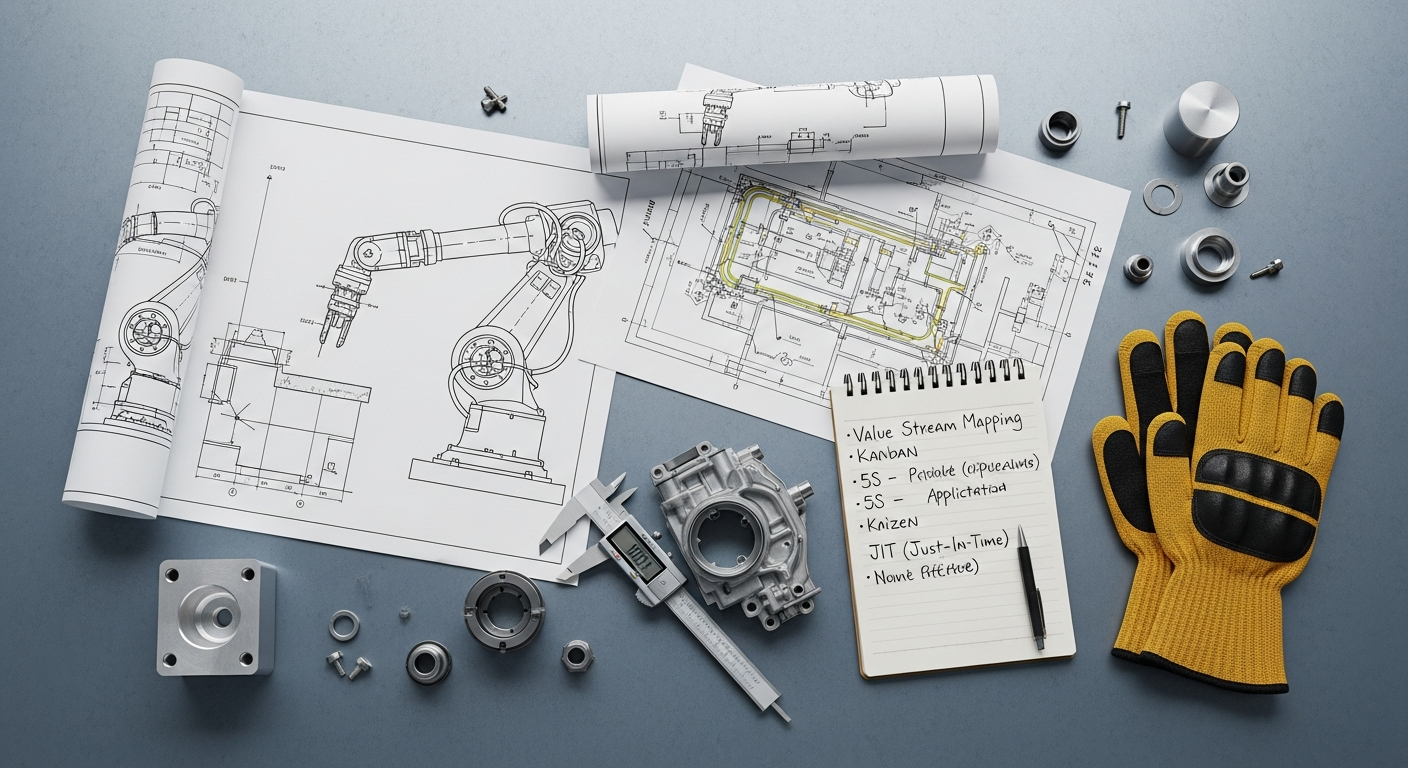
At its heart, Lean Manufacturing is guided by five interconnected principles that, when implemented collectively, create a powerful system for continuous improvement and waste reduction. Understanding these principles is crucial for any organization embarking on a Lean journey.
-
1. Define Value: The foundational step in Lean is to precisely define what constitutes “value” from the ultimate customer’s perspective. In a manufacturing context, this means understanding what features, functions, performance, and price points the customer is willing to pay for. Anything that does not directly contribute to these aspects is considered waste. For instance, a customer paying for a high-precision metal component values its dimensional accuracy, material strength, and timely delivery, but not the time it spent waiting in inventory or being reworked due to defects. Defining value requires deep market understanding, customer feedback, and a clear vision of the product or service’s purpose. This principle ensures that all subsequent efforts are directed towards delivering what truly matters to the end-user.
-
2. Identify the Value Stream: Once value is defined, the next step is to map the entire “value stream.” This involves identifying all the steps, both value-adding and non-value-adding, required to bring a product or service from raw materials to the customer’s hands. A value stream map visually represents the flow of materials and information, highlighting where waste occurs. This comprehensive mapping process typically spans across multiple departments and even external suppliers. For example, in producing a complex machinery part, the value stream would include raw material procurement, various machining operations, assembly, quality checks, packaging, and logistics. By visualizing the entire process, organizations can pinpoint bottlenecks, areas of excessive inventory, unnecessary transport, and redundant steps that do not add value but consume resources.
-
3. Create Flow: With the value stream mapped and waste identified, the goal is to eliminate obstacles and ensure a smooth, continuous flow of work through the remaining value-adding steps. This means moving away from batch processing, where work accumulates at various stages, to a system where products move seamlessly from one process step to the next without interruption, waiting, or backtracking. Achieving flow often involves redesigning layouts, optimizing equipment, cross-training employees, and standardizing work processes. For example, setting up a single-piece flow line for assembly rather than moving large batches between workstations significantly reduces lead times and work-in-progress inventory. The aim is to make the production process as fluid and uninterrupted as possible, minimizing delays and improving efficiency.
-
4. Establish Pull: The “pull” principle dictates that production should only begin when there is an actual demand from the customer. Instead of pushing products through the system based on forecasts (which often leads to overproduction and excess inventory), a pull system ensures that each downstream process signals its need to the upstream process, which then initiates production. Think of it like a supermarket: shelves are restocked only when items are purchased by customers. This just-in-time (JIT) approach minimizes inventory levels, reduces storage costs, and prevents the production of goods that may become obsolete or require costly rework. Kanban systems are a classic example of a pull mechanism, using visual signals to trigger replenishment or production activities. Implementing a robust pull system ensures responsiveness and conserves resources.
-
5. Seek Perfection: The fifth and arguably most crucial principle of Lean is the relentless pursuit of perfection through continuous improvement. Lean is not a one-time project; it is an ongoing journey. Organizations must foster a culture where everyone is encouraged to identify problems, propose solutions, and implement small, incremental improvements every day. This commitment to continuous improvement, often embodied by the Kaizen philosophy, ensures that waste is systematically driven out, quality is consistently enhanced, and processes become more efficient over time. Perfection in Lean means striving for zero defects, zero inventory, zero lead time, and zero waste. While true perfection may be unattainable, the continuous effort to move closer to it drives innovation, learning, and sustained competitive advantage. This principle emphasizes that even seemingly perfect processes can always be made better, highlighting the importance of ongoing vigilance and adaptation.
Lean Manufacturing Principles and Tools: An EAV/Q2A Table
| Principle | Tool | KPI | Expected Outcome |
|---|---|---|---|
| Define Value | Voice of Customer | Customer Satisfaction | Enhanced Product Relevance |
| Identify Value Stream | Value Stream Mapping | Lead Time | Reduced Waste |
| Create Flow | Takt Time Calculation | Cycle Time | Improved Efficiency |
| Establish Pull | Kanban | Inventory Turns | Optimized Inventory Levels |
| Seek Perfection | Kaizen | First Pass Yield | Continuous Improvement |
Identifying and Eliminating the Eight Wastes (Muda)
-
1. Defects: This waste refers to products or services that fail to meet quality standards, requiring rework, repair, scrap, or reinspection. Defects lead to wasted materials, labor, and time, and can damage customer satisfaction and brand reputation. For instance, a batch of improperly machined components means wasted raw material, the energy used to machine them, and the labor time spent, plus the cost of disposal or rework. Implementing robust quality control, Poka-Yoke (mistake-proofing), and root cause analysis are key to reducing defects.
-
2. Overproduction: Producing more than is immediately needed or demanded by the customer is arguably the worst of the wastes, as it often leads to or magnifies other forms of waste. Overproduction consumes resources prematurely, ties up capital in excess inventory, and requires additional storage space, transportation, and handling. It creates a false sense of productivity and hides underlying problems. For example, manufacturing 1,000 units when only 500 are ordered means 500 units sit idle, potentially becoming obsolete or damaged, and delaying the production of other needed items.
-
3. Waiting: This waste occurs when people, equipment, or materials are idle, waiting for the next step in a process to begin. Waiting time can be caused by bottlenecks, uneven workloads, equipment breakdowns, delayed material deliveries, or poor scheduling. For example, a machine operator waiting for a part to arrive from an upstream process, or a partially finished product waiting for a quality inspection, represents wasted time and resources. Minimizing waiting involves balancing workloads, improving reliability, and streamlining flow.
-
4. Non-Utilized Talent (or Skills): This often-overlooked eighth waste refers to the underutilization of employees’ skills, knowledge, creativity, and potential. When employees are not engaged in problem-solving, their ideas are ignored, or they are assigned tasks below their capabilities, the organization loses out on valuable contributions. For example, an engineer spending their time on routine administrative tasks that could be automated or handled by a less specialized employee is a waste of their expertise. Empowering employees and fostering a culture of continuous improvement, as advocated by Kaizen, helps unlock this potential.
-
5. Transportation: Unnecessary movement of materials, parts, or finished goods between processes or locations is a waste. While some transportation is unavoidable, excessive movement adds no value to the product and increases the risk of damage, delays, and additional costs. For instance, moving raw materials from a distant warehouse to the production line, then to another warehouse, then to assembly, then back to a finished goods warehouse, involves multiple instances of wasteful transportation. Optimizing plant layout and supply chain logistics are crucial here.
-
6. Inventory: Holding excessive amounts of raw materials, work-in-progress (WIP), or finished goods beyond what is immediately needed is a significant waste. High inventory levels tie up capital, require storage space, incur handling costs, risk obsolescence or damage, and can hide underlying operational problems (e.g., poor quality, unreliable suppliers). For example, a manufacturer stockpiling components “just in case” a supplier delivers late is using inventory to mask an unreliable supply chain issue. Lean aims for just-in-time inventory, where materials arrive precisely when needed. This is where efficient supply chain management and reliable Materials Science In Manufacturing insights become critical, ensuring that materials are not only available but also optimally utilized.
-
7. Motion: This refers to any unnecessary movement by people within their workspace. This includes excessive walking, reaching, bending, searching for tools, or repetitive motions that do not add value to the product. Poor workstation design, disorganized tools, or inefficient processes can lead to significant motion waste. For example, an assembly worker having to walk across a large area to retrieve a tool multiple times an hour is a waste of motion. Ergonomic design and the 5S methodology are key tools for eliminating motion waste.
-
8. Overprocessing: This waste involves doing more work on a product or service than is required by the customer or the next process step. This can include using overly precise equipment when simpler tools would suffice, performing unnecessary inspections, adding features the customer doesn’t value, or polishing surfaces that will be hidden. For example, deburring a part to a mirror finish when it will be painted and hidden inside an assembly is overprocessing. Understanding customer requirements and standardizing processes help prevent this waste. Considering the properties and processing requirements described in a Materials Science In Manufacturing guide can help optimize processing steps, ensuring they are only as complex as necessary for the material and end-use application.
By systematically identifying and eliminating these eight wastes, organizations can streamline their operations, reduce costs, improve quality, and enhance overall efficiency, moving closer to the ideal state of lean production.
Key Lean Tools and Methodologies for Implementation
While the principles of Lean Manufacturing provide the philosophical framework, a diverse set of practical tools and methodologies enables their effective implementation. These tools empower teams to identify waste, create flow, and sustain continuous improvement.
-
5S Methodology: A cornerstone of workplace organization and standardization, 5S stands for five Japanese words that begin with ‘S’ (Sort, Set in Order, Shine, Standardize, Sustain). It is a systematic approach to creating a clean, organized, and safe work environment. Sort involves removing unnecessary items; Set in Order means organizing remaining items for easy access; Shine is about cleaning the workspace; Standardize establishes consistent practices for maintaining the first three S’s; and Sustain focuses on maintaining these practices over time. 5S improves safety, efficiency, and morale by reducing motion waste and improving visibility.
-
Kanban: Meaning “signboard” or “visual signal,” Kanban is a scheduling system for just-in-time (JIT) production. It uses visual cues (cards, bins, lights) to signal the need to replenish materials or parts. When a component is used, a Kanban card is sent upstream, authorizing the production or movement of a new component. This pull-based system prevents overproduction, reduces inventory, and ensures that resources are only consumed when there is actual demand. It’s a highly effective way to manage workflow and maintain optimal inventory levels.
-
Poka-Yoke (Mistake-Proofing): Developed by Shigeo Shingo, Poka-Yoke refers to error-proofing devices or methods designed to prevent defects from occurring or being passed on to the next process step. These can be simple, low-cost solutions, such as jigs that only allow a part to be inserted in the correct orientation, or sensors that detect missing components. The goal is to make it impossible for an error to occur, or immediately obvious if it does, thereby eliminating the waste of defects and rework. An example might be a unique connector shape that prevents incorrect assembly of electronic components.
-
SMED (Single-Minute Exchange of Dies): Also developed by Shigeo Shingo, SMED is a methodology for reducing the time it takes to complete equipment changeovers or setups. The “single-minute” refers to less than ten minutes. By converting internal setup activities (those that can only be done when the machine is stopped) into external activities (those that can be done while the machine is running), SMED dramatically reduces downtime, enables smaller batch sizes, and improves flexibility. This is crucial for achieving smooth flow and responsiveness in manufacturing.
-
Value Stream Mapping (VSM): VSM is a visual tool used to map the entire flow of materials and information required to bring a product or service to the customer. It helps identify all value-adding and non-value-adding steps, highlighting areas of waste (Muda), overburden (Muri), and unevenness (Mura). By creating both a “current state” and a “future state” map, VSM provides a clear roadmap for improvement efforts, guiding where to apply other Lean tools to achieve desired outcomes. It offers a holistic view of the process, making interconnected wastes visible.
-
Kaizen Events: While Kaizen (continuous improvement) is a philosophy, Kaizen events are focused, short-term improvement projects (typically 3-5 days) involving a cross-functional team. The team identifies a specific problem or process area, analyzes it using Lean tools, implements changes, and tests their effectiveness, all within a rapid timeframe. These events are powerful for generating quick wins, building team engagement, and fostering a culture of continuous improvement. The principles outlined in a Kaizen Continuous Improvement Explained guide are directly applicable here, emphasizing small, incremental changes.
-
Standardized Work: This involves documenting the safest, highest-quality, and most efficient method for performing a task. Standardized work provides a baseline for consistency, makes problems visible, and serves as a foundation for continuous improvement. It ensures that every operator performs a task in the same optimal way, reducing variation and improving predictability. This is particularly important in complex manufacturing environments where consistency is key to quality and efficiency.
These tools, among others, provide the practical means to translate Lean principles into tangible improvements on the shop floor and throughout the organization. Their effective application often requires training, commitment, and a culture that embraces change and problem-solving.
The Synergy of Lean with Other Methodologies: Six Sigma and Kaizen
Lean Manufacturing does not operate in a vacuum. Its effectiveness is often amplified when integrated with complementary methodologies like Six Sigma and Kaizen. These approaches share common goals of efficiency and quality but tackle them from different angles, creating a powerful synergy.
Lean and Six Sigma: A Powerful Combination for Process Excellence
While Lean focuses on eliminating waste and streamlining processes to increase speed and flow, Six Sigma is a data-driven methodology aimed at reducing variation and defects to improve quality and predictability. Lean asks, “How can we make this process faster and eliminate unnecessary steps?” Six Sigma asks, “How can we make this process produce perfect results consistently?”
Individually, both methodologies offer significant benefits. Lean helps identify and remove non-value-adding activities, making processes more efficient. Six Sigma identifies the root causes of defects and variation, bringing processes under statistical control. However, their combined power, often referred to as “Lean Six Sigma,” is truly transformative. Lean principles can be used to simplify and optimize a process before Six Sigma is applied to reduce variation within that refined process. For example, Lean might eliminate unnecessary steps in an assembly line, and then Six Sigma would be used to reduce the defect rate of the remaining, value-adding assembly operations.
Implementing Lean first can make Six Sigma projects more focused and impactful. By removing obvious waste, Lean helps ensure that Six Sigma efforts are directed at truly critical process issues, rather than simply improving a wasteful process. Conversely, Six Sigma’s rigorous statistical analysis can provide the data needed to make informed decisions about Lean improvements, ensuring that changes are effective and sustainable. For a deeper understanding of defect reduction and process control, exploring a Six Sigma Methodology Guide is highly recommended, as it complements the waste-elimination focus of Lean.
Lean and Kaizen: The Engine of Continuous Improvement
Kaizen, the Japanese philosophy of “change for the better” or “continuous improvement,” is not just a tool within Lean but its very heartbeat. The fifth principle of Lean, “Seek Perfection,” is directly embodied by Kaizen. It emphasizes making small, incremental changes on an ongoing basis, involving everyone from top management to frontline employees. Unlike revolutionary changes, Kaizen promotes an evolutionary approach, where minor adjustments accumulate over time to yield significant improvements.
In a Lean environment, Kaizen ensures that waste elimination and efficiency gains are not one-off events but a perpetual state of organizational activity. It fosters a culture where problems are seen as opportunities for improvement, and every employee is empowered to identify and resolve issues. For instance, after implementing Lean tools like 5S and Value Stream Mapping, Kaizen events can be regularly scheduled to refine processes further, address newly identified wastes, or improve specific workstations. An article on Kaizen Continuous Improvement Explained would further elaborate on its principles, highlighting its essential role in maintaining the momentum of Lean initiatives.
The synergy lies in Lean providing the framework for identifying what needs to be improved (the wastes and inefficiencies), while Kaizen provides the operational mechanism and cultural mindset for actually implementing those improvements on a continuous basis. Without Kaizen, Lean efforts risk stagnating; with it, Lean becomes a dynamic, self-optimizing system.
The Transformative Benefits of Adopting Lean Principles
The adoption of Lean Manufacturing principles extends far beyond mere cost-cutting; it instigates a profound cultural and operational transformation that delivers a multitude of benefits across an organization. These advantages contribute to a stronger, more resilient, and more competitive enterprise, especially as we navigate the complexities of the manufacturing landscape in 2026 and beyond.
-
Increased Efficiency and Productivity: By systematically eliminating waste (Muda), Lean streamlines processes, reduces non-value-adding activities, and optimizes the use of resources. This leads to a significant increase in output per unit of input, meaning more products can be manufactured with the same or fewer resources. Reduced waiting times, smoother flow, and optimized motion contribute directly to higher productivity rates.
-
Reduced Costs: Waste is inherently costly. By reducing defects, inventory, overproduction, unnecessary transportation, and idle time, Lean directly translates into substantial cost savings. Less scrap, lower storage expenses, reduced rework, and optimized labor utilization all contribute to a healthier bottom line. For instance, minimizing inventory reduces capital tied up, insurance costs, and the risk of obsolescence.
-
Improved Quality: Lean’s emphasis on identifying and eliminating defects at their source, combined with tools like Poka-Yoke and standardized work, leads to a significant improvement in product quality. By ensuring processes are stable and consistent, the likelihood of errors is drastically reduced. Higher quality products enhance customer satisfaction and reduce warranty claims and returns, further saving costs.
-
Faster Lead Times: By creating flow and establishing pull systems, Lean dramatically reduces the time it takes for a product to move from raw materials to a finished good in the customer’s hands. Eliminating bottlenecks, reducing queues, and optimizing changeovers (via SMED) enable quicker response to customer orders, faster delivery, and increased market responsiveness.
-
Enhanced Customer Satisfaction: The cumulative effect of higher quality, lower costs, and faster delivery directly translates into greater customer satisfaction. Customers receive better products, more quickly, and often at a more competitive price, fostering loyalty and strengthening market position. Lean’s customer-centric approach ensures that every improvement is ultimately geared towards delivering more value to the end-user.
-
Better Employee Morale and Engagement: Lean empowers employees by involving them in problem-solving and improvement initiatives (e.g., Kaizen events). This increases their sense of ownership, provides opportunities for skill development, and fosters a more collaborative and respectful work environment. When employees feel valued and see their contributions making a difference, morale improves, leading to higher engagement and lower turnover.
-
Increased Agility and Adaptability: Lean organizations are inherently more flexible and responsive to changes in market demand, technology, or customer preferences. Their streamlined processes, low inventory levels, and quick changeover capabilities allow them to adapt rapidly, introduce new products faster, and pivot strategies with greater ease. This agility is a critical advantage in today’s volatile global economy.
-
Sustainable Growth: By continuously optimizing operations and fostering a culture of improvement, Lean provides a robust foundation for sustainable growth. It encourages innovation, reduces environmental impact through waste reduction, and builds organizational resilience against economic fluctuations. A Lean enterprise is one that is consistently learning, adapting, and striving for perfection, positioning itself for long-term success.
In essence, Lean Manufacturing is not just about making things better; it’s about building an organizational culture that continuously strives for excellence, creating a virtuous cycle of improvement that benefits customers, employees, and the bottom line.
Challenges and Best Practices for Successful Lean Implementation
While the benefits of Lean Manufacturing are compelling, successful implementation is not without its challenges. Organizations must be prepared to navigate potential pitfalls and adopt best practices to ensure their Lean journey is sustainable and yields the desired results.
Common Challenges in Lean Implementation:
-
Resistance to Change: Perhaps the most significant hurdle is human resistance to change. Employees may be comfortable with existing routines, fear job losses, or distrust new initiatives. Without proper communication and engagement, this resistance can sabotage even the best-planned Lean programs.
-
Lack of Leadership Commitment: Lean is a cultural transformation, not just a set of tools. If leadership is not fully committed, visible, and actively involved in championing Lean principles, the initiative will likely be perceived as a temporary “flavor of the month” and fail to gain traction.
-
Insufficient Training and Understanding: Without adequate training on Lean principles and tools, employees may struggle to apply them effectively or understand their purpose. A superficial understanding can lead to misapplication or abandonment of Lean practices.
-
Focus on Tools, Not Philosophy: Some organizations mistakenly focus solely on implementing Lean tools (e.g., 5S, Kanban) without grasping the underlying philosophy of waste elimination and continuous improvement. This can lead to isolated improvements that are not sustained or integrated into a holistic system.
-
Lack of Patience and Expecting Quick Fixes: Lean is a long-term journey. Organizations that expect immediate, dramatic results and become discouraged by incremental progress may abandon the initiative prematurely. Sustaining Lean requires patience and a commitment to continuous, albeit sometimes small, improvements.
-
Inadequate Communication: Poor communication about the “why” behind Lean, its progress, and its benefits can lead to confusion, rumors, and disengagement among employees.
Best Practices for Sustainable Lean Implementation:
-
Strong Leadership Commitment and Visible Support: Leaders must champion Lean, allocate necessary resources, participate in improvement activities, and consistently communicate its strategic importance. Their enthusiasm and dedication are contagious and critical for success.
-
Comprehensive Training and Education: Invest in thorough training for all levels of the organization, tailored to their roles. Ensure employees understand not just how to use Lean tools, but also the underlying principles and the “why” behind the changes. This fosters understanding and ownership.
-
Start Small with Pilot Projects: Instead of attempting a massive, organization-wide overhaul, begin with pilot projects in specific areas or value streams. This allows teams to gain experience, demonstrate quick wins, learn from mistakes, and build momentum before scaling up. Success stories from pilot projects can serve as powerful motivators.
-
Empower and Engage Employees: Foster a culture where frontline employees are empowered to identify problems, propose solutions, and lead improvement efforts. Their intimate knowledge of daily processes makes them invaluable assets. Encourage participation through suggestion systems, Kaizen events, and cross-functional teams.
-
Focus on Value Stream and Flow: Always keep the customer’s perspective of value at the forefront. Prioritize improvements that directly contribute to smooth flow and waste reduction across the entire value stream, rather than isolated departmental optimizations.
-
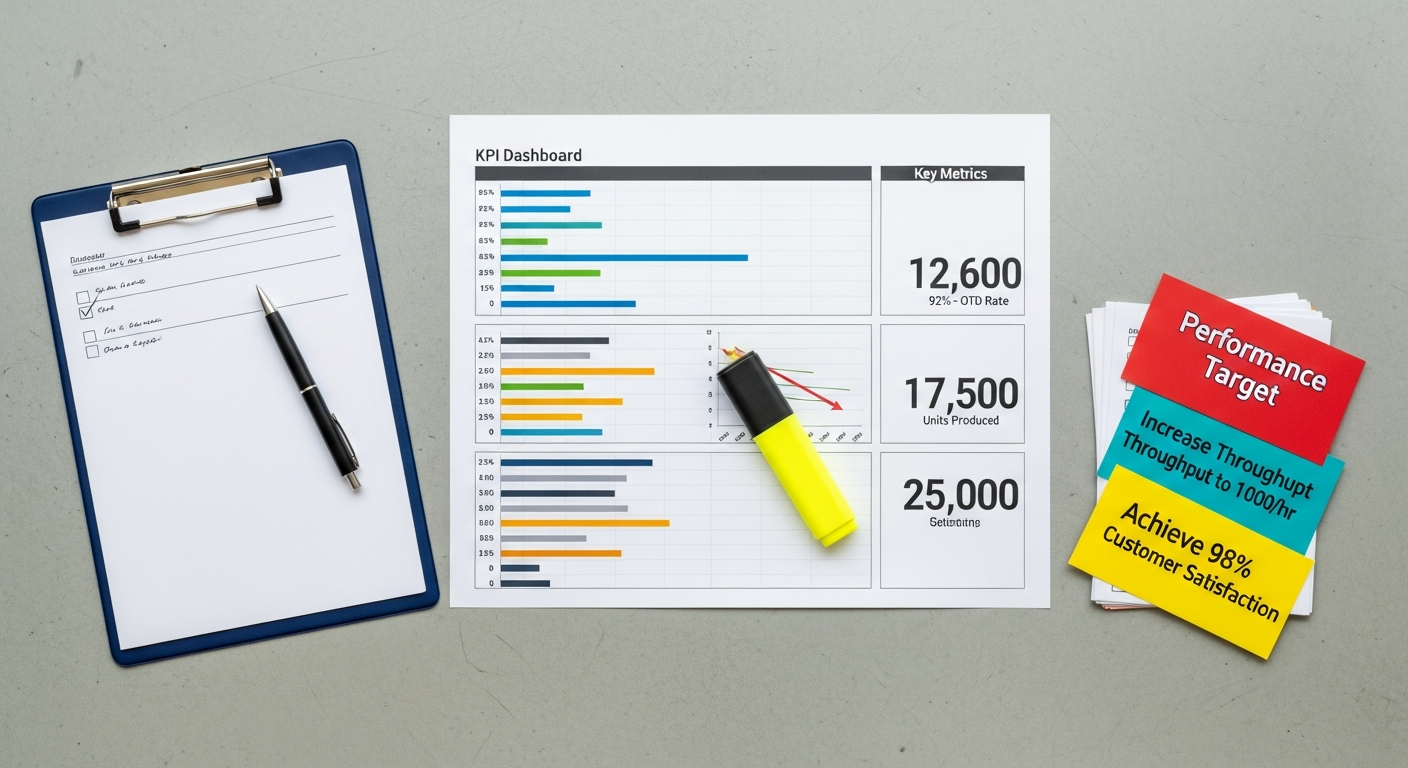
Measure and Monitor Progress: Establish clear metrics and key performance indicators (KPIs) to track the impact of Lean initiatives. Regularly review progress, celebrate successes, and identify areas that need further attention. Visual management tools can help make performance visible to everyone.
-
Sustain the Gains (Standardization and Audit): Once improvements are made, standardize the new processes to ensure consistency and prevent backsliding. Regular audits and reviews help ensure that Lean practices are maintained and continuously refined. This is where the “Sustain” in 5S becomes paramount.
-
Embrace Continuous Learning and Adaptability: View Lean as an ongoing journey of learning and adaptation. Encourage experimentation, learn from failures, and continuously seek new ways to improve. The principles of Kaizen are essential for maintaining this momentum and ensuring long-term success in an ever-changing industrial landscape.
By proactively addressing these challenges and adhering to best practices, organizations can successfully embed Lean Manufacturing into their operational DNA, driving sustained excellence and competitive advantage for years to come.
Frequently Asked Questions
Recommended Resources
Related reading: How To Reduce Screen Time Tips (Diaal News).
Learn more about this topic in Domestic Violence Resources For Families at Protect Families Protect Choices.
From Our Network
- state abortion laws 2025 (en Protectfamiliesprotectchoices)
- how to drink more water daily (en Diaalnews)