What is Laser Cutting in Manufacturing?
Modern industrial fabrication is continually seeking methods that offer unparalleled precision, speed, and material versatility. In this landscape, laser cutting in manufacturing stands out as a transformative, thermally-driven process. It leverages a focused, high-power laser beam to accurately cut, engrave, or mark materials for a myriad of industrial applications. This sophisticated technique has fundamentally reshaped production methodologies, enabling the fabrication of intricate designs with exceptional repeatability and efficiency across sectors ranging from heavy industry to microelectronics.
Laser cutting’s impact on contemporary production lines cannot be overstated. By delivering intense, coherent light energy, it enables contact-free material processing, which minimizes material distortion and eliminates tool wear. This technological leap contributes significantly to higher quality outputs, reduced waste, and faster turnaround times, making it an indispensable component of Industry 4.0 paradigms. Its ability to process a vast array of materials, from thin foils to thick plates, with superior edge quality, underscores its critical role in driving innovation and competitiveness in the global manufacturing sector.
What are the primary components of a typical laser cutting system?
An industrial laser cutting system is a complex integration of sophisticated technologies designed for precision and reliability. At its core, every system comprises several essential components:
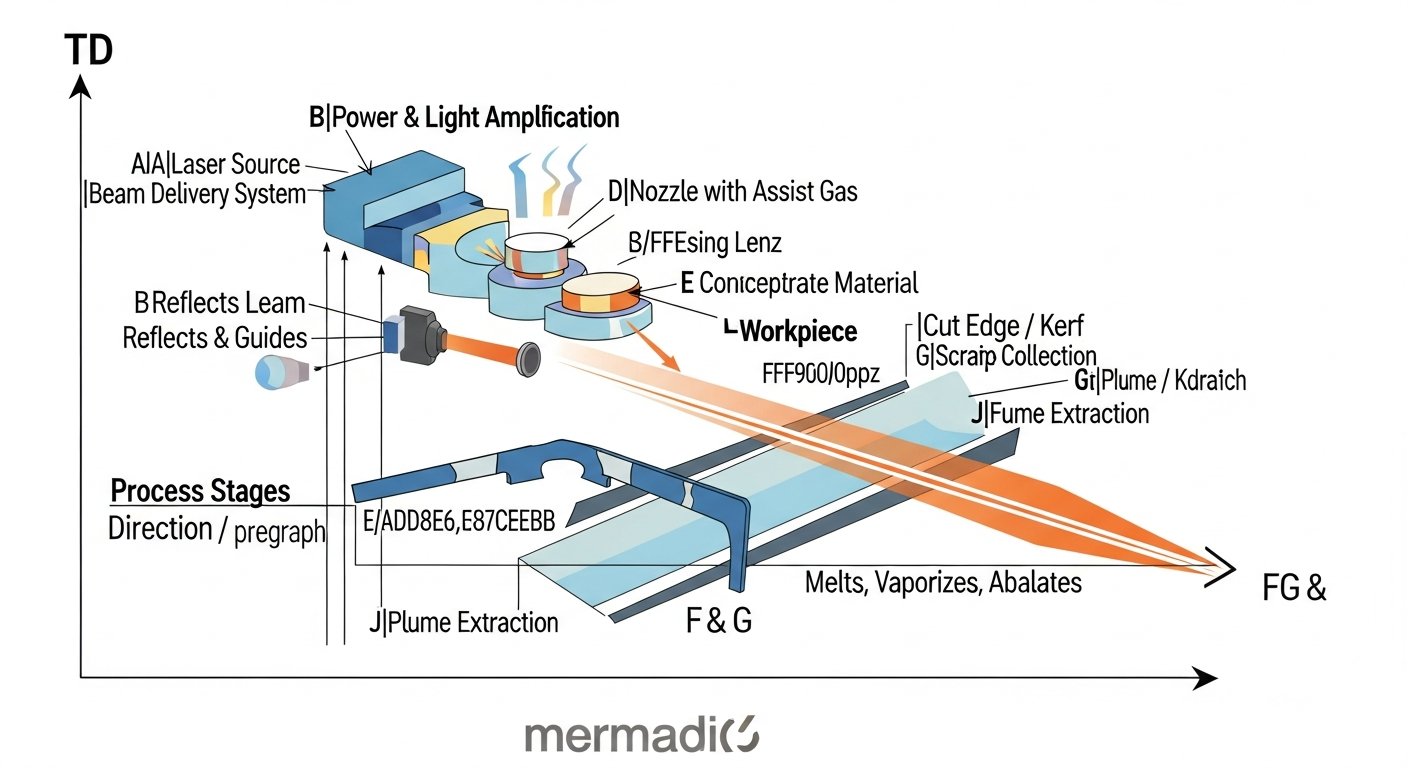
- Laser Resonator: This is the heart of the system, responsible for generating the intense laser beam. Common types include CO2, Fiber, and Nd:YAG resonators, each producing a beam with distinct characteristics.
- Beam Delivery System: A series of mirrors (for CO2 lasers) or fiber optics (for fiber lasers) precisely guides the laser beam from the resonator to the cutting head, maintaining its coherence and focus.
- Cutting Head: This component houses the focusing lens, which converges the laser beam to an extremely small, high-power density spot on the material surface. It also often includes a nozzle for assist gas delivery.
- Assist Gas System: Pressurized gases (e.g., oxygen, nitrogen, argon) are directed through the cutting head nozzle. These gases aid in expelling molten material from the kerf, cooling the cut zone, and sometimes assisting the exothermic cutting reaction.
- CNC (Computer Numerical Control) System: The brain of the operation, the CNC system interprets CAD designs and converts them into precise motion commands for the cutting head, controlling its path, speed, and laser parameters.
- Motion System: High-precision motors and guides (linear motors, ball screws, rack-and-pinion) move the cutting head or the workpiece along X, Y, and sometimes Z axes, executing the programmed cut path.
- Workpiece Table/Support: A robust, often perforated table or pallet system supports the material being cut and allows molten material and slag to drop away.
- Fume Extraction System: Crucial for safety and air quality, this system removes smoke, fumes, and particulate matter generated during the cutting process.
- Cooling System (Chiller): Lasers generate significant heat; a chiller circulates coolant to maintain optimal operating temperatures for the laser resonator and other critical components.
The Science Behind Industrial Laser Cutting
Understanding the fundamental physics governing laser-material interaction is paramount to appreciating the capabilities and limitations of industrial laser cutting. This sophisticated manufacturing process hinges on the precise delivery of energy, transforming solid material into a molten or vaporized state, allowing for intricate and clean separation. Building on the foundational understanding of laser system components, we delve into the core scientific principles that enable this high-precision fabrication method.
Laser-Material Interaction: Absorption, Melting, and Vaporization
The efficacy of precision laser fabrication stems from the highly localized and intense energy transfer from the laser beam to the material. When a collimated, monochromatic laser beam impacts a workpiece, its energy is absorbed by the material. The extent of this absorption depends on the material’s optical properties (reflectivity and absorption coefficient) at the specific laser wavelength. For instance, metals typically reflect a high percentage of infrared laser energy, requiring higher power densities to initiate cutting compared to some non-metals.
Once absorbed, the laser energy rapidly increases the material’s temperature in the focal spot. This intense heating leads to one or a combination of processes:
- Melting: The material quickly reaches its melting point, forming a localized pool of molten metal.
- Vaporization (Sublimation): With continued energy input, the material surpasses its vaporization temperature, turning directly from solid to gas (sublimation) or from liquid to gas. This creates a small, high-pressure plume of vapor that ejects material from the kerf.
- Chemical Reaction (Oxidation): For certain metals like mild steel, an exothermic reaction with an oxygen assist gas can significantly enhance the cutting process by generating additional heat, aiding in melting and material expulsion.
The rapid transition of material states, controlled by laser power, speed, and focus, is what creates the “cut” or kerf.
Controlling Precision: Kerf Width, HAZ, and Assist Gases
The hallmarks of advanced laser processing are its precision and minimal material distortion. Several factors are meticulously controlled to achieve these characteristics:
- Kerf Width: This refers to the width of the cut path. Industrial laser systems can achieve kerf widths typically ranging from 0.1mm to 0.5mm, depending on material type, thickness, and laser parameters. A narrower kerf allows for finer details and reduces material waste, which is crucial for maximizing yield from expensive sheet materials.
- Heat-Affected Zone (HAZ): Due to the thermal nature of laser cutting, a region around the cut edge experiences changes in its metallurgical properties or micro-structure. This is the HAZ. Modern laser systems are designed to minimize the HAZ through optimized power delivery, fast cutting speeds, and efficient cooling from assist gases, thereby preserving the material’s original properties and reducing post-processing needs.
- Assist Gases: Beyond expelling molten material, assist gases play critical roles in controlling cut quality and HAZ:
- Oxygen: Used for reactive cutting of mild steel. It creates an exothermic reaction, increasing cutting speed but can lead to an oxidized edge.
- Nitrogen: Used for “clean cutting” of stainless steel and aluminum. It provides a non-reactive environment, preventing oxidation and resulting in a brighter, dross-free edge, ideal for components requiring high cosmetic finish or subsequent welding.
- Argon: An inert gas, used for highly reactive materials like titanium, where even nitrogen could cause a reaction. It primarily serves to cool the cut zone and eject molten material.
[INLINE IMAGE 1: diagram showing a detailed cross-section of a laser cut, highlighting the laser beam, focal point, kerf width, and heat-affected zone (HAZ) with molten material expulsion via assist gas.]
Key Laser Technologies Driving Manufacturing Innovation
To fully appreciate the diverse capabilities and applications of laser cutting in manufacturing, it’s essential to differentiate between the primary laser technologies employed. Each offers distinct advantages for specific materials and production demands, reflecting decades of continuous innovation in laser machining for production. The choice of laser type significantly influences factors like cutting speed, material compatibility, operational costs, and the ultimate quality of the fabricated part.
| Laser Type | Wavelength (µm) | Material Compatibility | Typical Power Range (kW) | Beam Quality (M²) | Initial Cost (Relative) | Operational Cost (Relative) | Maintenance | HAZ Characteristics |
|---|---|---|---|---|---|---|---|---|
| CO2 Laser | 10.6 | Non-metals (plastics, wood, textiles), some metals (mild steel, SS to a degree) | 1 – 8 (up to 20 for specialized) | 1.5 – 2.5 | Medium | Medium-High (gas, optics) | Higher (optics cleaning, gas replenishment) | Generally larger due to longer wavelength absorption |
| Fiber Laser | 1.06 – 1.07 | Metals (steel, SS, aluminum, copper, brass, titanium) | 1 – 30+ | < 1.2 | High | Low (energy efficient, long diode life) | Lower (sealed, minimal optics) | Smaller, more localized due to high beam intensity |
| Nd:YAG Laser | 1.064 | Metals, especially for pulsed welding/drilling (older cutting tech) | 0.1 – 4 (average for cutting) | ~1.5 – 2.0 | Medium-Low (for older systems) | Medium (lamp replacement) | Medium (lamp replacement, cooling) | Variable, depending on pulsed vs. CW operation |
CO2 Lasers: Versatility for Non-Metals and Thicker Sections
CO2 lasers, utilizing a gas mixture (carbon dioxide, nitrogen, and helium) as the active medium, produce a laser beam in the far-infrared spectrum (typically 10.6 µm wavelength). This wavelength is readily absorbed by a wide array of non-metallic materials, making CO2 lasers highly versatile for cutting plastics (acrylic, polycarbonate), wood, textiles, paper, and composites. They are also adept at processing thicker sections of mild steel and stainless steel, albeit often with lower speeds and higher power consumption compared to fiber lasers for similar metal thicknesses.
The CO2 laser’s beam quality and wavelength allow for clean, smooth cuts on many materials. However, their beam delivery systems, which rely on a series of mirrors, require regular maintenance to ensure optimal performance. The energy efficiency of CO2 lasers is generally lower than fiber lasers, contributing to higher operational costs, especially in high-volume metal cutting applications.
Fiber Lasers: High Speed and Efficiency for Metals
Fiber lasers represent a significant advancement in automated laser cutting technology, particularly for metal processing. They generate a laser beam by pumping light through optical fibers doped with rare-earth elements (like ytterbium). The beam is then delivered directly to the cutting head via a flexible optical fiber, eliminating the need for complex mirror systems. This “solid-state” design results in several key advantages:
- Higher Efficiency: Fiber lasers boast electrical-to-optical conversion efficiencies of up to 40-50%, significantly reducing power consumption and operational costs.
- Superior Beam Quality: They produce a very small, highly focused beam spot (low M² value, typically <1.2), leading to finer kerf widths, faster cutting speeds, and excellent edge quality, especially for thin to medium-thick metals.
- Low Maintenance: The fully sealed, solid-state design with fiber optic delivery drastically reduces maintenance requirements, eliminating the need for mirror cleaning or gas replenishment (for the laser medium itself).
- Broad Metal Compatibility: Their shorter wavelength (~1.06 µm) is highly absorbed by a wide range of metals, including highly reflective materials like copper and brass, which are challenging for CO2 lasers.
Fiber lasers have become the dominant technology for high-speed, high-volume metal fabrication due to their efficiency, speed, and precision.
Nd:YAG Lasers and Emerging Solid-State Solutions
Neodymium-doped Yttrium Aluminum Garnet (Nd:YAG) lasers were among the first solid-state lasers used in industrial applications, operating at a wavelength of 1.064 µm. While still used for specific applications like welding, drilling, and marking, their role in cutting has largely been superseded by the more efficient and powerful fiber lasers. Older Nd:YAG systems often use flashlamps as pump sources, leading to lower efficiency and shorter lifespan compared to diode-pumped systems.
Beyond CO2 and fiber, the field of laser machining for production continues to evolve. Emerging solid-state laser technologies include:
- Diode Lasers: Directly convert electrical energy into laser light, offering high efficiency and compact designs. While historically lower power, advancements are pushing them into higher power ranges for cutting applications.
- Ultrafast Lasers (Pico- and Femtosecond Lasers): These lasers deliver extremely short pulses (picoseconds or femtoseconds). Their ultrashort pulse duration minimizes heat transfer to the surrounding material, allowing for “cold ablation” and virtually no HAZ, making them ideal for micro-machining, processing delicate materials, and creating extremely fine features in medical device production and electronics.
These advanced systems continually push the boundaries of precision laser fabrication, enabling new material processing capabilities and intricate geometries.
Material Compatibility and Advanced Processing Capabilities
One of the most compelling advantages of automated laser cutting technology is its extraordinary material versatility. From robust aerospace alloys to delicate medical-grade polymers, laser systems can precisely process an extensive range of materials, each requiring specific parameters and configurations to achieve optimal results. This section details the broad spectrum of materials compatible with various laser cutting technologies and the advanced capabilities they unlock for diverse industries.
Processing Metals: Steels, Aluminum, Titanium, and Exotics
Metals form the backbone of industrial manufacturing, and laser cutting excels in their precise fabrication.
- Mild Steel: Highly compatible with both CO2 and fiber lasers. Fiber lasers typically offer faster cutting speeds, especially for thinner gauges (up to 15-20mm), utilizing oxygen as an assist gas for a reactive exothermic cut. CO2 lasers are also effective, particularly for thicker sections, though often at slower speeds.
- Stainless Steel (e.g., 304, 316): Best processed with fiber lasers using nitrogen assist gas for a dross-free, bright, and non-oxidized edge. This is crucial for applications requiring hygiene, corrosion resistance, or subsequent welding without additional surface preparation. Fiber lasers can cut stainless steel up to 30mm thick.
- Aluminum Alloys (e.g., 5052, 6061): Challenging due to their high reflectivity and thermal conductivity. Fiber lasers, with their shorter wavelength and higher power density, are significantly more effective than CO2 lasers. Nitrogen assist gas prevents oxidation. Common thicknesses range from 1mm to 25mm.
- Copper and Brass: Historically difficult to cut due to extreme reflectivity at CO2 wavelengths. Fiber lasers, with their 1.06 µm wavelength, are far more efficient and safer for cutting these highly reflective materials, though high power is still required.
- Titanium Alloys (e.g., Ti-6Al-4V): Crucial for aerospace and medical applications. Fiber lasers with argon or nitrogen assist gas are preferred to prevent oxidation and maintain material properties, achieving high-quality cuts for thicknesses up to 10-15mm.
- Nickel Alloys (e.g., Inconel): Used in high-temperature applications. Fiber lasers provide excellent results, often with nitrogen, ensuring structural integrity.
Non-Metal Fabrication: Plastics, Composites, and Wood
While fiber lasers dominate metal processing, CO2 lasers remain the go-to for a vast array of non-metallic materials.
- Acrylic (PMMA): CO2 lasers produce a flame-polished, clear edge, making them ideal for signage, displays, and architectural models. Thicknesses up to 25mm are commonly cut.
- Polycarbonate: CO2 lasers can cut polycarbonate, but careful parameter control is needed to avoid discoloration or charring. Special consideration for fumes.
- ABS Plastic: CO2 lasers provide good cut quality, but fumes must be managed effectively.
- Plywood and MDF: CO2 lasers are excellent for cutting wood-based products for furniture, prototyping, and decorative items. The cut edge often has a slight charring that can be managed.
- Textiles and Leather: CO2 lasers are widely used for precision cutting of fabrics, natural and synthetic leathers, enabling intricate patterns with sealed edges (preventing fraying).
- Composites (e.g., Carbon Fiber Reinforced Polymer – CFRP): Challenging due to delamination and heat damage. While CO2 lasers can process some composites, specialized fiber or ultrafast lasers are increasingly used to minimize fiber damage and achieve cleaner cuts with reduced HAZ. Waterjet cutting is also a strong contender here.
- Rubber: CO2 lasers can cut various types of rubber, creating smooth, intricate shapes for gaskets, seals, and custom components.
[INLINE IMAGE 2: collage of intricate parts cut from various materials – a stainless steel gear, an acrylic sign, a titanium medical implant, and a carbon fiber component, showcasing diverse material processing capabilities.]
Diverse Applications of Laser Machining Across Industries
The pervasive adoption of manufacturing laser systems across a spectrum of industries is a testament to their unparalleled precision, efficiency, and versatility. From heavy industrial machinery to delicate consumer electronics, automated laser cutting technology has become a cornerstone of modern production, enabling innovative designs and streamlining complex fabrication processes. This section explores the profound impact of precision laser fabrication in key industrial sectors.
Precision Fabrication in Aerospace and Automotive
The aerospace and automotive sectors demand components with extremely tight tolerances, high strength-to-weight ratios, and consistent quality. Automated laser cutting technology meets these stringent requirements:
- Aerospace Engineering: Lasers are indispensable for cutting complex shapes from advanced materials such as titanium alloys (e.g., Ti-6Al-4V), high-nickel superalloys (e.g., Inconel), and carbon fiber reinforced polymers (CFRPs) used in aircraft frames, turbine blades, and engine components. The precision of laser cutting enables the fabrication of intricate parts with tolerances of ±0.05mm, crucial for aerodynamic efficiency and structural integrity. For example, cutting small holes or complex patterns in lightweight aluminum fuselage sections, or precision profiling of engine brackets.
- Automotive Manufacturing: From prototyping to high-volume production, laser cutting plays a pivotal role. It’s used for cutting vehicle chassis components, hydroformed parts, intricate dashboard elements, airbag deployment patterns, and exhaust system components. The speed and flexibility of laser systems allow for rapid design changes and customized production runs. For example, cutting high-strength steel for safety cages or producing aesthetic trim pieces with perfect edges.
Medical Device Production and Electronics Manufacturing
In industries where miniaturization, biocompatibility, and extreme precision are paramount, advanced laser processing offers solutions unmatched by traditional methods.
- Medical Device Production: Laser cutting is critical for fabricating micro-scale features in medical instruments, implants (e.g., stents, pacemakers, surgical tools), and diagnostic equipment. Biocompatible materials like stainless steel, Nitinol, and titanium are cut with exceptional accuracy and minimal HAZ, ensuring product performance and patient safety. For instance, creating intricate patterns on stent tubes with kerf widths as small as 20 micrometers.
- Electronics Manufacturing: The electronics industry relies on laser processing for cutting flexible PCBs, intricate components for smartphones, micro-sensors, and display screens. The non-contact nature of laser cutting prevents damage to delicate circuits and materials. Ultrafast lasers are increasingly used here to avoid thermal damage to sensitive electronic substrates.
General Fabrication and Architectural Design
Beyond high-tech industries, laser cutting applications in industry extend to a broad range of general fabrication and creative fields.
- General Metal Fabrication: Custom machine parts, brackets, enclosures, and structural components are rapidly produced with laser systems. The ability to cut diverse shapes from sheet metal without custom tooling significantly reduces lead times and costs for small to medium batch sizes.
- Signage and Display: Acrylics, metals, and wood are precisely cut to create illuminated signs, intricate logos, and display stands with crisp edges and fine details.
- Architectural Design and Art: Artists and architects utilize laser cutting to create intricate decorative panels, models, prototypes, and art installations from various materials, leveraging the technology’s ability to translate complex digital designs into physical forms.
- Appliance Manufacturing: From refrigerator panels to washing machine components, precision laser fabrication ensures accurate parts that fit seamlessly during assembly.
Advantages, Challenges, and Common Mistakes in Laser Fabrication
While automated laser cutting technology offers a wealth of benefits that have revolutionized modern production, like any advanced manufacturing process, it also presents specific challenges and areas where operational mistakes can diminish its effectiveness. A comprehensive understanding of both the strengths and potential pitfalls is crucial for optimizing laser cutting operations and maximizing return on investment.
Core Benefits of Automated Laser Processing
The adoption of manufacturing laser systems is driven by a compelling suite of advantages that address critical industrial needs:
- High Precision and Accuracy: Lasers can cut intricate shapes and fine features with exceptional dimensional accuracy (often within ±0.05mm), enabling the creation of complex parts with high repeatability.
- Speed and Efficiency: Particularly with modern fiber lasers, cutting speeds for various metals can reach up to 50m/min for thin gauge mild steel, drastically reducing production times compared to traditional methods.
- Material Versatility: A single laser system can process a wide range of materials, including metals, plastics, wood, and composites, offering flexibility in production.
- Minimal Heat-Affected Zone (HAZ): The concentrated energy and rapid processing minimize thermal distortion and metallurgical changes in the material adjacent to the cut, preserving material properties.
- Non-Contact Process: Eliminates tool wear, reducing consumable costs and maintenance. It also prevents material contamination or deformation that can occur with physical cutting tools.
- Reduced Material Waste: Narrow kerf widths and efficient nesting software minimize scrap material, leading to cost savings, especially with expensive alloys.
- Automation and Digital Integration: Easily integrates with CAD/CAM software and robotic systems, facilitating lights-out manufacturing and streamlining workflows.
- Superior Edge Quality: Often produces a clean, burr-free edge that requires little to no secondary finishing, saving time and labor.
Addressing the Limitations and Operational Hurdles
Despite its numerous advantages, precision laser fabrication is not without its limitations:
- High Initial Capital Investment: Industrial laser cutting systems, especially high-power fiber lasers, represent a significant upfront investment, which can be a barrier for smaller manufacturers.
- Material Thickness Limitations: While powerful, lasers have practical limits on the thickness of material they can efficiently cut. Beyond a certain point (e.g., 30mm for steel), other methods like plasma or waterjet cutting may become more cost-effective or faster.
- Material Reflectivity: Highly reflective materials (like copper and brass) can be challenging, requiring higher power and specific laser types (fiber) to cut safely and effectively.
- Perforation and Piercing Time: Piercing thicker materials can be a time-consuming process, sometimes taking longer than the actual cutting path.
- Safety Considerations: High-power lasers pose significant safety risks (eye damage, skin burns, fire hazards) if proper safety protocols and equipment (enclosures, interlocks) are not rigorously implemented.
- Energy Consumption: While fiber lasers are efficient, high-power systems still consume substantial electricity, impacting operational costs.
Common Mistakes to Avoid in Industrial Laser Cutting
Experienced operators and engineers often highlight several pitfalls that can undermine the efficiency and quality of laser cutting operations:
- Incorrect Parameter Settings: Using inappropriate laser power, cutting speed, focal point position, or assist gas pressure for a given material and thickness can lead to poor cut quality, excessive dross, or incomplete cuts. This is arguably the most frequent error.
- Neglecting Maintenance: Skipping regular cleaning of optics (especially for CO2 lasers), nozzle inspection, or cooling system checks can degrade beam quality, reduce cutting efficiency, and shorten component lifespan.
- Poor Material Handling and Nesting: Inefficient sheet utilization due to suboptimal nesting software or incorrect material loading leads to excessive scrap and wasted time. Material flatness and proper clamping are also critical.
- Inadequate Fume Extraction: Neglecting a robust fume extraction system can lead to health hazards for operators, contamination of optics, and poor cut quality due to particulate interference.
- Ignoring Safety Protocols: Complacency regarding laser safety (e.g., bypassing interlocks, not wearing proper eye protection) can result in severe injuries and regulatory non-compliance.
- Lack of Operator Training: Insufficiently trained operators may struggle with troubleshooting, advanced parameter adjustments, or identifying subtle signs of impending equipment issues, impacting productivity and quality.
Optimizing Laser Operations and Future Trends
To fully harness the potential of manufacturing laser systems, continuous optimization is essential. This involves not only refining current operational practices but also anticipating and integrating future technological advancements. As automated laser cutting technology continues to evolve, its integration with emerging digital tools and sustainable practices will further solidify its role as a cornerstone of industrial fabrication.
Strategies for Efficiency, Quality, and Cost-Effectiveness
Maximizing the performance and profitability of precision laser fabrication operations requires a multi-faceted approach:
- Parameter Tuning and Database Management: Develop and maintain a comprehensive database of optimized cutting parameters for various materials, thicknesses, and desired edge qualities. Regularly test and update these parameters as new materials or consumables become available.
- Advanced Nesting Software: Utilize sophisticated nesting algorithms to maximize material utilization, minimizing scrap. Dynamic nesting, which adapts to changing production needs, can further enhance efficiency.
- Automated Material Handling: Integrate automated loading and unloading systems (e.g., pallet changers, robotic loaders) to reduce manual labor, increase throughput, and enable lights-out operations.
- Preventive Maintenance Programs: Implement a rigorous schedule for cleaning optics, inspecting nozzles, checking gas lines, and calibrating the system. This proactive approach prevents unexpected downtime and ensures consistent beam quality.
- Assist Gas Management: Optimize assist gas selection (oxygen, nitrogen, argon) and pressure settings. Consider gas generators for nitrogen to reduce reliance on expensive bottled gas, improving cost-effectiveness.
- Real-time Monitoring and Feedback: Implement sensors and software to monitor critical cutting parameters (e.g., laser power, head height, gas flow) in real time. Use this data for immediate adjustments and long-term process improvement.
- Operator Training and Certification: Invest in continuous training for operators and technicians to ensure they are proficient in machine operation, troubleshooting, and safety protocols, adhering to industry standards like ISO 9001 for quality management.
The Future Landscape: AI, Automation, and New Horizons
The future of laser cutting in manufacturing is intrinsically linked to advancements in artificial intelligence, robotics, and sustainable practices.
- AI and Machine Learning Integration: AI algorithms will increasingly optimize cutting parameters in real time, compensating for material variations, nozzle wear, or environmental changes. Predictive maintenance, driven by AI, will minimize downtime by anticipating equipment failures. Machine vision systems will enhance quality control by identifying defects during or immediately after cutting.
- Enhanced Automation and Robotics: Fully automated cells, where robots handle material loading, unloading, part sorting, and even secondary operations (e.g., deburring, bending), will become more common, enabling greater lights-out manufacturing capabilities.
- Hybrid Manufacturing Processes: The integration of laser cutting with other processes like additive manufacturing (e.g., for creating custom supports or internal structures) or robotic welding will open new avenues for complex part fabrication.
- Ultrafast Lasers for Micro-Machining: Advancements in picosecond and femtosecond lasers will push the boundaries of micro-fabrication, enabling ultra-fine features with virtually no HAZ for electronics, medical devices, and advanced materials.
- Sustainable Manufacturing: Focus on energy-efficient laser sources, optimized gas usage, and comprehensive scrap metal recycling will contribute to more environmentally friendly production processes.
What are the critical safety considerations for laser cutting equipment?
The power and intensity of industrial laser systems necessitate rigorous safety protocols to protect personnel and prevent accidents. Critical safety considerations include:
- Eye Protection: The most significant hazard. Operators and anyone in the vicinity must wear approved laser safety eyewear specifically rated for the laser’s wavelength and power.
- Beam Enclosures: Laser systems should be enclosed to contain the laser beam, preventing accidental exposure. Interlocks on access panels prevent operation when the enclosure is open.
- Skin Protection: Direct or reflected laser beams can cause severe skin burns. Operators should wear appropriate clothing and gloves.
- Fume and Particulate Extraction: The cutting process generates smoke, fumes, and harmful particulates. A powerful, properly maintained fume extraction and filtration system is vital to ensure air quality and prevent respiratory issues.
- Fire Hazards: Some materials (e.g., plastics, wood) can ignite during laser cutting. Fire suppression systems, proper material handling, and assist gas management are crucial.
- Electrical Safety: Industrial lasers operate with high voltages, requiring proper grounding and adherence to electrical safety standards.
- Training and Procedures: All personnel operating or working near laser systems must receive comprehensive training on safe operation, emergency procedures, and the specific hazards associated with the equipment. Clear warning signs and restricted access areas are mandatory.
Sources & References
- Fabricators & Manufacturers Association (FMA). “The Fabricator.” Various articles on laser cutting technology and applications. Available at: https://www.thefabricator.com/
- Steen, W. M., & Mazumder, J. (2010). *Laser Material Processing* (4th ed.). Springer. (Focuses on the physics and applications of laser material interaction).
- Tugberk, K. (2023). “Semantic SEO: How to Create Content That Ranks by Understanding User Intent.” (Framework for content strategy and entity salience).
- American Welding Society (AWS). “Laser Beam Welding and Cutting.” (Technical standards and guidelines for laser processing). Available at: https://pubs.aws.org/
Reviewed by Marcus Thorne, Senior Technical Editor — Last reviewed: March 30, 2026
This deep dive into laser cutting in manufacturing highlights its pivotal role in shaping modern industrial practices. For a broader perspective on various production methodologies, explore our main category on [PILLAR LINK: Manufacturing Processes & Techniques].