
The Smart Factory Blueprint 2026: A Comprehensive Guide to Digital Transformation in Manufacturing
Defining the Smart Factory: Beyond Automation
At its essence, a Smart Factory is a manufacturing facility where machinery, equipment, systems, and products communicate and cooperate with each other, and with humans, in real-time. It’s a dynamic, self-optimizing system that leverages data to make intelligent, autonomous decisions, leading to unprecedented levels of operational efficiency, flexibility, and quality. This goes far beyond traditional automation, which typically involves programmable machines executing predefined tasks.
While conventional automation focuses on automating discrete processes, a Smart Factory orchestrates an entire ecosystem. It integrates Information Technology (IT) with Operational Technology (OT), bridging the gap between enterprise-level planning (ERP, MES) and shop-floor execution (PLCs, SCADA). Key pillars include:
* Connectivity: Ubiquitous, reliable communication networks enabling seamless data exchange between all assets.
* Data Analytics: The ability to collect, process, and derive actionable insights from vast quantities of operational data.
* Artificial Intelligence (AI) & Machine Learning (ML): Algorithms that learn from data to predict outcomes, optimize processes, and enable autonomous decision-making.
* Cyber-Physical Systems (CPS): The integration of computing and physical processes, where embedded computers and networks monitor and control physical processes, with feedback loops.
* Digital Twin Technology: Virtual representations of physical assets, processes, or systems, updated in real-time with operational data, allowing for simulation, analysis, and optimization without impacting physical production.
Unlike a traditional automated plant that reacts to predefined conditions, a Smart Factory anticipates needs, adapts to changes, and even self-corrects. It fosters a proactive manufacturing environment where predictive maintenance replaces reactive repairs, prescriptive analytics guides process improvements, and production lines can dynamically reconfigure to meet fluctuating demand or customize products on the fly. This shift from automation to autonomous intelligence is the fundamental differentiator.
Core Technologies Powering the Smart Factory
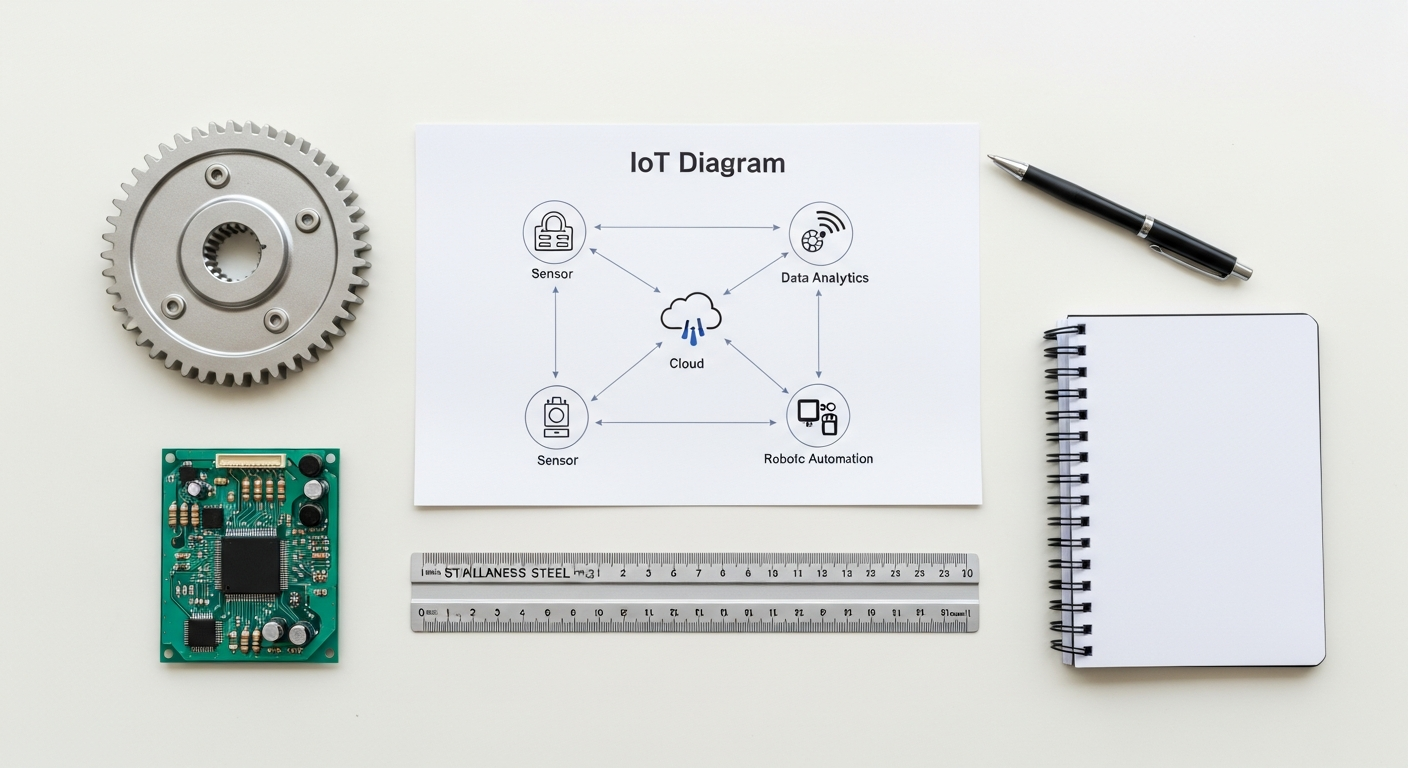
Building a Smart Factory requires a robust technological foundation. The integration of several advanced technologies creates the synergistic effects that define these intelligent environments.
Industrial Internet of Things (IIoT)
The IIoT forms the nervous system of the Smart Factory. It involves a network of sensors, actuators, and smart devices embedded in machinery, tools, and products, all connected to a central system or cloud. These devices continuously collect vast amounts of data on machine performance, environmental conditions, product quality, and more.
* Technologies: Advanced sensors (temperature, pressure, vibration, vision), RFID tags, gateways, industrial wireless networks (Wi-Fi 6E, 5G, LoRaWAN), and communication protocols like OPC UA (for secure, platform-independent data exchange) and MQTT (lightweight messaging for constrained devices).
* Benefits: Real-time visibility into operations, predictive maintenance capabilities, optimized resource utilization, and enhanced traceability.
Artificial Intelligence & Machine Learning (AI/ML)
AI and ML are the brains of the Smart Factory, transforming raw IIoT data into actionable intelligence.
* Applications:
* Predictive Maintenance: ML algorithms analyze sensor data to predict equipment failures before they occur, reducing downtime and maintenance costs.
* Quality Control: AI-powered vision systems detect defects with higher accuracy and speed than human inspection.
* Process Optimization: ML models identify optimal parameters for production processes, improving yield and efficiency.
* Generative AI: Emerging applications include AI-assisted design, rapid prototyping, and optimizing production schedules based on complex variables.
* Benefits: Enhanced decision-making, increased efficiency, improved product quality, and reduced operational risks.
Digital Twins
A Digital Twin is a virtual replica of a physical asset, process, or even an entire factory. It’s updated in real-time with data from its physical counterpart via IIoT sensors.
* Functionality: Allows engineers and decision-makers to monitor performance, simulate “what-if” scenarios, test changes, and predict future behavior without disrupting physical operations. For example, a Digital Twin of a production line can simulate the impact of a new product introduction or a machine retooling.
* Benefits: Optimized asset performance, predictive analytics, reduced prototyping costs, faster time-to-market, and improved operational planning.
Advanced Robotics & Collaborative Robots (Cobots)
Robotics continues to evolve, moving beyond repetitive tasks to intelligent, adaptable, and collaborative applications.
* Advanced Robotics: Highly precise and fast robots for tasks like welding, assembly, and material handling, often integrated with AI for vision-guided navigation and manipulation.
* Collaborative Robots (Cobots): Designed to work safely alongside human operators without cages, performing tasks that augment human capabilities, such as intricate assembly, quality inspection, or ergonomic assistance.
* Autonomous Guided Vehicles (AGVs) & Autonomous Mobile Robots (AMRs): Intelligent vehicles that transport materials within the factory, optimizing logistics and reducing manual labor. AMRs, unlike AGVs, can navigate dynamically without fixed routes.
* Benefits: Increased production speed, improved accuracy, enhanced safety, reduced labor costs, and greater operational flexibility.
Cloud & Edge Computing
Data processing and storage are critical for Smart Factories, handled by a hybrid approach.
* Edge Computing: Processing data closer to the source (on the factory floor) reduces latency for critical real-time decisions, minimizes network bandwidth usage, and enhances cybersecurity by localizing sensitive data.
* Cloud Computing: Provides scalable storage and computational power for large-scale data analytics, AI model training, and integration across multiple sites. It enables robust data backup, disaster recovery, and global accessibility.
* Benefits: Real-time responsiveness, robust data management, scalability, and improved data security posture.
Additive Manufacturing (3D Printing)
While not directly part of the real-time operational layer, additive manufacturing (AM) significantly contributes to the agility and innovation of a Smart Factory.
* Applications: Rapid prototyping, production of custom tools and fixtures on demand, creation of complex parts with optimized designs, and decentralized manufacturing for supply chain resilience.
* Benefits: Accelerated product development, reduced lead times, cost-effective customization, and enhanced supply chain flexibility.
Augmented Reality (AR) & Virtual Reality (VR)
AR/VR technologies enhance human interaction within the Smart Factory.
* Applications:
* Maintenance & Repair: AR overlays digital instructions onto physical equipment, guiding technicians through complex procedures.
* Training: VR simulations provide immersive, risk-free environments for operator training.
* Design & Planning: VR allows engineers to virtually walk through factory layouts or product designs before physical implementation.
* Benefits: Improved training effectiveness, reduced human error, faster maintenance, and enhanced design collaboration.
Cybersecurity
With increased connectivity comes increased vulnerability. Robust cybersecurity is non-negotiable for Smart Factories.
* Focus: Protecting IIoT devices, OT networks, data integrity, and intellectual property. This involves implementing solutions for anomaly detection, access control, network segmentation, and endpoint protection.
* Standards: Adherence to standards like ISA/IEC 62443 series for industrial automation and control systems security is critical.
* Benefits: Protection against data breaches, operational disruptions, intellectual property theft, and ensuring business continuity.
Building Your Smart Factory: A Phased Implementation Strategy
Transitioning to a Smart Factory is a journey, not a single project. A phased, strategic approach minimizes risk, maximizes ROI, and ensures sustainable transformation.
Phase 1: Assessment & Strategy Definition
Before deploying any technology, a thorough understanding of current operations and future goals is paramount.
* Current State Analysis: Conduct a comprehensive audit of existing infrastructure, processes, and digital maturity. Identify bottlenecks, inefficiencies, and areas with the highest potential for improvement. Tools like the ACATECH Industrie 4.0 Maturity Index can provide a structured assessment.
* Define Clear KPIs: Establish measurable objectives. What specific improvements are you targeting? (e.g., reduce OEE downtime by 15%, increase First Pass Yield by 5%, decrease energy consumption by 10%).
* Stakeholder Alignment & Change Management: Secure buy-in from leadership, IT, OT, and shop-floor personnel. Develop a robust change management strategy to address potential resistance and foster a culture of digital adoption.
* Pilot Project Identification: Select a small, manageable project with clear, measurable outcomes to demonstrate early success and build momentum. Focus on a critical pain point or an area with high visibility.
Phase 2: Connectivity & Data Foundation
This phase establishes the bedrock for all subsequent Smart Factory initiatives.
* Robust Network Infrastructure: Deploy high-bandwidth, low-latency industrial networks such as 5G, Time-Sensitive Networking (TSN), or industrial Ethernet. Ensure secure, reliable communication across the entire facility.
* IIoT Sensor & Gateway Deployment: Strategically install sensors on critical machinery and processes to collect relevant data. Implement IIoT gateways to aggregate, filter, and transmit data securely to analytics platforms.
* Data Lake/Warehouse Implementation: Establish a scalable data infrastructure to store both structured and unstructured data from various sources. This could be on-premises, cloud-based, or a hybrid model.
* Data Governance & Quality Frameworks: Define clear policies for data collection, storage, security, access, and quality. Ensure data accuracy and consistency, which are vital for reliable analytics.
Phase 3: Analytics & Intelligence Integration
With data flowing, the focus shifts to extracting value and building intelligence.
* AI/ML Platform Implementation: Deploy platforms capable of processing large datasets, training ML models, and deploying them for real-time inference. This could involve cloud-based AI services or edge AI solutions.
* Digital Twin Development: Begin creating Digital Twins for critical assets (e.g., a specific machine, a production cell) or processes. Start with simpler models and gradually increase complexity.
* System Integration: Integrate disparate systems like Manufacturing Execution Systems (MES), Enterprise Resource Planning (ERP), Product Lifecycle Management (PLM), and Supply Chain Management (SCM) to create a unified data view. Leverage standard APIs and middleware for seamless communication.
* Data Visualization & Dashboards: Develop intuitive dashboards and reporting tools to present real-time KPIs and actionable insights to operators, supervisors, and management.
Phase 4: Automation & Optimization
This phase leverages the intelligence gathered to drive autonomous operations and continuous improvement.
* Advanced Robotics & Autonomous Systems Deployment: Integrate and deploy advanced robots, cobots, AGVs, and AMRs to automate material handling, assembly, quality inspection, and other labor-intensive or hazardous tasks.
* Closed-Loop Control Systems: Implement systems where AI/ML models directly feed optimization recommendations back into machine controls, enabling self-correcting and self-optimizing processes (e.g., dynamic adjustment of machine parameters based on real-time quality data).
* Predictive & Prescriptive Maintenance: Fully operationalize predictive maintenance programs, moving from scheduled or reactive maintenance to condition-based and predictive interventions. Implement prescriptive analytics to recommend optimal actions.
* Continuous Improvement Cycles: Establish agile methodologies for continuous monitoring, evaluation, and refinement of Smart Factory systems. Regularly review KPIs and identify new opportunities for optimization.
Cybersecurity Integration Across All Phases
Cybersecurity is not an afterthought but an integral part of every phase. From network design to device deployment and data management, security measures must be embedded from day one, adhering to standards like ISA/IEC 62443. This includes implementing robust access controls, network segmentation, threat detection systems, and regular security audits.
Key Performance Indicators (KPIs) and Metrics for Smart Factories
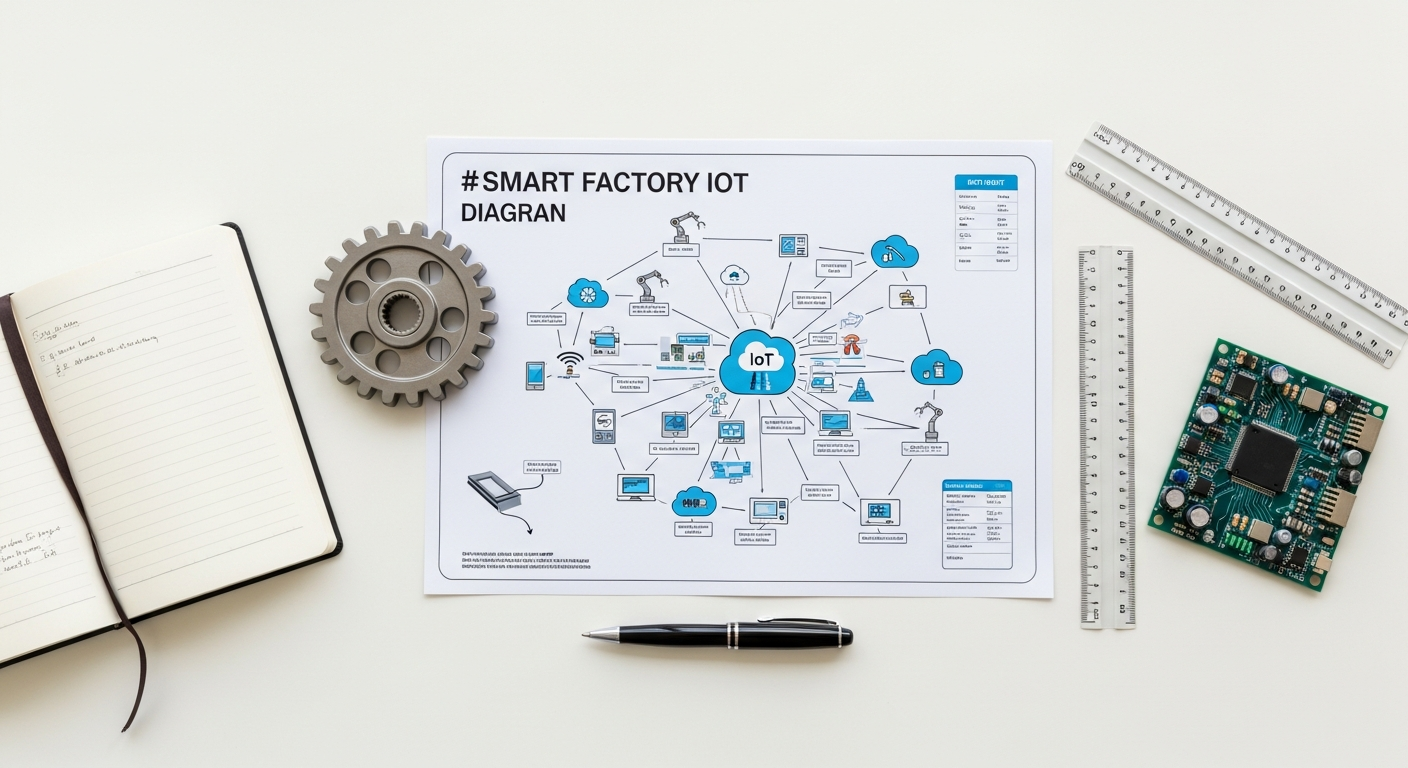
The power of a Smart Factory lies in its ability to provide real-time, granular data, enabling precise measurement and continuous improvement of critical KPIs.
* Operational Efficiency:
* Overall Equipment Effectiveness (OEE): A composite measure of availability, performance, and quality. Smart Factories drive OEE improvements through predictive maintenance, optimized scheduling, and real-time quality control.
* Cycle Time: The time it takes to produce one unit or complete a process. IIoT and AI enable identification of bottlenecks and process optimization to reduce cycle times.
* Throughput: The rate at which products are produced. Real-time monitoring and dynamic scheduling boost throughput.
* Quality:
* First Pass Yield (FPY): The percentage of products that meet quality standards without rework. AI-powered vision systems and in-process monitoring significantly enhance FPY.
* Defect Rate/Scrap Rate: The percentage of products with defects or those that must be discarded. Smart factories aim for near-zero defects through continuous process adjustments.
* Maintenance:
* Mean Time Between Failures (MTBF): The average time a system or component functions before failing. Predictive maintenance aims to extend MTBF.
* Mean Time To Repair (MTTR): The average time required to repair a failed component. Predictive maintenance, AR-guided repairs, and optimized spare parts management reduce MTTR.
* Predictive Maintenance Accuracy: A new metric measuring the success rate of predicting failures before they occur.
* Supply Chain:
* On-Time Delivery (OTD): The percentage of orders delivered on or before the promised date. Smart factories improve OTD through optimized production scheduling and real-time inventory visibility.
* Inventory Turns: How many times inventory is sold or used over a period. Real-time demand forecasting and production agility improve inventory efficiency.
* Lead Time: The time from order placement to delivery. Optimized production and logistics reduce overall lead times.
* Sustainability:
* Energy Consumption per Unit: Smart factories can precisely monitor and optimize energy usage across all assets.
* Waste Reduction: AI-driven process optimization minimizes material waste and rework.
* Financial:
* Return on Investment (ROI): Crucial for justifying Smart Factory investments, measured by improvements in efficiency, quality, and cost reduction.
* Total Cost of Ownership (TCO): Evaluates the full lifecycle cost of Smart Factory technologies, including implementation, operation, and maintenance.
Standards and Best Practices for Smart Factory Implementation
Adherence to established standards and best practices is crucial for ensuring interoperability, scalability, security, and long-term viability of your Smart Factory initiatives.
* Interoperability & Data Exchange:
* OPC UA (Open Platform Communications Unified Architecture): A machine-to-machine communication protocol for industrial automation, providing secure and reliable data exchange across different platforms and vendors. It’s foundational for IT/OT convergence.
* MQTT (Message Queuing Telemetry Transport): A lightweight messaging protocol ideal for IIoT devices with limited resources, enabling efficient data transfer.
* MTConnect: An open, royalty-free manufacturing data standard that fosters greater interoperability between manufacturing equipment and software applications.
* Cybersecurity:
* ISA/IEC 62443 Series: A comprehensive set of standards addressing cybersecurity for industrial automation and control systems (IACS). It provides a framework for securing IACS from design to operation, covering policies, procedures, and technical requirements.
* Data Models & KPIs:
* ISO 22400 (Manufacturing Operations Management – Key Performance Indicators): Provides a standardized framework for defining and calculating KPIs in manufacturing operations, ensuring consistency and comparability.
* Reference Architectures:
* RAMI 4.0 (Reference Architectural Model for Industry 4.0): Developed by Germany’s Plattform Industrie 4.0, RAMI 4.0 provides a three-dimensional architectural model for understanding and implementing Industry 4.0 concepts, ensuring a holistic approach.
* Safety:
* ISO 13849 (Safety of Machinery – Safety-related parts of control systems): Specifies requirements for the design and integration of safety-related parts of control systems, crucial for robotics and automated systems.
* ANSI/RIA R15.06 (Industrial Robots and Robot Systems – Safety Requirements): An American national standard providing guidelines for the safe design, construction, installation, safeguarding, maintenance, and operation of industrial robots and robot systems.
* Sustainability:
* ISO 14001 (Environmental Management Systems): While not specific to Smart Factories, its principles for managing environmental responsibilities can be integrated into Smart Factory design to optimize resource consumption and waste reduction.
By leveraging these standards, manufacturers can build robust, future-proof Smart Factories that are secure, scalable, and capable of integrating diverse technologies and systems efficiently.