What is Industry 4.0? The Dawn of Smart Manufacturing
Industry 4.0 represents the fourth major industrial revolution, characterized by the digitalization and integration of industrial processes. Unlike previous revolutions that focused on mechanization, mass production, and computerization, Industry 4.0 is about creating a “smart factory” where machines, systems, and people communicate and collaborate in real time. It’s a holistic approach that connects the entire value chain, from suppliers to customers, enabling a level of transparency and control previously unimaginable.
At its heart, Industry 4.0 is driven by the idea of cyber-physical systems, which are integrations of computation, networking, and physical processes. These systems monitor physical processes, create a virtual copy of the physical world, and make decentralized decisions. Through the Internet of Things (IoT), these systems can communicate and cooperate with each other and with humans in real time. This interconnectedness allows for highly flexible and adaptive production processes, capable of responding instantly to changes in demand, material availability, or equipment status.
The vision of Industry 4.0 is to create manufacturing environments that are:
- Connected: All elements of production—machines, products, and people—are linked and communicate seamlessly.
- Smart: Systems can analyze data, learn from experience, and make autonomous decisions.
- Predictive: Maintenance can be scheduled before failures occur, and quality issues can be prevented.
- Flexible: Production lines can be quickly reconfigured to produce customized products or adapt to new designs.
- Efficient: Resources are optimized, waste is minimized, and productivity is maximized.
This revolution is not just about adopting new technologies; it’s about fundamentally rethinking manufacturing processes and business models. It promises to unlock new levels of productivity, reduce costs, enhance product quality, and enable unprecedented levels of customization, all while fostering a safer and more sustainable industrial environment.
Key Technologies Driving Industry 4.0 Explained
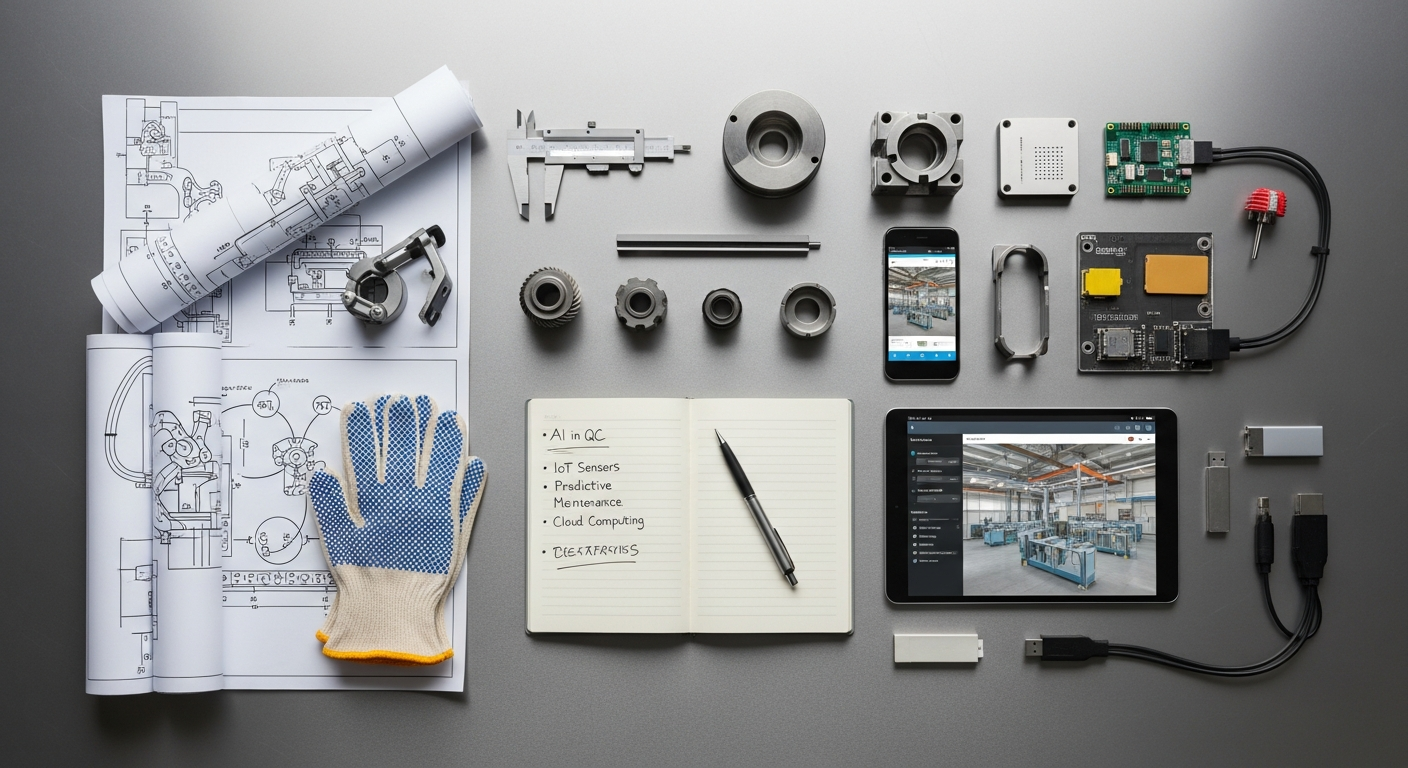
The transformation brought about by Industry 4.0 is underpinned by a suite of powerful, interconnected technologies. Understanding these core components is crucial for any organization looking to navigate and thrive in the era of smart manufacturing. Each technology plays a distinct yet collaborative role in creating the intelligent, automated, and interconnected factories of the future.
The Internet of Things (IoT) in Manufacturing
The Internet of Things (IoT) is perhaps the most foundational technology of Industry 4.0. It involves embedding sensors, software, and other technologies into physical objects—machines, vehicles, buildings, and other items—that connect and exchange data with other devices and systems over the internet. In manufacturing, IoT sensors are deployed on everything from individual machine components to entire production lines, collecting vast amounts of real-time data on performance, status, environmental conditions, and more.
- Real-time Monitoring: IoT enables continuous monitoring of equipment health, operational efficiency, and energy consumption.
- Predictive Maintenance: By analyzing sensor data for anomalies, systems can predict equipment failures before they occur, allowing for proactive maintenance and minimizing downtime.
- Asset Tracking: Real-time location and status of tools, materials, and finished goods throughout the factory and supply chain.
- Quality Control: Sensors can detect deviations in product specifications or environmental conditions that might impact quality, allowing for immediate corrective action.
The insights derived from IoT data are instrumental in optimizing production processes, reducing operational costs, and improving overall equipment effectiveness (OEE).
Cyber-Physical Systems (CPS)
Cyber-Physical Systems (CPS) are the backbone of smart factories, integrating computation, networking, and physical processes. They are essentially advanced IoT systems that go beyond mere data collection to actively control physical processes. CPS monitor the physical world, create a digital twin (a virtual representation), and then use this digital twin to make informed, decentralized decisions that impact the physical world.
- Autonomous Control: CPS enable machines and systems to operate with a high degree of autonomy, making decisions based on real-time data without constant human intervention.
- Adaptive Production: They allow production lines to dynamically reconfigure themselves in response to changing product requirements or production schedules.
- Human-Machine Interaction: CPS facilitate more intuitive and efficient interaction between human operators and complex machinery.
These systems are critical for achieving the flexibility and responsiveness that characterize Industry 4.0, transforming static production lines into dynamic, self-optimizing ecosystems.
Big Data and Analytics
The proliferation of IoT devices and CPS generates an unprecedented volume, velocity, and variety of data – known as Big Data. To extract meaningful insights from this deluge, sophisticated Analytics tools are essential. Big Data analytics involves collecting, processing, and analyzing massive datasets to uncover patterns, trends, and associations, especially those relating to human behavior and interactions.
- Operational Optimization: Analyzing production data can reveal bottlenecks, inefficiencies, and opportunities for process improvement.
- Supply Chain Optimization: Predictive analytics can forecast demand, optimize inventory levels, and enhance logistics.
- Root Cause Analysis: Rapidly identifying the underlying causes of quality defects or equipment failures.
- Personalized Production: Data from customer preferences can drive highly customized manufacturing processes.
Effective Big Data and analytics capabilities are paramount for making data-driven decisions that enhance efficiency, reduce waste, and improve decision-making across the entire manufacturing enterprise.
Artificial Intelligence (AI) and Machine Learning (ML)
Artificial Intelligence (AI) and its subset, Machine Learning (ML), are the engines that turn raw data into actionable intelligence. AI encompasses systems that can perceive their environment, learn, reason, and act to achieve goals, often mimicking human cognitive functions. ML allows systems to learn from data without being explicitly programmed, improving their performance over time.
- Predictive Quality: ML algorithms can identify subtle patterns in production data that indicate potential quality issues, allowing for intervention before defects occur.
- Optimized Scheduling: AI can dynamically optimize production schedules, material flow, and resource allocation in complex manufacturing environments.
- Robotics and Automation: AI powers advanced robotics, enabling them to perform more complex tasks, adapt to changing environments, and learn from experience.
- Generative Design: AI can rapidly generate and evaluate thousands of design options based on specified criteria, accelerating product development.
AI and ML transform factories from reactive to proactive, enabling autonomous decision-making, intelligent automation, and continuous optimization.
Cloud Computing
Cloud Computing provides the scalable infrastructure necessary to store, process, and analyze the vast amounts of data generated by Industry 4.0 technologies. It offers on-demand availability of computer system resources, especially data storage and computing power, without direct active management by the user.
- Scalability: Easily scale computing resources up or down to meet fluctuating demands, without significant upfront investment.
- Accessibility: Data and applications can be accessed from anywhere, at any time, facilitating remote monitoring and distributed operations.
- Cost-Efficiency: Reduces the need for expensive on-premise hardware and IT maintenance staff.
- Data Integration: Centralizes data from disparate sources, enabling a unified view of operations across multiple factories or supply chain partners.
The cloud acts as the central nervous system for Industry 4.0, enabling the seamless flow and processing of information that is critical for real-time decision-making and collaboration.
Additive Manufacturing (3D Printing)
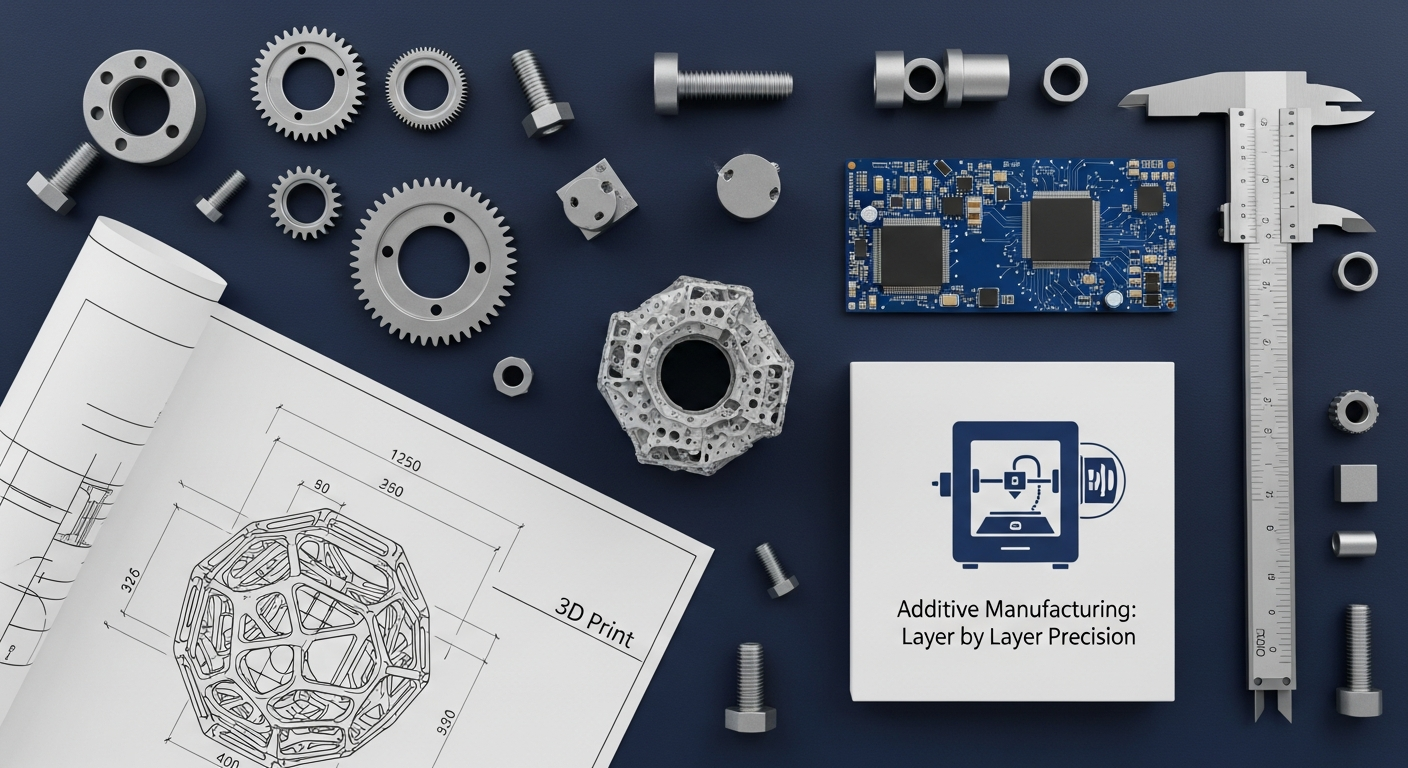
Additive Manufacturing, commonly known as 3D Printing, refers to processes that create a three-dimensional object by adding successive layers of material. Unlike traditional subtractive manufacturing (e.g., machining), additive manufacturing builds objects directly from digital 3D designs, layer by layer.
- Rapid Prototyping: Quickly create physical prototypes for design validation and iteration.
- Customization and Personalization: Produce highly customized parts or products on demand, even in small batches, without expensive tooling.
- Complex Geometries: Create intricate parts with internal structures that are impossible or impractical with conventional methods.
- On-demand Production: Manufacture spare parts or specialized tools precisely when needed, reducing inventory and lead times.
- Material Efficiency: Reduces material waste compared to subtractive methods, aligning with sustainable manufacturing goals.
Additive manufacturing significantly enhances design flexibility, accelerates product development cycles, and enables decentralized, localized production, revolutionizing how parts are designed and produced.
Advanced Robotics and Collaborative Robots (Cobots)
Robotics has long been a staple in manufacturing, but Industry 4.0 brings forth a new generation of Advanced Robotics and, crucially, Collaborative Robots (Cobots). These robots are more intelligent, versatile, and capable of working safely alongside human operators.
- Increased Automation: Automating repetitive, dangerous, or precise tasks, freeing human workers for more complex roles.
- Flexibility: Advanced robots can be easily reprogrammed and reconfigured for different tasks, adapting to varying production requirements.
- Human-Robot Collaboration: Cobots are designed to work safely and efficiently in shared workspaces with humans, enhancing productivity and ergonomic conditions.
- Precision and Consistency: Performing tasks with high accuracy and repeatability, leading to improved product quality.
These advanced robotic systems are key to increasing productivity, improving safety, and enabling greater flexibility on the factory floor, particularly for tasks that require both precision and adaptability.
Augmented Reality (AR) and Virtual Reality (VR)
Augmented Reality (AR) overlays digital information onto the real world, enhancing human perception and interaction. Virtual Reality (VR), on the other hand, creates entirely immersive simulated environments. Both technologies have significant applications in Industry 4.0.
- Training and Simulation: VR can create realistic training environments for complex machinery or dangerous procedures, reducing risks and costs.
- Maintenance and Repair: AR overlays digital schematics, instructions, or sensor data onto physical equipment, guiding technicians through maintenance tasks.
- Product Design and Prototyping: VR allows engineers to virtually explore and interact with product designs before physical prototypes are made.
- Remote Assistance: AR enables remote experts to guide on-site technicians through complex operations, reducing travel time and costs.
AR and VR enhance human capabilities, improve training, streamline maintenance, and accelerate design and development processes.
Cybersecurity
As manufacturing systems become increasingly interconnected and rely heavily on data, Cybersecurity emerges as a critical component of Industry 4.0. Protecting industrial control systems (ICS), operational technology (OT) networks, and sensitive data from cyber threats is paramount to prevent disruptions, intellectual property theft, and safety hazards.
- Data Protection: Securing sensitive manufacturing data, including designs, production processes, and customer information.
- System Integrity: Protecting control systems from malicious attacks that could disrupt production or cause physical damage.
- Compliance: Ensuring adherence to industry regulations and data privacy laws.
- Resilience: Building robust defenses to minimize the impact of successful attacks and ensure rapid recovery.
Robust cybersecurity measures are non-negotiable for maintaining trust, ensuring operational continuity, and safeguarding the intellectual and physical assets of smart factories.
Digital Twins
A Digital Twin is a virtual representation of a physical object, system, or process. It’s a dynamic, real-time replica that collects data from its physical counterpart via IoT sensors, allowing for continuous monitoring, simulation, and analysis. This virtual model evolves with its physical twin throughout its lifecycle.
- Performance Optimization: Simulating different operational scenarios to identify the most efficient settings without disrupting physical production.
- Predictive Maintenance: Analyzing real-time data from the physical asset to predict potential failures and schedule proactive maintenance.
- Product Lifecycle Management: Tracking a product from design through manufacturing, operation, and even end-of-life, providing insights for continuous improvement.
- Process Simulation: Optimizing entire production lines or factory layouts in a virtual environment before implementing changes in the physical world.
Digital Twins provide an invaluable tool for understanding, predicting, and optimizing the behavior of complex manufacturing assets and processes, significantly reducing risks and costs associated with physical experimentation.
The Benefits of Embracing Industry 4.0
Enhanced Productivity and Efficiency
One of the most immediate and tangible benefits is a significant boost in productivity and operational efficiency. By automating repetitive tasks, optimizing machine performance through predictive maintenance, and streamlining workflows with real-time data, companies can produce more with fewer resources. This includes reduced downtime, optimized energy consumption, and faster throughput, directly impacting the bottom line.
Improved Quality and Reduced Waste
Industry 4.0 enables unprecedented levels of quality control. Real-time monitoring and analytics can detect subtle deviations in processes or materials, allowing for immediate corrective action before defects proliferate. This proactive approach leads to a reduction in scrap, rework, and warranty claims, contributing to higher product quality and significant cost savings. The ability to track products throughout their lifecycle also enhances traceability and accountability.
Greater Agility and Flexibility
The interconnected nature of Industry 4.0 systems allows factories to be far more agile and flexible. Production lines can be quickly reconfigured to switch between different product variants, accommodate smaller batch sizes, or even facilitate mass customization. This responsiveness is crucial in today’s rapidly changing markets, enabling manufacturers to adapt swiftly to evolving customer demands and market trends without extensive retooling or delays.
Cost Reduction
While initial investments in Industry 4.0 technologies can be substantial, the long-term cost reductions are significant. These savings come from various sources: reduced energy consumption, optimized inventory levels (due to better demand forecasting and on-demand production), minimized downtime, lower labor costs for repetitive tasks, and decreased waste. The predictive capabilities inherent in Industry 4.0 also prevent costly equipment failures and quality incidents.
Enhanced Customer Experience
Industry 4.0 facilitates greater product customization and faster delivery times, directly translating to an improved customer experience. Manufacturers can better understand customer needs through data analytics and tailor products accordingly. The ability to produce bespoke items efficiently and respond rapidly to market shifts fosters stronger customer loyalty and opens up new market opportunities.
Increased Safety and Sustainability
By automating dangerous tasks and leveraging AR/VR for training, Industry 4.0 significantly enhances workplace safety. Furthermore, optimized resource utilization, reduced waste, and more efficient energy consumption contribute to more sustainable manufacturing practices. The ability to monitor and manage environmental impact in real time helps companies meet regulatory requirements and achieve their sustainability goals.
Challenges and Considerations in Industry 4.0 Adoption
While the benefits of Industry 4.0 are transformative, its adoption is not without significant challenges. Organizations must carefully consider these hurdles and develop robust strategies to overcome them, ensuring a smooth and successful transition to smart manufacturing.
High Initial Investment
Implementing Industry 4.0 technologies often requires substantial upfront capital expenditure. This includes investments in new sensors, advanced robotics, AI/ML platforms, cloud infrastructure, and cybersecurity solutions. For many small and medium-sized enterprises (SMEs), this financial barrier can be a significant deterrent, necessitating careful cost-benefit analysis and potentially phased implementation strategies.
Cybersecurity Risks
The increased connectivity and data exchange inherent in Industry 4.0 create a larger attack surface for cyber threats. Industrial Control Systems (ICS) and Operational Technology (OT) networks become vulnerable to sophisticated cyberattacks, which can lead to production downtime, intellectual property theft, data breaches, or even physical damage. Robust cybersecurity frameworks and continuous monitoring are absolutely essential.
Data Management and Interoperability
The sheer volume, velocity, and variety of data generated by Industry 4.0 systems pose significant data management challenges. Ensuring data quality, storage, processing, and analysis requires sophisticated infrastructure and expertise. Furthermore, interoperability between disparate systems, legacy equipment, and different software platforms can be complex, requiring standardized protocols and integration solutions.
Talent Gap and Workforce Readiness
The shift to smart manufacturing demands a new set of skills from the workforce. There is a growing need for professionals proficient in data science, AI, robotics, cybersecurity, and advanced IT. Many existing employees may lack these skills, creating a significant talent gap. Companies must invest heavily in upskilling and reskilling programs, as well as attract new talent, to ensure their workforce is ready for the demands of Industry 4.0.
Organizational Culture and Change Management
Implementing Industry 4.0 is not just a technological change; it’s an organizational and cultural one. Resistance to change, fear of job displacement, and skepticism about new technologies can hinder adoption. Effective change management strategies, clear communication, and employee involvement are crucial to foster acceptance and ensure a smooth transition. A culture of continuous learning and adaptation is vital.
Regulatory and Ethical Considerations
As AI and automation become more prevalent, new regulatory and ethical questions arise regarding data privacy, algorithmic bias, autonomous decision-making, and the impact on employment. Manufacturers must navigate a complex landscape of evolving regulations and ensure their Industry 4.0 implementations are ethical and compliant with local and international standards.
Integrating Industry 4.0 with Established Manufacturing Practices
For a company like Mitsubishi Manufacturing, which likely has a strong foundation in proven methodologies, the key to successful Industry 4.0 adoption lies not in replacing but in integrating these new technologies with established, effective practices. Principles like Lean Manufacturing, Kaizen Continuous Improvement, and advancements in Materials Science are not rendered obsolete by Industry 4.0; rather, they are amplified and accelerated.
Enhancing Lean Manufacturing Principles Explained with Industry 4.0
Lean Manufacturing Principles Explained focuses on maximizing customer value while minimizing waste. It identifies and systematically eliminates seven types of waste: overproduction, waiting, transportation, over-processing, excess inventory, motion, and defects. Industry 4.0 technologies provide powerful tools to elevate lean practices to new heights:
- Waste Reduction: IoT sensors and real-time data analytics can precisely identify sources of waste in production, such as excessive energy consumption, machine idle time, or material scrap. This granular visibility allows for targeted interventions far more effectively than manual observation. For instance, sensors on machinery can detect inefficiencies in real-time, allowing operators to make adjustments immediately, preventing prolonged periods of waste.
- Optimized Inventory: Digital twins and predictive analytics can forecast demand with greater accuracy, optimizing inventory levels and reducing the waste associated with excess stock or stockouts. This aligns perfectly with the lean principle of Just-In-Time (JIT) production.
- Streamlined Processes: AI-powered optimization tools can analyze production workflows and suggest improvements to reduce waiting times, unnecessary transportation, and over-processing, creating a smoother, more efficient flow.
- Value Stream Mapping: Digital tools can automate and enhance value stream mapping, providing dynamic, real-time insights into the entire production process, making it easier to identify and eliminate non-value-added activities.
By providing real-time visibility and predictive capabilities, Industry 4.0 empowers lean practitioners to identify and eliminate waste with unprecedented precision and speed.
Accelerating Kaizen Continuous Improvement Explained with Industry 4.0
Kaizen Continuous Improvement Explained is a philosophy of making small, incremental changes on a regular basis to improve efficiency, quality, and safety. It emphasizes employee involvement and a culture of constant betterment. Industry 4.0 provides the data and tools to supercharge Kaizen efforts:
- Data-Driven Decisions: IoT and Big Data analytics provide objective, real-time data on process performance, making it easier to identify areas for improvement. Instead of relying on anecdotal evidence, Kaizen teams can use hard data to pinpoint problems and measure the impact of their changes.
- Rapid Experimentation: Digital twins and simulation software allow for virtual experimentation with potential improvements before implementing them on the physical production line. This reduces risk and accelerates the trial-and-error process inherent in Kaizen.
- Performance Monitoring: AI and machine learning can continuously monitor the effects of Kaizen changes, providing immediate feedback on their effectiveness and suggesting further refinements. This closes the loop on improvement cycles much faster.
- Empowered Workforce: AR tools can provide workers with immediate access to performance data, standard operating procedures, and training modules, empowering them to identify and implement improvements more effectively.
Industry 4.0 transforms Kaizen from a potentially slow, anecdotal process into a rapid, data-driven cycle of improvement, fostering a truly agile and responsive manufacturing environment.
The Role of Materials Science In Manufacturing within Industry 4.0
Materials Science In Manufacturing is the study of the properties and applications of materials and is fundamental to product innovation and manufacturing processes. In the context of Industry 4.0, advanced materials play a dual role: they are both beneficiaries of and enablers for smart manufacturing:
- Smart Materials: The development of advanced materials with embedded sensors or self-healing properties is critical for the next generation of IoT devices and cyber-physical systems. For example, materials that can change properties based on temperature or pressure are vital for sophisticated sensors.
- Additive Manufacturing: 3D printing relies heavily on innovations in materials science to create new filaments, resins, and powders with specific properties (e.g., strength, flexibility, heat resistance) for diverse applications, from aerospace components to medical implants.
- Performance Optimization: Materials science expertise is crucial for selecting the right materials for components in Industry 4.0 machinery, ensuring durability, efficiency, and performance under extreme conditions. For instance, developing lightweight, high-strength materials for advanced robotics can improve their energy efficiency and load capacity.
- Sustainable Manufacturing: Research into recyclable, biodegradable, or sustainably sourced materials, coupled with Industry 4.0’s waste reduction capabilities, drives environmentally responsible production. Data analytics can also track the lifecycle of materials, from sourcing to disposal, ensuring compliance and optimizing resource usage.
The synergy between materials science and Industry 4.0 technologies allows for the creation of smarter products, more efficient manufacturing processes, and entirely new capabilities that were previously unattainable.
The Future of Manufacturing: Beyond 2026
As we look beyond 2026, the trajectory of Industry 4.0 points towards an even more integrated, intelligent, and autonomous manufacturing landscape. The foundational technologies discussed will continue to mature, leading to deeper levels of digitalization and automation. We can anticipate the widespread adoption of lights-out manufacturing for certain processes, where factories operate with minimal human intervention, relying on advanced AI and robotics for decision-making and execution.
The concept of “hyper-personalization” will move from niche markets to mainstream production, enabled by highly flexible robotic systems and advanced additive manufacturing techniques that can produce unique items on demand at scale. Supply chains will become truly intelligent, self-optimizing networks that can predict disruptions, reroute logistics, and even autonomously negotiate with suppliers and customers.
Furthermore, the convergence of Industry 4.0 with other emerging technologies, such as quantum computing and advanced bio-manufacturing, promises to unlock entirely new possibilities. Factories may become living organisms, capable of self-assembly, self-repair, and even self-replication. The role of humans will evolve from direct operators to strategic overseers, innovators, and problem-solvers, working in collaboration with sophisticated AI systems. The focus will shift towards creating resilient, sustainable, and highly adaptive manufacturing ecosystems capable of responding to global challenges with unprecedented speed and efficiency.
Conclusion
Industry 4.0 is far more than a collection of new technologies; it represents a fundamental re-imagining of manufacturing itself. It is a journey towards creating highly intelligent, interconnected, and autonomous production systems that promise to revolutionize efficiency, quality, flexibility, and sustainability. For companies like Mitsubishi Manufacturing, embracing Industry 4.0 is not merely about staying competitive; it’s about pioneering the future of industrial excellence. By strategically integrating technologies such as IoT, AI, robotics, and digital twins with established principles like Lean Manufacturing and Kaizen, and leveraging advancements in Materials Science, manufacturers can unlock unprecedented value.
While challenges such as significant investment, cybersecurity risks, and the need for a skilled workforce exist, the long-term benefits of enhanced productivity, reduced waste, greater agility, and improved customer experiences make the transformation imperative. The smart factories of today are merely the precursors to the hyper-personalized, self-optimizing, and profoundly sustainable manufacturing ecosystems of tomorrow. As we move beyond 2026, the continuous evolution of Industry 4.0 will undoubtedly shape a future where innovation knows no bounds, and manufacturing truly becomes the engine of human progress.
Frequently Asked Questions
Recommended Resources
For more on Industry 4.0 technologies, see Hpv Vaccine Importance Guide on Protect Families Protect Choices.
For more on Industry 4.0 technologies, see Career Change Guide For Professionals on Diaal News.