Industry 4.0: A Strategic Imperative for Manufacturers by 2026
Industry 4.0 represents the convergence of advanced digital technologies with industrial operations, creating a fully interconnected, intelligent, and autonomous manufacturing ecosystem. It moves beyond mere automation to enable real-time data exchange, self-optimization, and human-machine collaboration across the entire value chain. The core promise is unprecedented efficiency, flexibility, quality, and responsiveness, empowering manufacturers to address complex market demands, optimize resource utilization, and unlock new business models.
The Foundational Pillars of Industry 4.0
At its heart, Industry 4.0 is built upon a constellation of interconnected technologies, each playing a crucial role in enabling the smart factory vision. Understanding these pillars is fundamental to grasping the scope and potential of this transformation.
Cyber-Physical Systems (CPS)
Cyber-Physical Systems are the bedrock of Industry 4.0, integrating computational algorithms with physical components. These systems, comprising sensors, actuators, embedded processors, and communication networks, monitor and control physical processes in real-time. In manufacturing, CPS manifest as intelligent machines and robots that can sense their environment, communicate with each other, and make decentralized decisions, moving beyond centralized control systems to enhance adaptability and responsiveness.
Industrial Internet of Things (IIoT)
The Industrial Internet of Things extends the concept of interconnectedness to the factory floor, creating a vast network of smart sensors, machines, and devices capable of collecting and exchanging data. IIoT platforms facilitate seamless communication using protocols like MQTT (Message Queuing Telemetry Transport) and OPC UA (Open Platform Communications Unified Architecture), enabling real-time monitoring of operational parameters such as temperature, pressure, vibration, and energy consumption. This ubiquitous data collection forms the basis for advanced analytics and insights.
Cloud Computing & Edge Computing
The sheer volume of data generated by IIoT devices necessitates robust infrastructure for storage, processing, and analysis. Cloud computing provides scalable, on-demand resources, enabling manufacturers to host applications, store vast datasets, and perform complex analytics without significant upfront hardware investments. For latency-sensitive applications or situations requiring immediate data processing at the source, edge computing complements the cloud by bringing computational power closer to the data origin, reducing bandwidth demands and enabling faster decision-making directly on the factory floor.
Big Data & Analytics
Industry 4.0 generates massive datasets, often referred to as “Big Data,” encompassing everything from sensor readings and production logs to supply chain information and customer feedback. Advanced analytics tools, including descriptive, diagnostic, predictive, and prescriptive analytics, are employed to extract actionable insights from this data. These insights drive improvements in process optimization, quality control, predictive maintenance, and demand forecasting, transforming raw data into strategic intelligence.
Artificial Intelligence (AI) & Machine Learning (ML)
AI and ML algorithms are the intelligence engines of Industry 4.0. Machine Learning, a subset of AI, enables systems to learn from data without explicit programming. In manufacturing, AI/ML applications range from optimizing production schedules and robotic movements to identifying anomalies in quality control through computer vision, predicting equipment failures, and even designing new materials. This capability for autonomous learning and decision-making is central to achieving true self-optimizing systems.
Additive Manufacturing (3D Printing)
Additive manufacturing, commonly known as 3D printing, transforms digital designs into physical objects layer by layer. This technology offers unparalleled flexibility in design complexity, enables rapid prototyping, and supports the production of customized parts on demand. For Industry 4.0, additive manufacturing facilitates decentralized production, reduces waste, and shortens lead times, particularly for low-volume, high-complexity components and tooling.
Robotics & Collaborative Robots (Cobots)
Advanced robotics are integral to automating repetitive, dangerous, or high-precision tasks. Industry 4.0 elevates robotics through enhanced intelligence, perception, and connectivity. Collaborative robots (cobots) are designed to work safely alongside human operators, augmenting human capabilities rather than replacing them. Strict safety standards, such as ISO 10218 for industrial robots and ISO/TS 15066 for collaborative robot operation, guide their integration, ensuring a harmonious and efficient human-robot work environment.
Augmented Reality (AR) & Virtual Reality (VR)
AR and VR technologies bridge the digital and physical worlds, offering immersive experiences for various manufacturing applications. AR overlays digital information onto the real-world view, assisting technicians with assembly instructions, maintenance procedures, or quality inspections. VR creates fully immersive simulated environments for product design, factory layout optimization, and comprehensive workforce training, reducing errors and improving efficiency.
Digital Twin
A Digital Twin is a virtual replica of a physical asset, process, or system, continuously updated with real-time data from its physical counterpart. This dynamic model allows manufacturers to monitor performance, simulate scenarios, predict behavior, and optimize operations without impacting the physical system. From individual machines to entire factories, Digital Twins provide unparalleled insights for predictive maintenance, process optimization, and product lifecycle management.
Cybersecurity
As manufacturing systems become increasingly interconnected, robust cybersecurity becomes paramount. Protecting intellectual property, operational data, and critical infrastructure from cyber threats is a non-negotiable aspect of Industry 4.0. Implementing frameworks like the NIST Cybersecurity Framework and adhering to standards such as IEC 62443 for industrial control systems cybersecurity are essential to ensure the integrity, confidentiality, and availability of data and operations.
Operationalizing Industry 4.0: Key Technologies and Implementations
Translating these foundational technologies into tangible operational improvements requires strategic implementation across various manufacturing functions.
Smart Factory Concepts
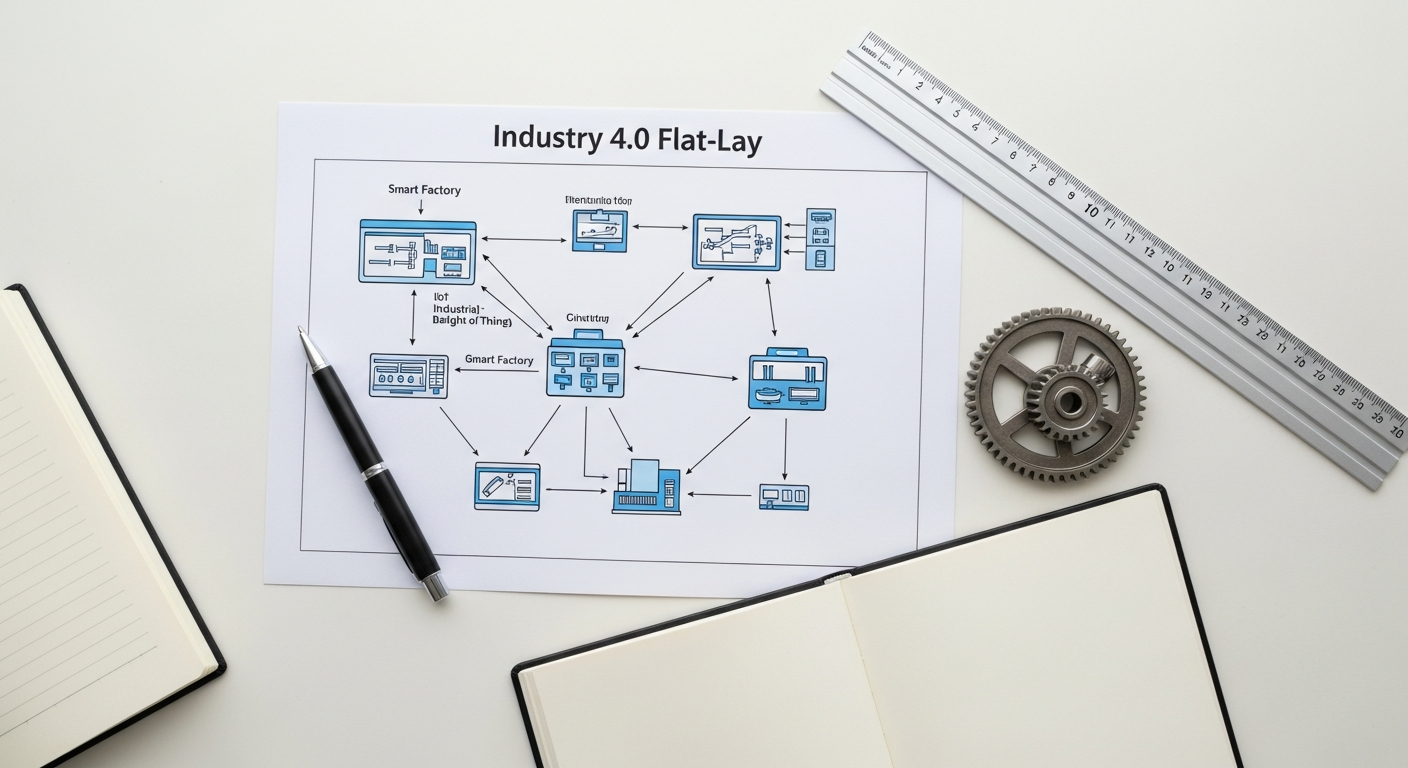
The ultimate manifestation of Industry 4.0 is the “Smart Factory” – a highly digitized and connected production facility where machines, systems, and products communicate autonomously. In a smart factory, manufacturing execution systems (MES) and enterprise resource planning (ERP) systems are seamlessly integrated, often guided by standards like ISA-95 for enterprise-control system integration, ensuring a fluid data flow from the shop floor to the top floor. This integration enables real-time visibility, dynamic scheduling, and adaptive production processes.
Predictive Maintenance
Leveraging IIoT sensors and AI/ML algorithms, predictive maintenance shifts from reactive or time-based maintenance to condition-based strategies. By continuously monitoring machine health parameters (e.g., vibration, temperature, current draw), algorithms can predict potential equipment failures before they occur. This allows maintenance to be scheduled precisely when needed, minimizing unplanned downtime and optimizing asset utilization. Key performance indicators (KPIs) like Mean Time Between Failures (MTBF) and Overall Equipment Effectiveness (OEE) see significant improvements.
Quality Control & Inspection
Industry 4.0 transforms quality control from post-production inspection to in-process defect prevention. AI-powered vision systems, integrated with high-resolution cameras, perform real-time, automated inspection, identifying even microscopic flaws at high speeds. Machine learning models can analyze production data to identify root causes of defects, enabling proactive adjustments to process parameters. This leads to substantial reductions in defect rates and improvements in First Pass Yield (FPY).
Supply Chain Optimization
The interconnected nature of Industry 4.0 extends beyond the factory walls to encompass the entire supply chain. Real-time data from production, logistics, and demand forecasting systems provides end-to-end visibility. AI algorithms optimize inventory levels, route planning, and supplier selection. Technologies like blockchain can enhance transparency and traceability, ensuring product authenticity and ethical sourcing. This leads to a more resilient, agile, and cost-effective supply chain.
Energy Management
IIoT sensors and advanced analytics enable precise monitoring of energy consumption at the machine, line, and facility levels. AI algorithms can identify energy inefficiencies and recommend optimizations, such as adjusting machine operating parameters or scheduling energy-intensive processes during off-peak hours. Adherence to energy management standards like ISO 50001 can be significantly enhanced through these real-time data-driven insights, leading to reduced operational costs and a smaller environmental footprint.
Performance Metrics and Tangible Benefits
The adoption of Industry 4.0 is driven by the promise of quantifiable improvements across numerous operational and strategic dimensions. Manufacturers can expect to see significant enhancements in:
Increased Efficiency & Productivity
– Overall Equipment Effectiveness (OEE): A composite metric (Availability x Performance x Quality) that typically sees substantial gains due to reduced downtime from predictive maintenance, optimized cycle times, and improved quality.
– Throughput: Increased production volume per unit of time through optimized processes and reduced bottlenecks.
– Cycle Time Reduction: Automation and intelligent scheduling lead to faster production cycles.
Cost Reduction
– Reduced Downtime: Predictive maintenance significantly lowers unplanned outages, saving on repair costs and lost production.
– Optimized Resource Utilization: AI-driven optimization of energy, materials, and labor reduces waste and operational expenses.
– Reduced Scrap & Rework: Improved quality control minimizes defective products.
– Lower Inventory Costs: Better demand forecasting and agile production reduce the need for large safety stocks.
Enhanced Agility & Customization
– Mass Customization: The ability to efficiently produce individualized products at scale, responding to diverse customer demands.
– Faster Time-to-Market: Agile development and production processes accelerate product launches.
– Supply Chain Resilience: Real-time visibility and adaptive planning mitigate disruptions and improve responsiveness to market shifts.
Improved Quality
– Reduced Defect Rates: Real-time quality monitoring and predictive analytics minimize errors.
– Higher Product Consistency: Automated processes and precision control ensure uniform product quality.
– Enhanced Traceability: Digital records provide comprehensive product lineage, crucial for compliance and recall management.
Workforce Transformation
– Enhanced Safety: Automation of hazardous tasks and collaborative robotics improve workplace safety.
– Upskilling & Reskilling: The shift to Industry 4.0 creates demand for new skills in data analytics, AI, and robotics, fostering a more highly skilled workforce.
– Human-Machine Collaboration: Empowering workers with AR tools and cobots enhances productivity and job satisfaction.
Sustainability
– Reduced Energy Consumption: Optimized processes and intelligent energy management lead to lower energy use per unit.
– Optimized Material Use: Precision manufacturing and additive manufacturing reduce material waste.
– Lower Carbon Footprint: Overall efficiency improvements contribute to environmental sustainability goals.
Navigating the Challenges and Mitigating Risks
While the benefits of Industry 4.0 are compelling, its implementation is not without challenges. Proactive strategies are essential to mitigate risks and ensure a successful transformation.
Initial Investment Costs
The upfront capital expenditure for hardware, software, and integration can be significant.
Mitigation: Adopt a phased implementation approach, starting with pilot projects that target specific pain points and demonstrate clear ROI. Focus on scalable solutions that can grow with the organization.
Cybersecurity Threats
Increased connectivity creates a larger attack surface, making systems vulnerable to data breaches, intellectual property theft, and operational disruption.
Mitigation: Implement a comprehensive cybersecurity strategy adhering to frameworks like NIST and standards such as IEC 62443. This includes network segmentation, robust access controls, continuous monitoring, employee training, and incident response planning.
Data Management & Interoperability
Integrating disparate legacy systems and managing vast volumes of data from various sources can be complex, leading to data silos and interoperability issues.
Mitigation: Prioritize open standards like OPC UA and MTConnect for communication. Invest in robust data integration platforms and establish clear data governance policies to ensure data quality, consistency, and accessibility.
Workforce Skill Gap
The rapid evolution of technology demands new skills, creating a potential gap in the existing workforce.
Mitigation: Develop comprehensive training and reskilling programs for current employees. Partner with educational institutions to cultivate new talent. Foster a culture of continuous learning and adaptability.
Organizational Change Management
Resistance to change, fear of job displacement, and cultural inertia can hinder adoption.
Mitigation: Engage employees at all levels from the outset. Communicate the vision and benefits clearly. Provide adequate training and support. Emphasize how technology augments human capabilities, creating new, more fulfilling roles.
Integration Complexities
Integrating new Industry 4.0 technologies with existing legacy infrastructure can be challenging and costly.
Mitigation: Conduct thorough assessments of existing infrastructure. Prioritize modular and API-driven solutions that offer flexibility for integration. Consider strategic partnerships with system integrators experienced in bridging legacy and modern systems.
The Strategic Roadmap for 2026 and Beyond
For manufacturers aiming to thrive by 2026, a well-defined strategic roadmap for Industry 4.0 adoption is crucial.
1.
Develop a Clear Digital Strategy Aligned with Business Objectives:
Begin by defining what Industry 4.0 means for your specific business goals. Identify key areas where digital transformation can deliver the most significant impact, whether it’s reducing costs, improving quality, or enhancing customer experience. This strategy must be integrated with the overall business strategy.
2.
Start Small, Scale Smart:
Avoid the temptation to overhaul everything at once. Identify specific, high-impact pilot projects (e.g., predictive maintenance on a critical machine, real-time quality monitoring on a specific line). Prove the concept, measure the ROI, and then scale successful initiatives across the organization.
3.
Invest in Robust Data Infrastructure:
Establish a secure, scalable, and interoperable data infrastructure that can handle the volume, velocity, and variety of data generated. This includes selecting appropriate cloud and edge computing solutions, data lakes, and analytics platforms. Prioritize data governance and quality from the outset.
4.
Prioritize Cybersecurity:
Integrate cybersecurity as a foundational element, not an afterthought. Implement a multi-layered security architecture, conduct regular risk assessments, and ensure compliance with relevant industry standards (e.g., IEC 62443). Employee training on cybersecurity best practices is paramount.
5.
Foster a Culture of Innovation and Continuous Improvement:
Encourage experimentation, learning from failures, and cross-functional collaboration. Empower employees to embrace new technologies and contribute to the digital transformation journey. Leadership commitment is vital in driving this cultural shift.
6.
Strategic Partnerships:
Collaborate with technology providers, system integrators, and research institutions. Leveraging external expertise can accelerate adoption, mitigate risks, and provide access to cutting-edge solutions that might be beyond internal capabilities.
7.
Continuous Workforce Development:
Implement ongoing training and reskilling programs to equip your workforce with the necessary digital skills. Focus on areas like data analytics, AI, robotics programming, and cybersecurity. Consider talent acquisition strategies for specialized roles.
8.
Embrace Interoperability and Open Standards:
Advocate for and adopt open standards (e.g., OPC UA, MTConnect) to ensure seamless communication between diverse systems and avoid vendor lock-in. This facilitates greater flexibility and scalability in your Industry 4.0 ecosystem.