
Life Cycle Assessment (LCA) Products & Sustainable Solutions for Industrial Manufacturing
In today’s rapidly evolving industrial landscape, the drive towards greater sustainability is no longer an option but a strategic imperative. Central to this shift is the systematic evaluation of environmental footprints, and this is precisely where understanding life cycle assessment (lca) products becomes paramount. For industrial manufacturers, applying this methodology allows for the quantification of environmental impacts associated with a product throughout its entire life cycle – from the extraction of raw materials, through manufacturing and distribution, to its use phase and eventual end-of-life. This comprehensive guide will delve deep into the principles, applications, and benefits of integrating product life cycle analysis into industrial operations, offering actionable insights to optimize resource use, comply with evolving regulations, and achieve ambitious sustainability goals. We’ll explore how this rigorous approach supports greener sustainable innovation and enhances the competitiveness of manufactured goods on a global scale.
What is Life Cycle Assessment (LCA) and Why is it Crucial for Industrial Products?
Understanding the full environmental story of a manufactured item requires a methodology that looks beyond the factory gates. This is where a comprehensive product life cycle analysis, often referred to simply as Product LCA, becomes indispensable for industrial manufacturers. It’s a structured approach to evaluate the environmental burdens associated with a product, process, or service, providing critical data for informed decision-making and strategic sustainability planning.
How is the “Cradle-to-Grave” Approach Defined for Manufactured Goods?
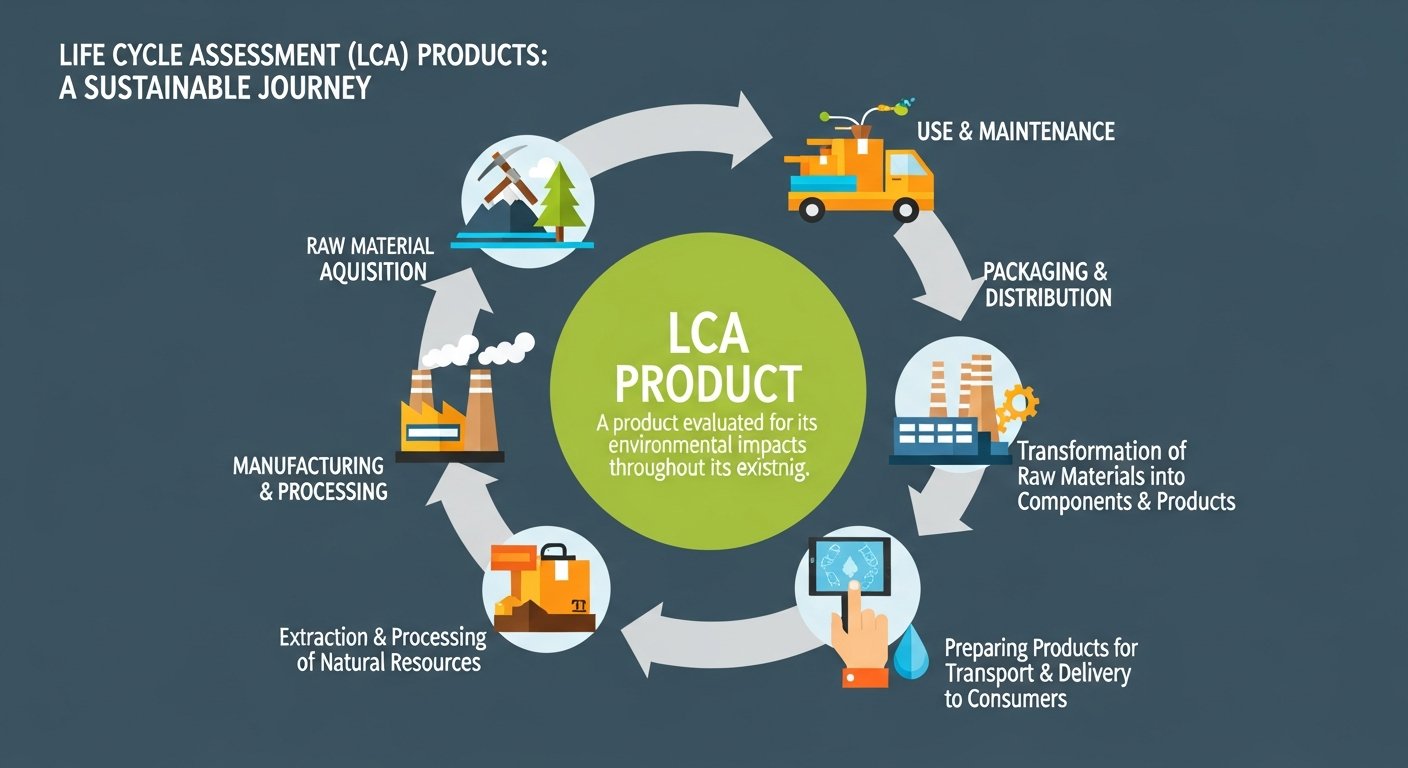
Product LCA, standardized by ISO 14040 and ISO 14044, offers a “cradle-to-grave” perspective, meaning it systematically quantifies environmental impacts from the initial extraction of raw materials all the way through to the product’s disposal or recycling. For industrial goods, this holistic view is crucial. It encompasses:
- **Raw Material Extraction:** Assessing the environmental impact of mining, forestry, or agricultural processes to obtain necessary inputs.
- **Manufacturing Processes:** Evaluating energy consumption, water usage, emissions to air and water, and waste generation during fabrication, assembly, and finishing.
- **Transportation:** Quantifying impacts from moving raw materials to factories, inter-facility transfers, and distribution of finished goods.
- **Use Phase:** Analyzing the energy and resource consumption, as well as emissions, during the product’s functional lifespan (e.g., electricity for an appliance, fuel for a vehicle).
- **End-of-Life:** Determining impacts related to disposal methods such as landfilling, incineration, recycling, or composting.
Industrial manufacturers utilize this cradle-to-grave analysis to quantify the environmental impact of their products, identifying critical hotspots where intervention can yield the greatest environmental benefit. This detailed attribute coverage ensures that no stage of a product’s life cycle is overlooked, providing a robust foundation for environmental management.
What are the Key Environmental Impact Categories Assessed by Product LCA?
A thorough environmental product assessment goes beyond a single metric. It evaluates impacts across various categories to provide a multi-faceted understanding. These impact categories are critical attributes of any comprehensive product sustainability assessment:
| Impact Category | Description | Relevant Industrial Product Examples |
|---|---|---|
| Global Warming Potential (GWP) | Contribution to climate change from greenhouse gas (GHG) emissions (e.g., CO2, methane). | Energy-intensive manufacturing processes (e.g., steel production, cement), fuel consumption in transportation and product use, HFCs in refrigeration units. |
| Acidification Potential (AP) | Emissions leading to acid rain and ecosystem damage (e.g., SO2, NOx). | Combustion of fossil fuels in power generation for factories, vehicle emissions from logistics. |
| Eutrophication Potential (EP) | Nutrient enrichment in water bodies, leading to algal blooms and oxygen depletion (e.g., nitrates, phosphates). | Wastewater discharge from certain chemical manufacturing processes, agricultural inputs for bio-based materials. |
| Ozone Depletion Potential (ODP) | Emissions of substances that deplete the stratospheric ozone layer (e.g., CFCs, halons). | Historically, refrigerants and blowing agents; now, trace emissions from legacy equipment or specific industrial processes. |
| Resource Depletion Potential | Consumption of non-renewable resources (e.g., fossil fuels, minerals). | Extraction of rare earth metals for electronics, reliance on virgin plastics or metals in manufacturing. |
| Water Scarcity Footprint | Impact on freshwater resources from consumption and pollution. | Water-intensive manufacturing (e.g., textile dyeing, semiconductor fabrication), cooling processes in power plants. |
By assessing these diverse impact categories, industrial manufacturers gain a nuanced picture of their products’ environmental burdens, allowing them to prioritize areas for improvement and develop truly sustainable product evaluation strategies.
What are The Four Stages of a Product Life Cycle Assessment Methodology?
A rigorous Product LCA follows a standardized, iterative framework, typically comprising four distinct phases as outlined by ISO 14040/14044. These stages ensure a systematic and transparent evaluation of the environmental performance of industrial products, moving from initial planning to actionable insights.
1. How is Goal and Scope Defined for Industrial Product LCAs?
The first and arguably most critical step in any manufacturing impact assessment is clearly defining the study’s goal and scope. This involves:
- **Goal:** Stating the purpose of the study (e.g., “to compare the environmental impacts of two alternative designs for a car component,” or “to identify environmental hotspots in the production of an industrial pump”).
- **Functional Unit:** Defining the reference unit that provides a measure of the function of the product system (e.g., “1,000 km driven by a vehicle,” “one hour of operation for a specific machine,” or “delivery of 100 kg of a specific chemical”). This ensures comparability between different product systems performing the same function.
- **System Boundaries:** Determining which life cycle stages and processes will be included or excluded from the analysis (e.g., “cradle-to-gate” includes raw material to factory gate; “cradle-to-grave” includes all stages up to disposal; “cradle-to-cradle” incorporates circularity). For industrial products, this often involves complex decisions about infrastructure, maintenance, and multi-functional processes.
- **Assumptions and Limitations:** Clearly documenting any assumptions made and the limitations of the study, which is crucial for transparency and interpretation.
For industrial products, correctly setting the functional unit and system boundaries is vital. For instance, assessing a durable machine might require a functional unit based on operational hours over its expected lifespan, whereas a consumable component might use a per-unit basis. Precise definition ensures the study’s relevance and integrity.
2. What is Life Cycle Inventory (LCI) and How is Data Collected for Manufacturing?
Once the goal and scope are established, the LCI phase focuses on collecting and quantifying all relevant inputs and outputs of a product system. This is essentially building a comprehensive data model of the system. For manufacturing processes, this involves gathering data on:
- **Inputs:** Raw materials (e.g., kilograms of steel, liters of chemicals), energy (e.g., kilowatt-hours of electricity, cubic meters of natural gas), water (e.g., liters of process water).
- **Outputs:** Products, co-products, emissions to air (e.g., CO2, NOx, particulate matter), emissions to water (e.g., heavy metals, organic pollutants), and solid waste (e.g., scrap material, packaging waste).
Data is collected for each process step within the defined system boundaries, from the production of upstream materials to the disposal of downstream waste. This can involve primary data collection directly from industrial facilities (e.g., energy consumption per unit of product from utility bills, emissions from stack monitoring) and secondary data from existing databases (e.g., Ecoinvent, GaBi databases for generic material production or transportation data).
3. How Does Life Cycle Impact Assessment (LCIA) Quantify Environmental Burdens?
The LCI phase provides a detailed list of elementary flows (inputs and outputs), but these raw numbers don’t immediately tell us about environmental significance. The LCIA phase translates the inventory data into potential environmental impacts. This involves several steps:
- **Classification:** Assigning LCI results to specific impact categories (e.g., CO2 emissions are classified under Global Warming Potential).
- **Characterization:** Calculating the contribution of each classified substance to its respective impact category using characterization factors (e.g., methane has a higher global warming potential than CO2 over a 100-year period). This results in a single indicator value for each impact category (e.g., kg CO2 equivalent for GWP).
- **Normalization (Optional):** Expressing the impact category results relative to a reference value (e.g., total impact of a region or person) to better understand their magnitude.
- **Weighting (Optional):** Assigning relative importance (weights) to different impact categories, allowing for aggregation into a single overall environmental score. This step is highly subjective and often used for internal decision-making.
This phase is crucial for quantifying environmental burdens and identifying the most significant impact categories across the product’s life cycle. Specialized software tools assist in this complex calculation process.
4. How is Life Cycle Interpretation Used to Inform Product Improvement Decisions?
The final stage of the methodology involves critically reviewing the results from the LCI and LCIA phases to draw conclusions, identify hot spots, explain limitations, and provide recommendations. This iterative process includes:
- **Identification of Significant Issues:** Pinpointing the life cycle stages, processes, or substances that contribute most significantly to the environmental impacts. For industrial products, this might reveal that the greatest impact comes from the raw material extraction, the energy consumption during a specific manufacturing process, or the disposal phase.
- **Completeness Check:** Ensuring that all relevant data has been included and that the study aligns with its defined goal and scope.
- **Sensitivity Analysis:** Examining how changes in data inputs or methodological choices might affect the results. This helps assess the robustness of the findings.
- **Recommendations:** Formulating actionable strategies for product improvement, process optimization, or supply chain changes based on the identified hot spots and insights. These recommendations can inform eco-design initiatives, procurement decisions, or waste management strategies.
The interpretation phase closes the loop, transforming complex data into meaningful insights that drive sustainable innovation and continuous improvement in industrial manufacturing.

How Do Industrial Manufacturers Implement LCA for Their Products?
Understanding the methodology is one thing; applying it effectively is another. Industrial manufacturers leverage the insights from Product LCA across various stages of their operations, from initial design to market communication, to embed sustainability deeply into their manufacturing processes and offerings. This systematic application drives both environmental performance and business value.
How is LCA Integrated into Product Design and Development (Eco-design)?
One of the most impactful applications of an environmental product assessment is its integration into the early stages of product design, often referred to as eco-design or Design for Environment (DfE). By conducting streamlined or full LCAs during the concept and development phases, manufacturers can:
- **Material Selection:** Compare the environmental impacts of different material choices (e.g., virgin plastics vs. recycled polymers, aluminum vs. steel) and opt for lower-impact alternatives.
- **Process Optimization:** Identify and select manufacturing processes with lower energy consumption, water usage, or waste generation.
- **Product Durability and Longevity:** Design products for longer lifespans, reducing the need for frequent replacements and associated environmental impacts.
- **Modularity and Repairability:** Engineer products that are easier to disassemble, repair, or upgrade, extending their functional life and facilitating component reuse.
- **End-of-Life Planning:** Design for easier recycling or responsible disposal by selecting compatible materials and minimizing hazardous substances.
Early integration of LCA allows manufacturers to “design out” environmental impacts rather than mitigating them later, leading to more fundamentally sustainable product offerings.
How Can LCA be Leveraged for Supply Chain Optimization and Material Selection?
The extended reach of a cradle-to-grave analysis makes it a powerful tool for enhancing supply chain sustainability. Industrial manufacturers use product sustainability assessment to:
- **Supplier Evaluation:** Assess the environmental performance of suppliers based on the data related to their inputs and processes, fostering a greener supply chain.
- **Raw Material Sourcing:** Make informed decisions about the origin and production methods of raw materials, prioritizing those with lower environmental footprints (e.g., responsibly sourced minerals, sustainably harvested timber).
- **Logistics and Transportation:** Optimize transportation routes, modes, and packaging to reduce fuel consumption and emissions.
- **Material Circularity:** Identify opportunities to incorporate recycled content, use renewable resources, and design for material recovery at end-of-life, aligning with circular economy principles.
This deep dive into the supply chain helps uncover hidden environmental costs and drives collaborations for collective improvement.
How is LCA Used for Environmental Product Declarations (EPDs) and Marketing?
Beyond internal optimization, the robust data generated by a manufacturing impact assessment provides a credible basis for external communication. Industrial firms utilize this data to:
- **Create Environmental Product Declarations (EPDs):** EPDs are standardized, third-party verified documents that communicate the environmental performance of a product based on LCA results. They are increasingly required in green building certifications and public procurement.
- **Support Green Marketing Claims:** Substantiate environmental claims with verifiable data, building trust with customers, investors, and regulatory bodies. This helps avoid “greenwashing” by providing transparent, science-based evidence.
- **Meet Customer Demand:** Respond to growing demand from business-to-business (B2B) and business-to-consumer (B2C) clients for transparent environmental information about the products they purchase.
- **Benchmark Performance:** Compare the environmental performance of their products against competitors or industry benchmarks, identifying areas for competitive advantage.
By effectively communicating their product’s environmental performance, manufacturers can enhance their brand reputation and gain a competitive edge in sustainability-conscious markets.
What are the Key Benefits of Integrating LCA into Industrial Product Management?
The strategic adoption of a sustainable product evaluation approach offers a multifaceted return on investment for industrial manufacturers, extending far beyond mere environmental compliance. It’s a driver for innovation, efficiency, and market leadership.
How Does LCA Drive Resource Efficiency and Cost Reduction?
One of the most tangible benefits of performing a detailed manufacturing impact assessment is the ability to pinpoint areas of inefficiency and excessive resource consumption. By identifying these “hotspots,” industrial firms can:
- **Minimize Waste:** Optimize material usage and production processes, leading to significant reductions in raw material waste and disposal costs. Our experience shows that manufacturers often achieve up to a 15-20% reduction in material waste after implementing LCA insights.
- **Reduce Energy Consumption:** Identify energy-intensive stages in the product life cycle, from material sourcing to manufacturing, and implement energy-saving measures. This can lead to substantial reductions in energy bills, sometimes improving energy efficiency by 10-25% in specific processes.
- **Optimize Water Use:** Pinpoint water-intensive processes and develop strategies for water recycling or more efficient usage.
- **Streamline Logistics:** Identify opportunities for more efficient transportation, reducing fuel costs and associated emissions.
Ultimately, a robust product life cycle analysis helps transform environmental challenges into economic opportunities, improving the bottom line through enhanced resource efficiency.
How Does LCA Enhance Regulatory Compliance and Risk Management?
The global regulatory landscape concerning product sustainability is becoming increasingly complex. Integrating product LCA provides a proactive mechanism for industrial manufacturers to navigate this environment:
- **Meeting Evolving Regulations:** Prepare for and comply with directives such as the EU Green Deal’s Ecodesign Directive for Sustainable Products, Extended Producer Responsibility (EPR) schemes, and mandatory carbon reporting requirements.
- **Mitigating Reputational Risk:** Avoid accusations of “greenwashing” by backing environmental claims with scientific, verifiable data from an environmental product assessment.
- **Proactive Problem Solving:** Identify potential environmental risks associated with materials or processes early in the product life cycle, allowing for timely mitigation before they become liabilities.
- **Accessing Green Markets:** Position products to meet criteria for green public procurement, eco-labels, and specific industry standards that demand environmental transparency.
By understanding their products’ impacts thoroughly, companies can stay ahead of regulatory curves and reduce future compliance burdens.
How Does LCA Boost Brand Reputation and Market Competitiveness?
In a world where sustainability is a growing concern for consumers and investors alike, a strong commitment to sustainable product evaluation can significantly enhance a company’s image and market position:
- **Customer Loyalty:** Attract and retain customers who prioritize environmentally responsible products. This is particularly relevant in B2B markets where supply chain sustainability is a key purchasing criterion.
- **Investor Confidence:** Appeal to socially responsible investors and gain access to green financing options, as transparent environmental performance signals good governance and foresight.
- **Innovation Driver:** Use LCA insights to drive genuine sustainable innovation, leading to new product lines, improved processes, and competitive differentiation.
- **Talent Attraction:** Attract and retain top talent who are increasingly looking to work for companies aligned with their values of sustainability and social responsibility.
Companies that visibly embed product LCA into their operations demonstrate leadership, foster trust, and build a resilient brand capable of thriving in the sustainable economy of 2026 and beyond.
What are the Challenges and Best Practices in LCA for Industrial Products?
While the benefits of sustainable product evaluation are clear, implementing a robust manufacturing impact assessment, especially for complex industrial products, comes with its own set of challenges. Addressing these effectively requires a strategic approach and adherence to best practices.
How Can Data Gaps and Complexity in Manufacturing Supply Chains be Addressed in LCA?
The intricate nature of industrial supply chains often presents the most significant hurdle in conducting a comprehensive product LCA:
- **Data Availability and Quality:** Obtaining precise, up-to-date primary data from every supplier across multiple tiers can be challenging. Many suppliers may not collect or readily share detailed environmental data.
- **Proprietary Information:** Suppliers may be reluctant to share sensitive process data due to intellectual property concerns.
- **Global Supply Chains:** Data collection across different countries and regions can be complicated by varying reporting standards, languages, and data formats.
- **Data Homogeneity:** Ensuring that collected data is consistent in terms of methodology, functional unit, and system boundaries across the entire supply chain is critical for valid comparisons.
To mitigate these challenges, industrial manufacturers often combine primary data (from their own operations) with high-quality secondary data from reputable LCA databases (like Ecoinvent or GaBi) for upstream processes where primary data is unavailable or too costly to obtain.
How Can Consistent System Boundaries and Allocation Rules be Ensured in LCA?
Methodological choices within a product life cycle analysis can significantly influence the results, making consistency vital:
- **System Boundary Definition:** Deciding what to include and exclude from the study can be subjective. For instance, whether to include the impacts of capital goods (machinery, factory buildings) or only operational inputs.
- **Allocation Procedures:** When a process produces multiple co-products (e.g., electricity generation with heat, or a chemical process yielding several useful outputs), the environmental impacts must be “allocated” among them. The choice of allocation method (e.g., by mass, economic value, or physical causality) can drastically alter results.
- **End-of-Life Scenarios:** Modeling end-of-life impacts (recycling, reuse, disposal) requires assumptions about future infrastructure and market conditions for recycled materials.
These methodological choices need to be transparently documented and justified according to ISO 14040/14044 standards to ensure the credibility and comparability of the LCA study.
What are the Best Practices for LCA: Collaboration, Software Tools, and Iterative Assessment?
Overcoming LCA challenges requires a multi-pronged approach:
- **Cross-Functional Teams:** Involve experts from design, R&D, production, procurement, and sustainability to ensure a holistic understanding of the product system and to facilitate data collection.
- **Supplier Collaboration:** Work closely with key suppliers to encourage data sharing, develop common data collection protocols, and foster joint sustainability initiatives.
- **Leveraging Specialized Software Tools:** Utilize professional LCA software for industrial applications to manage complex data, perform calculations, and generate reports efficiently. Popular tools include:
- **SimaPro:** Comprehensive modeling, scenario analysis, and EPD generation capabilities. Features extensive databases like Ecoinvent. Suitable for consultants and large corporations.
- **GaBi:** Integrated with a large database, strong for product design and supply chain optimization, particularly in automotive and chemical sectors.
- **openLCA:** Open-source software, offering flexibility and cost-effectiveness, suitable for researchers and smaller firms with technical expertise.
Software Name Key Features for Manufacturing Primary Data Sources/Databases Target User/Industry SimaPro Comprehensive modeling, scenario analysis, EPD generation, hotspot identification. Ecoinvent, Agri-footprint, US LCI. Sustainability consultants, large corporations, academic researchers. GaBi Process modeling, supply chain analysis, eco-design support, EPD creation. Thinkstep GaBi databases, custom datasets. Automotive, electronics, chemical, building & construction. openLCA Flexible modeling, comprehensive database integration (e.g., Ecoinvent, US LCI), open-source. Ecoinvent, ELCD, US LCI, Agribalyse. Researchers, small-to-medium enterprises, education, specialized consultants. - **Iterative Assessment:** Treat LCA as a continuous process, not a one-time project. Regularly update data, refine models, and reassess products as designs, materials, or manufacturing processes evolve.
- **Streamlined LCA:** For quick comparisons or early design phases, use simplified or screening LCA methods to get approximate results efficiently, reserving full, detailed LCAs for critical decisions.
By adopting these best practices, industrial manufacturers can harness the power of environmental product assessment to drive meaningful, verifiable sustainability improvements.
What is the Future of LCA in Sustainable Industrial Manufacturing?
As industrial manufacturing continues its rapid evolution, the role of Product LCA is set to expand and become even more deeply integrated into strategic decision-making. Emerging technologies and shifting sustainability paradigms are reshaping how manufacturing impact assessment is conducted and utilized.
What is the Role of Digitalization, AI, and Blockchain in Product LCA?
The future of sustainable product evaluation will be heavily influenced by advancements in digital technologies:
- **Automated Data Collection:** Digital twins, IoT sensors on production lines, and enterprise resource planning (ERP) systems will increasingly provide real-time, granular data, significantly reducing the manual effort and uncertainty in Life Cycle Inventory (LCI) data collection.
- **Artificial Intelligence (AI) and Machine Learning (ML):** AI and Machine Learning can analyze vast datasets, identify complex patterns, predict environmental impacts of new designs or processes, and even suggest optimized material compositions or manufacturing routes with lower footprints. This moves LCA from reactive assessment to proactive design optimization.
- **Blockchain for Supply Chain Transparency:** Blockchain technology can create an immutable, transparent record of materials, processes, and environmental data across complex supply chains. This enhances data credibility for product sustainability assessment, verifies claims, and helps combat greenwashing.
- **Integrated Design Tools:** LCA capabilities will be seamlessly integrated into CAD (Computer-Aided Design) and PLM (Product Lifecycle Management) software, allowing designers to get immediate environmental feedback as they create, making eco-design an intuitive part of the design process.
These technological convergences will make Product LCA faster, more accurate, and more accessible, democratizing its use across industrial manufacturing.
How Does LCA Connect with Circular Economy Principles?
The traditional linear “take-make-dispose” model is giving way to circular economy principles, and Product LCA is a vital tool for this transition:
- **Design for Circularity:** LCA helps evaluate and optimize products for longevity, repairability, remanufacturing, and recyclability. It identifies whether efforts to extend a product’s life truly reduce overall impacts compared to, for example, producing a new, highly efficient alternative.
- **Material Flow Analysis:** By tracking material flows throughout a product’s life cycle, LCA supports strategies to keep materials in use at their highest value for as long as possible.
- **Resource Recovery Assessment:** It provides data to assess the environmental benefits of recycling and reuse systems, informing investment in appropriate infrastructure and technologies.
- **Product-as-a-Service Models:** For companies shifting to “product-as-a-service” models, LCA helps understand and manage the cumulative environmental impacts over multiple use cycles, incentivizing design for durability and ease of maintenance.
By aligning the insights from sustainable product evaluation with the goals of a circular economy, industrial manufacturers can design products and systems that not only minimize negative impacts but actively generate positive value by regenerating natural systems and keeping resources flowing.
What are the Common Mistakes in Implementing Product LCA for Industrial Firms?
Even with the best intentions, industrial manufacturers can stumble during the implementation of a comprehensive product life cycle analysis. Recognizing these common pitfalls is the first step towards avoiding them and ensuring the effectiveness of your sustainable product evaluation efforts.
- **Unclear Goal and Scope Definition:** Rushing this initial phase leads to studies that are either too broad (overwhelming data needs) or too narrow (missing critical impacts). Without a precise functional unit and system boundaries, results can be incomparable or irrelevant for decision-making.
- **Poor Data Quality and Gaps:** Relying on outdated, generic, or incomplete data undermines the credibility of the entire assessment. Industrial processes are highly specific, and generic database values may not accurately reflect actual operational impacts, especially for unique manufacturing steps or proprietary materials.
- **Ignoring Hotspots Identified:** Conducting an LCA and then failing to act on the identified environmental hotspots is a wasted effort. The purpose of the assessment is to drive change, not just generate reports.
- **Lack of Internal Buy-in and Cross-Functional Collaboration:** LCA is not solely an environmental department’s task. Without input from R&D, engineering, procurement, and even sales, critical data may be missed, and implementation of recommendations can be stalled due to a lack of ownership.
- **Treating LCA as a One-Time Event:** Products, processes, and supply chains are dynamic. A single LCA provides a snapshot in time. To remain relevant, manufacturing impact assessments need to be iterative, updated as designs evolve, new materials are introduced, or production methods change.
- **Over-emphasis on Specific Stages:** While the “cradle-to-grave” approach is critical, some firms might overly focus on their direct manufacturing operations, neglecting significant impacts from upstream raw material extraction or downstream use and end-of-life phases.
- **Misinterpretation or Miscommunication of Results:** LCA results can be complex and are always based on certain assumptions. Misinterpreting the data or communicating it without acknowledging uncertainties can lead to poor decisions or accusations of greenwashing.
By proactively addressing these common challenges, industrial manufacturers can ensure their investment in product LCA yields robust, actionable insights that truly drive sustainability.
Conclusion: Driving Sustainable Innovation with Product LCA in Industrial Manufacturing
The journey towards a more sustainable industrial future is complex, yet the path is illuminated by powerful analytical tools like Life Cycle Assessment (LCA). For manufacturers, the systematic application of life cycle assessment (lca) products is no longer just a regulatory burden or a niche environmental concern; it is a fundamental strategic asset. From informing eco-design and optimizing resource efficiency to enhancing brand reputation and navigating evolving compliance landscapes, the insights derived from product LCA are instrumental in fostering true sustainable innovation.
By embracing this comprehensive methodology, industrial firms can identify critical environmental hotspots, drive significant cost reductions, strengthen their supply chains, and communicate their sustainability achievements with credibility. The ongoing integration of digital technologies such as AI and Machine Learning and blockchain promises to make product life cycle analysis even more powerful, enabling real-time insights and seamless integration into the manufacturing process. As the world moves towards a more circular and environmentally conscious economy, the commitment to rigorous environmental product assessment will differentiate leaders, ensure long-term resilience, and pave the way for a more responsible and prosperous industrial landscape.
Learn more about comprehensive Sustainability & Energy Management strategies for industrial operations.
Sources & References
- International Organization for Standardization (ISO). (2006). ISO 14040:2006 Environmental management – Life cycle assessment – Principles and framework. ISO.
- International Organization for Standardization (ISO). (2006). ISO 14044:2006 Environmental management – Life cycle assessment – Requirements and guidelines. ISO.
- Klöpffer, W., & Grahl, B. (2014). Life Cycle Assessment (LCA): A Guide for Practitioners. Wiley-VCH.
- European Commission. (2020). A New Circular Economy Action Plan For a Cleaner and More Competitive Europe. COM(2020) 98 final.
- Ecoinvent Centre. (Ongoing). Ecoinvent Database. Available from: www.ecoinvent.org.
About the Author
Dr. Omar Hassan, Automotive & Industrial AI Strategist — I’m an automotive and industrial AI strategist focused on leveraging data and machine learning to drive efficiency and innovation in manufacturing and mobility, with a Ph.D. in Robotics and certification as an AI Professional. My expertise lies in bridging advanced AI capabilities with practical industrial applications, including sustainable manufacturing processes and supply chain optimization.
Reviewed by Marcus Thorne, Senior Technical Editor — Last reviewed: March 30, 2026
Reviewed by Marcus Thorne, Senior Technical Editor — Last reviewed: March 30, 2026